Hannah Arendt, What Remains: Collected Poems, ed. and trans. Samantha Rose Hill, trans. Genese Grill – Liveright, December 2024

Hannah Arendt, What Remains: Collected Poems, ed. and trans. Samantha Rose Hill, trans. Genese Grill – Liveright, December 2024

A landmark literary event, What Remains collects Arendt’s complete poetic oeuvre—never before published in English.

Internationally renowned as one of the twentieth century’s foremost public intellectuals, Hannah Arendt was also intensely private. Though she often acknowledged that the language of poetry—especially that of Dickinson, Goethe, and Lowell—informed her work, only a few people knew that Arendt herself wrote poems.

In fact, between 1923 and 1961, Arendt wrote seventy-four poems, many of them signposts in an otherwise unwritten autobiography. For nearly forty years after her death, these poems remained hidden among the archives of the Library of Congress, until 2011, when they were rediscovered by scholar and translator Samantha Rose Hill. Now, for the first time in English, Hill and Genese Grill present Arendt’s poems in chronological order, taking us from the zenith of the Weimar Republic to the Cold War, and from Marburg, Germany, to New York’s Upper West Side.

Throughout, Arendt uses poetry to mark moments of joy, love, loss, and reflection. In “W. B.,” written in 1942, she remembers Walter Benjamin, who died near the French-Spanish border while attempting to flee the Nazis: “Gentle whispering melodies / Sound from the darkness. / We listen so we can let go.” So, too, she reflects on mutability and transience in 1946: “I know that the houses have fallen. / We entered the world in them, wonderfully sure, that they / were more durable than ourselves.” She tries to understand her place in the world: “Ironically foolish, / I’ve forgotten nothing, / I know the emptiness, / I know the burden, / I dance, I dance / In ironic splendor.”

A gift to all readers of Arendt, this stunning, dual-language edition provides an unparalleled view into the inner sanctum of one of our most original thinkers.


Posted in Hannah Arendt, Uncategorized | Leave a comment

Lieba Faier, The Banality of Good: The UN’s Global Fight against Human Trafficking – Duke University Press, September 2024 (open access)

Lieba Faier, The Banality of Good: The UN’s Global Fight against Human Trafficking – Duke University Press, September 2024 (open access)

In The Banality of Good, Lieba Faier examines why contemporary efforts to curb human trafficking have fallen so spectacularly short of their stated goals despite well-funded campaigns by the United Nations and its member-state governments. Focusing on Japan’s efforts to enact the UN’s counter-trafficking protocol and assist Filipina migrants working in Japan’s sex industry, Faier draws from interviews with NGO caseworkers and government officials to demonstrate how these efforts disregard the needs and perspectives of those they are designed to help. She finds that these campaigns tend to privilege bureaucracies and institutional compliance, resulting in the compromised quality of life, repatriation, and even criminalization of human trafficking survivors. Faier expands on Hannah Arendt’s idea of the “banality of evil” by coining the titular “banality of good” to describe the reality of the UN’s fight against human trafficking. Detailing the protocols that have been put in place and evaluating their enactment, Faier reveals how the continued failure of humanitarian institutions to address structural inequities and colonial history ultimately reinforces the violent status quo they claim to be working to change.

Posted in Uncategorized | Leave a comment

Juliet Fall, Bornées: Une histoire illustrée de la frontière – Mētis, November 2024

Juliet Fall, Bornées: Une histoire illustrée de la frontière – Mētis, November 2024

Bornées. Une histoire illustrée de la frontière raconte la frontière franco-suisse en bande dessinée. L’initiative de cette recherche s’enracine dans le contexte très particulier de la pandémie de Covid-19, ayant pour conséquence une fermeture des frontières à l’échelle internationale et un boulversement instantanée du quotidien des territoires frontaliers.
L’auteure, accompagnée de sa famille, décide alors de partir à vélo sur les traces physiques de la frontière qui sépare le Canton de Genève de la France, étapes par étapes, de bornes en bornes. Cette quête est également l’occasion de revenir sur l’histoire de cette limite, tantôt flagrante, tantôt invisible, aux multiples évolutions grâce notamment à l’analyse d’un riche corpus d’images et de cartographies d’archives. Ce fil rouge historique permet à Juliet Fall de questionner l’impact de la pandémie sur nos modes de vie et notre rapport aux territoires.
Tout au long de son livre, l’auteure dévoile ainsi les petits et grands efforts déployés depuis deux siècles pour fabriquer et maintenir un territoire national. Il s’agit là d’un inédit au sein de la collection vuesDensemble et plus largement pour MetisPresses: véritable essai graphique,
s’appuyant sur une méthode de recherche récente issue des graphic and cultural studies. Cette bande dessinée est le résultat d’un traitement graphique spécifique: l’auteure a ainsi réalisé une campagne photographie exhaustive, qu’elle a ensuite transformé en dessin puis colorisé. De même, Juliet Fall a créé une police calligraphique originale à partir de sa propre écriture. Le défi relevé par MetisPresses est donc de valoriser ce rendu de recherche en l’insérant dans une collection bien établie, tout en conservant la personnalité d’écriture de l’auteure.

Some sample pages of this remarkable work can be seen at Calamēo. An English edition is forthcoming.

I’ve shared a few things by Juliet before – including Feminist Political Geography – the animated movie; Visualising The Birth of Territory; and two pieces which give an idea of the story-board/graphic novel approach used in the book – “Dear Carl”: thinking visually and geographically about public figures and ‘Fenced In‘ (both open access).

Posted in Boundaries, Juliet Fall, terrain, Territory, Uncategorized | 1 Comment

Brian Eno and Bette A, What Art Does: An Unfinished Theory (print and e-book)

Brian Eno and Bette A, What Art Does: An Unfinished Theory (print and e-book)

The e-book is currently available for just £1

WHAT ART DOES examines the function of fictional worlds – such as pop songs, detective novels, soap operas, shoe tassels and the hidden language of haircuts – and suggests a new theory of art.

Why do we do it? How does it help us? And how does it hold us all together?

WHAT ART DOES is a full colour illustrated hardback book, initially available in a limited edition of 777 signed copies. Each copy comes with its own unique slipcase hand painted by Brian and Bette A. This limited edition is available exclusively from Metalabel for North American collectors, and Enoshop for collectors in the rest of the world.

Hardback and ebook editions will be available on general release from Faber on 16th January 2025.

All profits from the limited edition and PDF go to charity 

Posted in Uncategorized | 1 Comment

Open access versions of my articles

Most of my publications are listed on my Warwick webpage, with links to the publisher pages

Warwick’s online repository is WRAP, and my page is here. This has preprints of pieces from 2014 onwards for open access compliance.

I keep a list of publications on this site, providing links to as many as I can – separate pages for articles and chapters, a couple of links to booksinterviewsaudio and video, and reading lists.

Some forthcoming pieces are listed here.

I also try to keep ResearchGate updated, with several pieces available there. I deleted my academia.edu account some time ago (I briefly say why here).

If you can’t find an article or chapter by one of those routes then you can email me, and I’ll try to help. But I don’t have pdf copies of absolutely everything, unfortunately.

Posted in Uncategorized | 1 Comment

Journal of the History of Ideas Virtual Issue: Recent Work in French Intellectual History

Journal of the History of Ideas Virtual Issue: Recent Work in French Intellectual History

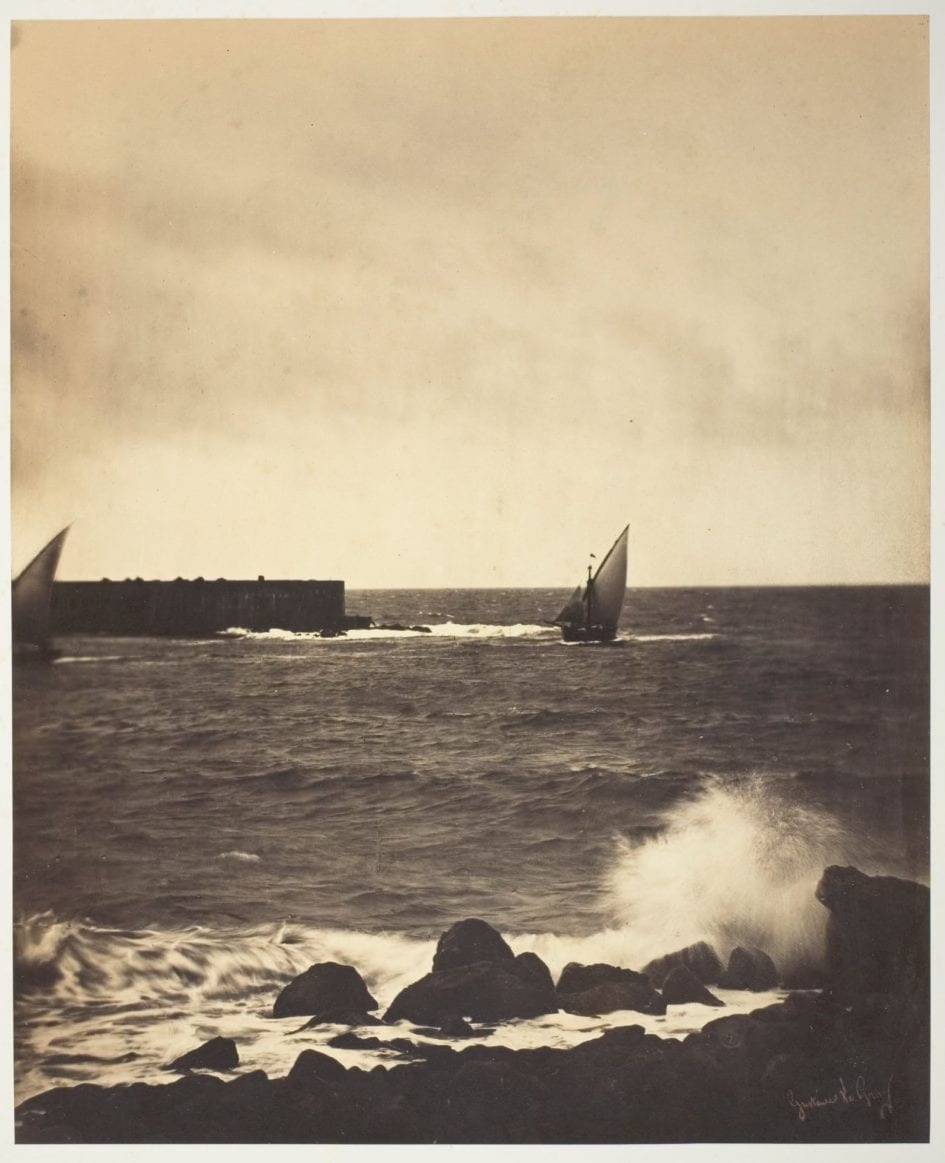
Featured image: Gustave Le Gray, The Breaking Wave, 1857, Hugh Edwards Fund, Art Institute Chicago, CCO.

This virtual issue highlights recent publications in the JHI of relevance to French intellectual history since the last quarter of the nineteenth century. The reason for compiling it is relatively simple—we hope that readers might enjoy it. This string of recent publications (roughly since 2016) indicates some significant turns in the field. “French” intellectual history is certainly no longer limited to the hexagon, nor to the existentialist, Marxist, structuralist and “liberal 1980s” storylines. It belongs squarely in transnational and postcolonial discussions; it is invested in close philological and theoretical work as much as in detailed contexts and sociological frames, some of which have long been underexamined; and it is far more genuinely transnational than it has been before. The research expected nowadays of articles on classic authors is both denser and broader in scope than it was even a decade ago. 

The essays in this set include work on the French Extreme Right, on classic figures like Deleuze and Foucault, on Black internationalism and anticolonialism, on Catholic theology, on the history of theory, and on a series of other topics. We also include texts which cut diagonally across the traditional field (like Asbrink’s “When Race was Removed from Racism,” whose second half considers Maurice Bardèche, ethnopluralism, and the New Right), Sarah C. Dunstan’s “The Capital of Race Capitals” (which considers Paris in the context of other sites of Black internationalism), and Nicolas Guilhot’s essay on the paranoid style (which brings Jacques Lacan’s early writings in conversation with the broader international discourse on the “paranoid style”). We as editors think that these are essential to seeing how to work transnationally on different registers. 

 —Stefanos Geroulanos, on behalf of the Executive Editors

Posted in Uncategorized | Leave a comment

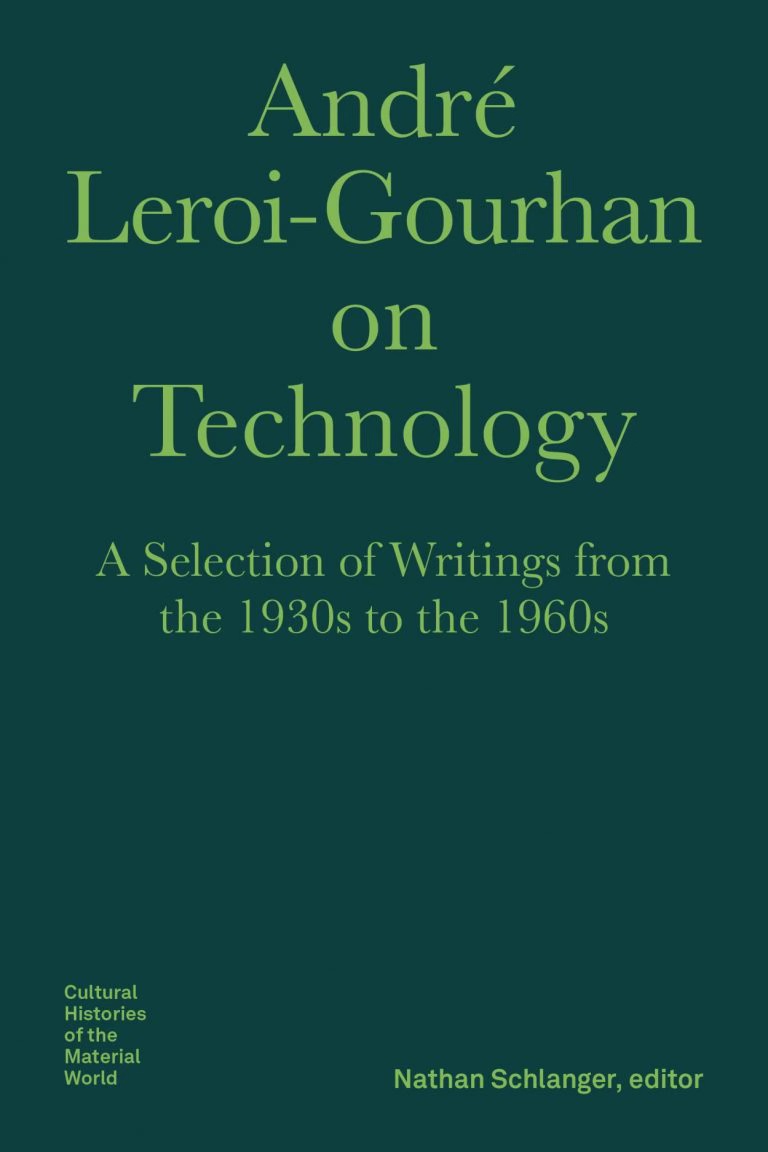
André Leroi-Gourhan on Technology: A Selection of Writings from the 1930s to the 1960s, ed. Nathan Schlanger, trans. Nils F. Schott – Hau Books, February 2025

André Leroi-Gourhan on Technology: A Selection of Writings from the 1930s to the 1960s, ed. Nathan Schlanger, trans. Nils F. Schott – Hau Books, February 2025

A selection of Leroi-Gourhan’s most important texts—many translated into English for the first time.

André Leroi-Gourhan is undoubtedly one of the most acclaimed figures of twentieth-century anthropology and archaeology. In France, his intellectual importance rivals that of the Claude Lévi-Strauss, yet Leroi-Gourhan’s major contributions are almost entirely unknown in the Anglophone world. This collection seeks to change that. This selection highlights some of his chief influences, such as elaborating a theory of technology, which argues that material culture focuses on the object in use and how use is a dynamic feature that has specific consequences for human evolution and human society. With serious ramifications for our understanding of material culture, putting Leroi-Gourhan’s thinking about technology into English will have an immediate and transformative impact on material culture studies.

Posted in Uncategorized | 1 Comment

Nedim Nomer and Kaya Șahin, Histories of Political Thought in the Ottoman World – Oxford University Press, March 2025

Nedim Nomer and Kaya Șahin, Histories of Political Thought in the Ottoman World – Oxford University Press, March 2025

This collection of papers is intended to provide a survey of the history of political ideas in the Ottoman world from its dawn around 1300 to its downfall in the early 20th century. It features fourteen original papers by some of the most prominent and innovative scholars of Ottoman history. The book sheds light on the complex role that ideas have played in all aspects of Ottoman social and political life throughout the history of the Ottoman world, across time, space, social class, and ethnic and religious identity. 

Histories of Political Thought in the Ottoman World takes exception to a common tendency, both among Ottoman historians and in the broader academic world, that considers Ottoman political life exclusively in terms of the political ideas of the Sunni Muslim governing elite. It makes clear that the non-elite, non-Sunni Muslim, non-Muslim, non-Turkish, and female members of the Ottoman society have also significantly contributed to the making of Ottoman political culture throughout its history.

Posted in Uncategorized | Leave a comment

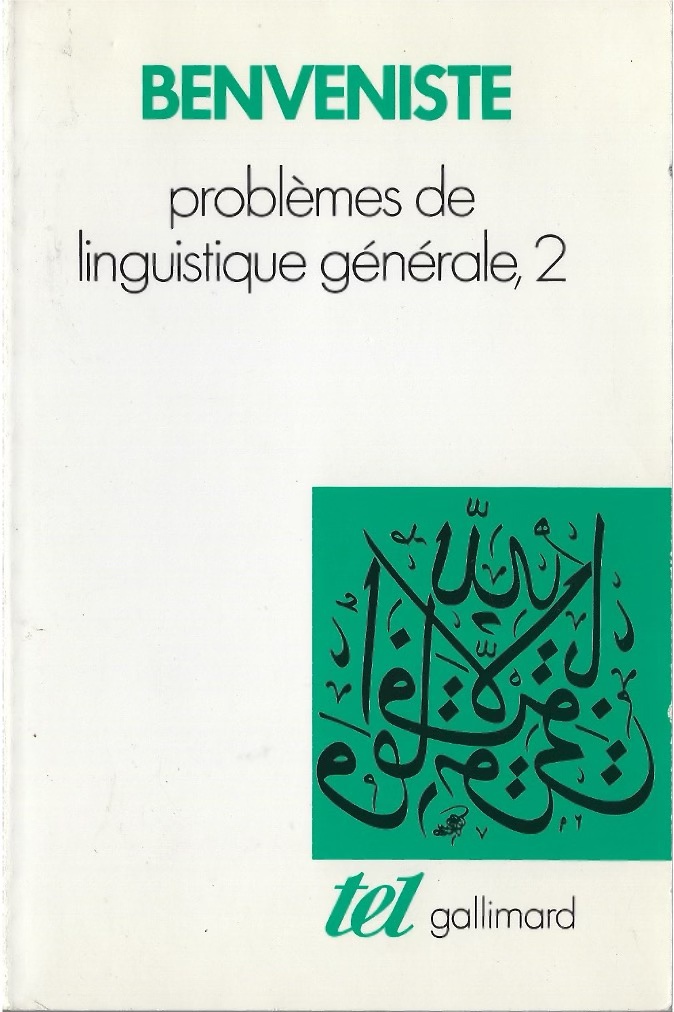
Émile Benveniste, Problèmes de linguistique générale – Problems in General Linguistics and other English translations

Émile Benveniste’s Problèmes de linguistique générale was published in two volumes in 1966 and 1974 by Gallimard, and later reprinted in the Tel series (volumes 1 and 2). The first volume brought together essays from 1939 to 1964, and was compiled by Benveniste himself. The second volume was compiled by Mohammed Djafer Moïnfar and Michel Lejeune after Benveniste’s 1969 stroke, and includes texts written between 1965 and 1969, though published as late as 1972.

The first volume was translated by Mary Elizabeth Meek in 1971 as Problems in General Linguistics. That text is long out of print. Fortunately there is a new and expanded edition forthcoming from Hau books, edited by Jordan K. Skinner, though it is long delayed.

The second volume has not been translated in full. Only a few of its essays are available in English translation, and I thought it might be useful to compile a short list. I’m happy to add any that I’ve missed. [Updated 19 December 2024 with a translation I’d missed and a bit more information.]

Benveniste is one of the main figures I discuss in my Mapping Indo-European Thought in Twentieth Century France project, on which more detail is here. As with the earlier Foucault work I’ve been sharing a few research resources – bibliographies, textual comparisons, sources, etc. as I’ve been doing the research. A few on Dumézil and one on Saussure are listed here. If you find these useful, please let me know – corrections and additions welcome. There are a lot of other research resources here.

Posted in Bartolus of Sassoferrato, Emile Benveniste, Ferdinand de Saussure, Georges Dumézil, Mapping Indo-European Thought in Twentieth Century France, Uncategorized | Leave a comment

Lynne Huffer, These Survivals: Autobiography of an Extinction – Duke University Press, May 2025

Lynne Huffer, These Survivals: Autobiography of an Extinction – Duke University Press, May 2025

A collage-style work in fragments, Lynne Huffer’s These Survivals brings together philosophy, memoir, poetry, and original multimedia artworks to articulate an ethics of living on a devastated planet. Focusing on climate change and mass species extinction, Huffer approaches ruination through assemblages rendered in sharp-edged prose, vibrant color images, and experimental features that include black-out poems, weather reports, and abecedarian essays. She considers her struggles with everyday life and confronts the immensity of extinction across the expanse of geological time, recognizing the self’s insignificance in the context of the planet’s 4.5-billion-year existence. As she moves across autobiographical, political, and literary registers, her abiding theme is the repeated phrase: the fragment remains while the whole crumbles. At every turn, Huffer insists on the fragmentary, provisional nature of anything taken to be whole as well as the impartial conditions under which we write, at times experienced as constraint and, at others, freedom. Reveling in interruption, obliquity, and layering, Huffer opens space for thought to emerge in unexpected and innovative ways—ways that are grounded in the material practices of writing and living.

Update: if you order direct from Duke, E25HUFFR gets 30% off.

Posted in Uncategorized | Leave a comment