Books received – Lévi-Strauss, Foucault, Derrida, Arendt and Scholem

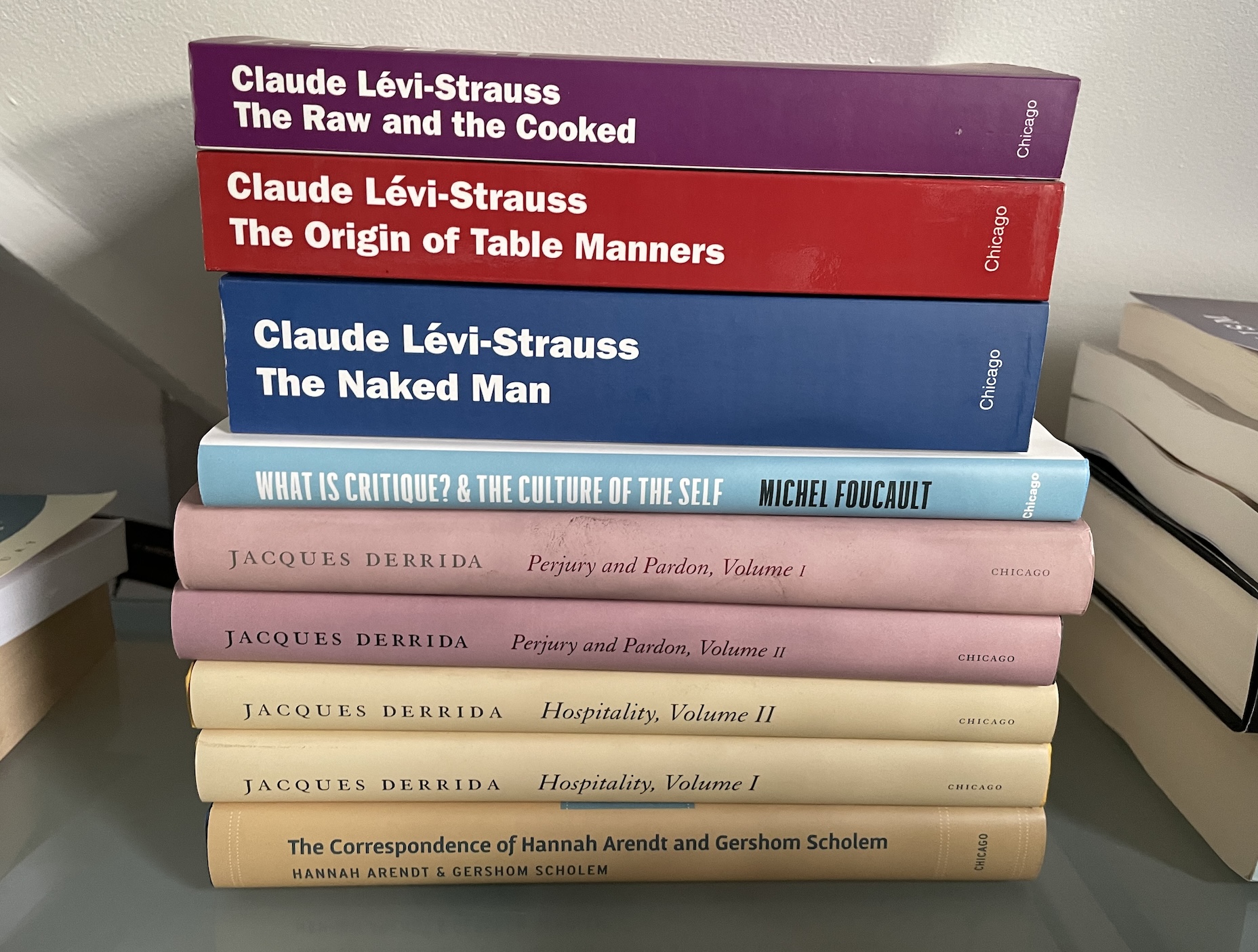
Books sent in recompense for review work for University of Chicago Press – three of the four volumes of Claude Lévi-Strauss’s Mythologies (the other one is out of print), Michel Foucault, What is Critique? and The Culture of the Self, the four most recent volumes of the Derrida seminars, and The Correspondence of Hannah Arendt and Gershom Scholem.

Posted in Claude Lévi-Strauss, Hannah Arendt, Jacques Derrida, Michel Foucault | 1 Comment

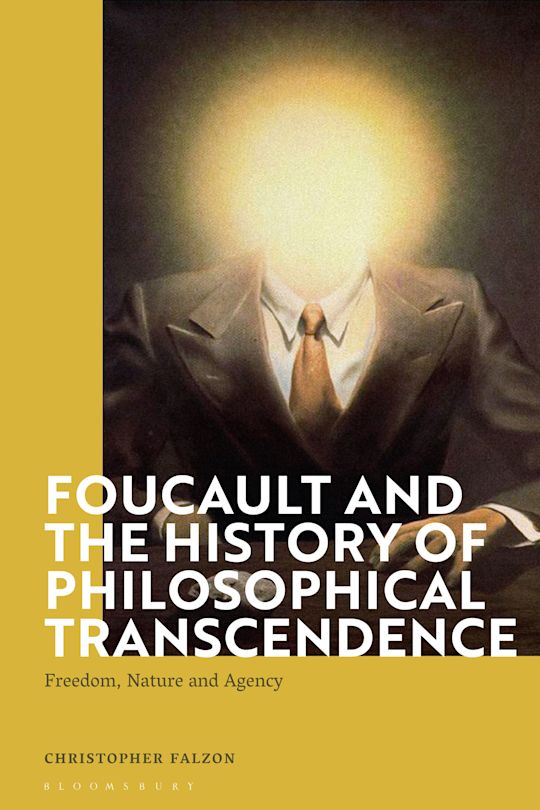
Christopher Falzon, Foucault and the History of Philosophical Transcendence: Freedom, Nature and Agency – Bloomsbury, August 2024

Christopher Falzon, Foucault and the History of Philosophical Transcendence: Freedom, Nature and Agency – Bloomsbury, August 2024

In an original approach to Foucault’s philosophy, Christopher Falzon argues for a reading of Foucault as a philosopher of finite transcendence, and explores its implications for ethics. 

In order to distinguish Foucault’s position, Falzon charts the historical trajectory of transcendence as a philosophical concept, starting with the radical notion of transcendence that was introduced by Plato, and which reappears in various forms in subsequent thinkers from the Stoics to Descartes, and from Kant to Sartre. He argues that Foucault’s critique of the transcendent subject of humanism is a rejection not of transcendence per se but of radical transcendence in its distinctively modern form. As such, he shows how Foucault’s conceptualisation of transcendence as finite enables a picture of the human being as neither fully determined nor a creature of infinite possibilities, but as both subject and object, affected by but also able to affect the world. 

With the notion of finite transcendence Falzon captures the essence of Foucault’s unique philosophy and provides a new insight into his contribution to ethics. Demonstrating its contemporary relevance, Foucault and the History of Philosophical Transcendence further explores the potential application of Foucault’s approach to the current ecological crisis.

Thanks to Foucault News for the link.

Posted in Uncategorized | Leave a comment

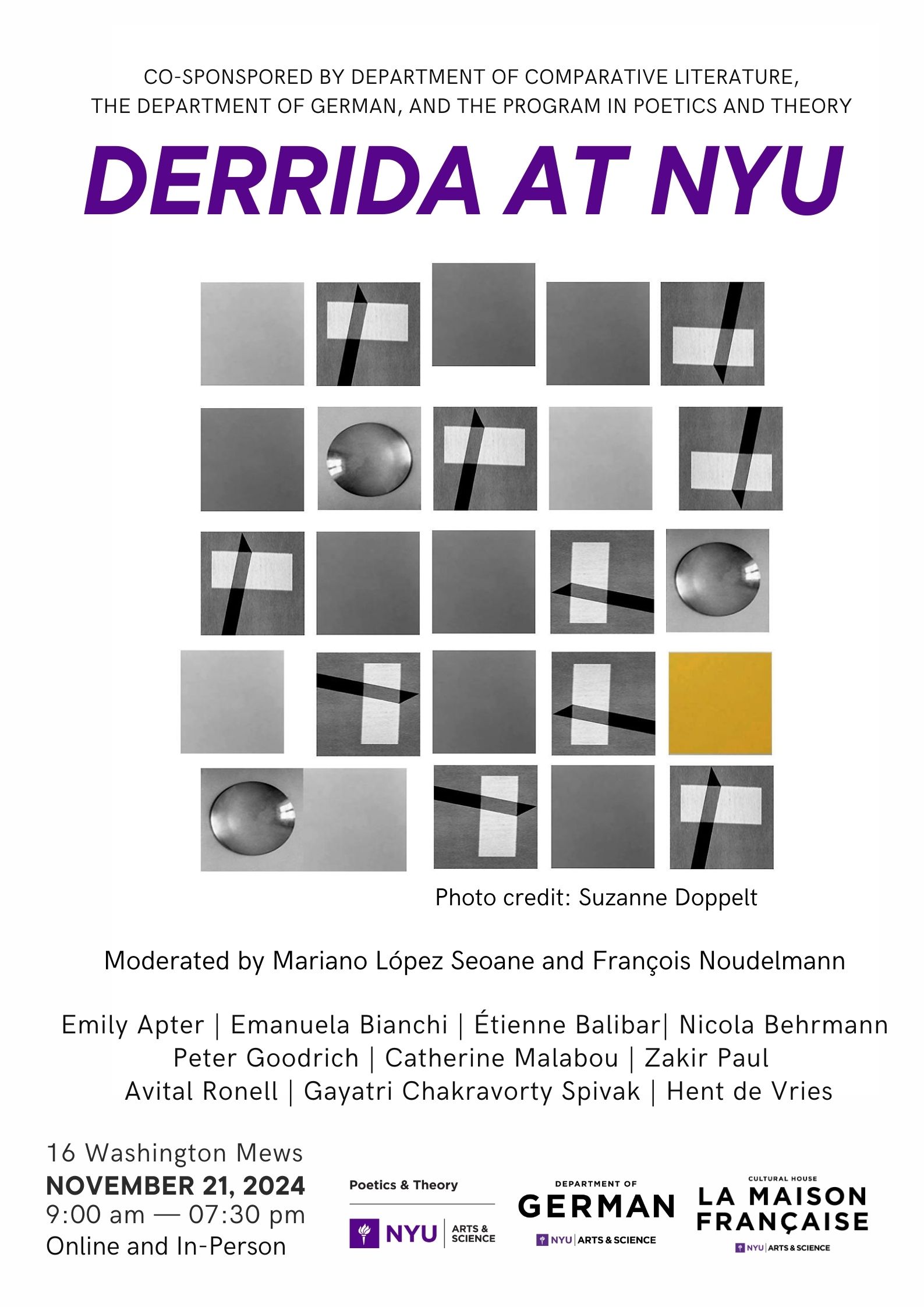
Derrida at NYU, 21 November 2024 – online and in-person

Derrida at NYU, 21 November 2024 – online and in-person

Posted in Jacques Derrida | Leave a comment

Marta Dyczok, Ukraine not ‘the’ Ukraine – Cambridge University Press, November 2024

Marta Dyczok, Ukraine not ‘the’ Ukraine – Cambridge University Press, November 2024

pdf free online until 13 December 2024

This Element is a historical tour of Ukraine from the medieval Kyivan prince Volodymyr the Great through to Ukraine’s twenty-first-century rock star president Volodymyr Zelensky. It presents Ukraine as an actor, not a pawn, in international history. And it focuses on people. In the past, historians wrote about Ukraine from a colonial perspective that portrayed it as a region, not its own entity. This shaped the way people thought about Ukraine and created mental maps where it was just part of something else. Put in contemporary terms, Ukraine was subjected to a historical disinformation war. This Element joins voices that are decolonizing that way of thinking by drawing a different mental map, one where Ukraine exists as itself. It explains how the people living on its lands have their own distinct history, how they shaped it, were shaped by it, and had an impact on both European and global history.

Posted in Uncategorized | Leave a comment

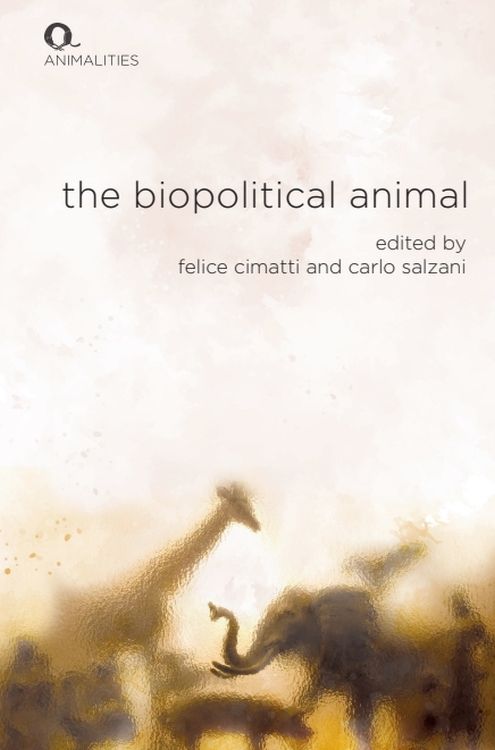
Felice Cimatti and Carlo Salzani (eds.), The Biopolitical Animal – Edinburgh University Press, November 2024

Felice Cimatti and Carlo Salzani (eds.), The Biopolitical Animal – Edinburgh University Press, November 2024

No description on the EUP website, so here’s the table of contents – shame about the price.

Introduction: What is a Biopolitical Animal? – Felice Cimatti and Carlo Salzani

Part I: The Animal of Biopolitics

Chapter 1: Turning Back to Nature: Foucault and the Practice of Animality – Matthew Calarco

Chapter 2: Community and Animality in the Ancient Cynics – Vanessa Lemm

Chapter 3: Biopolitics of COVID-19 and the Space of Animals: A Planetary Perspective – Miguel Vatter

Chapter 4: How to Chirp like a Cricket: Agamben and the Reversal of Anthropogenesis – Sergei Prozorov

Chapter 5: Animality and Inoperativity: Interspecies Form-of-Life – Sherryl Vint

Part II: Tales of Biopolitics and Animality

Chapter 6: Restraining Biopolitics: On Dino Buzzati’s Living Animals – Timothy Campbell

Chapter 7: Cages and Mirrors: Mr. Palomar and the Albino Gorilla – Serenella Iovino

Chapter 8: Bunnies and Biopolitics: Killing, Culling and Caring for Rabbits – David Redmalm and Erica von Essen

Chapter 9: Deading Life and the Undying Animal: Necropolitics After the Factory Farm – James K. Stanescu

Chapter 10: Factory Farms for Fishes: Aquaculture, Biopolitics and Resistance – Dinesh Wadiwel

Part III: Reconceptualising Biopolitics

Chapter 11: Imagining Liberation beyond Biopolitics: The Biopolitical ‘War against Animals’ and Strategies for Ending It – Zipporah Weisberg

Chapter 12: Animal Magnetism: (Bio)Political Theologies Between the Creature and the Animal – Diego Rossello

Chapter 13: Creaturely Biopolitics – Carlo Salzani

Chapter 14: A Dog’s Life: From the Biopolitical Animal to the Posthuman – Felice Cimatti

Afterword: Locating Race and Animality amidst the Politics of Interspecies Life – Neel Ahuja

Posted in Uncategorized | Leave a comment

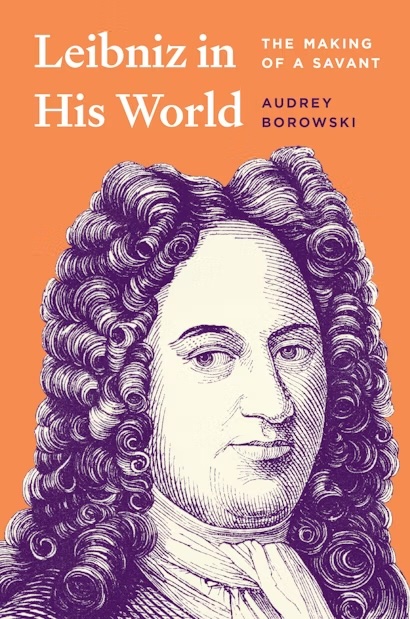
Audrey Borowski, Leibniz in His World: The Making of a Savant – Princeton University Press, November 2024

Audrey Borowski, Leibniz in His World: The Making of a Savant – Princeton University Press, November 2024

Described by Voltaire as “perhaps a man of the most universal learning in Europe,” Gottfried Wilhelm Leibniz (1646–1716) is often portrayed as a rationalist and philosopher who was wholly detached from the worldly concerns of his fellow men. Leibniz in His World provides a groundbreaking reassessment of Leibniz, telling the story of his trials and tribulations as an aspiring scientist and courtier navigating the learned and courtly circles of early modern Europe and the Republic of Letters.

Drawing on extensive correspondence by Leibniz and many leading figures of the age, Audrey Borowski paints a nuanced portrait of Leibniz in the 1670s, during his “Paris sojourn” as a young diplomat and in Germany at the court of Duke Johann Friedrich of Hanover. She challenges the image of Leibniz as an isolated genius, revealing instead a man of multiple identities whose thought was shaped by a deep engagement with the social and intellectual milieus of his time. Borowski shows us Leibniz as he was known to his contemporaries, enabling us to rediscover him as an enigmatic young man who was complex and all too human.

An exhilarating work of scholarship, Leibniz in His World demonstrates how this uncommon intellect, torn between his ideals and the necessity to work for absolutist states, struggled to make a name for himself during his formative years.

Thanks to John Raimo for the link.

Posted in Gottfried Leibniz, Uncategorized | Leave a comment

Call for Abstracts – Michel Foucault and Phenomenology: The Southern Journal of Philosophy Workshop March 27-28, 2025, The University of Memphis

Call for Abstracts: Michel Foucault and Phenomenology

The Southern Journal of Philosophy Workshop March 27-28, 2025, The University of Memphis

Keynote Speakers: Philippe Sabot, Elisabetta Basso, Christophe Bouton

The Southern Journal of Philosophy
https://foucault40.info

How is Michel Foucault’s thought related to the tradition of phenomenology? Studies addressing this question have been overshadowed by scholarship that considers Foucault’s work in relation to other movements in continental philosophy such as critical theory, Marxism, structuralism, and post-structuralism. When the question has been broached, scholars have straightaway had to confront Foucault’s sometimes dismissive, if not hostile, attitude towards phenomenological approaches. For instance, in a 1967 interview (“Who are you, Professor Foucault?”), Foucault describes phenomenology as a totalizing method whose universalist claims seek to account for meaning and knowledge formation through an analysis limited to the lived experience of the transcendent subject. Later, he describes his method of archaeology as aiming “to free history from the grip of phenomenology” (The Archaeology of Knowledge [1969]). However, the basis for well-founded replies to the question has very recently been significantly augmented by the publication of three early Foucault texts. These works represent Foucault’s richest engagement with this tradition and demonstrate a remarkable depth and precision to his early study of phenomenology that were not apparent from his previously published work:

Binswanger et l’analyse existentielle (Binswanger and Existential Analysis), edited by Elisabetta Basso, Seuil/Gallimard, May 2021;

Phénoménologie et psychologie, 1953-1954 (Phenomenology and Psychology, 1953-1954), edited by Philippe Sabot, Seuil/Gallimard, November 2021;

La constitution d’un transcendantal historique dans la Phénoménologie de l’esprit de HegelMémoire du diplôme d’études supérieures de philosophie (The Constitution of a Historical Transcendental in Hegel’s Phenomenology of Spirit. Graduate Degree Philosophy Thesis), edited by Christophe Bouton, Vrin, February 2024.

These texts are crucial sources for re-evaluating Foucault’s relation to phenomenology. Our hope is that an event which examines these writings, with keynote addresses from the editors of these three volumes, will help to cultivate exchanges and dialogues that may have previously been stymied by the prominence of Foucault’s more pointed objections to phenomenological approaches.

The Southern Journal of Philosophy workshop aims to provide a timely forum to take the measure of Foucault’s thought on phenomenology, broadly speaking, and to expand and develop a dialogue between Foucault’s philosophy and phenomenology that is both retrospective and prospective. We invite papers that focus on the three recent publications listed above, or on the relationship between Foucault’s thought and phenomenology in general. Papers delivered at the conference will also be published in a peer-reviewed special issue of The Southern Journal of Philosophy (see below for details).

Full details here; thanks to Foucault News for the alert.

Posted in Ludwig Binswanger, Michel Foucault | Leave a comment

Michael Hardt, The Subversive Seventies – Oxford University Press, September 2023 and New Books discussion

Michael Hardt, The Subversive Seventies – Oxford University Press, September 2023

Discussion with Hardt at the New Books Network with Morteza Hajizadeh.

Thanks to Dave Beer for the links.

A thought-provoking reconsideration of how the revolutionary movements of the 1970s set the mold for today’s activism.

The 1970s was a decade of “subversives”. Faced with various progressive and revolutionary social movements, the forces of order—politicians, law enforcement, journalists, and conservative intellectuals—saw subversives everywhere. From indigenous peasant armies and gay liberation organizations, to anti-nuclear activists and Black liberation militants, subversives challenged authority, laid siege to the established order, and undermined time-honored ways of life. Every corner of the left was fertile ground for subversive elements, which the forces of order had to root out and destroy—a project they pursued with zeal and brutality. 

In The Subversive Seventies, Michael Hardt sets out to show that popular understandings of the political movements of the seventies—often seen as fractious, violent, and largely unsuccessful—are not just inaccurate, but foreclose valuable lessons for the political struggles of today. While many accounts of the 1970s have been written about the regimes of domination that emerged throughout the decade, Hardt approaches the subversive from the perspectives of those who sought to undermine the base of established authority and transform the fundamental structures of society. In so doing, he provides a novel account of the theoretical and practical projects of liberation that still speak to us today, too many of which have been all but forgotten. 

Departing from popular and scholarly accounts that focus on the social movements of the 1960s, Hardt argues that the 1970s offers an inspiring and useful guide for contemporary radical political thought and action. Although we can still learn much from the movements of the sixties, that decade’s struggles for peace, justice, and freedom fundamentally marked the end of an era. The movements of the seventies, in contrast, responded directly to emerging neoliberal frameworks and other structures of power that continue to rule over us today. They identified and confronted political problems that remain central for us. The 1970s, in this sense, marks the beginning of our time. Looking at a wide range of movements around the globe, from the United States, to Guinea Bissau, South Korea, Chile, Turkey, and Italy, The Subversive Seventies provides a reassessment of the political action of the 1970s that sheds new light not only on our revolutionary past but also on what liberation can be and do today.

Posted in Uncategorized | Leave a comment

Cristina Vatulescu, Reading the Archival Revolution: Declassified Stories and their Challenges – Stanford University Press, November 2024

Cristina Vatulescu, Reading the Archival Revolution: Declassified Stories and their Challenges – Stanford University Press, November 2024

The opening of classified documents from the Soviet era has been dubbed the “archival revolution” due to its unprecedented scale, drama, and impact. With a storyteller’s sensibility, Cristina Vatulescu identifies and takes on the main challenges of reading in these archives.

This transnational study foregrounds peripheral Eastern European perspectives and the ethical stakes of archival research. In so doing, it contributes to the urgent task of decolonizing the field of Eastern European and Russian studies at this critical moment in the region’s history. Drawing on diverse work ranging from Mikhail Bakhtin to Tina Campt, the book enters into broader conversations about the limits and potential of reading documents, fictions, and one another. Pairing one key reading challenge with a particularly arresting story, Vatulescu in turn investigates Michel Foucault’s traces in Polish secret police archives; tackles the files, reenactment film, and photo albums of a socialist bank heist; pits autofiction against disinformation in the secret police files of Nobel Prize laureate Herta Müller; and takes on the digital remediation of Soviet-era archives by analyzing contested translations of the Iron Curtain trope from its 1946 origins to the current war in Ukraine. The result is a bona fide reader’s guide to Eastern Europe’s ongoing archival revolution.

Posted in Uncategorized | Leave a comment

Jenny Turner reviews Gillian Rose, Marxism Modernism and Love’s Work at London Review of Books

Jenny Turner reviews Gillian Rose, Marxism Modernism and Love’s Work at London Review of Books

Posted in Gillian Rose, Uncategorized | Leave a comment