Marie-Eve Morin on Jean-Luc Nancy

Polity has a page up for Marie-Eve Morin’s book on Nancy.

Jean-Luc Nancy is one of the leading contemporary thinkers in France today. Through an inventive reappropriation of the major figures in the continental tradition, Nancy has developed an original ontology that impacts the way we think about religion, politics, community, embodiment, and art.

Drawing from a wide range of his writing, Marie-Eve Morin provides the first comprehensive and systematic account of Nancy’s thinking, all the way up to his most recent work on the deconstruction of Christianity. Without losing sight of the heterogeneity of Nancy’s work, Morin presents a concise articulation of the organizing concepts, which structure Nancy’s body of work. The guiding thread is that of an essential rift at the heart of any “self” by which this self is exposed and relates to itself and other selves. Nancy’s ontology undercuts dichotomies between individual and community, interior and exterior, matter and spirit, thing and thought, not in the name of mere deconstruction, but in seeking to open a thinking of the “limit” or the “edge” as the locus of sense. While Nancy’s work has often been presented in relation to Heidegger or Derrida, Morin demonstrates the originality of Nancy’s work and argues that, despite the variety of its preoccupations and topics, it possesses its own rigorous internal logic.

This book will be of interest to students and scholars of philosophy and related fields who seek a systematic and critical understanding of one of the most original contemporary thinkers.

Posted in Jean-Luc Nancy, Marie-Eve Morin | Leave a comment

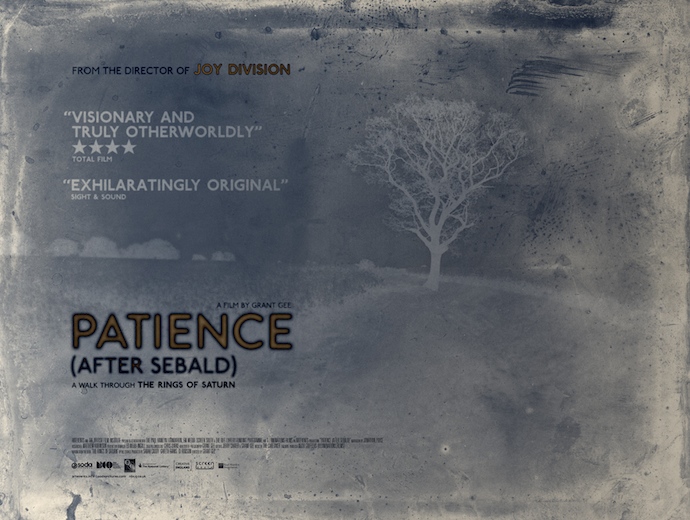
Patience (After Sebald)

An interesting, though slow, documentary film taking W.G. Sebald’s Rings of Saturn as its basis.

Rings of Saturnwas the first of Sebald’s books I read, and since I grew up in East Anglia – born in Ipswich and relatives there and in Lowestoft – it was a powerful read. Reading it in Singapore possible helped make connections to my past given that the book was more familiar than my everyday surroundings.

Lots of reviews online – The New York Times has a good one. It mentions Teju Cole at the end – a Nigerian writer I’ve been reading recently (Open City is in the ‘to read’ pile; and Everyday is for the Thief I read on the recent trip to Paris).

Biblioklept offers a more critical take on the film here.

Posted in Books | Leave a comment

The last part of the interview is here.

Posted in Judith Butler, Uncategorized | Leave a comment

London Conference in Critical Thought

Birkbeck, 29-30 June 2012 -programme here; more details here. Papers on art, spaces, human rights, animals, bodies, Marx, Foucault, Deleuze, etc. etc.

Posted in Conferences, Gilles Deleuze, Karl Marx, Michel Foucault | Leave a comment

Althusser, Lenin and Philosophy discussion

The discussion that followed Althusser’s famous ‘Lenin and Philosoophy’ lecture is freely available here, in Ted Stolze’s translation. Jean Wahl, Jean Hyppolite, Paul Ricoeur and others asking questions – thanks to David McInerney for the link.

Posted in Jean Hyppolite, Louis Althusser | Tagged , | Leave a comment

Call for Papers : Foucault and Mobilities Research

A Two-Day Symposium, 6th and 7th of January 2013, Lucerne, Switzerland

The publication in English and in German of Michel Foucault’s lectures at the Collège de France in the years 1970-1984 has been a key driver of the recent renaissance of research inspired by his work across the social sciences. As part of this, sociologists, geographers and others in the academic world have begun to draw on and work with a wider range of Foucauldian concepts than in earlier studies. Foucault’s thinking on power/knowledge, panopticism, discourse, the role of the sciences, and so on still resonates strongly across the social sciences but it is the topics that he lectured on at the Collège that arguably attract the bulk of attention: a surge of interest has occurred among social scientists in his writings on apparatuses/dispositifs, governmentality, self-government and ethics to name but a few concepts. The translation of the lectures into German and English has also brought to the fore a greater focus on the liveliness of the world, the non-discursive realm, materiality and resistance than Foucault is usually credited for. In fact, and as Philo (2012) has noted, the lectures show more than his published books that Foucault was closer to Deleuze than is often assumed.

Foucault’s work has been employed and embraced enthusiastically by ‘mobilities’ scholars (e.g. Adey, 2009; A. Jensen, 2011; Merriman, 2007; Paterson, 2008, Richardson and Jensen, 2008; Schwanen et al, 2011; Manderscheid, 2012). It can nonetheless be argued that mobilities researchers have not yet fully explored or exhausted the potential of Foucault’s philosophy for understanding mobilities. Against this background we seek to bring together scholars from across the social sciences with a shared interest in both mobilities and Foucauldian thinking. Mobilities are here understood broadly as the flows (or lack thereof) of people, artefacts, money, ideas, practices, and so on across a wide variety of spatial and temporal scales, both in contemporary societies or in the past. More specifically, we are soliciting conceptual and/or empirical papers that address one or several of the following topics or a related theme:

–          The governmentalities that shape mobilities

–          The government of im/mobile others and selves

–          Mobility dispositifs

–          Mobile subjectivities

–          Formation and contestation of material landscapes of mobilities

–          Ethics of mobility and mobile ethics

–          Discourses surrounding and underpinning mobilities

–          Mobilities as an object of knowledge

–          The ‘disciplining’ of mobilities

–          Techniques of im/mobility and im/mobile techniques

–          Conceptualisation of mobilities in regards to biopolitics and territory

The two-day symposium aims at connecting scholars from different disciplines with an interest in this range of topics. If you are interested in participating in this event with a paper, we ask that you prepare an abstract of no more than 250 abstract and send this to one of the organisers no later than 10th of June 2012.

Katharina Manderscheid, Lucerne University(katharina.manderscheid@unilu.ch)

Tim Schwanen, University of Oxford(tim.schwanen@ouce.ox.ac.uk)

David Tyfield, Lancaster University(d.tyfield@lancaster.ac.uk)

Posted in Conferences, Michel Foucault | 2 Comments

Deleuze in Taiwan

Authorized by the journal Deleuze Studies, the First International Deleuze Studies in Asia Conference will be held in Tamsui, a historic site in the Taipei Metropolitan area, May 31-June 2, 2013. Deleuze Studies has also authorized The International Deleuze Studies Conferences that have been held worldwide consecutively for four years. The deadline for paper or panel proposal will be September 1, 2012. Prior to the Conference, there will be a Deleuze Camp, May 25-29, 2013. While the camp addresses a wide range of issues related to Deleuze studies, the conference focuses on, though not limited to, the theme of Creative Assemblages. For this theme, there are no other places more befitting than Tamsui to host this first ever Deleuze conference in Asia. [more here]

Posted in Conferences, Gilles Deleuze | Leave a comment

Tim Cresswell’s new book – sounds interesting.

tjcresswell's avatarVarve

I have not written much on this blog for a while. I have been belatedly finishing a book on Geographic Thought I have been writing for about five years. It is delivered! It has been an irritant at times but mostly a labour of love. Just to wet your appetite I attach the first few pages of the final draft…

Introduction (extract), Geographic Thought: A Critical Introduction (Blackwell, 2013)

If the scientific investigation of any subject be the proper avocation of the philosopher, Geography, the science of which we propose to treat, is certainly entitled to a high place…

(Strabo 1912 [AD 7-18]: 1)

Geography is a profound discipline. To some this statement might seem oxymoronic. Profound geography seems as likely as ‘military intelligence’. Geography is often the butt of jokes in the United Kingdom. A school friend of mine who was about the start a degree in…

View original post 968 more words

Posted in Uncategorized | Leave a comment

Judith Butler interview

Interview in advance of her talk ‘A Politics of the Street’ in Vancouver.

Posted in Judith Butler, Politics | Leave a comment

Posted in Uncategorized | 1 Comment