On peer review

A post on the difficulty of getting reports, here; and a post on how it’s not really a huge amount of work, with interesting comments, here. Another post raises the issue of who is asked to referee. And finally, a proposal to abolish it altogether.

I’m unconvinced by the last. Yes, peer review has its problems, not least the generalised unwillingness of people to do it, often by the same people who are creating the need for it, i.e. authors. I’ve written about this in an editorial before, and recently wrote a short piece for the Society and Space open site about referees, following a piece by Felix Driver in Journal of Historical Geography. I sense that this will run and run, but here’s a paragraph from the Society and Space open site piece:

It is easy to be critical of reviewers, and there are, of course, bad reports and bad referees. Getting reports on a paper, getting those reports on time, and good reports, is one of the biggest challenges for journal editors and managers. But the idea is one that is difficult to envision being abandoned. It is increasingly fashionable to complain about the review, production and editing process of journals, and to praise open access publishing and blogs as means of disseminating information. While there can be very good editorial standards in open access journals – in related fields, see, for example Surveillance and Society and Acme: An International E-Journal for Critical Geographies – these are never ‘free’. They exist on the good will of editors, voluntary labour from others, and of course, on referees. If you think that the refereeing, editorial and publisher production process adds little, consider a journal that includes the next ten papers submitted to it, inappropriate or not, rough and ready, unedited and simply in the form they arrive, and compare that to the finished next issue of that journal. I can guarantee you are more likely to read the latter. Refereeing is an essential part of that process.

I wonder if there is something else the status getting into a peer-reviewed journal means – exposure for earlier career researchers. If everything was up on personal sites, or general, unreviewed depositories, then perhaps established people would have readers. But how would you tell whose personal site was worth reading; and in the general site among the huge amounts, why would you read X when you can read Y, perhaps on the same subject? You may have read a less good piece, but how would you know unless you read everything? I think that anything in Society and Space, regardless of author, is worth reading. And in terms of having different modes of review concerning material uploaded, it looks like it would be re-inventing the wheel: “other scholars (perhaps a pre-selected board?)”… “journal editors pick papers”… “what would a referee’s motivation be?”… “what if sites allowed qualified professionals to submit brief comments”…

The one thing that is compelling is the question of why review things twice. I’ve thought the same thing as I review tenure files for the US, write evaluation letters on published scholarship, not to mention the British research assessment exercise…

Posted in Publishing, Society and Space | 2 Comments

Agamben, Opus Dei in French

Agamben’s Opus Dei – volume II, 5 of the Homo Sacer project – has been translated into French. Why is it the French seem to always be quicker at translations than the English or American presses? I can’t find an English translation listed anywhere. It was the same with The Kingdom and the Glory, which I read in French a couple of years before the English version was published.

Does anyone know of a site that lists the order and plan for the Homo Sacer series?

There are a lot of videos of Agamben talking about this project and much else, here.

Posted in Giorgio Agamben | 4 Comments

Canguilhem, Complete Works

Volume 1 of Georges Canguilhem’s Œuvres complètes was published late last year. Given it is over 1,000 pages, the price of €38 is not too steep. There are projected to be six volumes. This has been promised for some time.

Canguilhem is perhaps best known today through the Foucault link, but he is a very interesting philosopher and historian of medicine and the life sciences.

Posted in Georges Canguilhem, Michel Foucault | Leave a comment

Shakespeare cartoons

Cliffs Notes have cartoon versions of six of Shakespeare’s plays, here. Currently Othello, Hamlet, Macbeth, Romeo & Juliet, A Midsummer Night’s Dream, and Julius Caesar. Not to be taken too seriously… (Via Julia Reinhard Lupton’s Thinking with Shakespeare blog.)

Posted in William Shakespeare | Leave a comment

Henry Miller’s advice for writers

This has been doing the rounds, I got it from Biblioklept.

Posted in Uncategorized | 1 Comment

The Epic Mode and Territory

This is a question I received that I can’t answer – anyone reading this have a sense of whether this has been done, is possible, or plausible? The request comes from Joel Gladd (jgladd@wisc.edu) but do please reply through comments. The initial request said:

I gathered – from the posts on The Birth of Territory – that you would know of an explicit connection between the traditional epic mode (e.g., as articulated by Hegel in his Lectures on Aesthetics) and techniques of territoriality.

When I confessed I didn’t know, I asked for a further elaboration before posting here:

My dissertation chapters are structured around historical novels in the American Naturalist tradition (roughly, 1890s-1920s).  Part of the conceptual labor involves a genealogy of the American historical novel, and the historical novel more generally.  Lukács famously appropriates Hegel’s dialectical reading of the epic mode (e.g., from the collected Lectures on Aesthetics, Vol. II of the Harris translation) for his Marxist interpretation of the historical novel, but I prefer to borrow from Hegel more directly, rather than through the Frankfurt School.  
 
The recent Lefebvre- & Foucault-inspired understanding of territoriality in Geography Studies (rigorously delimited by you) seems to provide some of the concepts for handling a Hegelian reading of the epic mode and its genealogical link with the historical novel, esp. in how Hegel connects a centered national consciousness with a specific area carved out of Nature.  In fact this seems so obvious that I assume there must be something already published that specifically links ‘territoriality’ with the epic mode.  This is somewhat outside of my field, however, and I was hoping you might have suggestions for where to look?    
 
You may include my name & email if this request is posted.  
Posted in Georg Wilhelm Friedrich Hegel, Henri Lefebvre, Michel Foucault, Territory, The Birth of Territory | 4 Comments

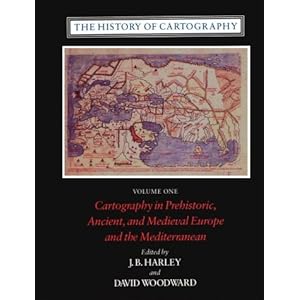
The History of Cartography – now free online

The University of Chicago Press have made volume 1 and the three books of volume 2 of the magisterial History of Cartography freely available online. The homepage for the project as a whole is here.

Posted in Medieval Studies, Publishing | Leave a comment

Harvey on Capital, Vol II

The first lecture is now up, here. There is a brief interview at the beginning, and then something of an overview to follow.

Posted in David Harvey, Karl Marx | Leave a comment

The Ontological Turn in Contemporary Philosophy

Third Annual International Summer School in German Philosophy: “The Ontological Turn in Contemporary Philosophy” (July 2-13, 2012) at the Rheinische Friedrich-Wilhelms-Universität Bonn.

Speakers include Ray Brassier, Iain Hamilton Grant, Martin Hägglund, Graham Harman and Slavoj Zizek.

What is the world? What do we mean when we speak of the world in philosophy and claim things such as true thought being about the world? Is the world “out there,” as Bernard Williams and Adrian Moore’s “absolute conception of reality” suggest or is it a horizon or regulative ideal guiding our epistemic practices?

In metaphysics, ontology, and epistemology it is common to speak of the world without bothering to explicate what this term means. Even though it features in debates concerning our access to the external world and even in book titles like Mind and World, it usually does not seem to express more than the vague realist assumption or platitude that not all objects or facts are made up, hallucinated, or in some way or another constructed by thinking subjects. Much of the 20th century’s linguistic turn, both in the analytical and in the hermeneutical/phenomenological traditions, assumes that the world is what we have access to with truth-apt thought, yet also is that which might be distorted by our attempts to grasp it as it is in itself. Over the last decade, many voices (such as Hilary Putnam, Stanley Cavell, Alain Badiou, Quentin Meillassoux and Paul Boghossian, to name a few) have urged that the overall territory of the debate regarding the position of thinking in a world of facts is fundamentally confused by missing the very facticity of the world. This has triggered a thoroughgoing return to realism, prominently figuring in the thought of the avant-garde movement of “speculative realism” or “speculative materialism,” as it has been labeled. Interestingly, the debates often associated with Badiou’s ontology and the critique of all transcendental philosophy in Meillassoux’s After Finitude have, in a recent turn, led to a reassessment of German idealism, for example in the work of Markus Gabriel, Iain Hamilton Grant, and Slavoj Zizek. On a closer look, it turns out the Fichte, Schelling, and Hegel’s criticisms of Kant can be read as attempts to overcome transcendental epistemology and themselves motivate an ontological turn.

This year, we will discuss an array of perspectives on the ontological turn developed by the organizer and visiting professors in recent work. In particular, we will address the concepts of speculative philosophy, the relation between transcendental philosophy and ontology in general, the issue of contemporary forms of realism and materialism, and the prospects for a suitably realist or materialist reading of figures such as Schelling, Hegel, and Derrida. The philosophers assembled will present and discuss their recent work in the form of a lecture followed by a seminar. Everyone admitted to the Summer School will receive a reader with texts to be prepared before arrival.

More details here (via here)

Posted in Conferences, Graham Harman, Slavoj Zizek | 2 Comments

Society and Space new issue

A new issue of Society and Space is now out – includes a theme section of essays on the Swiss geographer Claude Raffestin, edited by Francisco Klauser. Full table of contents here.

Posted in Claude Raffestin, Society and Space | Leave a comment