Tracing the metaphor of America as the Book of Revelation’s New Jerusalem, Yii-Jan Lin shows how apocalyptic narratives have been used to exclude unwanted immigrants
America appeared on the European horizon at a moment of apocalyptic expectation and ambition. Explorers and colonizers imagined the land to be paradise, the New Jerusalem of the Bible’s Book of Revelation. This groundbreaking volume explores the conceptualization of America as the New Jerusalem from the time of Columbus to the Puritan colonists, through U.S. expansion, and from the eras of Reagan to Trump.
While the metaphor of the New Jerusalem has been useful in portraying a shining, God-blessed refuge with open gates, it has also been used to exclude, attack, and criminalize unwanted peoples. Yii-Jan Lin shows how newspapers, political speeches, sermons, cartoons, and novels throughout American history have used the language of Revelation to define immigrants as God’s enemies who must be shut out of the gates. This book exposes Revelation’s apocalyptic logic at work in the history of Chinese exclusion, the association of the unwanted with disease, the contradictions of citizenship laws, and the justification for building a U.S.-Mexico wall like the wall around the New Jerusalem.
This book is a fascinating analysis of the religious, biblical, and apocalyptic in American immigration history and a damning narrative that weaves together American religious history, immigration and ethnic studies, and the use of biblical texts and imagery.
An exhaustive introduction to Gilbert Simondon’s oeuvre
Covers all the different areas of Gilbert Simondon’s work
Gathers many established researchers with different perspectives and expertise
A landmark text for students of Simondon’s philosophy
The Edinburgh Companion to Gilbert Simondon displays both the internal coherence of Simondon’s work and its innovative potential in a variety of research fields. The complexity of his philosophical enterprise is rigorously interpreted and made available to researchers that are keen to cross disciplinary boundaries and explore new appropriations of his research. Structured in four distinct sections, the volume hosts a collection of essays penned by scholars who have been working on and through Simondon for several years across different disciplines, including philosophy, psychology, politics, law, media, architecture, economy, and ecology. Topics covered range from individuation, technology, imagination and the transindividual to metastability and more.
Michel Serres, Hermes III: Translation – trans. Randolph Burks, University of Minnesota Press, February 2026
Unlocking the hidden patterns of knowledge—where science, art, and philosophy speak a common language
Hermes III: Translation is the third volume in Michel Serres’s renowned Hermes series, an ambitious exploration of the deep interconnections among disparate fields of knowledge. While Hermes II: Interference traced the overlapping echoes of ideas across realms, Hermes III moves to translate the structural logics of one field—be it genetics, painting, or philosophy—into the language of another. Revealing how the humanities, science, and art share hidden combinatory architectures, Serres exposes the underlying unity of knowledge systems typically thought distinct.
Through an array of examples—from Monod’s Chance and Necessity to works by Descartes, Leibniz, Comte, Turner, and Roumain—Serres shows how translation uncovers informational and mathematical patterns that shape both ancient and modern thought. This illuminating methodology leads Serres to issue a stark warning: when knowledge is detached from its guiding purpose, it becomes vulnerable to appropriation by destructive political forces.
Yet Serres’s vision remains ultimately hopeful. By tracing knowledge systems back to their mythic and structural roots, Hermes III: Translation gestures toward more harmonious relationships between fields. A rare synthesis of philosophy, science, art, and literature, this work will engage readers interested in the interdependence of disciplines and the possibilities for a more unified, humane understanding of knowledge.
The future of our species depends on the state. Can states resist corporate capture, religious zealotry, and nationalist mania? Can they find a way to work together so that the earth heals and its peoples prosper? Or is the state just not up to the task? In this book, the prominent political philosopher Philip Pettit examines the nature of the state and its capacity to serve goals like peace and justice within and beyond its borders. In doing so, he breaks new ground by making the state the focus of political theory—with implications for economic, legal, and social theory—and presents a persuasive, historically informed image of an institution that lies at the center of our lives.
Offering an account that is more realist than utopian, Pettit starts from the function the polity is meant to serve, looks at how it can best discharge that function, and explores its ability to engage beneficially in the life of its citizens. This enables him to identify an ideal of statehood that is a precondition of justice. Only if states approximate this functional ideal will they be able to deal with the perennial problems of extreme poverty and bitter discord as well as the challenges that loom over the coming centuries, including climate change, population growth, and nuclear arms.
Today marks thirty years since Gillian Rose died so tragically young, at the age of just 48.
The wall display in the Gillian Rose seminar room at the University of Warwick, with the covers of The Melancholy Science and The Broken Middle, and two photographs of Rose.
I’ve shared these links before, but Marxist Modernism: Introductory Lectures on Frankfurt School Critical Theory, edited by James Gordon Finlayson and Robert Lucas Scott, was published by Verso last year. Love’s Work was reissued by Penguin, and Jenny Turner reviews them both in London Review of Books. There was a discussion of the book and her work generally at the London Review Bookshop with James Butler, Rebekah Howes and Rowan Williams – recording available here.
Earlier this year, as part of the ‘Sunday Histories’ series, I wrote a short piece on Gillian Rose and the Indo-Europeanists – thinking about how books by several of the people I’ve been reading for my current project were in her library, which is now part of the University of Warwick collection, but that the explicit mentions of their work are limited in her publications. My suggestion for the reason was that Rose was working across the Graeco-Christian and Jewish traditions, which Dumézil, Benveniste and Eliade never really did. The Semitic was outside of the language and cultural groups that they were interested in, which is most surprising in the case of Benveniste, who was Jewish and whose parents were teachers for the Alliance israélite universelle. I end with a few thoughts on Maurice Olender’s remarkable book Languages of Paradise, which relates the Semitic and Indo-European language families in some fascinating ways.
Finally, there is a remarkable radio interview The RTE interview of Gillian Rose, which was transcribed and edited by Vincent Lloyd for Theory, Culture and Society in 2008 (requires subscription). While that transcription, and that of Marxist Modernism, give a sense of her spoken style, the recording is irreplaceable.
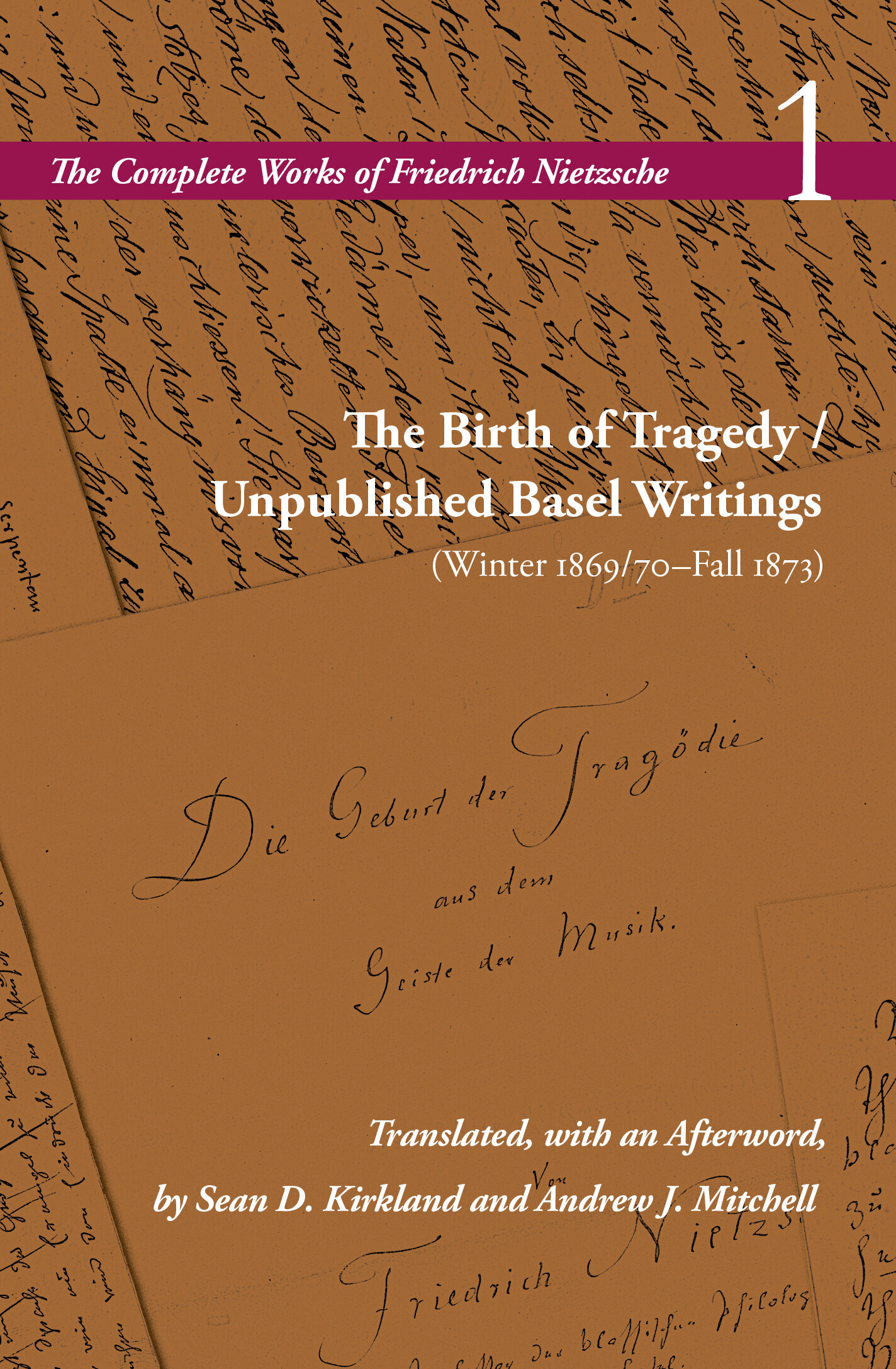
An incisive exploration of Nietzsche as a bold, visionary poet-philosopher.
Today, Nietzsche is justly celebrated for his rich, philosophical naturalism, but Keith Ansell-Pearson warns that we must not overlook the visionary dimension of his thinking and his focus on the need to cultivate a new care of the self and care of life. In Nietzsche’s Earthbound Wisdom, Ansell-Pearson recovers Nietzsche’s love for a philosophy that guides us through our passions, one that opens us more fully to the possibilities of life and the joy of knowledge.
Ansell-Pearson offers close readings of Nietzsche’s texts in conversation with philosophical and literary figures including Augustine, Baudelaire, Carlyle, Dostoevsky, Emerson, Flaubert, Stendhal, and more. Throughout, Ansell-Pearson examines Nietzsche’s sophisticated critique of literary naturalism and his alternative conception of the poet as a seer who has a deep longing for a new earth.
In July 1940, amidst fear of Nazi invasion, HMT Dunera left England. On board were a few British soldiers guarding over 2000 interned male Enemy Aliens, mostly Germans. Some of the internees were passionate Nazis, but most were Jewish refugees. Among them was Stefan Raphael Benjamin, the estranged child of the German-Jewish intellectual, Walter Benjamin.
Cue Walter Benjamin’s Ark which re-reads the life and work of Walter Benjamin via the curious life of his only child. The focal point is Stefan’s dramatic voyage from England to Australia in 1940, a voyage rich in intellectual suggestion, shared as it was with obscure men with famous names such as Wittgenstein, Kafka, Marx and Wilde. Central to the book is the one substantive text that can be ascribed to Stefan: Benjamin’s meticulous transcription of Stefan’s utterances as an infant. This fascinating text has been largely overlooked, despite the insistence of Benjamin’s biographers that ‘it continued to play a role in Walter Benjamin’s writing until the end of his life’. This book thus seeks not only to bring into view the intriguing figure that is Stefan but also to identify him as that most crucial of Benjaminian spectres, namely, the secret ‘you’ or addressee of Benjamin’s writings.
Huguette Fugier’s 1963 book Recherches sur l’expression du sacré dans la langue latine seems little known today, which is unfortunate given its interest and importance. In the opening lines, she describes it is “a study of historical semantics, applied to the Roman notion of the ‘sacred’” (p. 9).
Title page of Recherches sur l’expression du sacré dans la langue latine – my copy is one withdrawn from Durham University library which I found for sale long after I’d left…
Fugier is an intriguing figure. According to the Bibliothèque nationale database, she was born in 1926 and died in 2022. After studying in Lyon and teaching in Grenoble, for most of her career she taught at the University of Strasbourg. She wrote a short piece on recent publications on the sacred in 1980, and wrote the chapter on “Sémantique du «sacre» en latin” in a collective work in 1983. That chapter is something of a summary of her earlier book, with some updated references. She was also a vocal opponent of the Algeria war, and later worked in Côte-d’Ivoire and with Amnesty International (on her biography, this piece by Jeannette Boulay is helpful). She did not work exclusively on Latin, with her later book publications on Malagasy, such as Syntaxe Malgache.
In Archaic Roman Religion, first published in 1966, Georges Dumézil praises the significance of Recherches sur l’expression du sacré dans la langue latine, noting that it had appeared after he had first drafted his text (French, p. 142 n. 1; English Vol I, 129 n. 1), but mentioning it in some notes (French, pp. 143-45 and 574 n. 1; English Vol I, 130-31, Vol II, 583 n. 12). Dumézil was repaying her appreciative assessment of his work which had appeared in the Revue d’histoire et de philosophie religieuse in 1965. She also wrote a positive review of Archaic Roman Religion in 1968. For good or bad she was associated with his approach – Dumézil’s longtime opponent Henrik Wagenvoort saw her as part of an attack on his work (Pietas, p. 250 n. 46), and reviewed Recherches sur l’expression du sacré quite critically in Gnomon in 1966. Her work preceded the publication of Émile Benveniste’s Vocabulaire, though that book was based on earlier lectures, and he does not cite her work. She references his work in her 1983 chapter on the topic.
In Homo Sacer Giorgio Agamben indicates the importance of Recherches sur l’expression du sacré:
In a well-documented study, Huguette Fugier has shown how the doctrine of the ambiguity of the sacred [sacro] penetrates into the sphere of linguistics and ends by having its stronghold there (Recherches, pp. 238–40). A decisive role in this process is played precisely by homo sacer (Homo Sacer: Il potere sovrano e la nuda vita, p. 87; The Omnibus Homo Sacer, p. 67).
In one of the indented asides in his book following shortly afterwards, Agamben notes:
It is interesting to follow the exchanges documented in Fugier’s work between anthropology, linguistics, and sociology concerning the problem of the sacred. Pauly-Wissowa’s “Sacer” article, which is signed by R. Ganschinietz (1920) and explicitly notes Durkheim’s theory of ambivalence (as Fowler had already done for Robertson Smith), appeared between the second edition of Walde’s Wörterbuch and the first edition of Ernout-Meillet’s Dictionnaire. As for Ernout-Meillet, Fugier notes the strict links that linguistics had with the Parisian school of sociology (in particular with Mauss and Durkheim). When Roger Caillois published Man and the Sacred in 1939, he was thus able to start off directly with a lexical given, which was by then considered certain: “We know, following Ernout-Meillet’s definition, that in Rome the word sacer designated the person or the thing that one cannot touch without dirtying oneself or without dirtying” (L’homme et le sacré, p. 22). (Agamben, Homo Sacer, p. 88; The Omnibus Homo Sacer, p. 67).
This is the only reference he makes to her work in this book and indeed in the whole Homo Sacer series. There are a lot of possible references to explore here, from William Robertson Smith’s Lectures on the Religion of the Semites (1889) – used by Sigmund Freud in Totem and Taboo –through Alois Walde’s Lateinisches etymologisches Wörterbuch, to Richard Ganschinietz’s article in the Paulys Real-encyclopädie der classischen Altertumswissenschaft, whose later editor was Georg Wissowa. (Often known simply as Pauly-Wissowa, the English translation of Homo Sacer erroneously refers to this work as “Pauly-Wilson”.) The Fowler text mentioned is “The Original Meaning of the Word Sacer”, published in the first issue of The Journal of Roman Studies in 1911. Fowler indicates that “no one will deny that the homo sacer is a survival from a primitive age into one of highly developed civil and religious law. Sacer esto is in fact a curse; and the homo sacer on whom this curse falls is an outcast, a banned man, tabooed, dangerous” (p. 58). As Fowler indicates, Robertson Smith discusses a parallel figure in Semitic contexts (see “Additional Note B”, pp. 446-54).
Agamben also mentions Alfred Ernout and Antoine Meillet’s Dictionnaire étymologique de la langue latine, whose first edition was in1932, which is first quoted directly and then referenced in Caillois’s quotation. In the more recent Gallimard printing of L’Homme et le sacré the passage ison p. 46. In the English translation Man and the Sacred, the definition is rendered as “the one or that which cannot be touched without defilement” (p. 35). The entry on “sacer” appears in the 1951 second edition of Ernout and Meillet’s Dictionnaire on pp. 1033-35, with the words quoted by Caillois and then Agamben on p. 1034: “Sacer désigne celui ou ce qui ne peut être touché sans être souillé, ou sans souiller”, and continues “de là le double sens de ‘sacré’ ou ‘maudit’ [hence the double meaning of ‘sacred’ or ‘cursed/damned’]”.
These references connect in multiple ways to my current research – Meillet was one of Benveniste and Dumézil’s teachers, and when I’ve spoken about their work I’ve suggested that their early formation can be understood both within a French linguistic tradition and a sociological-anthropological one, of which Henri Hubert and Marcel Mauss are the key figures in the generation after Durkheim. Caillois gave five lectures at the École Pratique des Hautes Études in February-March 1939 which became Man and the Sacred. They were given in the middle of a Dumézil course which became his Mitra-Varunain 1940. Dumézil uses analyses from the Pauly-Wissowa Encyclopedia in that book – when I was editing the recent edition of that text, it took me some time to find an incorrect reference in it, as I mention here.
The section being referenced by Agamben to Fugier’s book is “Réflexion de méthode”, and it does indeed reference all the works Agamben indicates. Fugier also mentions Theodor Mommsen’s Römisches Strafrecht [Roman Criminal Law] – her reference is to Vol III, p. 235 n. 1, which I think it is p. 901 n. 3 of the composite edition, with a discussion that continues to 902 nn. 1-2. Fugier also indicates Durkheim’s The Elemental Forms of Religious Life, mentioned by Ganschinietz, and concerning the links between the French sociological school and the linguistic tradition points to Joseph Vendryes’s obituary of Meillet (see especially pp. 25-26, 33-34).
The main classical source for a definition of the notion of a homo sacer comes from Sextus Pompeius Festus. This is quoted, for example, by Agamben himself: “homo sacer is est, quem populus iudicavit ob maleficium; neque fas est eum immolari, sed qui occidit parricidi non damnatur [The sacred man is the one whom the people have judged on account of a crime. It is not permitted to sacrifice this man, yet he who kills him will not be condemned for homicide]” (Homo Sacer, p. 79; The Omnibus Homo Sacer,p. 61).
The passage from Festus also appears in Benveniste’s Vocabulaire, immediately after a discussion of Hubert and Mauss, where Benveniste glosses the quotation as:
A man who is called sacer is stained with a real pollution which puts him outside human society: contact with him must be shunned. If someone kills him, this does not count as homicide. The homo sacer is for men what the sacer animal is for the gods: neither has anything in common with the world of men (French, Vol I, p. 189; English p. 461).
In interpreting this phrase Agamben also makes use of Harold Bennett’s 1930 analysis in “Sacer esto”. Bennett’s conclusion is important: “the pronouncement of the death sentence by the people was in the later part of the Republic almost unknown, and with its virtual disappearance the sacer homo became the subject of an antiquarian’s definition rather than a figure of Roman life” (p. 18).
It is also worth noting that Festus’ definition is actually a sentence in an entry about Sacer Mons, a sacred mountain consecrated to Jupiter (book XVII). Festus’ text is an epitome of a work by Verrius Flaccus, De verborum significatione, and Festus’ epitome mainly survives through a further epitome by Paul the Deacon. Only part of a manuscript of Festus’ text survives. The edition used by Agamben is the 1846 bi-lingual Latin-French version by M. A. Savagner – the passage about Sacer Mons is in Volume II, pp. 571-72. This appears to be the only translation of the work into a modern language. Fugier uses Wallace M. Lindsay’s 1913 German edition of the Latin, where the reference is pp. 423-24. There is a more recent edition of the fragmentary manuscript, Il Festo farnesiano, and a commentary on the letter ‘N’, the first to survive in full, by Paolo Pieroni. A Festus Lexicon Project was set up to produce a more reliable text and an English translation, but progress has been slow. Their site is available at the Wayback Machine. Fay Glinister and Clare Woods’s collection Verrius, Festus, & Paul, which developed from that project, is a helpful guide to the history of the texts and debates.
I know relatively few pieces which discuss Fugier alongside Agamben. Thomas Berns, “Du Sacer au Sanctus”, uses Fugier and Benveniste to question some aspects of Agamben’s argument, particularly in terms of stressing the legal rather just religious aspects of sanctus as a sanction (especially, p. 449). Michèle Lowrie indicates that “Agamben cites only Festus because he is not interested in the historical development of these ideas; they are timeless to him” (p. 35 n. 12). That it certainly not the case for Fugier, for Benveniste or Dumézil.
In the abridged Der Kleine Pauly, for the entry on “sacer” Dumézil’s Archaic Roman Religion and Fugier’s Recherches sur l’expression du sacré dans la langue latine are given as two key sources (Vol IV, columns 1486-87). In the most recent edition, DerNeue Pauly, as well as a reference to Fugier, a reference is made to Roberto Fiori, Homo sacer: Dinamica politico-costituzionale di una sanzione giuridico-religiosa [Political and constitutional dynamics of a legal-religious sanction], which is not a book I knew about before (Vol X, column 1195). Fiori’s Homo sacer was published in 1996 and is an almost 600-page major study. There is a useful review by Annie Dubourdieu. Imagine the misfortune of publishing a book on that theme, painstaking and philological, which must have been under way for years, shortly after Agamben’s book of the same title!
In the collection he edited, Autour de la notion de sacer, Thibaud Lanfranchi recognises the importance of Fugier’s work (pp. 7-8, 9-10, 12, 15). He mentions the work of Fiori, among others, and includes a chapter by him in the collection. He sees Agamben’s work as bringing an external perspective, from philosophy, into the more historical and lexical debates about the terms. The hint is that some aspects of Agamben’s work might not stand up to scrutiny by more historically and linguistically trained readers. As has sometimes been said of Foucault too, the danger in these philosophical-historical accounts is that people uncritically accept their representation of the historical past, without doing any more detailed analysis themselves. As has been shown by Robert Jacob, Fugier and Fiori’s much more extensive and thorough analyses would be valuable guides in that work.
References
Giorgio Agamben, Homo Sacer: Il potere sovrano e la nuda vita, Torino: Giulio Einaudi, 1995; Homo Sacer: Sovereign Power and Bare Life, trans. Daniel Heller-Roazen [1998], in The Omnibus Homo Sacer, Stanford: Stanford University Press, 2017.
Harold Bennett, “Sacer esto”, Transactions and Proceedings of the American Philological Association 61, 1930, 5-18.
Émile Benveniste, Le Vocabulaire des institutions indo-européennes, 2 volumes,Paris: Éditions de Minuit, 1969; Dictionary of Indo-European Concepts and Society, trans. Elizabeth Palmer, Chicago: Hau Books, 2016; originally published as Indo-European Language and Society, Coral Gables: University of Miami Press, 1973.
Thomas Berns, “Du Sacer au Sanctus: contre Agamben à partir du droit romain”, Archiv für Rechts-und Sozialphilosophie 102 (3), 2016, 441-54.
Roger Caillois, L’homme et le sacré, Paris:Libraries Ernest Leroux, 1939; second edition, Paris: Gallimard, 1950, Folio Essais, 1989; Man and the Sacred, trans. Meyer Barash, Illinois: The Free Press of Glencoe, 1959.
Hubert Cancik and Helmuth Schneider eds. Der Neue Pauly: Enzyklopädie der Antike, Stuttgart & Weimar: J.B. Metzler, 1996-2003.
Annie Dubourdieu, “R. Fiori. Homo Sacer. Dinamica politico-costituzionale di una sanzione giuridico-religiosa”, Revue de l’histoire des religions 215 (4), 1998, 517-19.
Georges Dumézil, Mitra-Varuna: Essai sur deux representations indo-européennes de la Souveraineté, Paris: Presses Universitaires de France, 1940, second edition Paris: Gallimard, 1948; Mitra-Varuna: An Essay on Two Indo-European Representations of Sovereignty, trans. Derek Coltman, ed. Stuart Elden, Chicago: Hau, 2023 (open access at https://haubooks.org/mitra-varuna/)
Georges Dumézil, La réligion romaine archaïque,Paris: Payot, 1966; second edition, 1974; Archaic Roman Religion, trans. Philip Krapp, Chicago: University of Chicago Press, two volumes, 1970.
Alfred Ernout and Antoine Meillet, Dictionnaire étymologique de la langue latine, Paris: C. Klincksieck,second edition, 1951 [1932].
Sextus Pompeius Festus, Il Festo farnesiano (Cod. Neapol. IV. A.3), ed. Alessandro Moscadi, Firenze: Università degli studi di Firenze, 2001.
Roberto Fiori, Homo sacer: Dinamica politico-costituzionale di una sanzione giuridico-religiosa, Naples: Jovene Editore, 1996.
W. Warde Fowler, “The Original Meaning of the Word Sacer”, The Journal of Roman Studies 1, 1911, 57-63.
Huguette Fugier, Recherches sur l’expression du sacré dans la langue latine, Paris: Les Belles Lettres, 1963.
Huguette Fugier, “Quarante ans de recherches dans l’idéologie indo-européenne: la méthode de Georges Dumézil”, Revue d’histoire et de philosophie religieuse 45, 1965, 358-74.
Huguette Fugier, “G. Dumézil: La religion romaine archaïque, suivi d’un Appendice sur La religion des Étrusques…”, Revue d’histoire et de philosophie religieuses 48 (2), 1968, 182- 85.
Huguette Fugier, “Deux our trois mots sur le sacré”, Revue d’histoire et de philosophie religieuses 60 (1), 1980, 81-84.
Huguette Fugier, “Sémantique du «sacre» en latin”, in Julien Ries et. al., L’expression du sacré dans les grandes religions II: Peuples indo-européens et asianiques, hindouisme, bouddhisme, religion égyptienne, gnosticisme, islam, Louvain-la-Neuve: Centre d’histoire des religions, 1983, 25-85.
Huguette Fugier, Syntaxe Malgache, Louvain: Institut de linguistique de Louvain, 1999.
Richard Ganschienietz, “Sacer”, in Paulys Real-encyclopädie der classischen Altertumswissenschaft, eds. Georg Wissowa, Wilhelm Kroll, and Karl Mittelhaus, Stuttgart: J.B. Metzlerscche Verlagsbuchhandlung, 1931, Band I A,2, columns 1626-29 (available at https://ancientworldonline.blogspot.com/2010/09/emerging-open-access-paulys.html)
Fay Glinister and Clare Woods with J.A. North and M.H. Crawford eds. Verrius, Festus, & Paul: Lexicography, Scholarship, & Society, London: Institute of Classical Studies, 2007.
Robert Jacob, “La question romaine du sacer: Ambivalence du sacré ou construction symbolique de la sortie du droit”, Revue Historique 639, 2006, 523-88.
Thibaud Lanfranchi, “Introduction”, in Thibaud Lanfranchi ed., Autour de la notion de sacer, Rome: Publications de l’École française de Rome, 2017, 7-16, https://books.openedition.org/efr/3374
Paolo Pieroni, Marcus Verrius Flaccus’ De significatu verborum in den Auszügen von Sextus Pompeius Festus und Paulus Diaconus: Einleitung und Teilkommentar(154,19-186,29 Lindsay), Frankfurt & Oxford: Lang, 2004.
William Robertson Smith, Lectures on the Religion of the Semites: The Fundamental Institutions, ed. Stanley A. Cook, New York: Macmillan, third edition, 1927.
Joseph Vendryes, “Antoine Meillet”, Bulletin de la Société Linguistique de Paris 38, 1937, 1-42; abbreviated version published as “Antoine Meillet”, École pratique des hautes études, Section des sciences historiques et philologiques. Annuaire 1937-1938, 1937, 5-37.
Hendrik Wagenvoort, “Huguette Fugier, Recherches sur l’expression du sacré dans la langue latine”, G nomon 4, 1966, 380-84.
Hendrik Wagenvoort, Pietas: Selected Studies in Roman Religion, Leiden: E.J. Brill, 1980.
Alois Walde, Lateinisches etymologisches Wörterbuch, Heidelberg: Carl Winter’s Universitätsbuchhandlung, third edition, 1938 (available at https://archive.org/details/walde)
Konrat Ziegler and Walther Sontheimer eds. Der Kleine Pauly: Lexikon der Antike, München: Aldred Druckenmüller, five volumes, 1964-75.
This is the 49th post of a weekly series, where I post short essays with some indications of further reading and sources, but which are not as formal as something I’d try to publish more conventionally. They are usually tangential to my main writing focus, a home for spare ideas, asides, dead-ends and possible futures. I hope there is some interest in them. They are provisional and suggestions are welcome. A few, usually shorter, pieces in a similar style have been posted mid-week.
The full chronological list of ‘Sunday histories’ is here, with a thematic ordering here.
Newly published for the first time in English translation, Carl Schmitt’s 1934 tract, State Composition and Collapse of the Second Reich: The Victory of the Bourgeois Citizen over the Soldier, is an important addition to the corpus of Schmitt’s work in English. Written and published at the height of Carl Schmitt’s entanglement with National Socialism, this work outlines Schmitt’s historical and propagandistic account of the collapse of the Second German Empire and of Germany’s defeat in the First World War and sets the stage for his account of what should come next.
In this swiftly paced polemical history, Schmitt locates the roots of Germany’s defeat in the First World War in constitutional compromises between the Prussian soldier state and the liberal bourgeois citizenry forged in the course of the nineteenth century. These compromises left unresolved the tension between liberal constitutionalism and an executive-led strong state built on military power, preventing the Reich from being able to mobilize German society in order to wage a successful war effort. Schmitt’s account of how the Bismarckian Reich was undermined from within serves as a guide, in his view, for how the Nazi regime should avoid a similar fate.
A work of crisply riveting and, at times, haunting prose, Schmitt’s State Composition and Collapse of the Second Reich will be a source of persistent historical interest to all students of history, politics, Nazism, political thought and the First and Second World Wars.
Brings Derrida into conversation with postcolonial thinkers and writers from the Caribbean, Africa and Asia
Crosses disciplinary boundaries between philosophy, literature and postcolonial theory
Addresses issues of colonialism, race, migration, diaspora, language, gender, violence and social justice
Critically revisits some of Derrida’s most famous texts as well as many of his lesser-known ones, opening up new areas of scholarly research and writing on Derrida’s work
Brings Derrida into conversation with thinkers such as Toni Morrison, Edward Kamau Brathwaite, Hélène Cixous, V.S. Naipaul, Nelson Mandela, M.K Gandhi and Martin Luther King, Jr.
Jacques Derrida remains one of the most renowned intellectuals in the areas of philosophy, literary studies and cultural criticism today. Yet the close relationship between Derrida’s philosophical work and postcolonial theory – or their ‘affinity,’ as he once put it himself – has been largely neglected within contemporary scholarship. This book makes the case that Derrida’s work offers us an incisive engagement with the issues of colonialism, race, migration and diaspora that distinguish postcolonial theory as such. Rather than rehearse the biographical details of his personal life, it provides a postcolonial reading of Derrida’s work by bringing him into conversation with a diverse array of anticolonial and postcolonial thinkers and writers from the Caribbean, Africa and Asia, as well as various African American and French feminist thinkers and writers.