
Kathryn Yusoff, Geologic Life: Inhuman Intimacies and the Geophysics of Race – Duke University Press, May 2024
The Introduction is open access
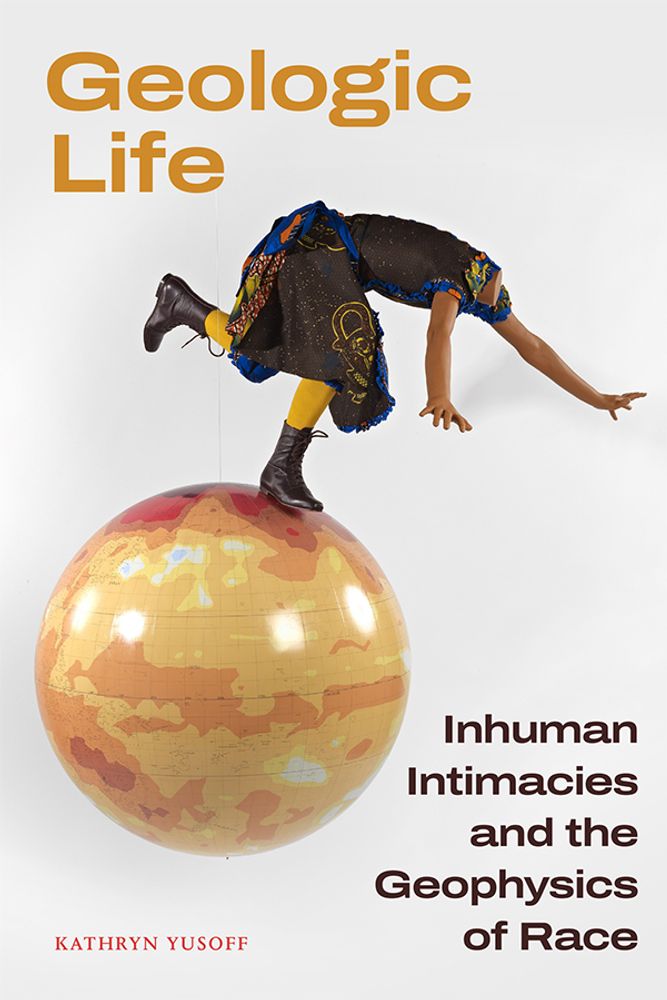
In Geologic Life, Kathryn Yusoff theorizes the processes by which race and racialization emerged geologically. Examining both the history of geology as a discipline and ongoing mineral and resource extraction, Yusoff locates forms of imperial geology embedded in Western and Enlightenment thought and highlights how it creates anti-Black, anti-Indigenous, and anti-Brown environmental and racial injustices. Throughout, she outlines how the disciplines of geology and geography—and their conventions: surveying, identifying, classifying, valuing, and extracting—established and perpetuated colonial practices that ordered the world and people along a racial axis. Examining the conceptualization of the inhuman as political, geophysical, and paleontological, Yusoff unearths an apartheid of materiality as distinct geospatial forms. This colonial practice of geology organized and underpinned racialized accounts of space and time in ways that materially made Anthropocene Earth. At the same time, Yusoff turns to Caribbean, Indigenous, and Black thought to chart a parallel geologic epistemology of the “earth-bound” that challenges what and who the humanities have chosen to overlook in its stories of the earth. By reconsidering the material epistemologies of the earth as an on-going geotrauma in colonial afterlives, Yusoff demonstrates that race is as much a geological formation as a biological one.
Discover more from Progressive Geographies
Subscribe to get the latest posts sent to your email.


https://newbooksnetwork.com/assembling-the-local
In 1817, in a region of the eastern coast of British India then known as Cuttack, a group of Paiks, the area’s landed militia, began agitating against the East India Company’s government, burning down government buildings and looting the treasury. While the attacks were initially understood as an attempt to return the territory’s native ruler to power, investigations following the rebellion’s suppression traced the cause back to the introduction of a model of revenue governance unsuited to local conditions. Elsewhere in British India, throughout the first half of the nineteenth century, interregional debates over revenue settlement models and property disputes in villages revealed an array of practices of governance that negotiated with the problem of their applicability to local conditions. And at the same time in Britain, the dominant Ricardian conception of political economy was being challenged by thinkers like Richard Jones and William Whewell, who sought to make political economy an inductive science, capable of analyzing the real world.