
The Essential Senghor: African Philosophy and Black Aesthetics – eds. Doyle C. Calhoun, Alioune B. Fall and Sheikh Thiam, Duke University Press, April 2026
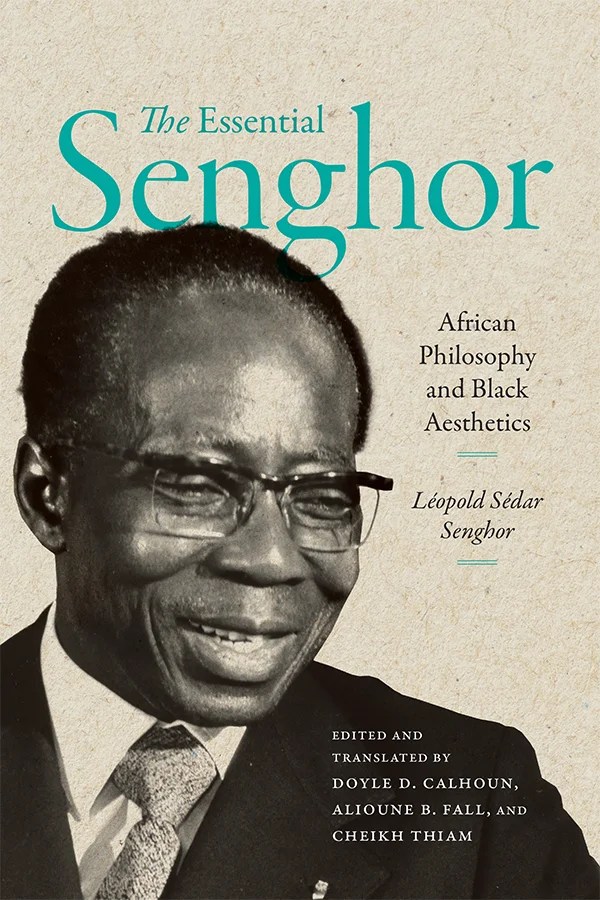
Senegalese poet, philosopher, and politician Leopold Sédar Senghor, together with Aimé Césaire and others, developed the influential and perennially relevant negritude movement—a Black artistic, philosophical, and political expression of Black presence in the modern colonial world. The Essential Senghor provides a new opportunity for English-language readers to engage with Senghor’s critical and philosophical writings spanning from 1937 to 1985. This collection includes Senghor’s key philosophical interventions in discourses on freedom, Blackness and being, humanism, history, and more. It portrays Senghor as a pivotal intellectual in the fields of African and Black studies whose work engages a wide range of disciplines, including literature, linguistics, anthropology, religion, and art history. The Essential Senghor invites readers not only to reflect on negritude and its importance for our political present, but also to reconsider intellectual genealogies of decolonial thought, Black liberation, and African philosophy.
The Introduction is open access at this link, and there is an interview with the editors by Unglid Paul at the Journal of the History of Ideas blog.
Last year, Léopold Sédar Senghor, Writings on Politics, edited by Yohann C. Ripert, was also published by Duke University Press, November 2025. The Introduction is also open access at this link.
Discover more from Progressive Geographies
Subscribe to get the latest posts sent to your email.


TO THE SENEGALESE RIFLEMEN WHO DIED FOR FRANCE
Here is the Sun
Which tightens the breasts of the virgins
Who makes the old men smile on the green benches
Who would awaken the dead under a maternal earth.
I hear the sound of cannon—is it from Irun?
They put flowers on tombs and warm the Unknown Soldier.
You my dark brothers, no one appoints you.
Five hundred thousand of your children are promised glory
of the future deaths, they thank them in advance, future
dark dead.
Die Schwarze Schande!
Listen to me, Senegalese Riflemen, in the solitude of
………..black earth and death
In your solitude without eyes without ears, more than
………..I in my dark skin at the depths of the Province,
Without even the warmth of your comrades lying close to
………..you, as in the trenches in
………..the village palavers long ago,
Listen to me, black skin Riflemen, well without
………..ears and eyes in your threefold chamber
………..at night.
We have not borrowed mourners, nor
………..tears from your former wives
………..—They only remember your
………..fury and prefer the stench of the living.
The mourners’ laments come too clear,
Too quickly drying up the cheeks of your wives, as
………..in the Fouta streams in the dry season,
The warmest tears too clear and too quickly
………..drunk from the corners of the forgetful lips.
We bring you, listen to us, we who epilate
………..your names in the months of your death,
We, in these days of fear without memory, we bring
………..you the friendship of your comrades
Ah! May I, one day, in a voice glowing like embers,
………..may I sing
The friendship of the comrades fervent as bowels
………..and delicate as entrails, strong as tendons.
Listen to us, Dead in the deep water
………..plains of the northern and the eastern fields.
Receive this red soil, under a summer sun this redden soil
………..blood of the white hosts
Receive the salute of your black comrades, Senegalese
………..Riflemen
DEATH FOR THE REPUBLIC!
…………………………………………………………….Tours, 1938