
I’ve written before about the friendship between Hannah Arendt and Alexandre Koyré, and a little about different aspects of Arendt and Koyré’s careers. Koyré’s letters to Arendt have been published by Paola Zambelli, but Arendt’s to Koyré are presumed lost. Both Arendt and Koyré moved to the United States during the war – Arendt as a refugee and Koyré to run the École Libre des Hautes Études in New York, and to teach there and the New School. Arendt would remain in the United States for the rest of her life, becoming a citizen in 1951, and teaching at several universities there, including the New School from 1967 until her death in 1975. Koyré returned to Paris at the end of the War to resume teaching at the École Pratique des Hautes Études, but held several visiting posts in the United States, often dividing his year between French and American institutions, including the Institute for Advanced Study in Princeton. I’ve written about his unsuccessful attempt to get elected to a chair at the Collège de France in History of European Ideas (open access). Both Arendt and Koyré would play a significant role in introducing European ideas to the United States, through their teaching, publications and other work, such as Arendt’s crucial role in the early English translations of Heidegger.
Here I want briefly to discuss another connection – their shared friendship with the philosopher Horace Kallen. Kallen (1882-1974) had been born in Silesia, then part of Prussia and now Poland. His father was a rabbi and scholar of Hebrew. His family emigrated to the United States when he was a small child. His doctoral thesis in 1908, Notes on the Nature of Truth, was supervised by a committee of George Santayana, Josiah Royce and Hugo Münsterberg. The thesis is available online from Harvard (warning: it’s a big file.) He was also taught by William James, and edited James’s posthumous book Some Problems of Philosophy in 1911. He taught at universities including Princeton, where he was hired by Woodrow Wilson, at Harvard, and at Wisconsin-Madison. He had to resign from the University of Wisconsin-Madison because of his pacifist views in World War I. He was part of the initial group of academics who founded the New School for Social Research. Kallen was a committed Zionist from the early 20th century. The YIVO Institute for Jewish Research at the Center for Jewish History in New York City holds many of his papers – a finding aid is here, and most of these materials are digitised. A fuller biography is on the YIVO site.
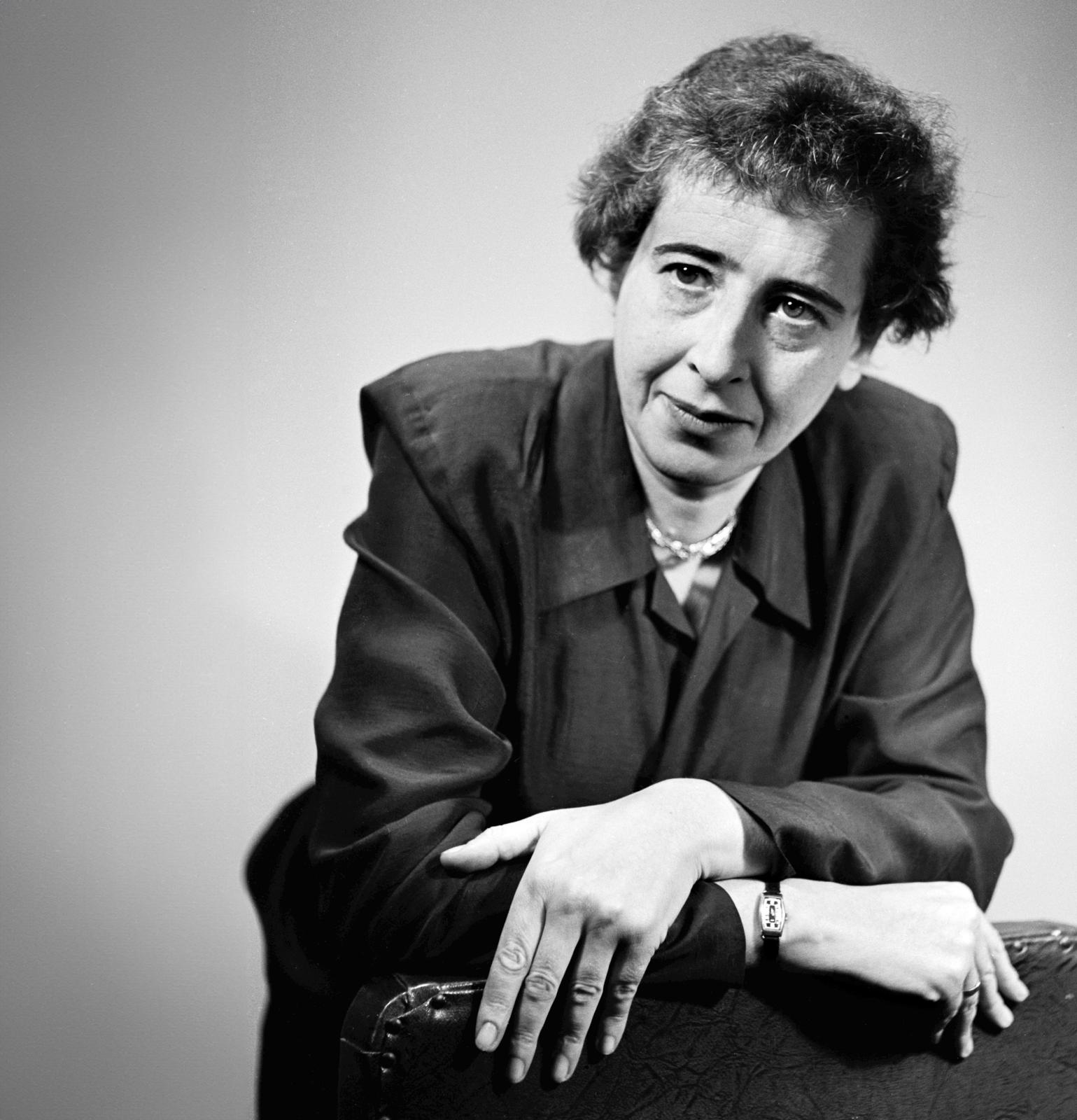
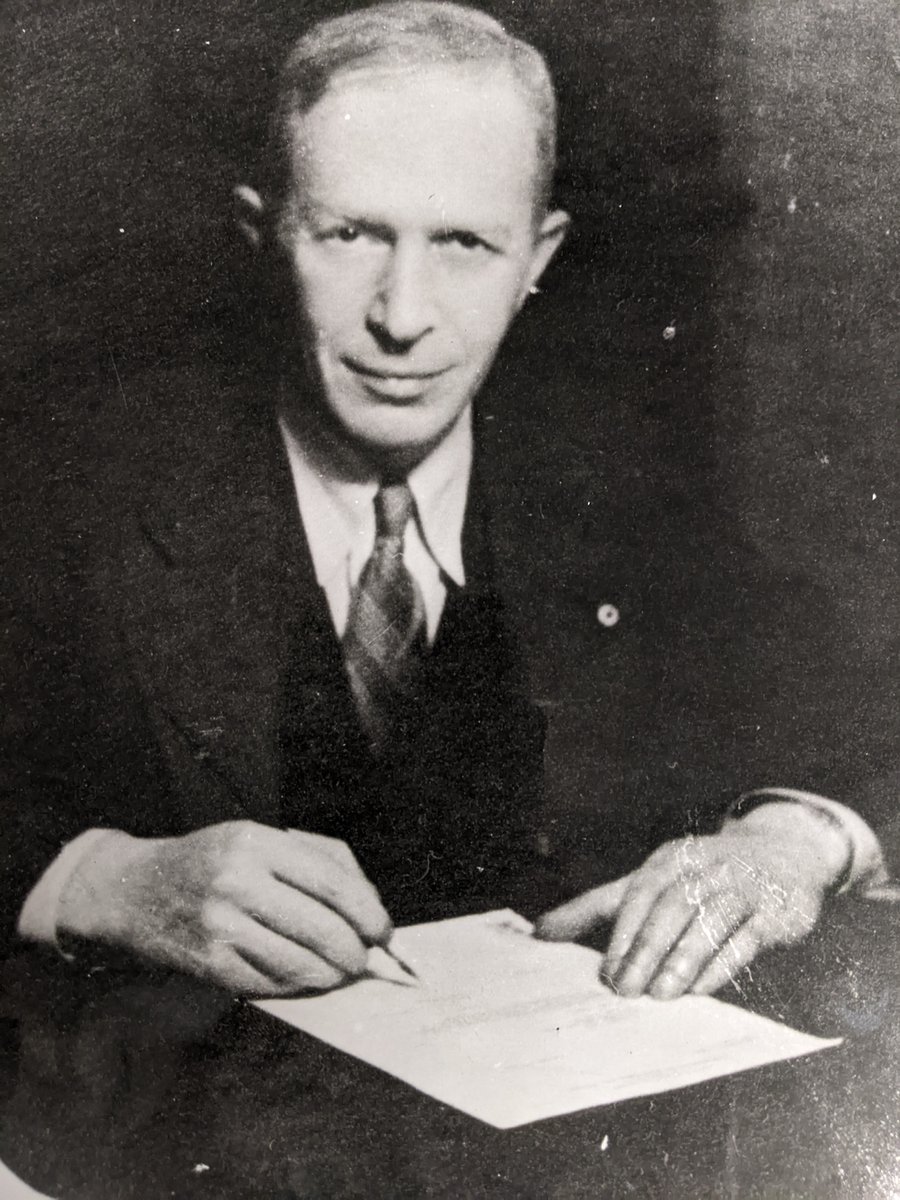
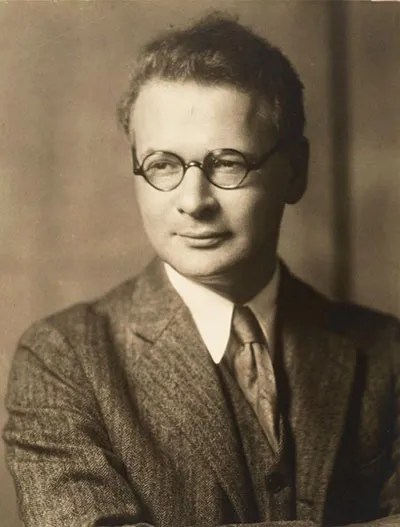
Looking at biographies or studies of these three scholars does not give much information about Arendt and Koyré’s connections to Kallen. Matthew J. Kaufman, Horace Kallen Confronts America has no mention of either Arendt or Koyré. We lack a biography of Koyré, and Paola Zambelli’s important work only mentions Kallen as a teacher at the New School. Elisabeth Young-Bruehl and Samantha Rose Hill say that Arendt’s second husband Heinrich Blücher’s job at Bard College was because President James Case had heard about him from Kallen (Hannah Arendt: For Love of the World, p. 269; Hannah Arendt, pp. 135-36). Kallen later spoke at Blücher’s funeral service (Hannah Arendt: For Love of the World, p. 434; Hannah Arendt, p. 189).
Both Arendt and Koyré wrote to Kallen in English, although Koyré’s letters to Arendt are in French. There are two letters from Arendt to Kallen at YIVO, one providing copies of her CV on 2 June 1941, after they had first met, as she was looking for employment. The second is from 19 March 1946, on behalf of the Commission on European Jewish Cultural Reconstruction. The Commission was set up to track down books, archives and other materials looted by the Nazis and to distribute those for which no owner or heir could be identified. Kallen was one of the founders of the Commission. Arendt’s letter includes a two-page typescript describing the work they were doing (YIVO RG 317 box 35, folder 605). Arendt’s letter and typed summary introduces the “Tentative List of Jewish Cultural Treasures in Axis-Occupied Countries”, which was published as a supplement to Jewish Social Studies in 1946. In the published version there is an opening statement by the historian Salo W. Baron, but Arendt led the research which produced this list – in the report she is described as “in charge of the entire project and especially of the West-European area” (p. 8). The Commission is mentioned briefly in biographies of Arendt (i.e., Young-Bruehl, pp. 187-88; Rose Hill, p. 118), and the work is discussed in essays by, for example, Michael J. Kurtz and Robert G. Waite. More could be done exploring Arendt’s work with the Commission, and I’ll return to this in a future piece.
There are some other letters from Arendt to Kallen in the American Jewish Archives in Cincinnati. There are brief ones from 1946 and 1953, and then a gap until a postcard from 1965, and letters from 1970, 1971, November 1973 and a final one from December 1973. They show a warm friendship. These letters suggest that there are ones missing from the sequence, and the December 1970 one is certainly part of a continuing conversation, so it’s hard to tell if this was a correspondence which continued throughout the missing years, or was restarted at some point. Of course, the increased use of telephones, even for long-distance calls, meant that letter writing started to die out. If Arendt owned books by Kallen these are not in her library archived at Bard College. I could not find any correspondence from Kallen in the Arendt papers at the Library of Congress.
After the War, Koyré gave some further lectures at the New School. His published lecture “Present Trends of French Philosophical Thought” is probably from 1946 (New School Bulletin IV [4], 23 September 1946), but he also taught on “New Approaches in France to the Problems of Philosophy” on 13 October, 27 October and 17 November 1950 (New School Bulletin VIII [6], 9 October 1950, VIII [8], 23 October 1950). These three lectures were part of Kallen’s course on Basic Problems in Philosophy, held on Fridays from 11.30am-1pm. The topics of Koyré’s three lectures were existentialism, neo-Thomism and “his own approaches to these subjects” (Hans Staudinger to Members of the Executive Faculty, Graduate Faculty of Political and Social Science, 12 October 1950).
There are letters from Koyré to Kallen from 1945, 1947, 1950, 1951, 1952 and 1953, and some copies of letters Kallen sent to him. These are mostly in the YIVO archives with a few in the American Jewish Archives. A few of Koyré’s articles, with brief dedications are in the Kallen papers at the New School, and one is in the Kallen papers at the American Jewish Archives. There are some interesting comments from Koyré about the shock of moving back to Paris after the end of the war, with the rationing of coal and the lack of paper for books.
Neither Arendt nor Kallen contribute to the Mélanges Alexandre Koyré, a two-volume Festschrift for Koyré’s 70thbirthday, but which was delayed and came out in 1964, the year he died. In one of his letters, Koyré complains about not being invited to contribute to a volume in tribute to Kallen, which was published as Freedom and Experience in 1947, with contributions from, for example, an John Dewey, Sidney Hook, Alain Locke, and Jean Wahl. I wonder if this had been compiled a decade later if a place would have been found for Arendt.
The correspondence between Koyré and Kallen, and his letters to Arendt, also help to situate Koyré as he moved back and forth across the Atlantic, and specify the dates of his teaching in the USA. Koyré talks of his experiences in Madison, Wisconsin, Baltimore and Chicago, and of a trip to Israel in 1953. There are also some mentions of other people, including Jean Wahl and Karl Löwith. Unfortunately, except for the copies kept by Kallen, the letters he sent to Koyré appear not to have survived.
Archives
Hannah Arendt Papers, Library of Congress: Correspondence, 1938-1976; General, 1938-1976, https://www.loc.gov/collections/hannah-arendt-papers/about-this-collection/
Hannah Arendt Personal Library, Bard College, https://blogs.bard.edu/arendtcollection/
Horace M. Kallen papers, American Jewish Archives, MS-1
Horace M. Kallen papers, New School Archives, https://findingaids.archives.newschool.edu/repositories/3/resources/234
Papers of Horace Meyer Kallen (1882-1974) 1902-1970 RG 317, YIVO Institute for Jewish Research, Center for Jewish History, https://archives.cjh.org/repositories/7/resources/525
Fonds Alexandre Koyré, École des Hautes Études en Sciences Sociales archives, Humathèque Condorcet, https://cak.ehess.fr
Hans Staudinger papers, “German and Jewish Intellectual Émigré Collections”, University at Albany, State University of New York, https://archives.albany.edu/description/repositories/ger
References
Mélanges Alexandre Koyré, Hermann, two volumes, 1964.
Commission on European Jewish Cultural Reconstruction, “Tentative List of Jewish Cultural Treasures in Axis-Occupied Countries”, Jewish Social Studies VIII (1), 1946, supplement.
Commission on European Jewish Cultural Reconstruction, “Tentative List of Jewish Educational Institutions in Axis-Occupied Countries”, Jewish Social Studies VIII (3), 1946, supplement.
Stuart Elden, “Alexandre Koyré and the Collège de France”, History of European Ideas 51 (2), 2025, 276-89, https://doi.org/10.1080/01916599.2024.2391378
Judith Friedlander, A Light in Dark Times: The New School for Social Research and its University in Exile, New York: Columbia University Press, 2019.
Sidney Hook and Milton R. Konvitz eds., Freedom and Experience: Essays Presented to Horace M. Kallen, Ithaca: Cornell University Press, 1947.
William James, Some Problems of Philosophy, London: Longmans, Green, 1911.
Horace M. Kallen, Notes on the Nature of Truth, 1908.
Matthew J. Kaufman, Horace Kallen Confronts America: Jewish Identity, Science, and Secularism, Syracuse, New York: Syracuse University Press, 2019.
Alexandre Koyré, “Present Trends of French Philosophical Thought”, ed. and intro Paola Zambelli, Journal of the History of Ideas 59 (3), 1998, 521-48.
Alexandre Koyré, “Lettres à Hannah Arendt (1951-1963)”, ed. Paola Zambelli, Nouvelles de la république des lettres 13 (1), 1997, 137-56; introduced by Paola Zambelli, “Koyré, Hannah Arendt et Jaspers”, 131-37.
Michael J. Kurtz, “Resolving a Dilemma: The Inheritance of Jewish Property”, Cardozo Law Review 20 (2), 1998–99, 625-55.
Samantha Rose-Hill, Hannah Arendt, London: Reaktion, 2021.
Robert G. Waite, “Returning Jewish Cultural Property: The Handling of Books Looted by the Nazis in the American Zone of Occupation, 1945 to 1952”, Libraries & Culture 37 (3), 2002, 213-28.
Elisabeth Young-Bruehl, Hannah Arendt: For Love of the World, New Haven: Yale University Press, 1982.
Paola Zambelli, Alexande Koyré in Incognito, Firenze: Leo S. Olschki, 2016; trans. Irène Imbart, Alexandre Koyré, un juif errant? Firenze: Musée Galileo, 2021.
This is the 94th post of a weekly series, posted every Sunday throughout 2025, and so far through 2026. The posts are short essays with indications of further reading and sources. The pieces are not as formal as something I’d try to publish more conventionally, but are hopefully worthwhile as short sketches of histories and ideas. They are usually tangential to my main writing focus, a home for spare parts, asides, dead-ends and possible futures. I hope there is some interest in them. They are provisional and suggestions are welcome. A few, usually shorter, pieces in a similar style have been posted mid-week.
I discuss what I am doing in this series in “Writing the ‘Sunday histories’ – an experiment in sharing short pieces on a blog”, my contribution to the Northern Ireland Legal Quarterly “Reflections on Writing” Series – all pieces are open access.
The full chronological list of ‘Sunday histories’ is here, with a thematic ordering here.
Discover more from Progressive Geographies
Subscribe to get the latest posts sent to your email.


Pingback: The Friendship between Hannah Arendt and Alexandre Koyré | Progressive Geographies