
Jack Reynolds, Merleau-Ponty, Embodied Cognition and Enactivism: Between Phenomenology and the Life Sciences – Edinburgh University Press, November 2026
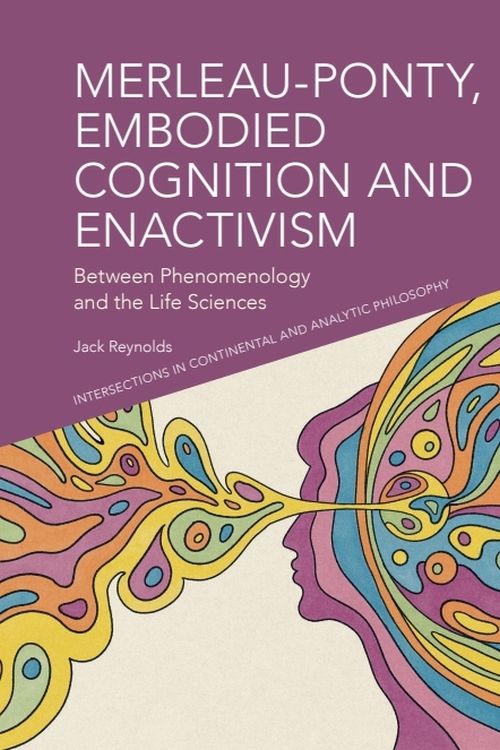
Updates Merleau-Ponty’s relevance for contemporary and intersecting discussions about enactivism, the life sciences and cognitive neuroscience
- Offers new interpretations of Merleau-Ponty’s work across much of his career, ranging from Structure of Behavior and Phenomenology of Perception, to his Nature course notes and The Visible and the Invisible
- Explores 4e cognition by linking enactivism and embodied cognition to Merleau-Ponty’s thought alongside contemporary biological research (postgenomics, epigenetics, microbiomics) and the cognitive sciences (illusionism, predictive processing and active inference accounts of mind) to offer a new understanding of mind and life
- Addresses a range of epistemological and metaphysical issues in 4e cognition including new responses to the problem of higher order cognition, as well as detailed engagement with emergentism, naturalism, and the epistemology of mutual constraint in empirically-minded phenomenology
Drawing on Merleau-Ponty’s phenomenological work on embodiment and perception, Jack Reynolds develops a novel account of many of the recent debates in enactivism and embodied cognition, engaging specifically with the epistemological and metaphysical aspects of these views.
Reynolds sets out a Merleau-Ponty inspired view of enactive cognition, arguing that it presents the best overall explanation of both phenomenological considerations and a range of scientific evidence concerning life and mind. He defends the view against a variety of alternative positions across the putative analytic-continental divide, including predictive processing, illusionism and computationalism.
Discover more from Progressive Geographies
Subscribe to get the latest posts sent to your email.


