A post exploring the generational links between Merrifield, David Harvey, Piero Sraffa and Antonio Gramsci.
I was in New York recently, where I once lived, some twenty-years back, there to visit my old friend and mentor, my old university teacher—and now he is old—an 88-year-old David Harvey, the world-renowned Marx scholar. I hadn’t seen him for a while and was keen to catch up, to hear his news and tell him some of my own, about my life in Rome, about my work on Gramsci. Ever so brilliant, it’s good to get some tips from David, some inspiration, a little encouragement, as well as a bit of critical feedback. As usual, too, in his company, we did a lot of talking and eating, some drinking, and together we rode the East River ferry over to Brooklyn and back, just for the fun of it, on a bitterly cold afternoon. It’s one of David’s favorite Big Apple past times; he does it alone most days; during Covid lockdowns, he said, it was an al fresco lifeline. [continues here]
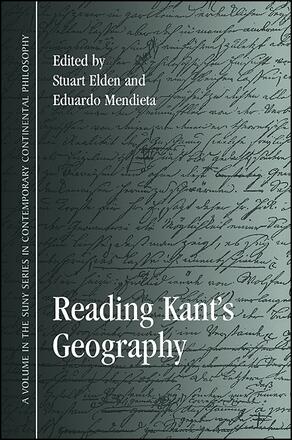
I’ve not written much on Kant, but he was the topic of perhaps my favourite of the essay collections I’ve edited or co-edited – Stuart Elden and Eduardo Mendieta (eds.), Reading Kant’s Geography, SUNY Press, 2011.
Eduardo and I discussed the idea and while we realised we couldn’t write the book together, we did know or know of the people who could. We brought many of them together for workshops in New York and Durham. It’s very much a book I think of as one by many hands – not just a collection of pieces on a theme, but one where the pieces fit together to cover most of the aspects of a topic.
The book came out shortly before the translation of one of the versions of Kant’s lectures was translated into English in the Natural Science collection. The problems of that text are discussed in the book in detail – we had contributions from the English and French translators, and the German editors.
Perspectives on Kant’s teachings on geography and how they relate his understanding of the world.
For almost forty years, German enlightenment philosopher Immanuel Kant gave lectures on geography, more than almost any other subject. Kant believed that geography and anthropology together provided knowledge of the world, an empirical ground for his thought. Above all, he thought that knowledge of the world was indispensable to the development of an informed cosmopolitan citizenry that would be self-ruling. While these lectures have received very little attention compared to his work on other subjects, they are an indispensable source of material and insight for understanding his work, specifically his thinking and contributions to anthropology, race theory, space and time, history, the environment and the emergence of a mature public. This indispensable volume brings together world-renowned scholars of geography, philosophy and related disciplines to offer a broad discussion of the importance of Kant’s work on this topic for contemporary philosophical and geographical work.
It was not the easiest of books to get contracted – I remember clearly one rejection, only moments after we’d sent a carefully-crafted pitch, which was basically to say “philosophers aren’t interested in geography; geographers aren’t interested in Kant”. But it found a good home with SUNY Press, thanks to the interest of Dennis J. Schmidt in the project.
The table of contents is:
Acknowledgments
Reintroducing Kant’s Geography
Stuart Elden
I. The Invention of Geography: Kant and His Times
Immanuel Kant and the Emergence of Modern Geography
Michael Church
Kant’s Geography in Comparative Perspective
Charles W. J. Withers
II. From a Lecture Course of Forty Years to a Book Manuscript: Textual Issues
Kant’s Lectures on “Physical Geography”: A Brief Outline of Its Origins, Transmission, and Development: 1754–1805
Werner Stark
Historical and Philological References on the Question of a Possible Hierarchy of Human “Races,” “Peoples,” or “Populations” in Immanuel Kant—A Supplement.
Werner Stark
Translating Kant’s Physical Geography: Travails and Insights into Eighteenth Century Science (and Philosophy)
Olaf Reinhardt
Writing Space: Historical Narrative and Geographical Description in Kant’s Physical Geography
Max Marcuzzi
III. Towards a Cosmopolitan Education: Geography and Anthropology
“The Play of Nature”: Human Beings in Kant’s Geography
Robert Louden
The Pragmatic Use of Kant’s Physical Geography Lectures
Holly Wilson
The Place of the Organism in Kantian Philosophy: Geography, Teleology, and the Limits of Philosophy
David Morris
IV. Kant’s Geography of Reason: Reason and Its Spatiality
Kant’s Geography of Reason
Jeff Malpas and Karsten Thiel
Orientation in Thinking: Geographical Problems, Political Solutions
Onora O’Neill
“The Unity of All Places on the Face of the Earth”: Original Community, Acquisition, and Universal Will in Kant’s Doctrine of Right
Jeffrey Edwards
V. Gender, Race, History, and Geography
Cosmopolitanism in the Anthropology and Geography
David Harvey
Is there Still Room for Freedom? A Commentary on David Harvey’s “Cosmopolitanism in the Anthropology and Geography”
Ed Casey
Kant’s Third Thoughts on Race
Robert Bernasconi
The Darker Side of the Enlightenment: A De-Colonial Reading of Kant’s Geography
Walter Mignolo
Geography is to History as Woman is to Man: Kant on Sex, Race, and Geography
Eduardo Mendieta
An earlier essay of mine, “Reassessing Kant’s Geography” was published in Journal of Historical Geography in 2009. My introduction to the edited volume was a shorter, and revised version of this text. I’m happy to share the pdf of the essay if you email me.
Some nice things were said about the book:
“…a timely collection of eighteen essays woven into a coherent matrix by the two editors Stuart Elden and Eduardo Mendieta. A splendid job, by its nature an inherently interdisciplinary endeavour, at the same time a window to the past and a gate-opener to the future. ” —Gunnar Olsson, Geografiska Annaler Series B
“One of the great strengths of Reading Kant’s Geography is that it brings together geographers and philosophers to engage with the nexus between Kant and geography. ” — Robert Mayhew, Journal of Historical Geography
“A moment of Kantian enlightenment! In a splendid, interdisciplinary set of interrogations, the nature and significance of Immanuel Kant’s geography is brought into full light for the very first time. This remarkable work of retrieval thus enlightens, at once, Kant’s own Enlightenment project, and geography’s place in the project of Enlightenment. Whether dealing with racial geography, philosophical topography, or cosmopolitan politics, Reading Kant’s Geography constantly illuminates and instructs. If, as is sometimes said, geography is too important to be left to geographers, it’s no less true that it’s too important to be left to philosophers. ” — David N. Livingstone, author of Adam’s Ancestors: Race, Religion, and the Politics of Human Origins
“This volume of impeccable scholarship and sustained critical inquiry performs an invaluable service. It is a major contribution to writings on the history of geography, but it also shows that Kant’s geography was far from incidental to the whole outworking of his philosophy, nor to what he claimed about the potentialities and pitfalls in shared human occupation of the planet. As such, this volume needs to be read by anyone concerned with enlightenment, modernity, and issues such as cosmopolitanism and transnationalism. ” — Chris Philo, editor of Theory and Methods: Critical Essays in Human Geography
“This excellent book, which oozes scholarly seriousness from start to finish, offers something new to philosophers and geographers alike… There is a pleasing consistency to Reading Kant’s Geography that the editors and contributors must be congratulated for. Despite involving nineteen different authors and two translators, all the pieces are intellectually rich, carefully argued, well structured and written in crisp English. There was clearly a collective desire to ensure that this book meets the highest scholarly standards. The SUNY Press have also done an excellent presentational job: from the cover sleeve to the font choice to the extensive end notes and beyond, the book makes you want to pick it up and dive in. Reading Kant’s Geography is both authoritative and attractive in equal measure”. — Noel Castree, Annals of the Association of American Geographers
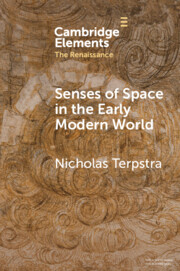
How did early moderns experience sense and space? How did the expanding cultural, political, and social horizons of the period emerge out of those experiences and further shape them This Element takes an approach that is both global expansive and locally rooted by focusing on four cities as key examples: Florence, Amsterdam, Boston, and Manila. They relate to distinct parts of European cultural and colonialist experience from north to south, republican to monarchical, Catholic to Protestant. Without attempting a comprehensive treatment, the Element aims to convey the range of distinct experiences of space and sense as these varied by age, gender, race, and class. Readers see how sensory and spatial experiences emerged through religious cultures which were themselves shaped by temporal rhythms, and how sound and movement expressed gathering economic and political forces in an emerging global order. This title is also available as Open Access on Cambridge Core.
Judith Carney, “Planting Resistance: Botanical Legacies of the African Diaspora”, British Academy/Denis Cosgrove lecture, Royal Botanic Gardens, Kew, 28 May 2024, 6pm
Delivered by the most outstanding academics in the UK and beyond, the British Academy’s flagshipLecture programme showcases the very best scholarship in the humanities and social sciences.
In the 21st century, the expansion of large-scale industrial agriculture across tropical landscapes in the Americas is threatening an Afrodescendant food system that has long prioritized agrobiodiversity and agroecological practices. These practices emerged during the plantation era of transatlantic slavery, when the enslaved leveraged subsistence precarity for the right to food plots, independent production, and partial autonomy over their labour. Historical continuities connect this much-ignored food system to agricultural practices maintained to this day in many Afrodescendant farming communities. Places exemplified by the plants, cultural knowledge, and social memories of these communities can be considered biocultural refugia – extending a concept from European heritage landscapes to tropical environments in the Americas.
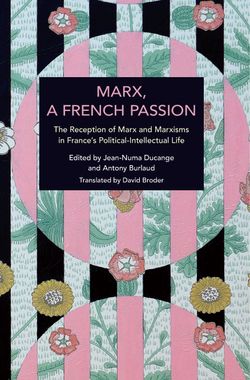
Despite the collapse of Soviet-style socialism, the spectre of Marx still haunts the French imagination. This is no accident, in a country whose intellectual life and political history have long been marked by his multiple presences. This volume offers a historical and sociological insight into the way his thought has been received in the French context, from his own lifetime to the present. Analysing Marx’s place and influence in the French intellectual, political and artistic debate – across the political spectrum and even in the French-speaking colonial world – it helps us understand the uses and misuses of an œuvre of paramount importance.
« Nietzsche et Heidegger, ça a été le choc philosophique ! Mais je n’ai jamais rien écrit sur Heidegger et je n’ai écrit sur Nietzsche qu’un tout petit article ; ce sont pourtant les deux auteurs que j’ai le plus lus », dira Michel Foucault à la fin de sa vie. Puis, il précise : « Je crois que c’est important d’avoir un petit nombre d’auteurs avec lesquels on pense, avec lesquels on travaille, mais sur lesquels on n’écrit pas. » Les Cours, conférences et travaux sont des témoignages inédits du « travail » de Foucault avec Nietzsche. Ces textes datent des deux grandes périodes de sa vie intellectuelle : d’abord le début des années 1950, quand il s’intéresse à Hegel et à la phénoménologie, ainsi qu’au marxisme. Le jeune Foucault expérimente alors de nouvelles approches pour développer une philosophie fondée sur l’expérience et l’analyse du discours. Ensuite, après la publication des Mots et les Choses en 1966, lorsque Foucault revient avec élan à Nietzsche pour élaborer sa propre méthode généalogique, relançant ainsi son projet d’une histoire de la vérité et du dire vrai. C’est à travers la confrontation avec Nietzsche que Foucault aura construit sa propre manière de philosopher. Ces Cours, conférences et travaux sont indispensables pour comprendre comment Foucault a lu Nietzsche, en particulier au moment décisif où il le découvre. Ils sont essentiels pour saisir le Nietzsche de Foucault.
I still use four of these on a daily basis; the exception is that I replaced the last with 1Focus. I can’t remember why I switched. A couple of these have become more expensive and so I’ve moved to more limited plans/features to reduce the cost.
I say a bit about why I use these in the original post, and most of the reasons hold true now as well. Alongside Dropbox I also use iCloud for my library of pdfs, partly because it only keeps recently used things offline on the laptop to save memory, but I can access anything wherever I have an internet connection.
(Please note the Sanebox link above gives $5 off if you subscribe, which also benefits me too.)
The ones I should probably add are Audacity – basic audio editing software, which I use when I’ve recorded a talk and want to tidy up the file – normalise volume, reduce noise, edit start and end of the recording, etc. and then convert to mp3 – and Todoist
The one I would probably most benefit from is some kind of project management app, but I’ve never really looked into those. Other suggestions welcome too.
The book is discussed at Language on the Move (partnered with New Books Network)
In this book, McElvenny offers a concise history of modern linguistics from its emergence in the early nineteenth century up to the end of World War II. Written as a collective biography of the field, it concentrates on the interaction between the leading figures of linguistics, their controversies, and the role of the social and political context in shaping their ideas and methods.
While A History of Modern Linguistics focuses on disciplinary linguistics, the boundaries of the account are porous: developments in neighbouring fields – in particular, philosophy, psychology and anthropology – are brought into the discussion where they have contributed to linguistic research.
Since Kenya’s invasion of Somalia in 2011, the Kenyan state has been engaged in direct combat with the Somali militant group Al-Shabaab, conducting airstrikes in southern Somalia and deploying heavy-handed police tactics at home. As the hunt for suspects has expanded within Kenya, Kenyan Muslims have been subject to disappearances and extrajudicial killings at the hands of U.S.-trained Kenyan police.
War-Making as Worldmaking explores the entanglement of militarism, imperialism, and liberal-democratic governance in East Africa today. Samar Al-Bulushi argues that Kenya’s emergence as a key player in the “War on Terror” is closely linked—but not reducible to—the U.S. military’s growing proclivity to outsource the labor of war. Attending to the cultural politics of security, Al-Bulushi illustrates that the war against Al-Shabaab has become a means to produce new fantasies, emotions, and subjectivities about Kenya’s place in the world. Meanwhile, Kenya’s alignment with the U.S. provides cover for the criminalization and policing of the country’s Muslim minority population.
How is life lived in a place that is not understood to be a site of war, yet is often experienced as such by its targets? This book weaves together multiple scales of analysis, asking what a view from East Africa can tell us about the shifting configurations and expansive geographies of post-9/11 imperial warfare.
There is a New Books discussion with John Yargo here.
Navigate the Depths of a Timeless Classic, Reimagined.
Come sail with I.
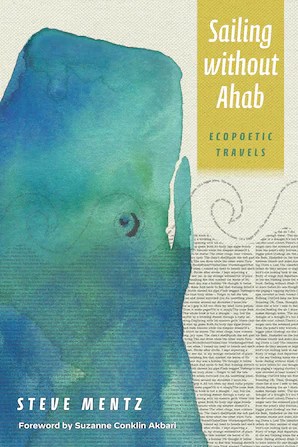
We’re not taking the same trip, though you might recognize the familiarcourse. This time, the Pequod’s American voyage steers its course acrossthe curvature of the Word Ocean without anyone at the helm. We are leaving one man and his madness on shore. Our ship overflows with glorious plurality – multiracial, visionary, queer, conflicted, polyphonic, playful, violent. But on this voyage something is different. Today we sail headless without any Captain. Instead of binding ourselves to the dismasted tyrant’s rage, the ship’s crew seeks only what we will find: currents teeming with life, a blue-watered alien globe, toothy cetacean smiles from vasty deeps. Treasures await those who sail without.
This cycle of one hundred thirty-eight poems – one for each chapter in Moby-Dick, plus the Etymology, Extracts, and Epilogue – launches into oceanic chaos without the stabilizing mad focus of the Nantucket captain. Guided by waywardness and curiosity, these poems seek an alien ecopoetics of marine depths, the refraction of light, the taste of salt on skin. Directionless, these poems reach out to touch oceanic expanse and depth. It’s not an easy voyage, and not a certain one. It lures you forward. It has fixed its barbed hook in I.
Sailing without means relinquishing goals, sleeping at the masthead, forgetting obsessions. I. welcomes you to trace wayward ways through these poems. Read them any way you can – back to front, at random, sideways, following the obscure promptings of your heart. It’s the turning that matters. It’s a blue wonder world that beckons.