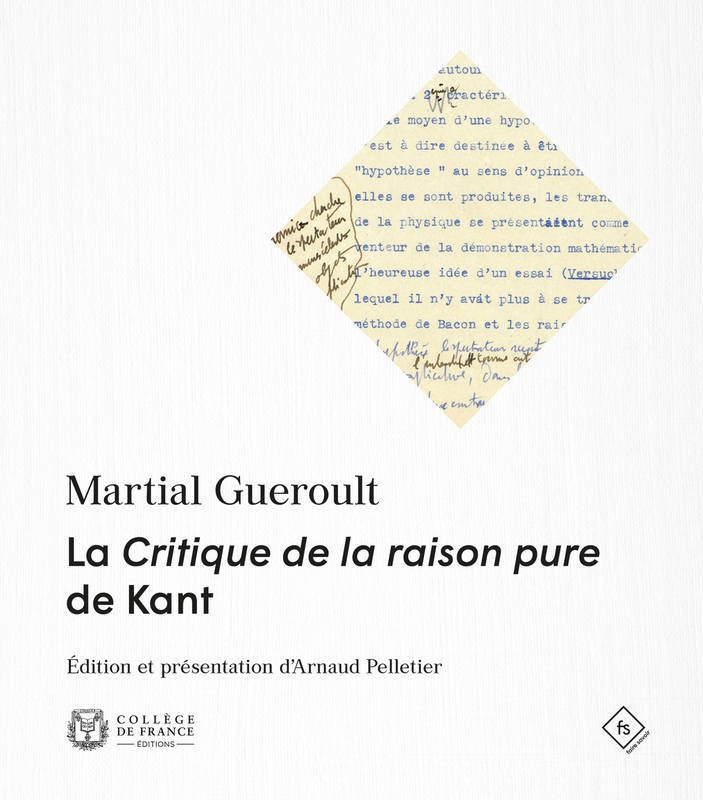
Martial Gueroult, Critique de la raison pure de Kant – previously unpublished lecture course, Éditions du Collège de France, November 2022

Martial Gueroult, Critique de la raison pure de Kant – Éditions du Collège de France, edited by Arnaud Pelletier, November 2022

A previously unpublished lecture course, from 1957-58. Gueroult held the history of philosophy chair at the Collège de France, succeeded by Jean Hyppolite (history of philosophical thought) and then Michel Foucault (history of systems of thought). Also available as text online, though the e-book isn’t open access. There is a piece on the edition by Laure Léveillé here.
Martial Gueroult introduit ainsi le cours qu’il donna au Collège de France en 1957-1958 : « La richesse du sujet choisi : Kant, Critique de la raison pure, nous a conduits à le limiter à l’Esthétique transcendantale et à l’Analytique transcendantale et à lui consacrer nos deux conférences hebdomadaires. Notre propos a été double : donner du texte un exposé aussi clair et précis que possible, élucider non tous les problèmes – ils sont innombrables – mais les plus importants d’entre eux, relatifs à la signification et à l’économie structurale du système. »

D’emblée, le cours s’adresse à deux lecteurs : l’étudiant y lit une présentation remarquable des concepts et arguments fondamentaux de la Critique ; le chercheur y trouve une discussion technique de quelques points centraux, dans laquelle Gueroult se confronte à des commentaires magistraux, surtout allemands, et parfois oubliés de nos jours. Cet ouvrage est l’édition de la version finale de ce cours, retravaillé pendant plus de trente ans et resté inédit jusqu’à aujourd’hui. Sa valeur tant philosophique que pédagogique en fait un livre incontournable pour éclairer une lecture de la Critique de la raison pure.

Né au Havre, Martial Gueroult (1891-1976) fut l’un des grands historiens de la philosophie au XXe siècle. Professeur à l’université de Strasbourg puis à la Sorbonne, il est élu au Collège de France en 1951 sur la chaire Histoire et technologie des systèmes philosophiques. Il est l’auteur d’études d’envergure sur Descartes, Spinoza, Leibniz, Malebranche, Berkeley, Maïmon et Fichte.

Arnaud Pelletier est professeur de philosophie moderne et directeur du Centre de recherche en philosophie de l’Université libre de Bruxelles.

Posted in Immanuel Kant, Jean Hyppolite, Michel Foucault | Leave a comment

Roland Barthes, Le Neutre: Cours au Collège de France (1978) – new edition, ed. Eric Marty, Seuil, April 2023

Roland Barthes, Le Neutre: Cours au Collège de France (1978) – new edition, ed. Eric Marty, Seuil, April 2023

Published today, newly edited, based on the recordings rather than Barthes’s notes. Unlike the other reedited Barthes courses, this isn’t in the Points series, but ‘grand format’. (See my questions and their answers about the reediting practices here.)

Update: there is an interview with Eric Marty at Diakritik.

Le Neutre est le fil rouge de l’œuvre de Roland Barthes, qu’on trouve dès Le Degré zéro de l’écriture et jusqu’à La chambre claire, aussi bien dans les livres, les articles et les entretiens, comme une préoccupation ou une aspiration éthique. Il apparaît pour la première fois au grand jour, explicité comme tel, dans ce cours du Collège de France donné en 1978.

Autrefois publiées sous la forme des notes préparatoires, les treize séances paraissent ici sur la base d’une transcription des enregistrements. On retrouve ainsi l’une des dimensions décisives de la parole de Barthes telle qu’elle se déployait dans son enseignement : la germination du discours, ses dérives, ses boucles, ses excroissances, et le charme incomparable de la phrase.

C’est dire l’importance de ce cours, où le Neutre trouve une formulation ample, détaillée, ouvertement placée sous le signe du fantasme, du projet, ou de la projection.

« On a défini comme relevant du Neutre toute inflexion qui esquive ou déjoue la structure paradigmatique, oppositionnelle, du sens, et vise par conséquent à la suspension des données conflictuelles du discours. […] On a essayé de faire entendre que le Neutre ne correspondait pas forcément à l’image plate, foncièrement dépréciée qu’en a la Doxa, mais pouvait constituer une valeur forte, active. »

Éric Marty a établi l’édition définitive de ce cours et a assuré un système de notes à la fois sobre et efficace. Sa préface rappelle le contexte de la fin des années 1970 et situe les enjeux les plus actuels du Neutre.

Posted in Roland Barthes | Leave a comment

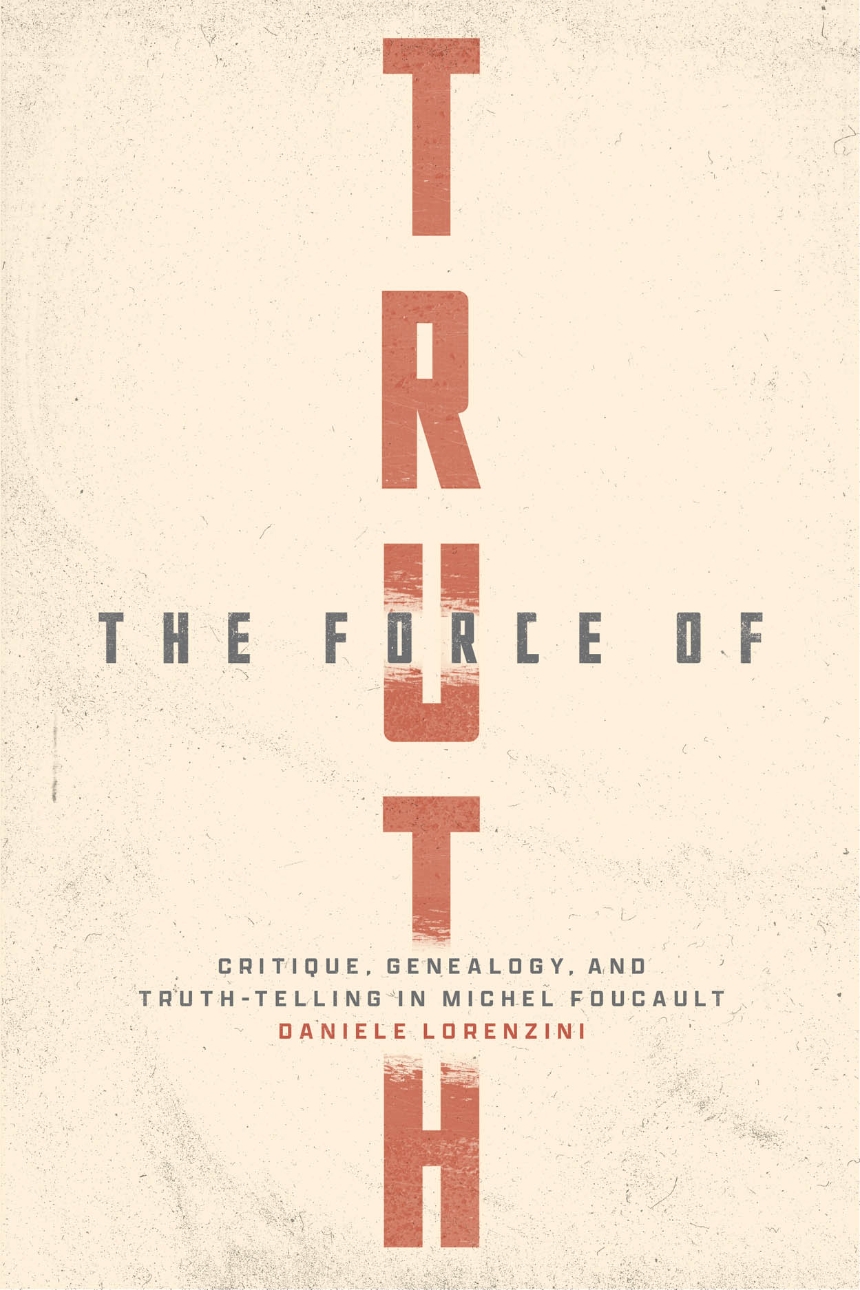
Daniele Lorenzini, The Force of Truth: Critique, Genealogy, and Truth-Telling in Michel Foucault – University of Chicago Press, September 2023

Daniele Lorenzini, The Force of Truth: Critique, Genealogy, and Truth-Telling in Michel Foucault – University of Chicago Press, September 2023

Great to see this book going through production – and three great endorsements at the UCP site, from Arnold Davidson, Verena Erlenbusch-Anderson and Martin Hägglund. [Update there is also a fourth, from Bernard Harcourt.]

[Update November 2023: there is a New Books discussion with Richard Grijalva here]

A groundbreaking examination of Michel Foucault’s history of truth.

Many blame Michel Foucault for our post-truth and conspiracy-laden society. In this provocative work, Daniele Lorenzini argues that such criticism fundamentally misunderstands the philosopher’s project. Foucault did not question truth itself but what Lorenzini calls “the force of truth,” or how some truth claims are given the power to govern our conduct while others are not. This interest, Lorenzini shows, drove Foucault to articulate a new ethics and politics of truth-telling precisely in order to evade the threat of relativism. The Force of Truth explores this neglected dimension of Foucault’s project by putting his writings on regimes of truth and parrhesia in conversation with early analytic philosophy and by drawing out the “possibilizing” elements of Foucault’s genealogies that remain vital for practicing critique today.

Posted in Michel Foucault | Leave a comment

Eglė Rindzevičiūtė, The Will to Predict: Orchestrating the Future Through Science – Cornell University Press, 2023

Eglė Rindzevičiūtė, The Will to Predict: Orchestrating the Future Through Science – Cornell University Press, 2023

In The Will to Predict, Eglė Rindzevičiūtė demonstrates how the logic of scientific expertise cannot be properly understood without knowing the conceptual and institutional history of scientific prediction. She notes that predictions of future population, economic growth, environmental change, and scientific and technological innovation have shaped much of twentieth and twenty-first-century politics and social life, as well as government policies. Today, such predictions are more necessary than ever as the world undergoes dramatic environmental, political, and technological change. But, she asks, what does it mean to predict scientifically? What are the limits of scientific prediction and what are its effects on governance, institutions, and society? 

Her intellectual and political history of scientific prediction takes as its example twentieth-century USSR. By outlining the role of prediction in a range of governmental contexts, from economic and social planning to military strategy, she shows that the history of scientific prediction is a transnational one, part of the history of modern science and technology as well as governance. Going beyond the Soviet case, Rindzevičiūtė argues that scientific predictions are central for organizing uncertainty through the orchestration of knowledge and action. Bridging the fields of political sociology, organization studies, and history, The Will to Predict considers what makes knowledge scientific and how such knowledge has impacted late modern governance.  

Posted in Uncategorized | Leave a comment

Hugh Lopes Williams, ‘Claude Lévi-Strauss and the Political Paradoxes of Structural Anthropology’ – Journal of the History of Ideas blog

Hugh Lopes Williams, ‘Claude Lévi-Strauss and the Political Paradoxes of Structural Anthropology‘ – Journal of the History of Ideas blog

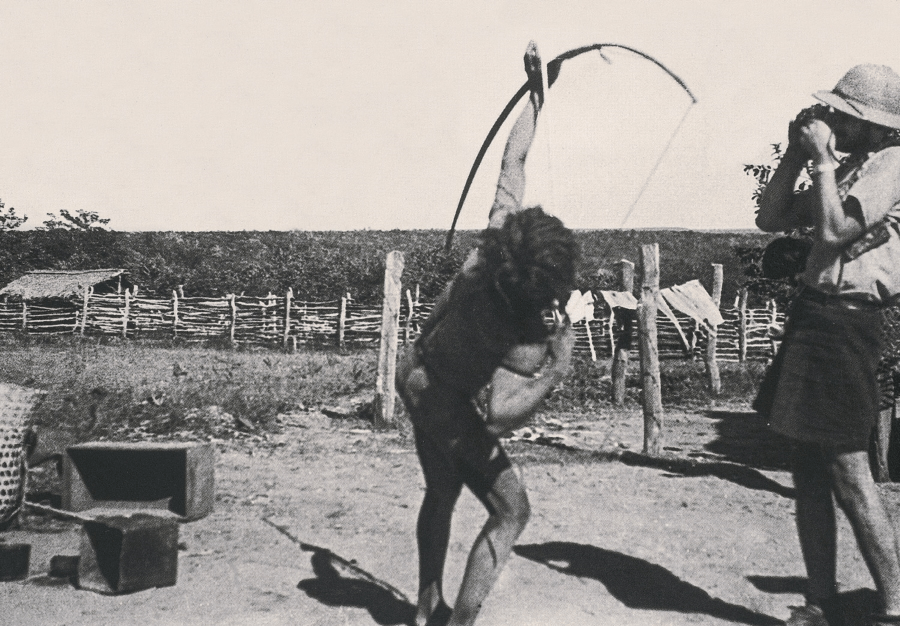
Levi-Strauss photographing a Nambikwara person – Luiz de Castro Faria Archive.

In 1952, Claude Lévi-Strauss, then a respected but by no means famous anthropologist, published the short book Race and History, commissioned by UNESCO as part of its drive to present arguments against racial prejudice from a variety of social-scientific perspectives. Apart from sparking an acrimonious exchange in French intellectual circles between Lévi-Strauss and the colonial apologist Roger Caillois, the book was largely a non-event for Lévi-Strauss’s career, which would only blossom into its maturity later that decade. The book’s argument centered around the premise that evolutionist frameworks in cultural history and anthropology were overly convenient and politically suspect ways of interpreting the fact of cultural diversity, which were by then, comfortably situated in the ethical paradigm of cultural relativism developed by Franz Boas forty years earlier.

Posted in Claude Lévi-Strauss, Uncategorized | Leave a comment

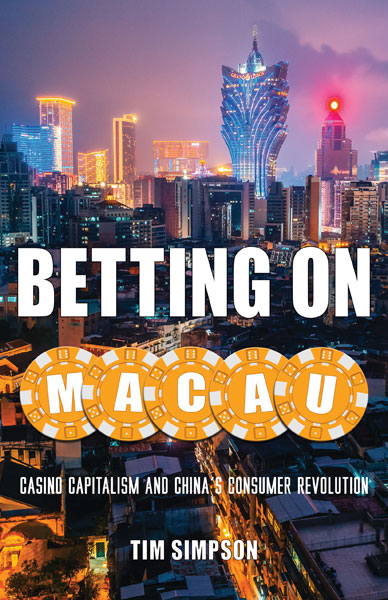
Tim Simpson, Betting on Macau: Casino Capitalism and China’s Consumer Revolution – University of Minnesota Press, April 2023

Tim Simpson, Betting on Macau: Casino Capitalism and China’s Consumer Revolution – University of Minnesota Press, April 2023

Update: there is a New Books discussion with Michael O. Johnston here.

Betting on Macau delves into the radical transformation of what was formerly the last remaining European territory in Asia, returned to the People’s Republic of China in 1999 after nearly half a millennium of Portuguese rule. Examining the unprecedented scale of its development and its key role in China’s economic revolution, Tim Simpson follows Macau’s emergence from historical obscurity to become the most profitable casino gaming locale in the world.

Identified as a UNESCO World Heritage Site and renowned for its unique blend of Chinese and Portuguese colonial-era architecture, contemporary Macau has metamorphosed into a surreal, hypermodern urban landscape augmented by massive casino megaresorts, including two of the world’s largest buildings. Simpson situates Macau’s origins as a strategic trading port and its ensuing history alongside the emergence of the global capitalist system, charting the massive influx of foreign investment, construction, and tourism in the past two decades that helped generate the territory’s enormous wealth. 

Presented through a cross section of postcolonial studies and social theory with extensive insight into the global gambling industry, Betting on Macau uncovers the various roots of the territory’s lucrative casino capitalism. In turn, its trenchant analysis provides a distinctive view into China’s broader project of urbanization, its post-Mao economic reforms, and the continued rise of its consumer culture.

Posted in Uncategorized | Leave a comment

Books received – Bataille, Eliade, Castree, Charnock & Christophers, Hakl

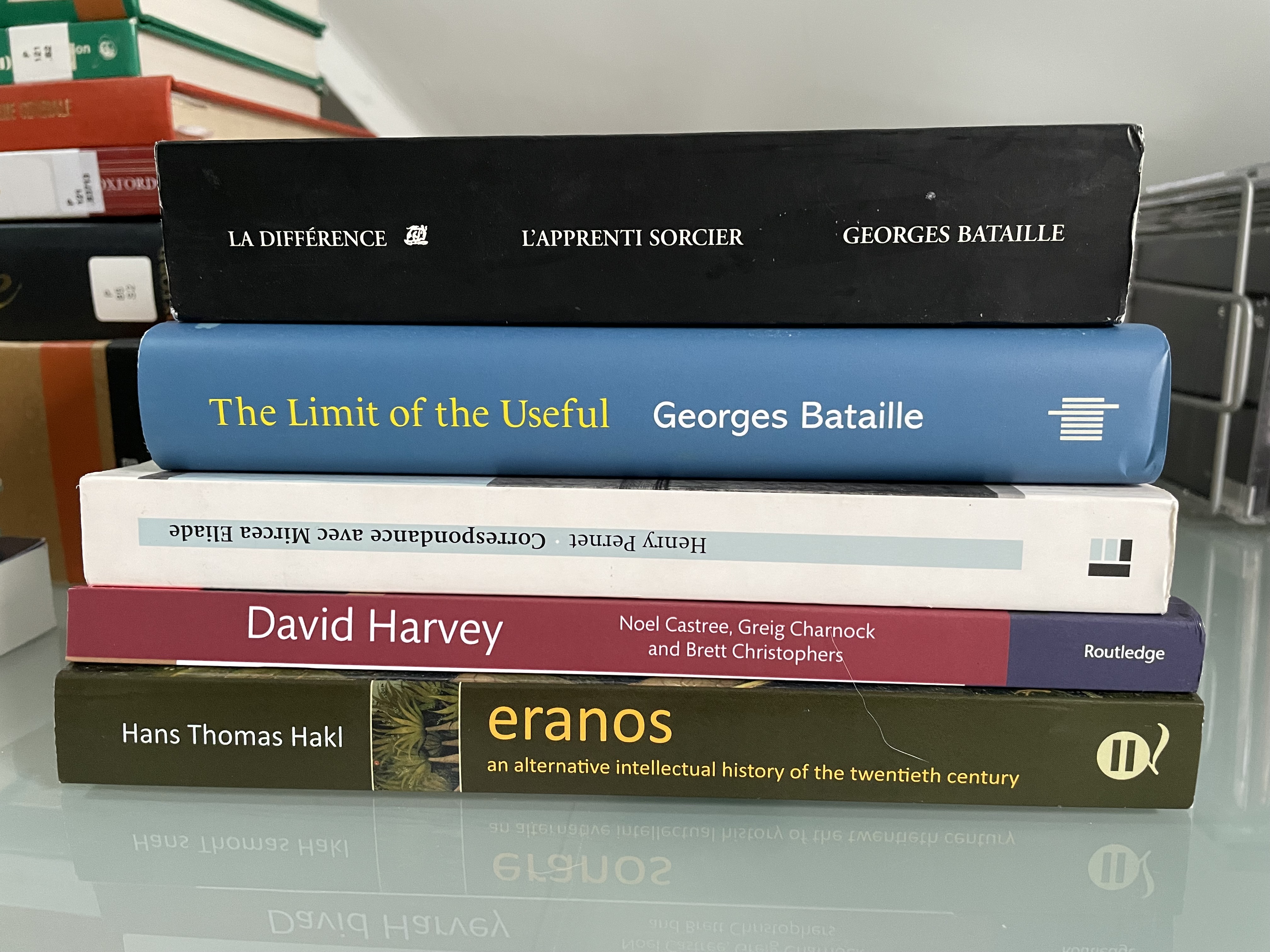
The older collection L’Apprenti Sorcier and the new translation The Limit of the Useful by Bataille; a volume of Eliade correspondence; Noel Castree, Greig Charnock, Brett Christophers, David Harvey: A Critical Introduction to his Thought and Hans Thomas Hakl’s Eranos: An Alternative History of the Twentieth Century.

The last two books were recompense for review work; the others bought second-hand or new.

Posted in David Harvey, Georges Bataille, Mircea Eliade | 2 Comments

Niki Kasumi Clements, “Foucault the Confessor”, University of Bristol, 19 April 2023, 3.30pm

Niki Kasumi Clements, “Foucault the Confessor”, University of Bristol, 19 April 2023, 3.30pm

Joint Research Talk 

Department of French & the Institute of Greece, Rome, and the Classical Tradition

Niki Kasumi Clements, Watt J. and Lilly G. Jackson Associate Professor of Religion at Rice University

Respondent: Federico Testa, British Academy Postdoctoral Fellow at the School of Modern Languages, University of Bristol

Wednesday, 19 April 2023 (3:30pm)

Room LT3, School of Modern Languages, 17 Woodland Road, Arts Complex, University of Bristol

Drinks reception from 5pm (Humanities Common Room, 11 Woodland Road)

Posted in Michel Foucault | Leave a comment

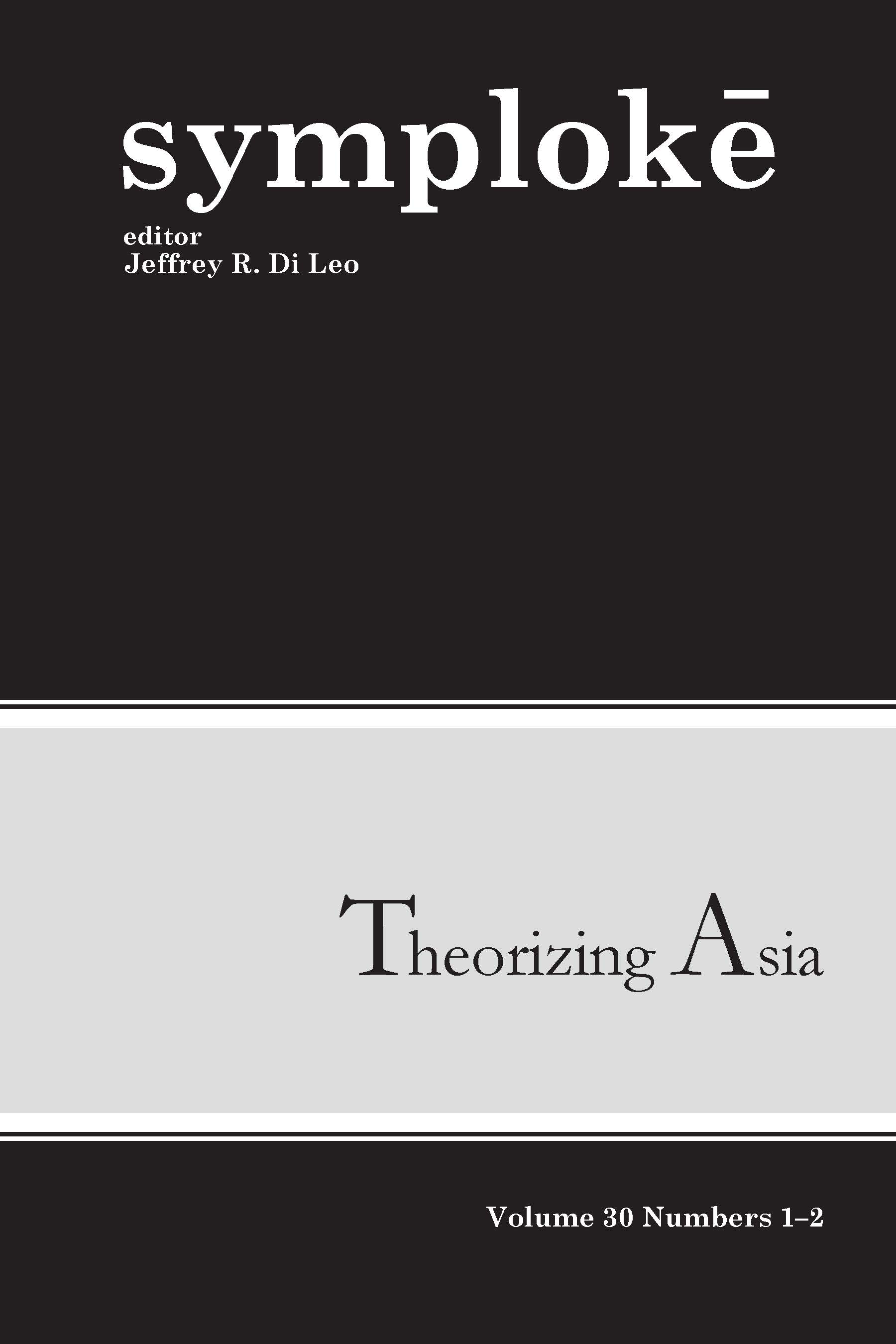
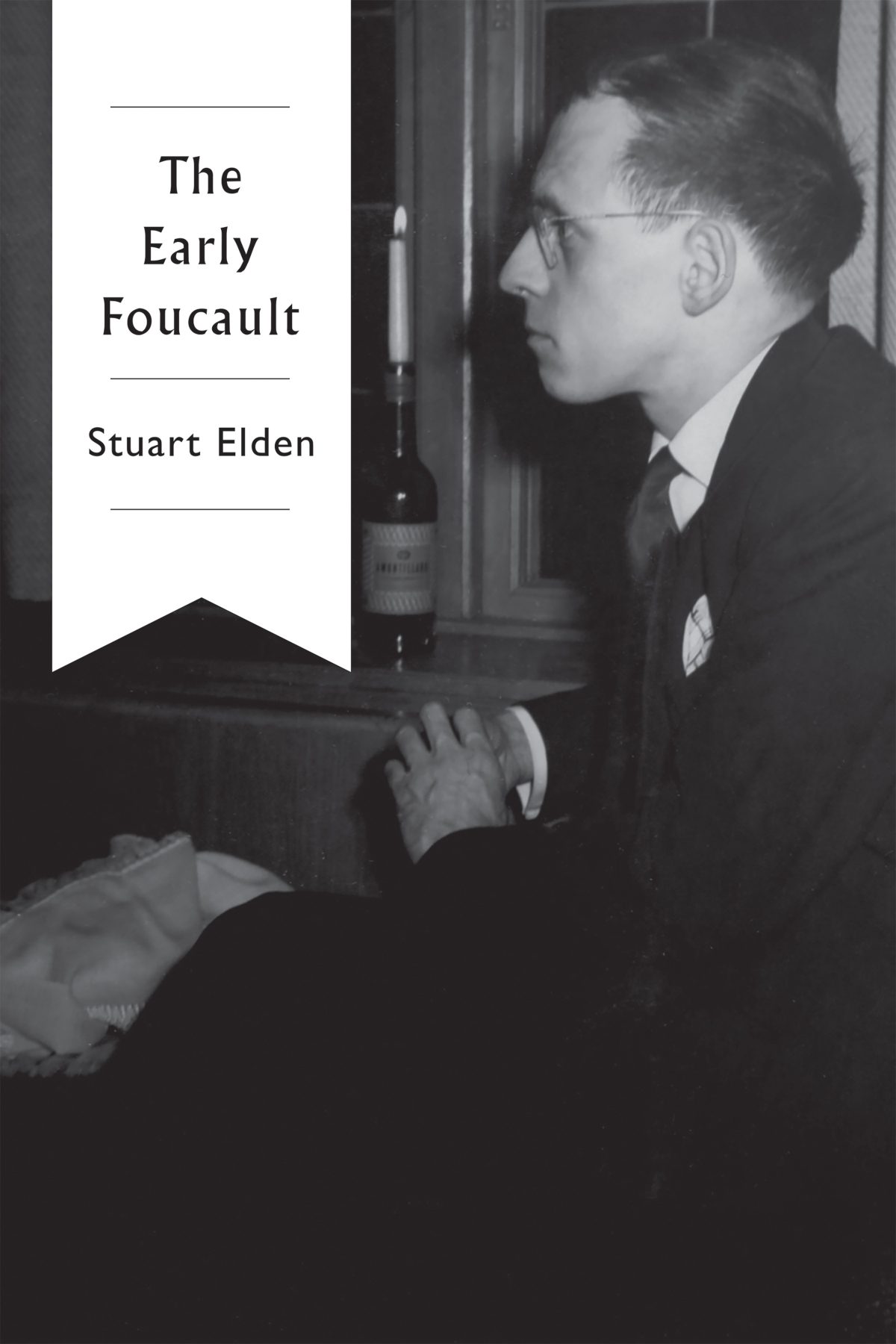
Paul Allen Miller, “Foucault’s Formative Years” – review of The Early Foucault (Polity, 2021) in Symploke

Paul Allen Miller, “Foucault’s Formative Years” – a very generous review of my 2021 Polity book The Early Foucault in Symploke. The review requires subscription, unfortunately, but I’m happy to share if you email me.

Stuart Elden has become the definitive chronicler of Foucault’s intellectual evolution. The Early Foucault is the third in what will ultimately be a four-volume history. The series began with Foucault’s Last Decade (2016). While the first volume was originally intended as a stand-alone work, it immediately became clear to the publisher and the reviewers alike that this approach should be extended to the whole of Foucault’s intellectual life. Elden has created what is in effect a kind of Bible for Foucault scholars, a series of works that any serious student of Foucault simply must consult…

The issue also contains a review symposium of Allen’s own book Foucault’s Seminars on Antiquity.

Posted in Michel Foucault, The Early Foucault, Uncategorized | Leave a comment

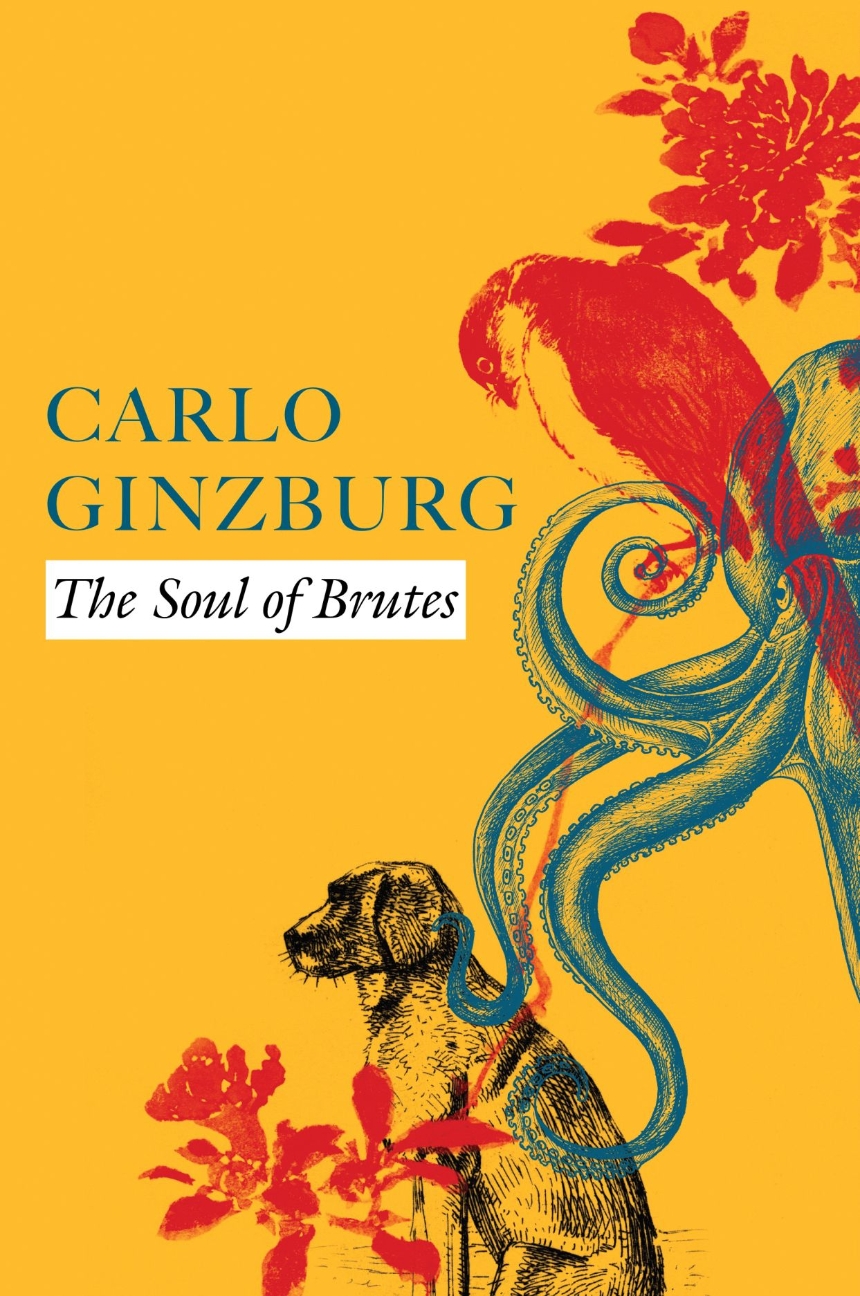
Carlo Ginzburg, The Soul of Brutes – Seagull, November 2022

Carlo Ginzburg, The Soul of Brutes – Seagull, November 2022

A collection of diverse yet interconnected essays from one of the world’s most respected historians.

Carlo Ginzburg has been at the forefront of the discipline of microhistory ever since his earliest works were published to great acclaim in the 1970s. The Soul of Brutes brings together four of Ginzburg’s recent scintillating essays and lectures that testify to the diversity of his thoughts on history and philosophy.

“Civilization and Barbarism” resurrects a sixteenth-century debate between two thinkers in Spain about the humanness, or lack thereof, of Native Americans, and highlights the influence of classical thinkers, from Herodotus to Aristotle, and the iterations and interpretations through which their writings have traversed down to the Cinquecento. In “The Soul of Brutes” Ginzburg traces the genealogy of the debate on the rationality of animals and the limits of their imagination, from Plutarch and Aristotle to sixteenth-century thinkers like Pietro Pomponazzi and Girolamo Rorario. Following Montaigne, he provokes, are we to beasts as they seem to us? In “Calvino, Manzoni and the Grey Zone,” Carlo Ginzburg pithily writes about the mental dialogue between Holocaust survivor Primo Levi and two Italians who profoundly influenced Levi’s search for these “unexplored pockets of exception”—his contemporary Italo Calvino and the nineteenth-century novelist and philosopher Alessandro Manzoni. And finally, in “Schema and Bias”, he probes whether the historian can clearly see into the past, peering through the layers of bias, which include their own prejudices, or if relativism is the only path.

With several beautifully reproduced color illustrations, The Soul of Brutes will interest not only scholars of history, philosophy, and art, but also general intellectual readers.

Posted in Carlo Ginzburg, Uncategorized | 1 Comment