Clare Pettitt, Serial Forms: The Unfinished Project of Modernity, 1815-1848 – Oxford University Press, June 2020, and review in Critical Inquiry

Clare Pettitt, Serial Forms: The Unfinished Project of Modernity, 1815-1848 – Oxford University Press, June 2020

I’m late to noticing this book, which looks interesting:

Serial Forms: The Unfinished Project of Modernity, 1815-1848 proposes an entirely new way of reading the transition into the modern. It is the first book in a series of three which will take the reader up to the end of the First World War, moving from a focus on London to a global perspective. Serial Forms sets out the theoretical and historical basis for all three volumes. It suggests that, as a serial news culture and a stadial historicism developed together between 1815 and 1848, seriality became the dominant form of the nineteenth century. Through serial newsprint, illustrations, performances, and shows, the past and the contemporary moment enter into public visibility together. Serial Forms argues that it is through seriality that the social is represented as increasingly politically urgent. The insistent rhythm of the serial reorganizes time, recalibrates and rescales the social, and will prepare the way for the 1848 revolutions which are the subject of the next book. By placing their work back into the messy print and performance culture from which it originally appeared, Serial Forms is able to produce new and exciting readings of familiar authors such as Scott, Byron, Dickens, and Gaskell. Rather than offering a rarefied intellectual history or chopping up the period into ‘Romantic’ and ‘Victorian’, Clare Pettitt tracks the development of communications technologies and their impact on the ways in which time, history and virtuality are imagined.

There is a review in Critical Inquiry by David Kurnick, which has a little more on how it is part of an ambitious project:

The book is the first of a projected trilogy that will follow its argument through the First World War (the second volume, Serial Revolutions: 1848, is announced as forthcoming): Pettitt’s readers will shortly be able to assess a bit more of her compelling argument’s historical and theoretical reach.
Posted in Uncategorized | Leave a comment

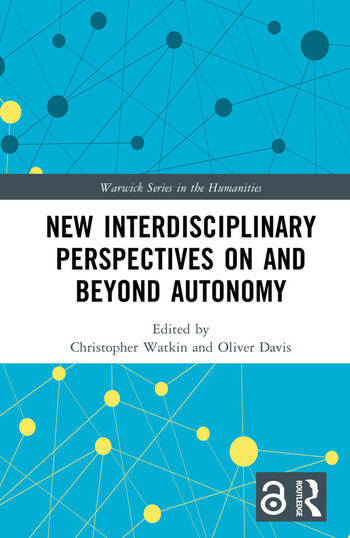
Christopher Watkin and Oliver Davis (eds) New Interdisciplinary Perspectives On and Beyond Autonomy – Routledge, December 2022

Christopher Watkin and Oliver Davis (eds) New Interdisciplinary Perspectives On and Beyond Autonomy – Routledge, December 2022

Hardback and e-book, with two chapters open access

What does ‘autonomy’ mean today? Is the Enlightenment understanding of autonomy still relevant for contemporary challenges? How have the limits and possibilities of autonomy been transformed by recent developments in artificial intelligence and big data, political pressures, intersecting oppressions and the climate emergency? The challenges to autonomy today reach across society with unprecedented complexity, and in this book leading scholars from philosophy, economics, linguistics, literature and politics examine the role of autonomy in key areas of contemporary life, forcefully defending a range of different views about the nature and extent of resistance to autonomy today. These essays are essential reading for anyone who wants to understand the predicament and prospects of one of modernity’s foundational concepts and one of our most widely cherished values.

Posted in Uncategorized | Leave a comment

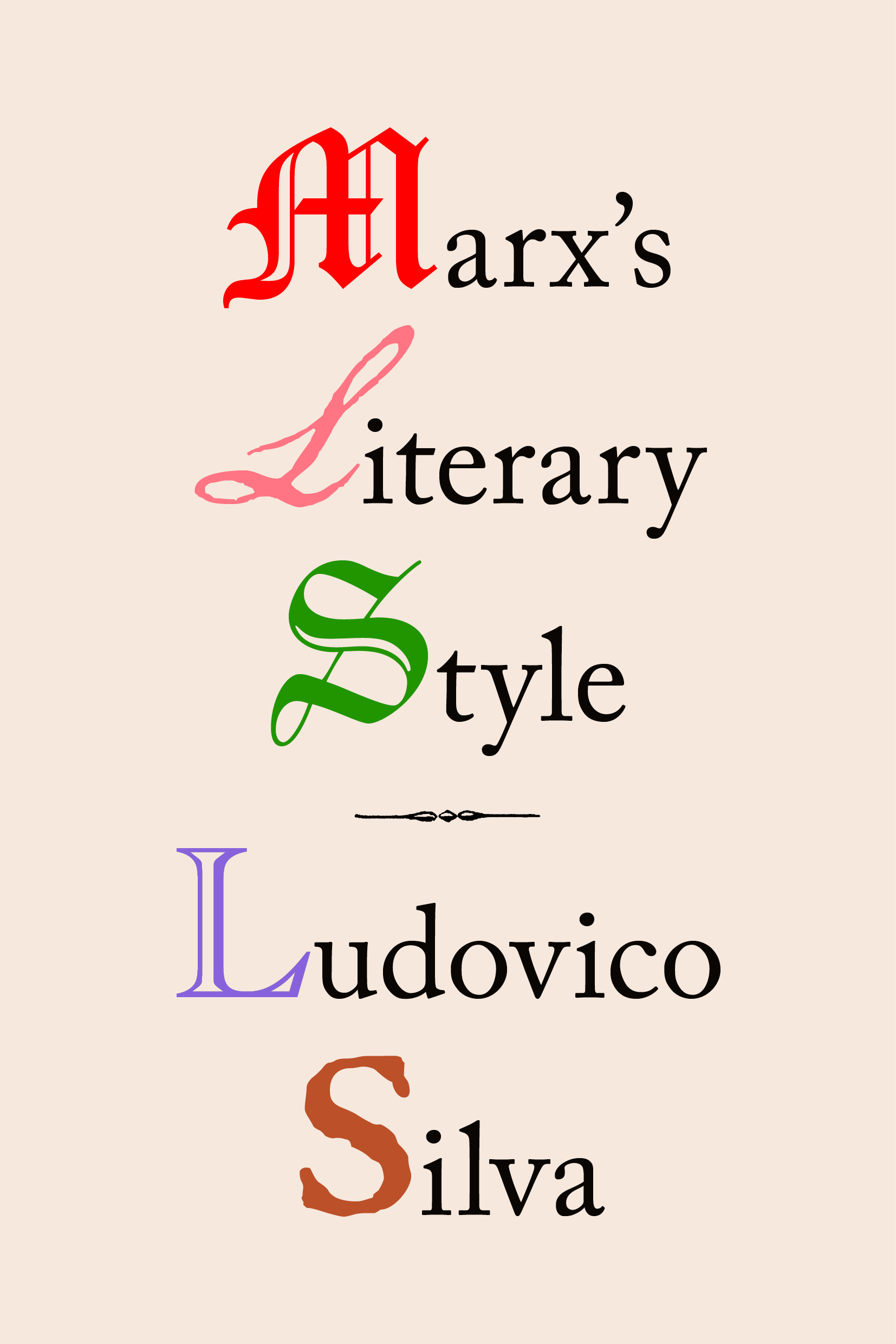
Ludovico Silva, Marx’s Literary Style – Verso, January 2023

Ludovico Silva, Marx’s Literary Style – Verso, January 2023

Update: Verso editor Sebastian Budgen comments on the book here

A true understanding of Marx’s work requires a careful study of his literary choices

In Marx’s Literary Style, the Venezuelan poet and philosopher Ludovico Silva argues that much of the confusion around Marx’s work results from a failure to understand his literary mode of expression. Through meticulous readings of key passages in Marx’s oeuvre, Silva isolates the key elements of his style: his search for an “architectonic” unity at the level of the text, his capacity to express himself dialectically at the level of the sentence, and, above all, his great gift for metaphor. Silva’s unique sensitivity to Marx’s literary choices allows him to illuminate a number of terms that have been persistently, and fatefully, misunderstood by many of Marx’s most influential readers, including alienation, reflection, and base and superstructure. At the heart of Silva’s book is his contention that we we cannot hope to understand Marx if we treat him as a scientist, a philosopher, or a literary writer, when he was in fact all three at once.

Originally published in 1971, this is a key work by one of the most important Latin American Marxists of the twentieth century. This edition, which marks the first appearance of one of Silva’s works in English, features an introduction by Alberto Toscano.

“We’ve waited a long time for an English-language edition of this brilliant, agenda-setting work. The book is indispensable. To read it is to learn how inadequate it is to describe any metaphor – and certainly any of Marx’s – as “mere” ever again.” – China Miéville

Posted in Karl Marx, Uncategorized | Leave a comment

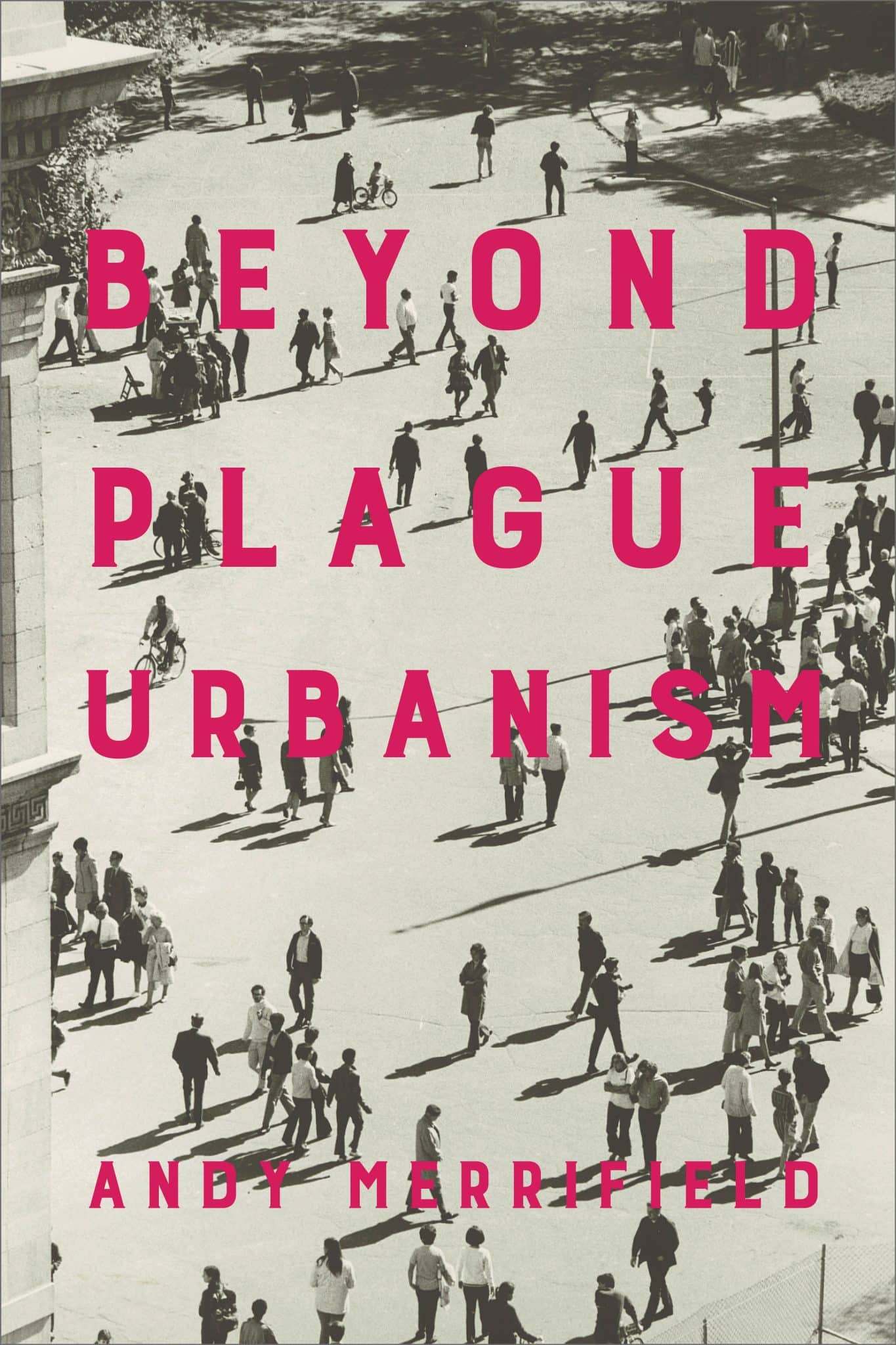
Andy Merrifield, Beyond Plague Urbanism – Monthly Review, Spring 2023

Andy Merrifield, Beyond Plague Urbanism – Monthly Review, Spring 2023

Andy tells me the striking cover image is by André Kertész.

Our cities have been plagued by economic injustices and inequalities long before COVID-19 upended urban life everywhere. Beyond Plague Urbanism delves into this zone of urban pathology and wonders what successive lockdowns and exoduses, remote work and small-business collapse, redundant office space and unaffordable living space portend for our society in cities and our cities in society.

The city has historically been a Great Book inspiring a liberal education, the kind that teaches you how to become a citizen of the world. The city was always an existential rite of passage, especially for young people, broadening horizons, deepening your whole being. But lately our great seat of learning has remaindered a lot of its classics texts, closed down public access, and auctioned off its campus to the highest bidder. The city’s romance is already talking alimony. How to resuscitate the city as a vast open-air public library? How to redraft this Great Book together? How to dialogue anew about its table of contents, re-typesetting the future social life contained within its leaves?

Andy Merrifield journeys intercontinentally as he reflects on these questions, in a narrative that moves imaginatively between literature and life, plague and populist politics, public values and private inclinations, the U.S. Main Street and the British High Street, overcrowding and undercrowding, the right to the city today and eco-cities of tomorrow. Blending modern jazz with French Surrealism, Thomas Pynchon’s rocket science with the odyssey of James Joyce, Henri Lefebvre’s Marxism with the street ballets of Jane Jacobs, this challenging book appears at a timely moment in our fraught political history and opens up an urgent humanist conversation about the future of city life.

Posted in Andy Merrifield, Henri Lefebvre, Uncategorized, urban/urbanisation | Leave a comment

Melissa Pawelski, “Between ‘Körper’ and ‘Leib’ – Translating Michel Foucault’s concept of the body after Friedrich Nietzsche”, Perspectives, 2022 (open access)

Melissa Pawelski, “Between ‘Körper’ and ‘Leib’ – Translating Michel Foucault’s concept of the body after Friedrich Nietzsche“, Perspectives: Studies in Translation Theory and Practice, 2022 (open access)

This article analyses the German words ‘Leib’ and ‘Körper’ that can both be translated as ‘the body’ in English and as ‘le corps’ in French. The human body is a central object in the philosophies of Friedrich Nietzsche and Michel Foucault. Whilst ‘Körper’, originating in Latin, commonly refers to the body, ‘Leib’ stems from Middle High German meaning ‘the body’, ‘life’, and ‘person’. Nietzsche’s use of ‘Leib’ must be understood as an idiosyncrasy, an Untranslatable following Cassin. In Nietzsche’s thought, he insists on the aspects of life and the will to live, positing that the body ought not to be abstracted in philosophy. I show that the word ‘Leib’ is functional in Nietzsche’s philosophy on which, in turn, Foucault draws. Walter Seitter’s German translations of Foucault, especially of the essay ‘Nietzsche, la généalogie, l’histoire’ (1971) and the book Surveiller et punir. Naissance de la prison (1975), alternate between ‘Leib’ and ‘Körper’ to translate Foucault’s ‘le corps’. This raises the question which of the two words is most effective in translating ‘the body’ in Foucault. I argue that Foucault problematises Nietzsche’s ‘Leib’ because the body’s vital force and personal intimacy are at stake in a new political economy of the body.

Posted in Friedrich Nietzsche, Michel Foucault, Uncategorized | 2 Comments

Two new Heidegger translations from Polity, December 2022

Two new Martin Heidegger translations from Polity

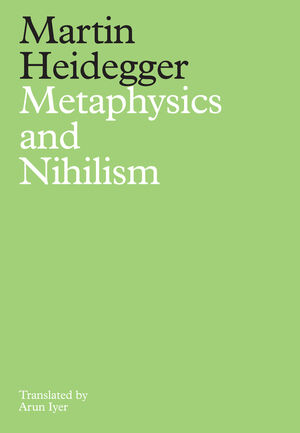
Metaphysics and Nihilism: 1 – The Overcoming of Metaphysics 2 – The Essence of Nihilism, trans. Arun Iyer

The two treatises The Overcoming of Metaphysics (1938/39) and The Essence of Nihilism (1946–1948) do not belong together temporally or formally, but they are brought together in this volume because they both treat a common thesis from the standpoint of different questions – namely, that nihilism is the essence of metaphysics in relation to the history of being.

The overcoming of metaphysics is, for Heidegger, the decisive historical moment in which metaphysics is experienced as the history of the abandonment by being and overcome at the same time. The abandonment of beings by being reveals itself in the final and most extreme intensification of metaphysics as the “unconditioned predominance of manipulation.” Manipulation means here the all-dominating producibility of beings.

The Essence of Nihilism is linked to the idea of overcoming. This text deals with the attempt to elucidate the essence of nihilism through Nietzsche’s words “God is dead.”  The killing of God springs from the will to power as the most extreme form of manipulation. The being of beings is grasped here as the positing of values emanating from the will to power.  In this positing of being as value, it becomes clear that being itself remained unthought in metaphysics. Therefore, metaphysics as such is nihilism proper. 

These key works by Heidegger, now available in English for the first time, will be of great interest to students and scholars of philosophy and to anyone interested in Heidegger’s thought.

On the Essence of Language and the Question of Art, trans. Adam Knowles

The texts and notes collected in this volume offer unique insight into the development of Heidegger’s thinking on language and art from the late 1930s to the early 1950s – a tumultuous period both for Heidegger personally and for Germany as a whole.  Following Germany’s defeat in World War II, Heidegger was banned from teaching at Freiburg University, where he had been a professor since 1928, and his thinking underwent significant changes as he began to cultivate different modes of silence and non-saying in his philosophy of language. This volume illuminates these shifts and charts the evolution of key terms in Heidegger’s philosophy of language during this key period in the development of his thought. 

The central theme of Heidegger’s reflections on language in this volume is his repeated engagement with the character of the word, silence and the unsaid, and his rejection of the instrumental conception of language, where he instead prioritized conversation as the “homeland of language.” Alongside references to Hölderlin and von Hofmannsthal and shrewd scrutiny of aural phenomena such as silent thought and speechlessness, speech is demonstrated to be intimately connected to the human essence. In a later section, Heidegger examines the place of art, in particular the plastic arts, and the role of the artist in conjunction with the new industrial landscape and architecture of his time, and in juxtaposition with ancient Greek attitudes to space and the polis.

This key work by Heidegger, now available in English for the first time, will be of great interest to students and scholars of philosophy and to anyone interested in Heidegger’s thought.

Posted in Martin Heidegger, Uncategorized | Leave a comment

Aaron Zielinski, The Imaginary Force of History: On Images, the Imaginary, and Myths in Foucault’s Early Works (2022)

An interesting piece making use of some recently published manuscripts, notably Phénoménologie et psychologie, to shed light on Foucault’s History of Madness.

Clare O'Farrell's avatarFoucault News

Aaron Zielinski (2022) The Imaginary Force of History: On images, the Imaginary, and Myths in Foucault’s Early Works, Critical Review, Published online: 09 Dec 2022

DOI: 10.1080/08913811.2022.2151709

ABSTRACT
In manuscripts and unpublished articles written in the 1950s, Foucault developed a notion of myth that was intimately linked to what he called “imaginary forces,” a notion that he framed as a new critical approach. Its most important functions lie in exposing how mythological narratives naturalize social processes, and in developing a skeptical stance towards the allegedly liberating function of truth. This notion of myth is central in History of Madness, but it features most prominently in a passage that was omitted from the first English translation. Here, Foucault criticizes the narrative that Enlightenment psychiatry told about its own origins, which naturalized social processes. The young Foucault’s notion of myth is strikingly similar to the Marxist notion of second nature.

View original post 10 more words

Posted in Uncategorized | Leave a comment

Thomas Pynchon sells his archive

Thomas Pynchon sells his archive

Biblioklept's avatarBiblioklept

At The New York Times, Jennifer Schuessler reports that Thomas Pynchon has sold his archive to Huntington Library, Art Museum and Botanical Gardens in San Marino, California.

The article notes that the “archive includes 48 boxes — 70 linear feet, in archivist-speak — of material dating from the late 1950s to the 2020s” and includes :typescripts and drafts of all his published books”  to date as well as “copious research notes on the many, many subjects (World War II rocketry, postal history, 18th-century surveying) touched on in his encyclopedic novels.” And while the documents include letters related to publishing, it includes “no private letters or other personal material” — and no photographs of Pynchon.

The article also claims that Pynchon’s son Jackson “is described as having ‘compiled and represented the archive.'” (The passive voice there is a bit cryptic, but I guess cryptic is Pynchonian, so.)

The article…

View original post 47 more words

Posted in Uncategorized | Leave a comment

Stuart Elden, The Archaeology of Foucault – Polity, December 2022

Stuart Elden, The Archaeology of Foucault – Polity, December 2022

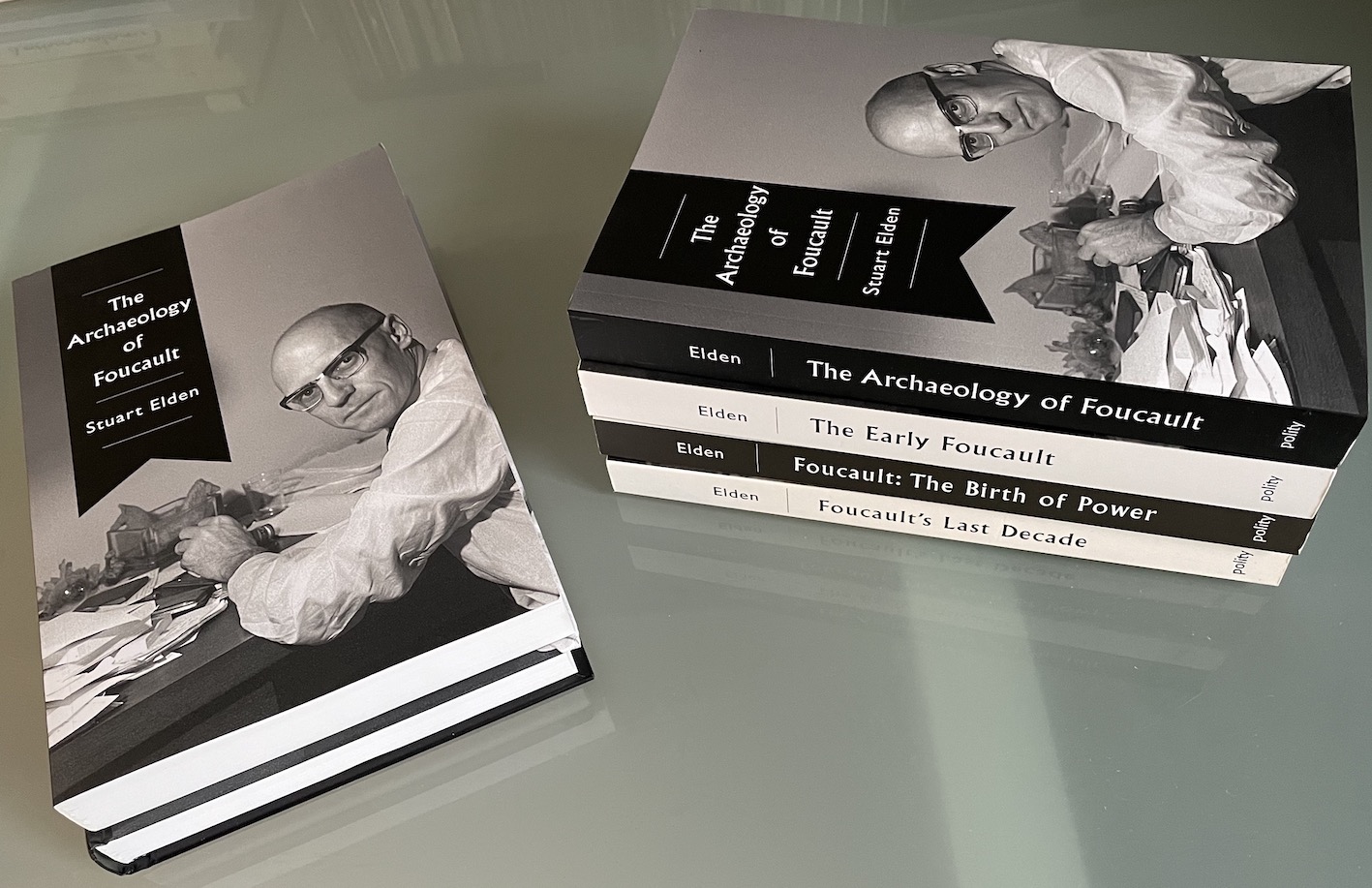
The fourth and final book in my series of studies of Foucault’s career is now published in the UK. US and rest of the world will follow in early 2023. Polity’s books are distributed by Wiley, and they should be able to deliver worldwide.

Here’s the back cover description of the book:

On 20 May 1961 Foucault defended his two doctoral theses; on 2 December 1970 he gave his inaugural lecture at the Collège de France. Between these dates, he published four books, travelled widely, and wrote extensively on literature, the visual arts, linguistics, and philosophy. He taught both psychology and philosophy, beginning his explorations of the question of sexuality.

 Weaving together analyses of published and unpublished material, this is a comprehensive study of this crucial period. As well as Foucault’s major texts, it discusses his travels to Brazil, Japan, and the USA, his time in Tunisia, and his editorial work for Critique and the complete works of Nietzsche and Bataille.

It was in this period that Foucault developed the historical-philosophical approach he called ‘archaeology’ – the elaboration of the archive – which he understood as the rules that make possible specific claims. In its detailed study of Foucault’s archive the book is itself an archaeology of Foucault in another sense, both excavation and reconstruction.

This book completes a four-volume series of major intellectual histories of Foucault. Foucault’s Last Decade was published by Polity in 2016; Foucault: The Birth of Power followed in 2017; and The Early Foucault in 2021.

And the three very generous endorsements:

“This final volume of Elden’s magisterial history offers a fascinating insight into Foucault’s life and work throughout the 1960s.”
Camille Robcis, Columbia University

“For we students of Foucault and avid readers of his books, the articulation with debates of the time and the reorientations of his thought seemed clear enough. What an illusion! Building on the new archive and testimonies with amazing intellectual empathy, Stuart Elden recreates the latent discourse. We can embark on a new reading and understanding of the great archaeologist of our culture.”
Étienne Balibar, author of On Universals

“Stuart Elden concludes his series on Foucault with another work of meticulous scholarship, unearthing archival sources, variants of Foucault’s publications, and links to his contemporaries in the exciting intellectual context of the 1960s.”
Clare O’Farrell, Queensland University of Technology

Completing this book brings to an end a long project, which grew substantially in scope over time. The books were written and published effectively as two pairs – Foucault’s Last Decade and Foucault: The Birth of Power, and then The Early Foucault and The Archaeology of Foucault – and in almost reverse chronological order. The reason for this was really that initially I planned to work on just the final phase of Foucault’s career, but the opening up of the archive meant that I could go further and further back. It also led to the side project on Georges Canguilhem, which produced a short book for Polity’s Key Contemporary Thinkers series.

The Archaeology of Foucault is the longest of the four books – together they are about 420,000 words, about 1,100 pages in print – a significant undertaking for me. It’s been a fascinating project to work on, and in process, if only in part with content, has shaped how I will do the research for the new project on Indo-European thought in Twentieth-Century France in important ways.

I’ve been sharing research updates on the process of doing the work on these books. Those for The Archaeology of Foucault are here, and the others linked from here, along with links to reviews of the earlier books.

I’ve also been sharing some Foucault research resources as I’ve been doing this work. I hope somebody else finds these useful.

Posted in Canguilhem (book), Etienne Balibar, Foucault's Last Decade, Foucault: The Birth of Power, Friedrich Nietzsche, Georges Bataille, Georges Canguilhem, Mapping Indo-European Thought in Twentieth Century France, Michel Foucault, My Publications, The Archaeology of Foucault, The Early Foucault, Uncategorized | 2 Comments

Stuart Elden, ‘Editing Georges Dumézil’s Mitra-Varuna’, Berfrois, December 2022

Update September 2025: the Berfrois site is now closed and the archive has been removed. My piece can now be found here.

I have a short piece at Berfrois, ‘Editing Georges Dumézil’s Mitra-Varuna‘.

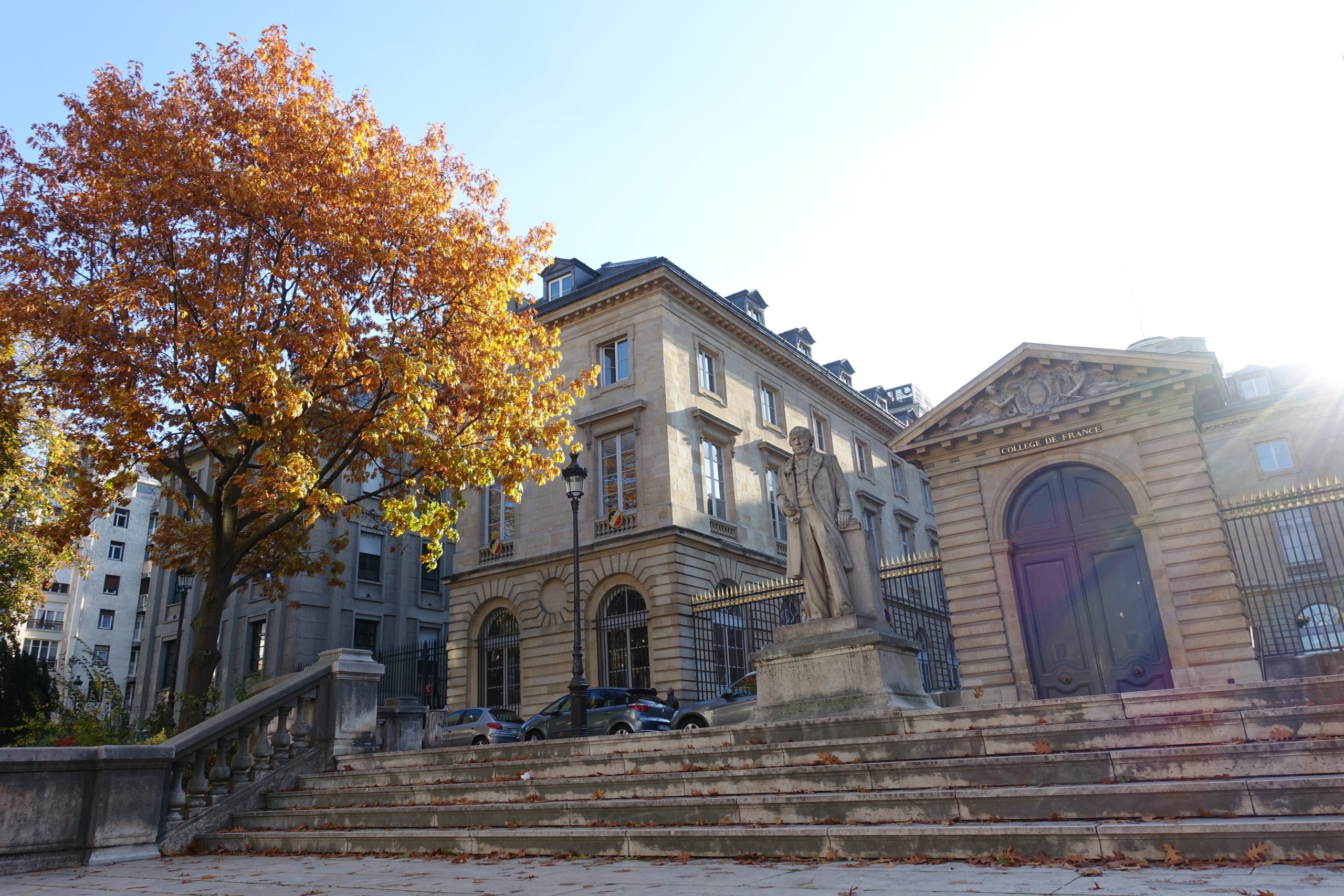
Guilhem Vellut: Collège de France, Paris, 2016 (CC)

In May 1940, the month of the invasion of France by Germany, a short book by the comparative mythologist and linguist Georges Dumézil was published. Entitled Mitra-Varuna: An Essay on Two Indo-Representations of Sovereignty, copies became very hard to find, and after the war Dumézil reedited the text with some changes. That revised edition appeared in March 1948. Forty years later, two years after Dumézil’s death, this second edition was translated into English by Derek Coltman with Zone books, though it has become hard to find and available only in libraries, pirated pdfs, or rather expensive second-hand copies. In 2023, the translation will become available again, in a new critical edition with HAU books. [continues here]

Sadly Berfrois is closing, so I want to thank Russell Bennetts and the team for their work, for being continually interesting, and for hosting several pieces of my writing over the years, including some reviews of texts by Foucault or about Foucault, a biography of Kantorowicz, on Kant, and a couple of pieces on Shakespeare.

Posted in Ernst Kantorowicz, Georges Dumézil, Immanuel Kant, Mapping Indo-European Thought in Twentieth Century France, Michel Foucault, William Shakespeare | Leave a comment