Milton Santos, The Nature of Space and For a New Geography, with a commentary at Progress in Political Economy [and discussion at New Books Network]

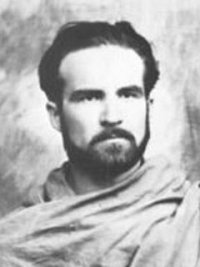
Milton Santos, The Nature of Space, translated by Brenda Baletti (Duke, 2021).

In The Nature of Space, pioneering Afro-Brazilian geographer Milton Santos attends to globalization writ large and how local and global orders intersect in the construction of space. Santos offers a theory of human space based on relationships between time and ontology. He argues that when geographers consider the inseparability of time and space, they can then transcend fragmented realities and partial truths without trying to theorize their way around them. Based on these premises, Santos examines the role of space, which he defines as indissoluble systems of objects and systems of actions in social processes, while providing a geographic contribution to the production of a critical social theory.

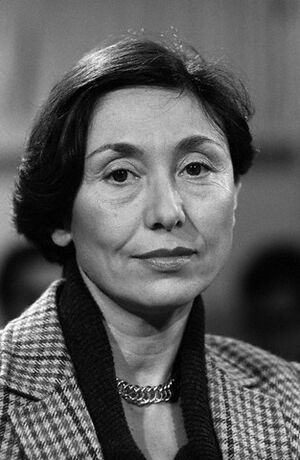
Milton Santos, For a New Geography, translated by Archie Davis (Minnesota, 2021)

Originally published in 1978 in Portuguese, For a New Geography is a milestone in the history of critical geography and it marked the emergence of its author, Milton Santos (1926–2001), as a major interpreter of geographical thought, a prominent Afro-Brazilian public intellectual, and one of the foremost global theorists of space.

Published in the midst of a crisis in geographical thought, For a New Geography functioned as a bridge between geography’s past and its future. In advancing his vision of a geography of action and liberation, Santos begins by turning to the roots of modern geography and its colonial legacies. Moving from a critique of the shortcomings of geography from the field’s foundations as a modern science to the outline of a new field of critical geography, he sets forth both an ontology of space and a methodology for geography. In so doing, he introduces novel theoretical categories to the analysis of space. It is, in short, both a critique of the Northern, Anglo-centric discipline from within and a systematic critique of its flaws and assumptions from outside.

There is a commentary by David Avilés Espinoza at Progress in Political Economy.

And a discussion at New Books Network with Archie Davis.

Posted in Uncategorized | 2 Comments

Cat Moir, Ernst Bloch’s Speculative Materialism – discussion, 14 December 2021

Beginning soon – the video stream is here https://www.youtube.com/watch?v=eYvjwe2OcDk

Update – ignore above link, please go to new link – https://www.youtube.com/watch?v=OAbO7tQS-fM

stuartelden's avatarProgressive Geographies

Cat Moir,Ernst Bloch’s Speculative Materialism: Ontology, Epistemology, Politics– hardback Brill 2019; paperbackHaymarket, 2020

Discussion 14 December 2021, 5pm – details and registration here

Update: the stream of this discussion will be here

Cat Moir’s 2020 book Ernst Bloch’s Speculative Materialism: Ontology, Epistemology, Politics (Historical Materialism Books, Brill & Haymarket Books) situates Bloch’s philosophy in the context of historical and contemporary debates about utopianism, science, and the theoretical and practical tasks of Marxism. Bloch’s project of a speculative materialism was famously dismissed by Jürgen Habermas as naïve and outdated. By reconstructing it and bringing it into conversation with current work in new materialism and ecological Marxism, Moir demonstrates its relevance for illuminating questions of agency and the human-nature relation that concern us today.

This online roundtable discussion broadcast by Historical Materialism brings together respondents with a wide range of relevant expertise to discuss the issues raised by…

View original post 30 more words

Posted in Uncategorized | Leave a comment

Shifting Territory and Sovereignty: People, Place and Power – interview on Radio Northern Beaches

Shifting Territory and Sovereignty: People, Place and Power – interview on Radio Northern Beaches with Michael Lester, Not a great recording of my voice, but hopefully listenable.

in conversation with stuart elden, professor, political theory and geography, warwick university, uk, a specialist in the study of ‘territory’ as a ‘modern’ idea of’exclusive property ownership (his book “the birth of territory”) we explore the birth of the concept, its history and development on a global scale, and its bearing on understanding contemporary challenges to territorial sovereignty as illustrated by the war on terror, the middle east, and the displacement of indigenous cultures with their unique concepts of the relationships between people, place and power. The modern notion is historically produced and the discussion reflects the pluralism of ways of thinking about territory.

Posted in Boundaries, Michel Foucault, Shakespearean Territories, Territory, Terror and Territory, The Birth of Territory, William Shakespeare | Leave a comment

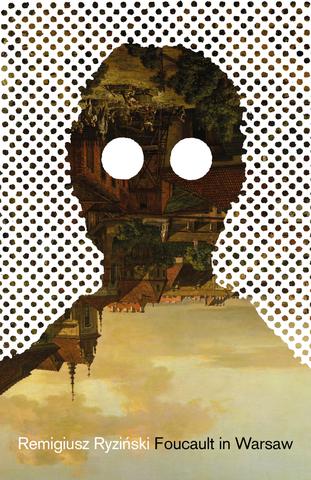
Foucault in the Panopticon (2021)

Remigiusz Ryziński’s Polish book on Foucault’s time in Warsaw now in English translation

Clare O'Farrell's avatarFoucault News

Foucault in the Panopticon
How Michel Foucault’s encounters in Poland’s heavily policed gay community informed his ideas
GEOFF SHULLENBERGER | Reason, FROM THE DECEMBER 2021 ISSUE

In 1958, the 32-year-old philosopher Michel Foucault arrived in Poland to assume the directorship of the Centre Français in Warsaw. Less than a year later, he abruptly left the country. According to a rumor that circulated for years, this rapid exit was precipitated by a sexual liaison with a young man who turned out to be on the payroll of the communist state’s secret police. Amid the minor scandal that ensued, the French embassy requested Foucault’s resignation and departure from Poland. His biographers have treated this Polish sojourn and the incident that brought it to an end as a footnote to his early career, covering it in a few pages.

In Foucault in Warsaw, first published in Polish in 2017 and now available…

View original post 37 more words

Posted in Uncategorized | Leave a comment

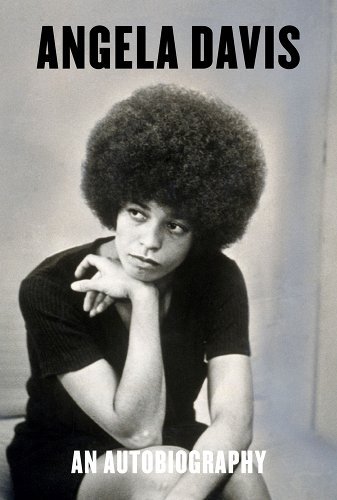
Angela Davis: An Autobiography – new edition, Haymarket, January 2022

Angela Davis: An Autobiography – new edition, Haymarket, January 2022

Angela Davis has been a political activist at the cutting edge of the Black Liberation, feminist, queer, and prison abolitionist movements for more than 50 years. First published and edited by Toni Morrison in 1974, An Autobiography is a powerful and commanding account of her early years in struggle. Davis describes her journey from a childhood on Dynamite Hill in Birmingham, Alabama, to one of the most significant political trials of the century: from her political activity in a New York high school to her work with the U.S. Communist Party, the Black Panther Party, and the Soledad Brothers; and from the faculty of the Philosophy Department at UCLA to the FBI’s list of the Ten Most Wanted Fugitives. Told with warmth, brilliance, humor and conviction, Angela Davis’s autobiography is a classic account of a life in struggle with echoes in our own time.

Posted in Uncategorized | Leave a comment

GUY DEBORD’S LETTERS & LIBRARY

Very interesting piece by Andy Merrifield about Guy Debord’s reading and writing.

Andy Merrifield's avatarandy merrifield

 Guy Debord has been dead twenty-seven years today. In Panegyric, his elegiac autobiography, the author of The Society of the Spectacle famously said that more than anything else his life had been marked by the habit of drinking, by consuming alcohol. “Among the small number of things I have liked and known how to do well,” he said, “what I have assuredly known how to do best is drink. Even though I have read a lot, I have drunk even more. I have written much less than most people who write, but I have drunk much more than most people who drink.”

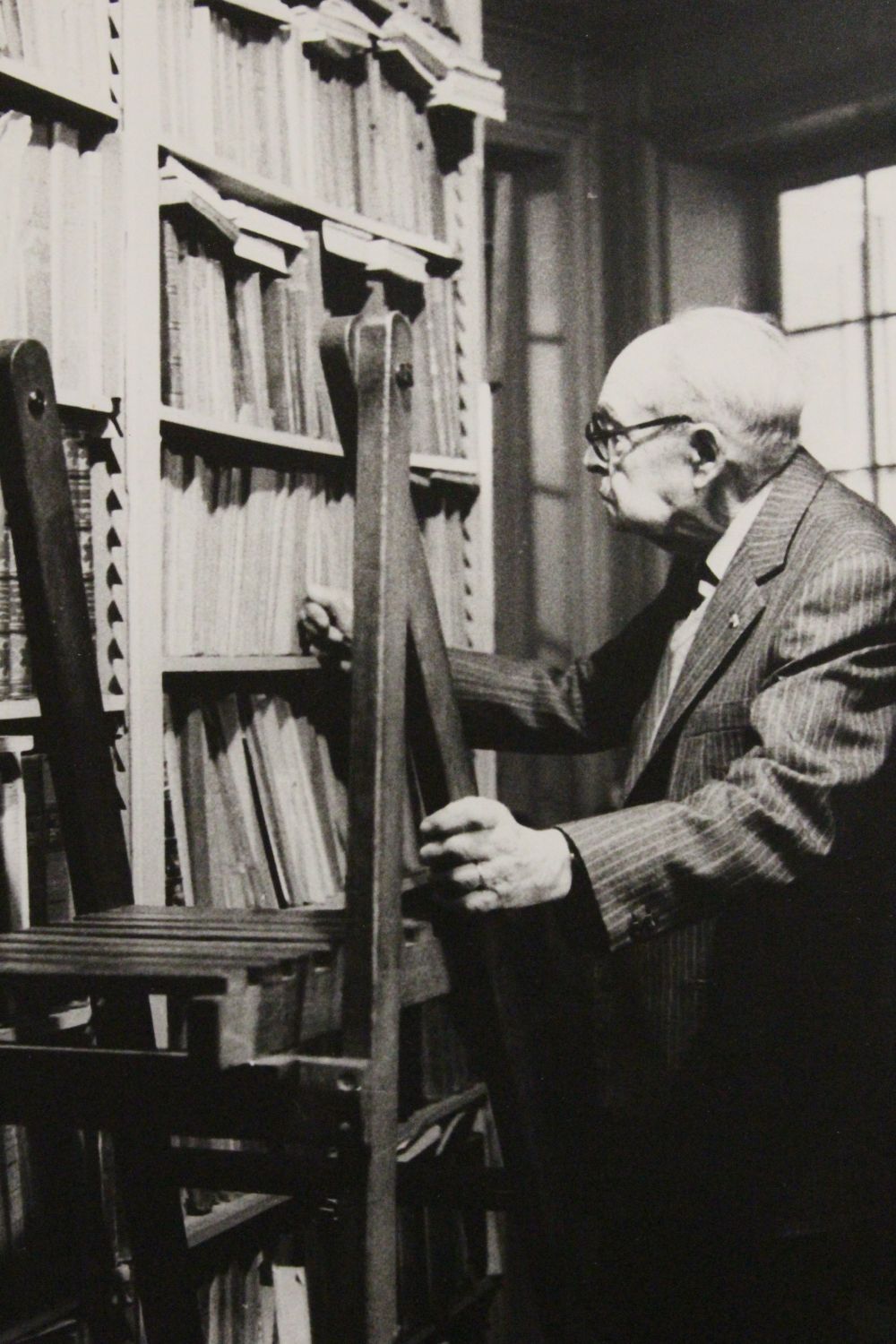
Yale University’s Beinecke Library houses many black and white photos of Debord, taken in Italy during the 1970s. These comprise part of the archive of the Italian Situationist Gianfranco Sanguinetti, Debord’s close friend and political confidant. The images are tremendously evocative of the times, when radical…

View original post 4,522 more words

Posted in Uncategorized | Leave a comment

Indo-European thought in twentieth-century France – the next major project

Although the manuscript on Foucault in the 1960s is not complete, the end is in sight, and I hope to have most of it done by early 2022. That book will complete my four-volume intellectual history of Foucault’s entire career. That’s the main thing I’ve been working on since 2013, although parts of the work date back to much earlier – I was working on the Collège de France courses from the first publications in the late 1990s and early 2000s. Bringing that to a close feels like the end of a significant era in my work. For the past couple of years I’ve been thinking about what might come next. 

Although I debated some other ideas, the next major project will be a study of Indo-European thought in twentieth-century France, looking at both French and émigré scholars, with a particular focus on Emile Benveniste, Georges Dumézil, Mircea Eliade and Julia Kristeva. 

As people who follow the blog, and especially the ‘books received’ posts may realise, I’ve been slowly building up a collection of their books. While some of Dumézil and Benveniste’s French books are still in print, many of the early ones are very hard to find, and often expensive. The relatively few English translations of Dumézil are nearly all out of print, and again rather expensive second-hand. Benveniste’s major works in English are either available again in a new edition or about to be. But there is a lot of earlier work which is hard to find. Books by Eliade and Kristeva are generally easier to locate. There is some secondary literature on them all, but not much in English on these questions in their work. There are extensive archives in France and Eliade’s papers are in Chicago.

This project will be generously funded by a Leverhulme major research fellowship, to run for three years from 1 October 2022. Here’s the opening part of the grant proposal I submitted.

What is Europe? Where is it located, who are its people and what languages do they speak? Thinking historically about these questions usually traces a lineage from classical Greece and Rome, through the Christianization of late antiquity and the Middle Ages to the present. In this fellowship I will explore a quite different tradition of thinking. This is the pioneering research conducted on Indo-European mythology, language and thought in twentieth-century France, by both French and émigré scholars. 

Indo-European scholarship makes a central contribution to Europe’s self-understanding and its relation to the wider world. Although twentieth-century French scholarship has often been accused of Eurocentrism or orientalism, this fellowship will explore a much more complicated picture. This tradition shows the importance of extra-European sources in India and Iran, and the crucial role of Europe’s geographical peripheries – Ireland, Scandinavia and the Caucasus as well as its core of Greece, Rome, France and Germany. The vision of a classical world that emerges is much more unsettling and unfamiliar than uncritical lineages from antiquity to the modern West might suggest. This tradition therefore situates Europe within a broader heritage which challenges many of the boundaries drawn in more conventional accounts, both geographical, linguistic and racial. 

While French theory has been extensively discussed in Anglophone scholarship, with studies and biographies of nearly all the key figures and movements, the work on Indo-European thought has not been analysed in the same way, despite its importance and often obscured influence. This project will explore this body of work in detail. Four thinkers will be examined in particular: the comparative mythologist and philologist Georges Dumézil (1898-1986), the linguist Émile Benveniste (1902-1976), and two émigré scholars who worked in France, Mircea Eliade (1907-1986) and the early work of Julia Kristeva (1941-). For this project I will utilise the approach I have developed and successfully employed in previous work. My research is distinguished by working with texts in their original language, comparative work between editions, the use of archival sources, and a careful contextualisation of the history of ideas. The research will therefore be historical, philological and philosophical in its approach, and political, geographical and sociological in its importance.

As expansive as this work was, one crucial and troubling question is what is meant by Indo-European? A hypothetical language, from which others developed; a civilisation, with myths and history; or, most problematically, a racial ideal? These questions are inherently political, and there are controversies around this work which need to be fully explored. Such issues remain important and pressing today with a rise of populism, nationalism and reactionary politics, as well as a crisis of democracy and the appropriate of mythology by the right. A historical study, embedding these writings in an intellectual context and a European network of ideas, is thus both timely as well as overdue.

There is a page for the project here, though at the moment it only gives the above information. I plan to update it when I begin work next year. The first major task will be a critical edition of Georges Dumézil’s Mitra-Varuna: An Essay on Two Indo-European Concepts of Sovereignty. I have a chapter on Foucault and Dumézil forthcoming, and may write another piece on Foucault’s use of his work. But for now the focus is completing the final Foucault book.

Posted in Emile Benveniste, Georges Dumézil, Julia Kristeva, Mapping Indo-European Thought in Twentieth Century France, Michel Foucault, Mircea Eliade, The Archaeology of Foucault, Uncategorized | Leave a comment

Alex Danchev, Magritte: A Life – Profile, November 2021

Alex Danchev, Magritte: A Life – Profile, November 2021

Great to see this book is now out – completed after Danchev’s untimely death by Sarah Whitfield. There is a review in The Guardian.

‘The first significant biography of the artist’ Michael Prodger, The Times’ ‘Best art books of 2021’

‘For those who love Magritte and those who do not, Danchev’s biography will come as a revelation’ Literary Review

‘[A] monumental biography of the inimitable surrealist artist … sure to be the definitive account of the extraordinary artist’s life’ Publishers Weekly

The first major biography for our time, from the celebrated biographer of Cézanne

René Magritte’s surreal sensibility, deadpan melodrama, and fine-tuned outrageousness have all become inescapably part of our times. But these groundbreaking subversions all came from a middle-class Belgian gent, who kept a modest house in a Brussels suburb and whose first one-man show sold absolutely nothing. 

Through a deep examination of Magritte’s friendships and his artistic development, Alex Danchev explores the path of an highly unconventional artist who posed profound questions about the relationship between image and reality, challenged the very nature of authenticity and whose influence can be seen in the work of everyone from Jasper Johns to Beyoncé.

Posted in Uncategorized | 1 Comment

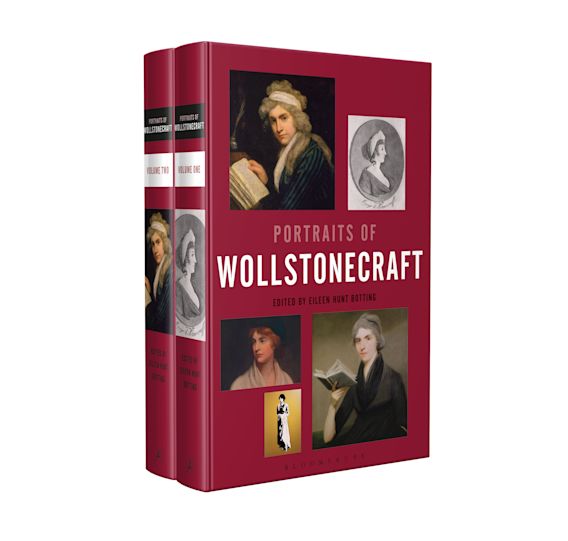
Eileen Hunt Botting (ed.), Portraits of Wollstonecraft, two volumes, Bloomsbury, May 2021

Eileen Hunt Botting (ed.), Portraits of Wollstonecraft, two volumes, Bloomsbury, May 2021

A major, and very expensive, reference work on Mary Wollstonecraft.

Mary Wollstonecraft’s watershed contribution to theories of women’s human rights and her international reception by both Western and non-Western intellectuals has ensured she continues to shape contemporary human rights debates around the world. Bringing together over 100 individual responses to Wollstonecraft’s life and work, Portraits of Wollstonecraft documents her international and cross-cultural reception from the late 18th-century to the early 21st-century.

Reflecting on over two centuries of responses to her political ideas, writing, and philosophy, it counters the persistent myth that she ceased to be read in the aftermath of the publication of her husband William Godwin’s scandalous posthumous Memoirs of her life in 1798. Beginning with her earliest portraiture and the first reviews of her published writings from the late 1780s, Volume I traces her emergence as an international public figure of women’s rights in her life, work, and philosophical, literary, and artistic reception throughout Britain, Ireland, Continental Europe, North and South America, and across the British Empire and its former colonies from Jamaica to India to South Africa. Volume II focuses on Wollstonecraft’s posthumous philosophical, literary, and artistic reception, especially within modern strands of feminism, by assembling responses from China, Japan, and South Korea as well as writing by Mary Shelley, Emma Goldman, Ruth Benedict, Virginia Woolf, Simone de Beauvoir, Betty Friedan, Susan Moller Okin, Barbara Johnson, Martha Nussbaum, and Amartya Sen that discusses her theories of virtue, love, gender, education, and rights.

Bringing to light many forgotten accounts and images of Wollstonecraft, pieces by major thinkers from across the history of philosophy, and 31 annotated illustrations showing her development into a feminist icon, Portraits of Wollstonecraft achieves what no other work on Wollstonecraft has yet to do. This comprehensive collection charts the depth and breadth of her legacies for philosophy, political theory, ethics, literature, art, and feminism on a global scale.

Posted in Uncategorized | Leave a comment

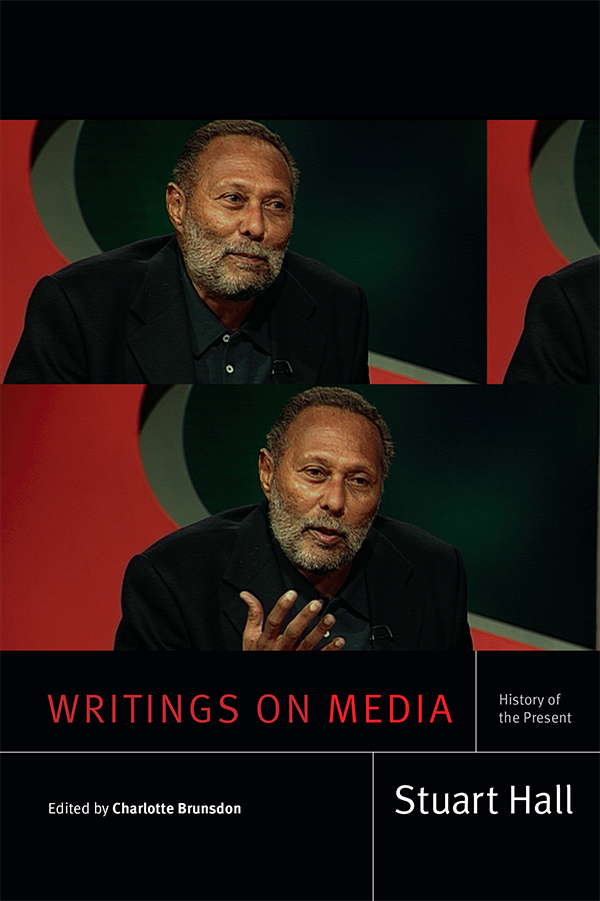
Stuart Hall, Writings on Media: History of the Present – Duke University Press, November 2021; and BBC Sounds ‘Afterwords: Stuart Hall’

Stuart Hall, Writings on Media: History of the Present, edited by Charlotte Brunsdon – Duke University Press, November 2021. This is the latest volume in the Selected Writings series.

Writings on Media gathers more than twenty of Stuart Hall’s media analyses, from scholarly essays such as “Encoding and Decoding in the Television Discourse” (1973) to other writings addressed to wider publics. Hall explores the practices of news photography, the development of media and cultural studies, the changing role of television, and how the nation imagines itself through popular media. He attends to Britain’s imperial history and the politics of race and cultural identity as well as the media’s relationship to the political project of the state. Testifying to the range and agility of Hall’s critical and pedagogic engagement with contemporary media culture—and also to his collaborative mode of working—this volume reaffirms his stature as an innovative media theorist while demonstrating the continuing relevance of his methods of analysis.

BBC Sounds – Afterwords: Stuart Hall

Posted in Stuart Hall, Uncategorized | Leave a comment