
Historiography of Science in South America (Argentina, Brazil and Uruguay) – Transversal special issue (open access)
Historiography of Science in South America (Argentina, Brazil and Uruguay) – Transversal special issue (open access)
Andy Merrifield’s tribute to Clive Barnett
When I heard the geographer Clive Barnett had passed away on Christmas Eve, it took me a while to reconcile that it was the Clive Barnett who’d died, the Clive Barnett I hadn’t seen for many years yet whom I still considered one of my closest friends. I can’t believe Clive has gone. At Oxford, for three years—late ’80s/early ’90s—I’d shared with him some of the happiest moments of my life. We were doing our DPhils together, under David Harvey’s watch, became inseparable, like brothers, living in rooms next door to one another, drinking and eating together, arguing together, staying up all night together, reading the same things, almost breathing the same things.
In those days, Clive was a desperately shy lad, with a freshly minted BA from Churchill College, Cambridge. I was almost a decade older, a “mature student” from Liverpool Polytechnic. I always called him “young man”—not condescendingly…
View original post 644 more words
At the end of each year I’ve posted a list of academic books I liked (2013, 2014, 2015, 2016, 2017, 2018, 2019, 2020). The criteria was simply that they were published in that year (or late the previous year), and that I read and appreciated them. Some of these are books I reviewed or endorsed, and some are by friends and colleagues. It’s of course biased by my interests and prejudices. I’m sure I’ve missed loads of other great books, and haven’t yet read all the ones I’ve bought or been sent, but I can at least say that these are all worth reading.
Rowland Atkinson, Alpha City: How London was Captured by the Super-Rich (Verso)
Huw Beynon and Ray Hudson, The Shadow of the Mine: Coal and the End of Industrial Britain (Verso)
Alain Brossat and Daniele Lorenzini (eds.) Foucault et… Les liaisons dangereuses de Michel Foucault (Vrin)
Rey Chow, A Face Drawn in Sand: Humanistic Inquiry and Foucault in the Present (Columbia)
Klaus Dodds, Border Wars: The Conflicts of Tomorrow (Ebury)
Jessica Dubow, In Exile: Geography, Philosophy and Judaic Thought (Bloomsbury)
Arlette Farge, Instants de Vie (EHESS)
Marta Faustino and Gianfranco Ferraro (eds.), The Late Foucault: Ethical and Political Questions (Bloomsbury)
Jennifer Forestal and Menaka Philips (eds.) The Wives of Western Philosophy: Gender Politics in Intellectual Labour (Routledge)
Michel Foucault Sexuality: The 1964 Clermont-Ferrand and 1969 Vincennes Lectures, edited by Claude-Olivier Doron, translated by Graham Burchell (Columbia) – which I endorsed
Michel Foucault, Binswanger et l’analyse existentielle, edited by Elisabetta Basso (EHESS/Gallimard/Seuil)
Matthew Fuller and Eyal Weizman, Investigative Aesthetics: Conflicts and Commons in the Pursuit of Truth (Verso)
Antonio Gramsci, Subaltern Social Groups: A Critical Edition of Prison Notebook 25, edited and translated by Joseph A . Buttigieg and Marcus E. Green (Columbia)
Christopher Harker, Spacing Debt: Obligations, Violence, and Endurance in Ramallah, Palestine (Duke)
Samantha Rose Hill, Hannah Arendt (Reaktion)
Reece Jones, White Borders: The History of Race and Immigration in the United States from Chinese Exclusion to the Border Wall (Beacon)
Anthony King, Urban Warfare in the Twenty-First Century (Polity)
Claude Lévi-Strauss, Wild Thought: A New Translation of ‘La Pensée Sauvage, translated by Jeffrey Mehlman and John Leavitt (Chicago)
Achille Mbembe, Out of the Dark Night: Essays on Decolonization (Columbia)
Cat Moir, Ernst Bloch’s Speculative Materialism: Ontology, Epistemology, Politics – Brill 2019; paperback Haymarket, 2021
Mark Neocleous, A Critical Theory of Police Power : The Fabrication of the Social Order (Verso, 2nd edition) – which I endorsed
Rachael Squire, Undersea Geopolitics: Sealab, Science, and the Cold War (Rowman) – which I endorsed
Intolerable: Writings from Michel Foucault and the Prisons Information Group (1970–1980), edited by Kevin Thompson and Perry Zurn (Minnesota) – which I endorsed
Illan rua Wall, Law and Disorder: Sovereignty, Protest, Atmosphere (Routledge)
Naomi Waltham-Smith, Shattering Biopolitics: Militant Listening and the Sound of Life (Fordham)
Alphabetical list of the music I enjoyed the most this year… Most bought on cd or blu-ray, though increasingly stuff on bandcamp too. Mostly rock, but also jazz, string quartets, ambient, solo piano, and probably the most peculiar/interesting thing I’ve heard this year – solo bass clarinet and saxophone recorded inside a box girder.
I missed live music, seeing only a few shows, and lots of things cancelled or postponed. Streaming live concerts, especially from Nik Bärtsch’s Ronin and Mobile, helped.
For previous years, see the lists from 2020, 2019, 2018, 2017, 2016, 2015, 2014, 2013 and 2012.
A very interesting interview with Perry Zurn and Kevin Thompson, editors of the Intolerable collection.
 Interview podcast with Kevin Thompson and Perry Zurn, editors of Intolerable. Writings from Michel Foucault and the Prisons Information Group (1970-1980), UNIVERSITY OF MINNESOTA PRESS 2021, New Books Network, Dec 20, 2021
Intolerable: Writings from Michel Foucault and the Prisons Information Group (1970-1980)(University of Minnesota Press, 2021), edited by Kevin Thompson and Perry Zurn, is a groundbreaking collection of writings by Michel Foucault and the Prisons Information Group documenting their efforts to expose France’s inhumane treatment of prisoners
Founded by Michel Foucault and others in 1970-71, the Prisons Information Group (GIP) circulated information about the inhumane conditions within the French prison system. Intolerable makes available for the first time in English a fully annotated compilation of materials produced by the GIP during its brief but influential existence, including an exclusive new interview with GIP member Hélène Cixous and writings by Gilles Deleuze and Jean Genet.
These…
View original post 204 more words
Mario Damen and Kim Overlaet (eds.), Constructing and Representing Territory in Late Medieval and Early Modern Europe – Amsterdam University Press, December 2021
The book is available open access
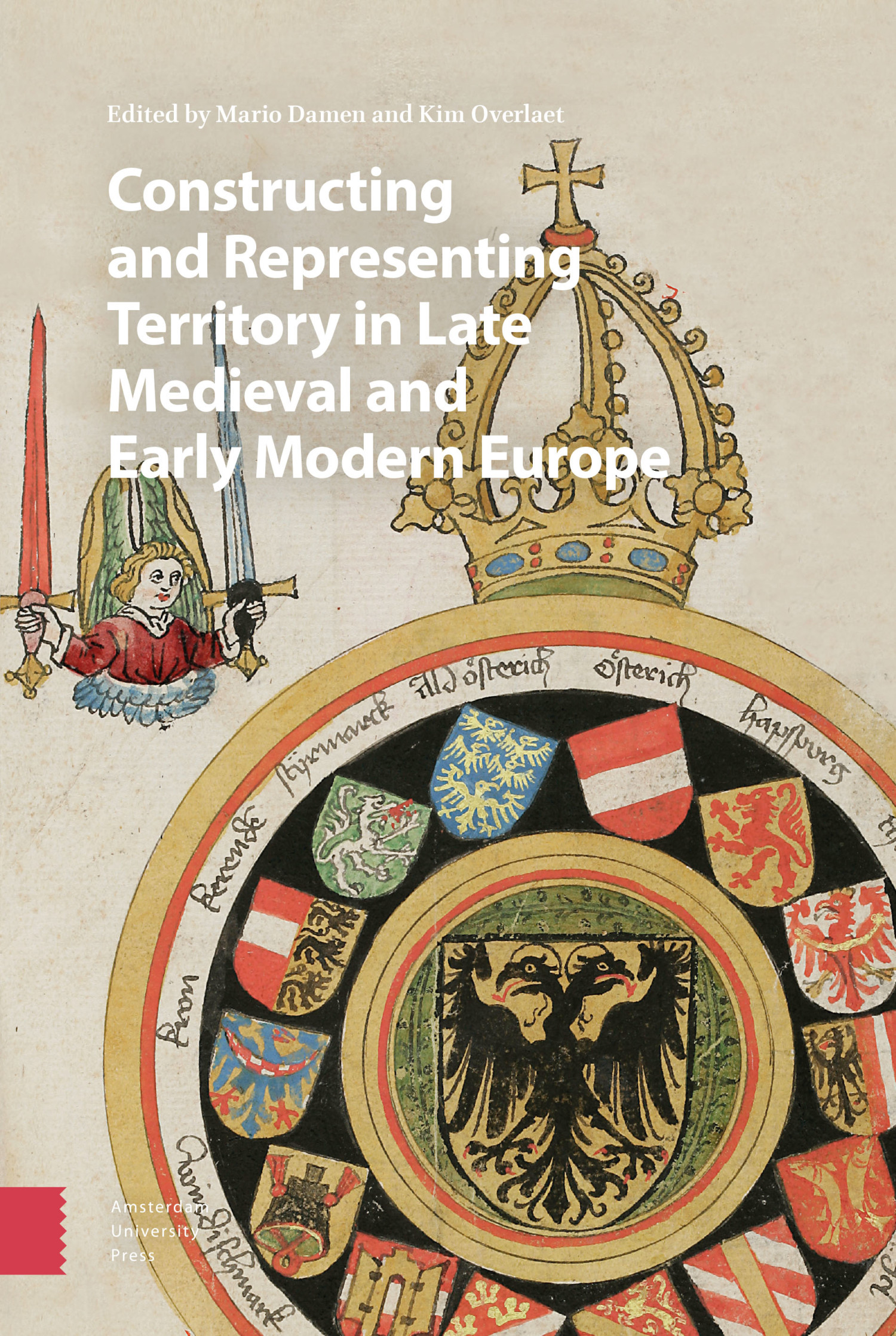
In recent political and legal history, scholars seldom specify how and why they use the concept of territory. In research on state-formation processes and nation building, for instance, the term mostly designates an enclosed geographical area ruled by a central government. Inspired by ideas from political geographers, this book explores the layered and constantly changing meanings of territory in late medieval and early modern Europe before cartography and state formation turned boundaries and territories into more fixed (but still changeable) geographical entities. Its central thesis is that assessing the notion of territory in a pre-modern setting involves analysing territorial practices: practices that relate people and power to space(s). The essays in this book not only examine the construction and spatial structure of pre-modern territories but also explore their perception and representation through the use of a broad range of sources: from administrative texts to maps, from stained-glass windows to chronicles.

Foucault Studies 31 now published. As ever, all articles are open access.
It includes a symposium on Richard Shusterman’s Ars Erotica and the collection of the Prison Information Group’s Intolerable, other articles and reviews.
The entire issue can be downloaded here; table of contents with individual article download links here.
Mainly bought second-hand for the new project, along with Milton Santos, For a New Geography, sent by University of Minnesota Press, and Cat Moir, Ernst Bloch’s Speculative Materialism.

Philipp Felsch, The Summer of Theory: History of a Rebellion, 1960-1990, (Translated by Tony Crawford), Polity, 2021
 Philipp Felsch, The Summer of Theory: History of a Rebellion, 1960-1990, (Translated by Tony Crawford), Polity, 2021
‘Theory’ – a magical glow has emanated from this word since the sixties. Theory was more than just a succession of ideas: it was an article of faith, a claim to truth, a lifestyle. It spread among its adherents in cheap paperbacks and triggered heated debates in seminar rooms and cafés. The Frankfurt School, Structuralism, Post-Structuralism, Adorno, Derrida, Foucault: these and others were the exotic schools and thinkers whose ideas were being devoured by young minds. But where did the fascination for dangerous thoughts come from?
In his magnificently written book, Philipp Felsch follows the hopes and dreams of a generation that entered the jungle of difficult texts. His setting is West Germany in the decades from the 1960s to the 1990s: in a world frozen in the Cold War, movement only…
View original post 98 more words
Milton Santos, The Nature of Space, translated by Brenda Baletti (Duke, 2021).
In The Nature of Space, pioneering Afro-Brazilian geographer Milton Santos attends to globalization writ large and how local and global orders intersect in the construction of space. Santos offers a theory of human space based on relationships between time and ontology. He argues that when geographers consider the inseparability of time and space, they can then transcend fragmented realities and partial truths without trying to theorize their way around them. Based on these premises, Santos examines the role of space, which he defines as indissoluble systems of objects and systems of actions in social processes, while providing a geographic contribution to the production of a critical social theory.
Milton Santos, For a New Geography, translated by Archie Davis (Minnesota, 2021)
Originally published in 1978 in Portuguese, For a New Geography is a milestone in the history of critical geography and it marked the emergence of its author, Milton Santos (1926–2001), as a major interpreter of geographical thought, a prominent Afro-Brazilian public intellectual, and one of the foremost global theorists of space.
Published in the midst of a crisis in geographical thought, For a New Geography functioned as a bridge between geography’s past and its future. In advancing his vision of a geography of action and liberation, Santos begins by turning to the roots of modern geography and its colonial legacies. Moving from a critique of the shortcomings of geography from the field’s foundations as a modern science to the outline of a new field of critical geography, he sets forth both an ontology of space and a methodology for geography. In so doing, he introduces novel theoretical categories to the analysis of space. It is, in short, both a critique of the Northern, Anglo-centric discipline from within and a systematic critique of its flaws and assumptions from outside.


There is a commentary by David Avilés Espinoza at Progress in Political Economy.
And a discussion at New Books Network with Archie Davis.


