
Dave Beer, ‘Editing Bits‘ – some very interesting reflections on writing and especially about stages of editing a manuscript.
There are lots most things about Writing and Publishing – posts from me and links on this site.

Dave Beer, ‘Editing Bits‘ – some very interesting reflections on writing and especially about stages of editing a manuscript.
There are lots most things about Writing and Publishing – posts from me and links on this site.
Peter Merriman, Space – Routledge, Key Ideas in Geography, February 2022
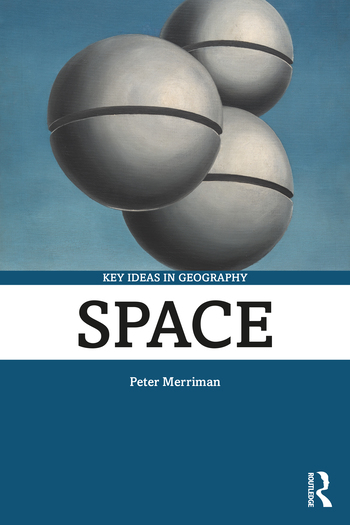
Space is the first accessible text which provides a comprehensive examination of approaches that have crossed between such diverse fields as philosophy, physics, architecture, sociology, anthropology, and geography.
The text examines the influence of geometry, arithmetic, natural philosophy, empiricism and positivism to the development of spatial thinking, as well as focussing on the contributions of phenomenologists, existentialists, psychologists, Marxists and post-structuralists to how we occupy, live, structure, and perform spaces and practices of spacing. The book emphasises the multiple and partial construction of spaces through the embodied practices of diverse subjects, highlighting the contributions of feminists, queer theorists, anthropologists, sociologists and post-colonial scholars to academic debates. In contrast to contemporary studies which draw a clear line between scientific and particularly quantitative approaches to space and spatiality and more ‘lived’ human enactments and performances, this book highlights the continual influence of different mathematical and philosophical understandings of space and spatiality on everyday western spatial imaginations and registers in the twenty-first century.
Space is possibly the key concept underpinning research in geography, as well as being of central importance to scholars and practitioners working across the arts, humanities, social sciences, and physical sciences.
1. Introduction 2. Genealogies of Western Spatial Thinking 3. Geometric and Arithmetic Spaces 4. Psy-Spaces and Spatialities 5. Phenomenological and Existential Spatialities 6. Different Spatialities / Spaces of Difference 7. Production, Structuring and the Spatialities of Power 8. Representing, Practising, Spacing 9. Conclusions Addendum: COVID-19 Spaces and Spatialities in the UK
‘Space is one of the most taken-for-granted, contested, and elusive of geographical concepts. In this engaging and accessible book, Peter Merriman guides us expertly through the twists and folds in the emergence of western conceptions of space and spatiality. Skillfully drawing together and appraising the most influential approaches to this complex topic, Merriman provides a compelling account of how space can be understood as abstract, lively, and intensely political. Merriman’s book will be an important and welcome resource for anyone in the social sciences and humanities seeking to make sense of how and why space matters.’
Derek McCormack, Professor of Cultural Geography, University of Oxford, UK
‘In this comprehensive survey, Peter Merriman provides a valuable map of the different ways in which space has been understood and practiced. An excellent guide for students – and their teachers – in a range of disciplines.’
Stuart Elden, Professor of Political Theory and Geography, Warwick University, UK
‘Space is both the most obvious thing in the world – where would we all be without it? what would we all be without it? – and an enigma. As we play with it, it plays with us. Peter Merriman does a fine job of outlining all of the ways in which writers from many disciplines have played with and practised space, sensed and been sensed by it. A classic.’
Sir Nigel Thrift, Visiting Professor at the University of Oxford and Tsinghua University and an Emeritus Professor at the University of Bristol, UK

Mostly bought second-hand, but also the new translation of Foucault’s early courses on sexuality from Columbia University Press. My endorsement is on the website but didn’t make the cut for the back cover.
Intolerable: Writings from Michel Foucault and the Prisons Information Group (1970-1980), University of Minnesota Press – book launch, 3 September 2021
The book was edited by Kevin Thompson and Perry Zurn, and translated by Perry Zurn and Erik Beranek. Register for the launch here.

Founded by Michel Foucault and others in 1970–71, the Prisons Information Group (GIP) circulated information about the inhumane conditions within the French prison system. Intolerable makes available for the first time in English a fully annotated compilation of materials produced by the GIP during its brief but influential existence, including an exclusive new interview with GIP member Hélène Cixous and writings by Gilles Deleuze and Jean Genet.
These archival documents—public announcements, manifestos, reports, pamphlets, interventions, press conference statements, interviews, and round table discussions—trace the GIP’s establishment in post-1968 political turmoil, the new models of social activism it pioneered, the prison revolts it supported across France, and the retrospective assessments that followed its denouement. At the same time, Intolerable offers a rich, concrete exploration of Foucault’s concept of resistance, providing a new understanding of the arc of his intellectual development and the genesis of his most influential book, Discipline and Punish.
Presenting the account of France’s most vibrant prison resistance movement in its own words and on its own terms, this significant and relevant collection also connects the approach and activities of the GIP to radical prison resistance movements today.
The Prisons Information Group was a crucial part of Foucault’s political trajectory, but it was an intensely collaborative project between intellectuals, prisoners, and their families. Expertly translated and introduced, this is the definitive collection of the group’s writings. Although the focus is France, the texts also illuminate other European countries, while the Algerian war opens up questions of colonialism, and the group’s links to the Black Panthers make it important for an understanding of the politics of race. A significant book that is both long overdue and a timely intervention in contemporary debates about police and prison abolition and reform.—
Stuart Elden, author of The Early Foucault
Intolerable contributes to incarceration studies by highlighting the contributions (and pointing to the contradictions) of the Prisons Information Group (GIP). By emphasizing the activism of the GIP, it demonstrates how the author and theorist as an academic activist was influenced by the militancy of political actors and revolutionaries who took great risks, especially as incarcerated intellectuals and rebels, to challenge repression structured by racial/colonial capitalism and captivity.—
Joy James, author of Seeking the Beloved Community: A Feminist Race Reader
Human Geography special issue – Friedrich Engels and Geography
The Introduction by Camilla Royle is open access, the rest requires subscription

Friedrich Engels (1820–1895) was Marx’s closest collaborator. He was influential in promoting Marxism both during Marx’s lifetime and after it. However, he is mentioned less often than Marx in geography. This editorial introduces a special issue of Human Geography on Friedrich Engels and Geography. It gives a brief overview of the key events in his life, discusses some of the geographical themes in Engels’ work – especially his relevance for work in political ecology, urbanism and geopolitics – and outlines the contents of the special issue.
Karla Mallette, Lives of the Great Languages: Arabic and Latin in the Medieval Mediterranean – University of Chicago Press, 2021
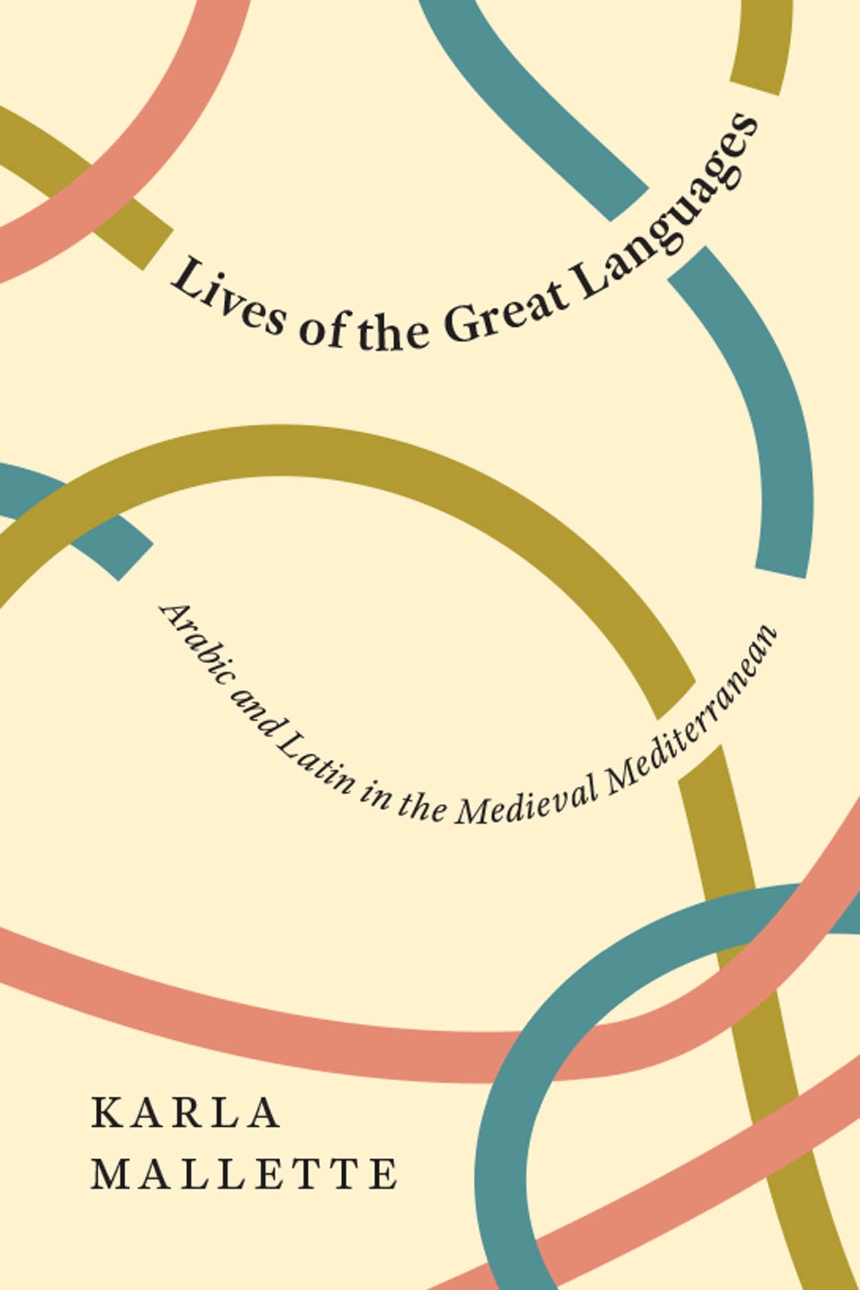
The story of how Latin and Arabic spread across the Mediterranean to create a cosmopolitan world of letters.
In this ambitious book, Karla Mallette studies the nature and behaviors of the medieval cosmopolitan languages of learning—classical Arabic and medieval Latin—as they crossed the Mediterranean. Through anecdotes of relationships among writers, compilers, translators, commentators, and copyists, Mallette tells a complex story about the transmission of knowledge in the period before the emergence of a national language system in the late Middle Ages and early modernity.Mallette shows how the elite languages of learning and culture were only tenuously related to the languages of everyday life. These languages took years of study to master, marking the passage from intellectual childhood to maturity. In a coda to the book, Mallette speculates on the afterlife of cosmopolitan languages in the twenty-first century, the perils of monolingualism, and the ethics of language choice. The book offers insight for anyone interested in rethinking linguistic and literary tradition, the transmission of ideas, and cultural expression in an increasingly multilingual world.
Theory Talk #75: Tarak Barkawi

In this Talk, Tarak Barkawi discusses the importance of the archive and real-world experiences, at a time of growing institutional constraints. He reflects on the growing rationalization and “schoolification” of the academy, a disciplinary and epistemological politics institutionalized within a university audit culture, and the future of IR in a post-COVID world. He also discusses IR’s contorted relationship to the archive, and explore future sites of critical innovation and inquiry, including the value of knowledge production outside of the academy.
Japhy Wilson, Reality of Dreams: Post-Neoliberal Utopias in the Ecuadorian Amazon – Yale University Press, September 2021
An exploration of radical megaprojects in the Ecuadorian Amazon, considering the fate of utopian fantasies under conditions of global capitalism
From 2007 to 2017, the “Citizens’ Revolution” launched an ambitious series of post-neoliberal megaprojects in the remote Amazonian region of Ecuador, including an interoceanic transport corridor, a world-leading biotechnology university, and a planned network of two hundred “Millennium Cities.” The aim was to liberate the nation from its ecologically catastrophic dependence on Amazonian oil reserves, while transforming its jungle region from a wild neoliberal frontier into a brave new world of “twenty-first-century socialism.” This book documents the heroic scale of this endeavor, the surreal extent of its failure, and the paradoxical process through which it ended up reinforcing the economic model that it had been designed to overcome. It explores the phantasmatic and absurd dimensions of the transformation of social reality under conditions of global capitalism, deconstructing the utopian fantasies of the state, and drawing attention to the eruption of insurgent utopias staged by those with nothing left to lose.
“Reality of Dreams is theoretically and empirically rich, deeply researched, closely argued, and very well written. This highly original work dismantles the developmental fantasies of the petro-state, showing how they crash miserably against the reality of petro-capitalism and how possibilities of radical social change emerge spontaneously from their debris.”—Mazen Labban, author of Space, Oil and Capital
“Reality of Dreams hovers in exciting ways over shadows cast by the secret dread animating all theory—that in the not so long run, nothing makes sense. What we have are fantasies rendered in ruins midst the juggernaut of ‘development.’ It is grotesque. It is absurd. It is unbelievable.”—Michael Taussig, author of Mastery of Non-Mastery in the Age of Meltdown
“Reality of Dreams is an epic tale of heroic modernization that takes us into the dark, dystopian heart of the post-neoliberal Citizens’ Revolution and President Correa’s petro-dream world, emerging into a world ever more fit for capitalist plunder.”—Michael J. Watts, Class of 1963 Professor of Geography and Development Studies Emeritus, University of California, Berkeley
“From the Jesuits, to Jonestown, to the (failed) from-scratch urban modernist ventures, Amazonia has not lacked for utopian experiments. Japhy Wilson’s fantastic book explores the Ecuadorian iteration of yet another tropical urban utopia fever dream.”—Susanna B. Hecht, author of Scramble for the Amazon and Fate of the Forest
Edward S. Casey, Turning Emotion Inside Out: Affective Life Beyond the Subject – Northwestern University Press, November 2021
In Turning Emotion Inside Out, Edward S. Casey challenges the commonplace assumption that our emotions are to be located inside our minds, brains, hearts, or bodies. Instead, he invites us to rethink our emotions as fundamentally, although not entirely, emerging from outside and around the self, redirecting our attention from felt interiority to the emotions located in the world around us, beyond the confines of subjectivity.
This book begins with a brief critique of internalist views of emotion that hold that feelings are sequestered within a subject. Casey affirms that while certain emotions are felt as resonating within our subjectivity, many others are experienced as occurring outside any such subjectivity. These include intentional or expressive feelings that transpire between ourselves and others, such as an angry exchange between two people, as well as emotions or affects that come to us from beyond ourselves. Casey claims that such far‑out emotions must be recognized in a full picture of affective life. In this way, the book proposes to “turn emotion inside out.”
“Turning Emotion Inside Out is a profoundly original and moving book, rife with transformative insights on emotions, that shows how emotions weave through the fabric of our social and political life, and affect, sustain, or deny us, outside in. Drawing on a vast range of sources, from ancient philosophy to recent feminism, psychology, and experiences of protest in our moment of crisis, Casey offers timely yet enduring lessons for philosophers, humanists, artists, and activists seeking better ways of living together.” —David Morris, author of Merleau-Ponty’s Developmental Ontology (Northwestern University Press, 2018)
“This is a bold and exciting book, opening up some new ways to think about, and experience, our emotional life, radically breaking out of the philosophical subjectivism that has for centuries imprisoned emotions inside the physiological body, not only neglecting their intricate engagement with the world, but also thereby denying them any claim to truth. But in chapters that turn all our prevailing models of emotion inside out, Edward Casey does more than rehabilitate the truth in emotion; he gives us a phenomenology of ‘material implications’ that, in an abundance of vivid descriptions, reconnects our emotions to the world that brings them forth, giving us a new sense of their ways of bearing affective meaning and power.” —David M. Kleinberg-Levin, author of Before the Voice of Reason: On Merleau-Ponty’s Ecology and Levinas’s Ethics
“An original, painterly exploration of emotion through its fluidity, textures, and surprising location beyond the self. This is yet another an important work by a profound thinker in the phenomenological tradition.” —Cynthia Willett, coauthor of Uproarious: How Feminist and Other Subversive Comics Speak Truth
“What if emotions are more out there than in here? With this provocative question, Edward S. Casey invites us on a fascinating emotional journey both in time (via the history of philosophy) and in place (through his phenomenological descriptions of emotional placescapes). Turning Emotion Inside Out not only demonstrates the insufficiency of thinking of emotion as a private and subjective phenomenon, it also shows the ethical and political consequences of the realisation that emotions are somewhere beyond our minds and our bodies. This book marks a new moment in the philosophy of emotion and is an important contribution to the study of experience more generally.” —Donald A. Landes, author of Merleau-Ponty and the Paradoxes of Expression
“Edward S. Casey again realizes the promise of phenomenology’s original aim of ‘back to the things themselves’ in his periphenomenological approach, rescuing emotion from the distorted traditional philosophical and cultural views of them as subjective, individualizing, or intrapsychic phenomena. Casey employs compelling concrete descriptions and analyses of how emotions come to us from and return to a public world as vital to the sense of both our personal and shared situations . . . An inspired and inspiring book: heartfelt, enlightening traditional approaches, and timely, too!” —Glen A. Mazis, author of Merleau-Ponty and the Face of the World: Silence, Ethics, Imagination and Poetic Ontology
“Casey offers a brilliant and timely phenomenology of affetivity. Tracking our western understanding of emotion from Plato to Merleau-Ponty, he shows how it has twisted and turned between introversion and extraversion. He makes a passionate plea for a new life of affective attunement in our relationship to art, politics and the environment.” —Richard Kearney, author of Touch: Recovering Our Most Vital Sense

Acid Horizon podcast: ‘Foucault (With Hair)’ – discussion of The Early Foucault
On this episode, Adam and Will are joined by Stuart Elden to discuss his latest book, The Early Foucault. We discuss the academic experiences and personal relationships that were formative in the Foucault’s development as an intellectual. The conversation ranges from Foucault’s early interest in Hegelianism to the influence of Canguilhem, Hyppolite, Barraqué, Althusser, and others!
Available in different forms –

