The Archaeology of Foucault update 10: cycling in Wales, work on The Order of Things, Nietzsche and a short trip to Paris

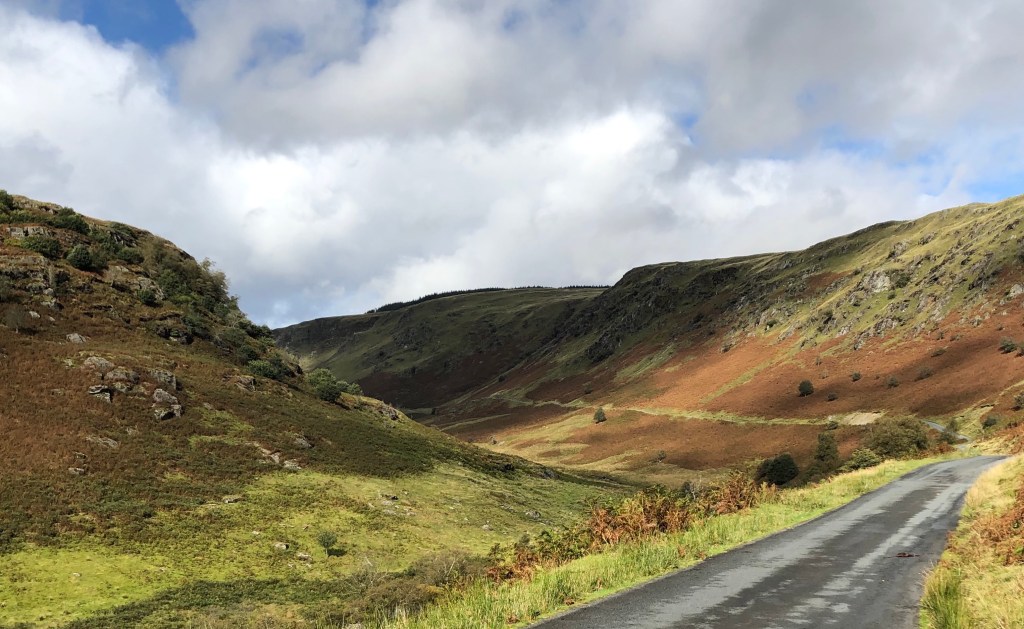
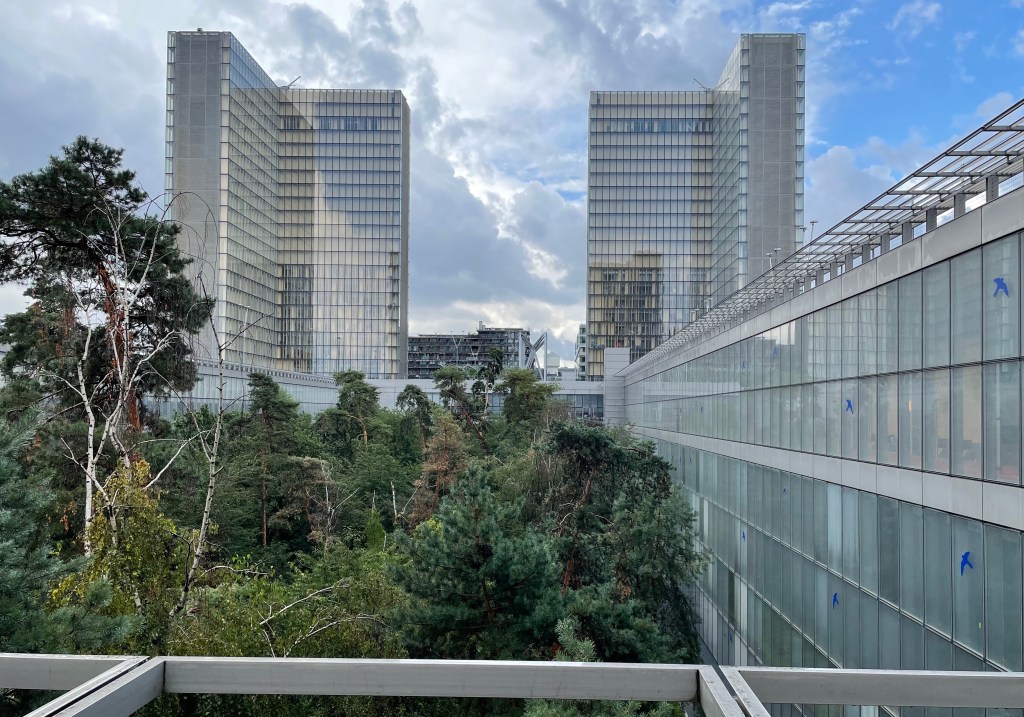
In the last part of the summer I was able to make some good progress on this manuscript. In late August and early September I had two-week writing and cycling break in Wales. The weather was good until the last day, and I got to do quite a lot of cycling, of which the highlight was Rhayader to Aberystwyth and back on the mountain road. I also did a lot of work on this book manuscript.

Much of the work was with the chapter on The Order of Things. I now have a fairly complete discussion of the book, the 1965 Brazil course where Foucault lectured on his manuscript in progress, and on some of the responses to the book particularly from Sartre and the relation Foucault had to structuralism. I also have short parts on some related material – the TV discussions with Badiou and others; the dialogue with Raymond Aron in 1967; the discussions with Raymond Bellour; the Introduction to the Port-Royal Grammar; and more briefly on the seminar paper on Cuvier, and the review of Cassirer. I looked again at Philippe Sabot’s books on Les Mots et les choses, which are really helpful – I can’t think of a comparable study in English. His notes to the Œuvres edition of Les Mots et les choses are also important. With Brazil, I needed to look at the manuscript again, but I was able to do that in Paris and the discussion is now in broad shape. I’ve previously mentioned Heliana de Barros Conde Rodrigues’s Portuguese book which is now translated into French as Michel Foucault au Brésil, and Marcelo Hoffman’s special issue of the Carceral Notebooks on ‘Foucault and the Politics of Resistance in Brazil’. Most of these discussions look at the several visits of the 1970s, but there is nonetheless some very useful contextualisation of the 1965 course.

I went back over the chapter on Nietzsche, and spent quite a bit of time trying to line up the chronology of the materials – either published, in the archive, or presumed lost. This led me to re-read the later lectures on Nietzsche which I discuss in Foucault: The Birth of Power – especially the one from McGill part-published in Lectures on the Will to Know and the first of the Truth and Juridical Forms lectures from Brazil. I also looked, yet again, at ‘Nietzsche, Genealogy, History’ and the inaugural lecture The Order of Discourse. The discussion of Foucault’s work with Deleuze in editing the French edition of Nietzsche’s works was in quite good shape already. There were some things I could only resolve by looking back at the Nietzsche materials in the Paris archive, but I’m now much happier with the organisation of the material in the draft chapter.

In connection with this chapter, I re-read some work by Pierre Klossowski which Foucault mentions in correspondence – his book on Nietzsche and Living Currency. I think this chapter is probably where I will discuss Foucault’s reviews of Deleuze, but I’ve yet to begin drafting that. I also read, again, Foucault’s little books of interviews with Claude Bonnefoy and Roger-Pol Droit (the first is translated as Speech Begins After Death, the second is only part-translated in Politics, Philosophy, Culture). These give some useful indicators on a number of themes, but are especially good on discussing Foucault’s attitude to writing.

While in Wales I tried to focus on new writing or reorganising notes rather than editing what I had drafted before, but there was a lot of fiddling around with material, including in some of the chapters I’d thought were in fairly good draft form. There was also quite a lot of cutting – the word limit is going to be a real problem with this book, especially given the range of material I’m trying to discuss.

Being away from an internet connection (and no phone signal for about a mile) was liberating even if sometimes frustrating. It’s one of the reasons why I like this place I’ve been staying. It’s amazing how much time is wasted even with work things – with a connection I can try to find a journal article immediately, or add a book to the British Library basket and order for the next visit, find a second-hand copy in a bookstore, or check something else. In some ways that’s great, but it’s much more time efficient to make a list of those things and check them in one go, rather than immediately as they arise. A quick detour – I’ll just check this – can lead to something else, and before you know it, you’re several steps away from the focus. Not being able to do that – or even get a book from a shelf to check a quote or find a reference – can mean a lot of things that are provisional or unresolved while writing, but it’s much better for keeping on track. Social media, news sites, etc. are an obvious distraction. I block those – either entirely or for discrete periods when I’m writing – as a matter of course. And I can try to discipline myself only to check email at specific times. But I only rarely turn off the internet entirely when working at home. Perhaps it’s something I should do more often.

Getting to Paris earlier in the summer proved impossible, but I was able to have a short visit before term began. I spent quite a bit of time before I left trying to do everything I could to prepare for that. Time there was precious even before, but in the current circumstances I didn’t want to be doing things there I could have done elsewhere, or find I can’t make sense of an archival document because I wasn’t ready – i.e. I didn’t yet know well enough a published text of which the archive has a variant. I can’t avoid these kinds of things entirely, since I’ve learned that the path is never straightforward or linear, but I did want to maximise the time there. Apart from the complications of two governments and travel restrictions, there were also some issues with Warwick authorising the trip, since they administer the grant which I’m using. But it was possible and I’m now hoping to get back in reading week, or maybe over the Christmas teaching break. However, I’m not sure things will be easier in the autumn and winter than they are now. Logistically this was already the most difficult trip to plan.

In Paris I did my usual practice of a full day in the archive, at the Richelieu site of the Bibliothèque nationale, and then heading across the city to the Mitterand site for a couple more hours in the evening. I can do quite a lot of work with the material on the open shelves, but there are loads of things in the printed collection which are hard to find in the UK. Among other things I was able to resolve things about the dating of Foucault’s work on the Nietzsche Œuvres, find the full transcripts of the TV interviews with Badiou (rather than the edited ones), an ENS report of the tribute session to Jean Hyppolite, and see the originals of Foucault’s interviews with Tunisian newspapers.

In the archive, I largely concentrated on material I’d seen before, but which I needed to look at again. So, I went back over the boxes of material on art and literature, to largely complete the work on those chapters. Some of those manuscripts are already published, and more are planned. The Nietzsche box has some important material for this period, notably what remains of his Vincennes course from 1969-70, and related lectures in Buffalo, Montréal, and Rio. The Brazil course on Les mots et les choses was also really important. Looking at the manuscripts of another well-known lecture opened up a much bigger issue than I imagined. I need to do the work, but I might write more about this.

While in Wales I also did a little work on the chapter on The Archaeology of Knowledge, mainly in relation to interviews and other things leading up to it. But I still need to write the discussion of the book itself, and all the preparatory materials that exist. That’s probably the most substantial job left with this book. It also requires much more time in the archive, since there are some substantial manuscripts for the book’s preparation – a complete early draft, a fragmentary draft, and a related but abandoned project. There are also some very interesting lecture materials from this period.

In addition to this chapter on that book and the related materials, I have a lot still to do with the Madness and Medicine chapters, and the Sexuality chapter, for which I really just have a bunch of notes. But the manuscript is certainly a lot further forward than it was a month ago. Term begins on Monday…

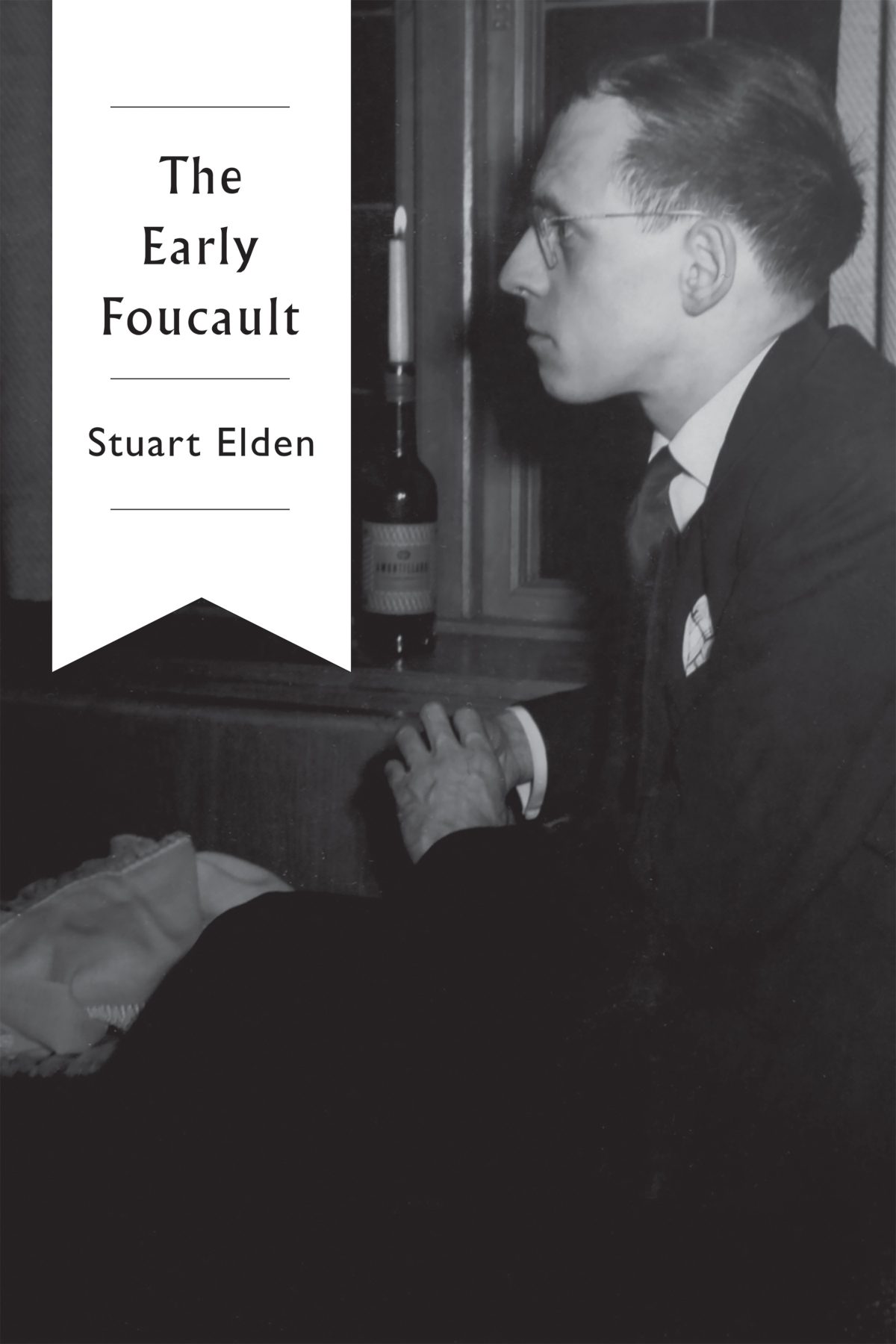
Previous updates on this book are here. The Early Foucault was published by Polity in June 2021, and updates for its writing are here. A list of the resources on this site relating to Foucault – bibliographies, audio and video files, some textual comparisons, some short translations, etc. – can be found here. The earlier books in this series are Foucault: The Birth of Power and Foucault’s Last Decade, both available from Polity.
Posted in Alain Badiou, Cycling, Foucault's Last Decade, Foucault: The Birth of Power, Friedrich Nietzsche, Gilles Deleuze, Jean Hyppolite, Michel Foucault, Pierre Klossowski, The Archaeology of Foucault, The Early Foucault, Travel, Uncategorized | 1 Comment

Books received – Patron, Kristeva, Eliade, Foucault et. al., Derrida, Lévi-Strauss

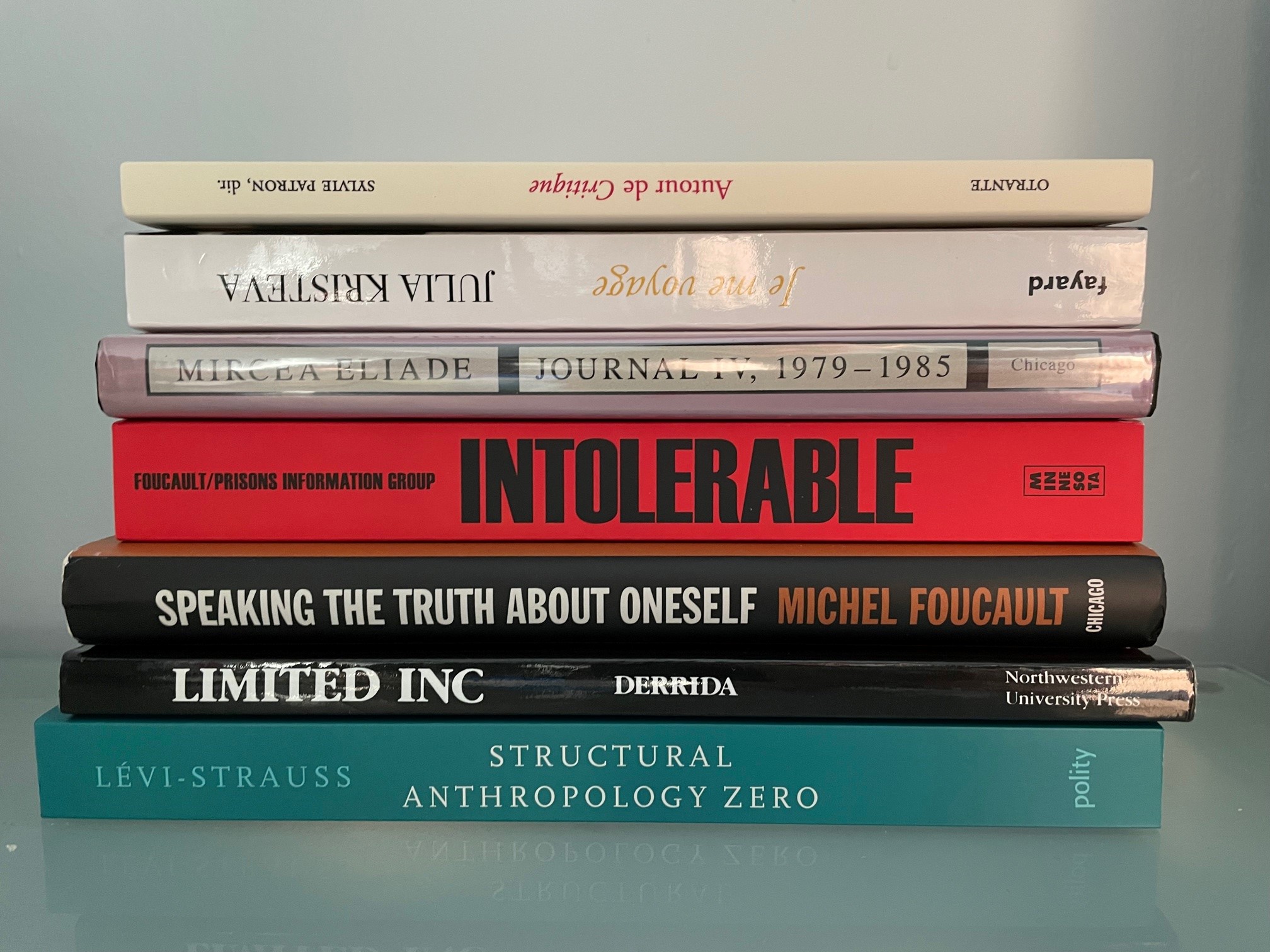
An edited collection on the Critique journal, Kristeva’s memoir, the final volume of Mircea Eliade’s journal, the long-awaited Intolerable: Writings from Michel Foucault and the Prisons Information Group (1970–1980), the translation of Foucault’s 1982 seminar in Toronto, Speaking the Truth About Oneself, Derrida’s Limited Inc and Lévi-Strauss, Structural Anthropology Zero.

I endorsed the two Foucault books, and the Lévi-Strauss was pre-ordered in recompense for review work.

Posted in Jacques Derrida, Julia Kristeva, Michel Foucault, Mircea Eliade | 1 Comment

A People’s Atlas of Nuclear Colorado – two online events

Sept. 14 Tuesday 11am – 12:30pm Eastern

“A People’s Atlas of Nuclear Colorado” Project Demo / Launch
Join us for the public launch of “A People’s Atlas of Nuclear Colorado, a digital public humanities project that documents and interprets nuclear geographies and legacies of the Cold War. The Atlas draws together background information, archival materials, accessible scholarly essays, and artist interventions into the legacies of the domestic Cold War. Grounded in the specific location of Colorado and its nuclear materials and ecologies, the Atlas allows users to explore the US nuclear complex and its many scales of operation, relational geographies, and troubling future.


Sept. 21 Tuesday 5:30pm – 6:45 Eastern

“Spatial Justice as Research Practice: Public Scholarship and the Politics of Mapping In/Justice”
This panel brings together researchers engaged with a diverse array of recent spatial humanities projects to consider the conceptual, practical, and political dimensions of their work. What practices of data collection and interpretation might guide the creation of spatial platforms about (in)justice? What publics are envisioned and assembled by these projects? What roles can design play—infrastructurally, graphically, and experientially—to trouble distanced consumption and foster recognition? And finally, what practices of collaboration, coordination, and (anti-) institutionalization have been developed that further, enact, and clarify the work’s underlying liberatory goals? Join us for a discussion of three projects: Detours: A Decolonial Guide to Hawai’i (Hōkūlani K. Aikau & Vernadette Vicuña Gonzalez); Separados/Torn Apart (Alex Gil); and A People’s Guide to Nuclear Colorado (Sarah Kanouse & Shiloh Krupar).

Posted in Uncategorized | 1 Comment

CFP: ‘What is an Author?’: Critical Reflections on Authors and Authority in Critical Security Studies

CFP: ‘What is an Author?’: Critical Reflections on Authors and Authority in Critical Security Studies

Full details in pdf – For enquiries and expressions of interest please contact the guest editors Tina Managhan (tmanaghan@brookes.ac.uk) and/or Dan Bulley (dbulley@brookes.ac.uk).

Posted in Uncategorized | 1 Comment

Jon Stewart, Hegel’s Century: Alienation and Recognition in a Time of Revolution – Cambridge University Press, October 2021

Jon Stewart, Hegel’s Century: Alienation and Recognition in a Time of Revolution – Cambridge University Press, October 2021

The remarkable lectures that Hegel gave in Berlin in the 1820s generated an exciting intellectual atmosphere which lasted for decades. From the 1830s, many students flocked to Berlin to study with people who had studied with Hegel, and both his original students, such as Feuerbach and Bauer, and later arrivals including Kierkegaard, Engels, Bakunin, and Marx, evolved into leading nineteenth-century thinkers. Jon Stewart’s panoramic study of Hegel’s deep influence upon the nineteenth century in turn reveals what that century contributed to the wider history of philosophy. It shows how Hegel’s notions of ‘alienation’ and ‘recognition’ became the central motifs for the era’s thinking; how these concepts spilled over into other fields – like religion, politics, literature, and drama; and how they created a cultural phenomenon so rich and pervasive that it can truly be called ‘Hegel’s century.’ This book is required reading for historians of ideas as well as of philosophy.

‘It is often thought that Hegel’s philosophy fell into a rather deserved obsolescence by the middle of the nineteenth century. But Hegel’s Century shows that even while Hegelianism waned, Hegel’s concerns with alienation and recognition continued to set the agenda for European philosophy, both inside and outside the universities. It offers a magisterial yet accessible guide to those thinkers, mystics, and revolutionaries who appropriated these Hegelian themes for radically new purposes.’

Mark Alznauer – Northwestern University

Posted in Georg Wilhelm Friedrich Hegel, Uncategorized | 1 Comment

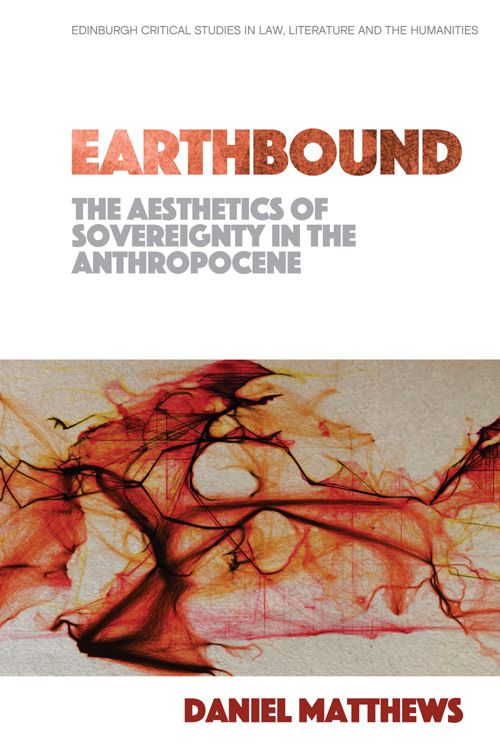
Daniel Matthews, Earthbound: The Aesthetics of Sovereignty in the Anthropocene, Edinburgh University Press, August 2021

Daniel Matthews, Earthbound: The Aesthetics of Sovereignty in the Anthropocene, Edinburgh University Press, August 2021

Examines how sovereignty inures us from the challenges associated with the climate crisis

– Engages with the work of Bruno Latour, Simone Weil, Clive Hamilton, Jacques Rancière, Donna Haraway, Judith Butler, Giorgio Agamben, Stuart Elden and others

– Presents an innovative theory of sovereignty’s ‘aesthetics’ that contributes to contemporary debates in legal and political theory

– Outlines the key challenges for law and politics provoked by the Anthropocene epoch

In this book, Daniel Matthews shows how sovereignty – the organising principle for modern law and politics – depends on a distinctive aesthetics that ensures that we see, feel and order the world in such a way that keeps the realities of climate change and ecological destruction largely ‘off stage’. Through analysis of a range of legal, literary, ecological and philosophical texts, this book outlines the significance of this aesthetic organisation of power and explores how it might be transformed in an effort to attend to the various challenges associated with the Anthropocene, setting the grounds for a new, ecologically attuned, critical jurisprudence.

Posted in Uncategorized | Leave a comment

Online Seminar ’Digital Archives: Space, Time and Memory’, October 20, 2021

Online Seminar ’Digital Archives: Space, Time and Memory’ in association with ICCE, Goldsmiths, University of London

Date/Time: Wednesday October 20, 2021 

09.00 – 11:30 (London time) 

10.00 – 12.30 (Berlin Time) 

17.00 – 19.30 (Tokyo Time) 

Focusing on digital archives, we will explore the impact of artificial intelligence on practices of meaning-making and memory formation. 

Posted in Uncategorized | Leave a comment

Books received – Federici, Kitchin, Morton, Morton & Bieler, Vincent, Caillois, Gamble, Garrett

Some books in recompense for review work for Bristol University Press and one pre-ordered from Polity, the new edition of Silvia Federici’s modern classic, Caliban and the Witch and two books from Adam David Morton, which he kindly sent to me – Unravelling Gramsci and Global Capitalism, Global War, Global Crisis, co-authored with Andreas Bieler.

Posted in Adam David Morton, Antonio Gramsci | Leave a comment

David Beer on The Early Foucault at The Fragment

David Beer on The Early Foucault at The Fragment

Reading Elden’s most recent installment in the series, The Early Foucault, is to be mesmerised by sheer detail. Focusing on the 1950s, a period before Foucault was established, Elden is deep in the archives. From amongst the dusty files, the book gives glimpses behind the curtain. As well as reading across different editions and versions of published works it also layers-in the type of insights that can only come from opening boxes and handling papers. At one point, for instance, Elden noticed, contrary to what is often thought, that Foucault was actually working on Nietzsche as far back as the mid 1950s – this is a discovery that is made due to some notes scrawled on the back of an early draft version of another piece of writing. This is one amongst many such moments. As a result, most of the book’s content is totally fresh, even to those who have read Foucault. It also means that it could be read by someone with no interest in Foucault but who is interested in writing, theory and the emergence of thinkers. By focusing on the period before Foucault’s well-known works, and during a time when there were few publications to work with, the archive has been allowed more space than in the previous volumes. The consequence is a rich engagement with the inner workings of ideas. The more archival focus of this book gives it even more of a backstage view on proceedings.

A really generous and thoughtful review – thank you!

Posted in Uncategorized | Leave a comment

The Archaeology of Foucault update 9: further work on linguistics, Roussel and the 1970 visits to Buffalo and Japan

This manuscript is slowly coming together. I’ve continued working on the linguistics and literary analysis texts in Folie, langage, littérature. For space reasons, I’ve had to keep the discussion of these down, though in many respects they reinforce or supplement points made in the other, fuller texts. I also wrote a long discussion of the “What is an Author?” lecture, with some discussion of the changes between the 1969 Paris and 1970 Buffalo version, and a little on the Paris discussion (on the textual issues see here). The last part of this chapter is a discussion of the translation of the translation Foucault made of Leo Spitzer, with some discussion of the question about its dating, which continues to bother me. This chapter is now in pretty good shape.

I have developed the Coda a bit more, with some discussion of the other Buffalo lectures on Flaubert and Balzac. This led me down a little detour as I wanted to read or reread some of the texts Foucault discusses. I also developed the discussion of the 1970 visit to Japan, notably the “Return to History” lecture with its important discussion of Georges Dumézil. I also say a little about the 1970 inaugural lecture at the Collège de France, “The Order of Discourse”. With some of these texts I have already discussed them in the Introduction to Foucault: The Birth of Power, and there is some, probably inevitable, thematic overlap between the end of this book and the start of that one. While I hope people will read this series of books, I also need to make sure this book works as a standalone study. But the short treatment of “The Order of Discourse” allows me to admit to an error I made in Foucault: The Birth of Power, where I said that we only had the published version of the lecture. Foucault prefaces the French book with a note that some passages were not read for reasons of time. I said we had no way of knowing what Foucault said rather than what he wrote. That isn’t actually the case, as the Collège de France published the earlier version. I got a copy of this hard to find text a few years ago, and while a very detailed comparison (available here) is far too long for the book, it is good to correct my mistake.

So now the Coda discusses Jean Hyppolite’s death and memorial, the visits to Buffalo and Japan, and then has a closing section which looks at how power begins to come to the fore in Foucault’s work. I have also drafted something which acts both as an ending to this book, but also somewhat to the series as a whole, particularly looking at the sense of the term archaeology. It’s a bit odd to have written the end of the book before completing some of the middle. There are now some chapters in complete draft, and others which are just a lot of notes and draft bits.

I also finally put together the section in the Literature chapter discussing the Raymond Roussel book and some related texts. The Roussel book is a difficult one to summarise. Another irritation is that Foucault doesn’t provide any references to the Roussel texts he discusses, so where I say something about his analysis of a specific, I go looking for the reference to Roussel too. Warwick doesn’t have a complete set of his Œuvres, either in the 1960s edition or the more recent one, and what is does have is in the store rather than the shelves, so that slows things up. One passage isn’t from Roussel himself, and that took a bit of work to find. But apart from a few things to check, this chapter is now in good shape.

Alongside this work, one of the books I read was Benoît Peeters, Trois ans avec Derrida: Les carnets d’un biographe(Paris: Flammarion, 2010). Peeters is author of a substantial biography of Derrida (French and English). This book is his diary while writing the biography, discussing the scope of the book, the archival work, and interviews with people who knew Derrida. Lots of interesting things – and it made me wish I’d kept a diary through this Foucault work, rather than just this series of updates. I was particularly interested by his discussion of the different types of biographies that could be written of a figure, and what he was trying to do and avoid (especially pp. 186-90). Particularly striking was the discussion of what type of biography is possible early and what only becomes possible much later. He began his biography less than three years after Derrida’s death in 2004, and the book was published in 2010. He indicates the key issue of his having access to many people who knew Derrida, and how a later biographer would not have that, but that sources become available much later (p. 103). I’ve often thought about that when I’ve reflected on biography – either in Do we need a new biography of Michel Foucault? (requires subscription; or see here) or the afterword I wrote for the reedition of David Macey’s biography of Foucault. Although I don’t see my series of books as a biography, there are undoubtedly biographical elements, and I have access to an extensive archive which Macey, Didier Eribon and James Miller did not have when they wrote in the late 1980s and early 1990s.

I had a few more days at London libraries including the British Library and the Warburg Institute. Getting reader slots for other libraries proved difficult – numbers are still restricted, but the staff at the Tate Gallery were really helpful in providing a scan of one piece. The British Library now doesn’t need slots to be booked in advance, which should make the autumn easier.

I’ve done some more work on the Dumézil editing project, and some reference work on a text by Lefebvre has taken up some time. I’ve written before about the challenges of completing Lefebvre’s references, and may do so again. When editing Lefebvre I’ve always tried to complete his incomplete references, and to provide ones where he fails to do so. With this piece, as with the rural book we co-edited, I’ve been helped by Adam David Morton. 

I’m now off to Wales for a couple of weeks, for a writing and cycling retreat. It’s the same place I went last year, with no WIFI and barely a phone signal for about a mile in any direction. It’s a great place to disconnect, read and write. I’m hoping to make progress with the chapters that discuss The Order of Things and The Archaeology of Knowledge, among other bits of the manuscript. I got a little ahead of the first of these with a brief note on the changes between the version of “The Prose of the World” chapter that was published beforehand and the one in the book itself. I’ll also need to incorporate a discussion of the version of the text Foucault used as the basis for his course in Brazil in 1965. With The Archaeology of Knowledge the comparisons are much more extensive, as there are two drafts of the book in the archive – one complete and one more fragmentary. For these I’ll need some more time in Paris. I’m now hopeful I can get there in September.

Previous updates on this book are hereThe Early Foucault was published by Polity in June 2021, and updates for its writing are here. A list of the resources on this site relating to Foucault – bibliographies, audio and video files, some textual comparisons, some short translations, etc. – can be found here. The earlier books in this series are Foucault: The Birth of Power and Foucault’s Last Decade, both available from Polity.

Posted in Jean Hyppolite, Michel Foucault, The Archaeology of Foucault, The Early Foucault | 2 Comments