British Academy, The COVID decade: understanding the long-term societal impacts of COVID-19 – open access report

British Academy, The COVID decade: understanding the long-term societal impacts of COVID-19 – open access report

The British Academy was asked by the Government Office for Science to produce an independent review on the long-term societal impacts of COVID-19. This report outlines the evidence across a range of areas, building upon a series of expert reviews, engagement, synthesis and analysis across the research community in the Social Sciences, Humanities and the Arts (SHAPE). It is accompanied by a separate report, Shaping the COVID decade, which considers how policymakers might respond. History shows that pandemics and other crises can be catalysts to rebuild society in new ways, but that this requires vision and interconnectivity between policymakers at local, regional and national levels.
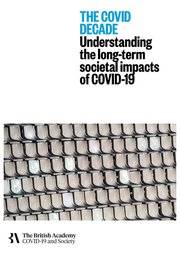
With the advent of vaccines and the imminent ending of lockdowns, we might think that the impact of COVID-19 is coming to an end. This would be wrong. We are in a COVID decade: the social, economic and cultural effects of the pandemic will cast a long shadow into the future – perhaps longer than a decade – and the sooner we begin to understand, the better placed we will be to address them.

There are of course many impacts which flowed from lockdowns, including not being able to see family and friends, travel or take part in leisure activities. These should ease quickly as lockdown comes to an end. But there are a set of deeper impacts on health and wellbeing, communities and cohesion, and skills, employment and the economy which will have profound effects upon the UK for many years to come. In sum, the pandemic has exacerbated existing inequalities and differences and created new ones, as well as exposing critical societal needs and strengths. These can emerge differently across places, and along different time courses, for individuals, communities, regions, nations and the UK as a whole.

We organised the evidence into three areas of societal effect. As we gathered evidence in these three areas, we continually assessed it according to five cross-cutting themes – governance, inequalities, cohesion, trust and sustainability – which the reader will find reflected across the chapters. Throughout the process of collating and assessing the evidence, the dimensions of place (physical and social context, locality), scale (individual, community, regional, national) and time (past, present, future; short, medium and longer term) played a significant role in assessing the nature of the societal impacts and how they might play out, altering their long-term effects. The three societal areas we chose to help structure our evidence collection and, ultimately, this report were:

Health and wellbeing – covering physical and mental health (including young people and work), wellbeing, and the environment we live in

Communities, culture and belonging – covering communities and civil society, cities and towns, family and kinship, and arts, media, culture, heritage and sport

Knowledge, employment and skills – covering education (compulsory and tertiary), skills, knowledge and research, and work and employment
Posted in Uncategorized | Leave a comment

Jean Cavaillès, The Second Davos University Conference with the Heidegger-Cassirer debate – new translation, and podcast

Jean Cavaillès, The Second Davos University Conference – new translation at Urbanomic. This is the event where Martin Heidegger and Ernst Cassirer had their debate.

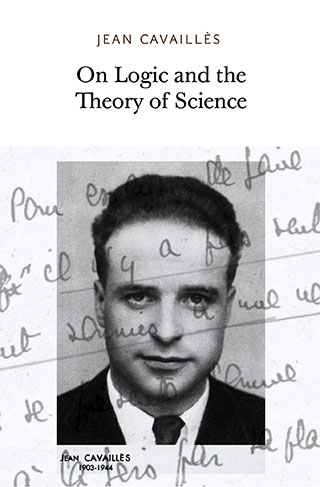
The translation is to mark the new translation of Jean Cavaillès, On Logic and the Theory of Science – Urbanomic, 2021 (UK sales; US sales), translated by Knox Peden and Robin Mackay. Preface by Gaston Bachelard. Introductory notice by Georges Canguilhem and Charles Ehresmann. Introduction by Knox Peden.

There is also a discussion of the book with Robin Mackay, Knox Peden and Matt Hare here.

… we present a young Jean Cavaillès’s report on the Second Davos University Conference, Easter 1929—the setting for a now legendary confrontation between Ernst Cassirer and Martin Heidegger.

[Originally published as ‘Les deuxièmes Cours Universitaire de Davos’, in Die II. Davoser Hochshulkurser. Les IImes Cours Universitaires de Davos du 17 mars au 6 avril 1929 (Davos: Kommissionsverlag, Heintz, Neu, & Zahn, 1929), 65–81.]

introduction

With its stringent critiques of Kantianism, logicism, and Husserlian phenomenology, Jean Cavaillès’s On Logic and the Theory of Sciencewritten in 1942-43, seeks to clear the ground for what was to be a full account of his philosophy of ‘mathematical experience’. Central to this philosophy is the need to reconcile the fact that mathematics unfolds as a ‘becoming’ with the necessity of its ‘concatenations’—both the chains of reasoning internal to mathematical theories and those that govern the order of their discovery. Cavaillès, that is, shuns any suggestion of a static, eternal register in which mathematical necessity could ultimately be isolated from the unfolding of these concatenations, or from the work that enables them to be formulated; but he also refuses to make the becoming of mathematics conditional upon either the consciousness within which it emerges or the symbols in which it is embodied. In other words, for Cavaillès, to insist on the autonomy of mathematics entails that the combined necessity and processual character of mathematics can be grounded neither in a final instance of consciousness nor in an apodictic set of operations reducible to formal tautology...

Posted in Gaston Bachelard, Georges Canguilhem | 1 Comment

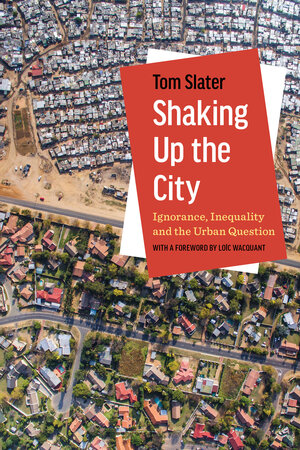
Tom Slater, Shaking Up the City: Ignorance, Inequality, and the Urban Question – University of California Press, September 2021, foreword by Loic Wacquant

Tom Slater, Shaking Up the City: Ignorance, Inequality, and the Urban Question – University of California Press, September 2021, foreword by Loic Wacquant 

Shaking Up the City critically examines many of the concepts and categories within mainstream urban studies that serve dubious policy agendas. Through a combination of abstract theory and concrete empirical evidence, Tom Slater strives to ‘shake up’ mainstream urban studies in a concise and pointed fashion, turning on its head much of the prevailing wisdom in the field.  In doing so, he explores the themes of data-driven innovation, urban resilience, gentrification, displacement and rent control, neighborhood effects, territorial stigmatization, and ethnoracial segregation. 

Slater analyzes how the mechanisms behind urban inequalities, material deprivation, marginality, and social suffering in cities across the world are perpetuated and made invisible. With important contributions to ongoing debates in sociology, geography, planning, and public policy, and engaging closely with struggles for land rights and housing justice, Shaking Up The City offers numerous insights for scholarship and political action to guard against the spread of an urbanism rooted in vested interest.

Posted in urban/urbanisation | 1 Comment

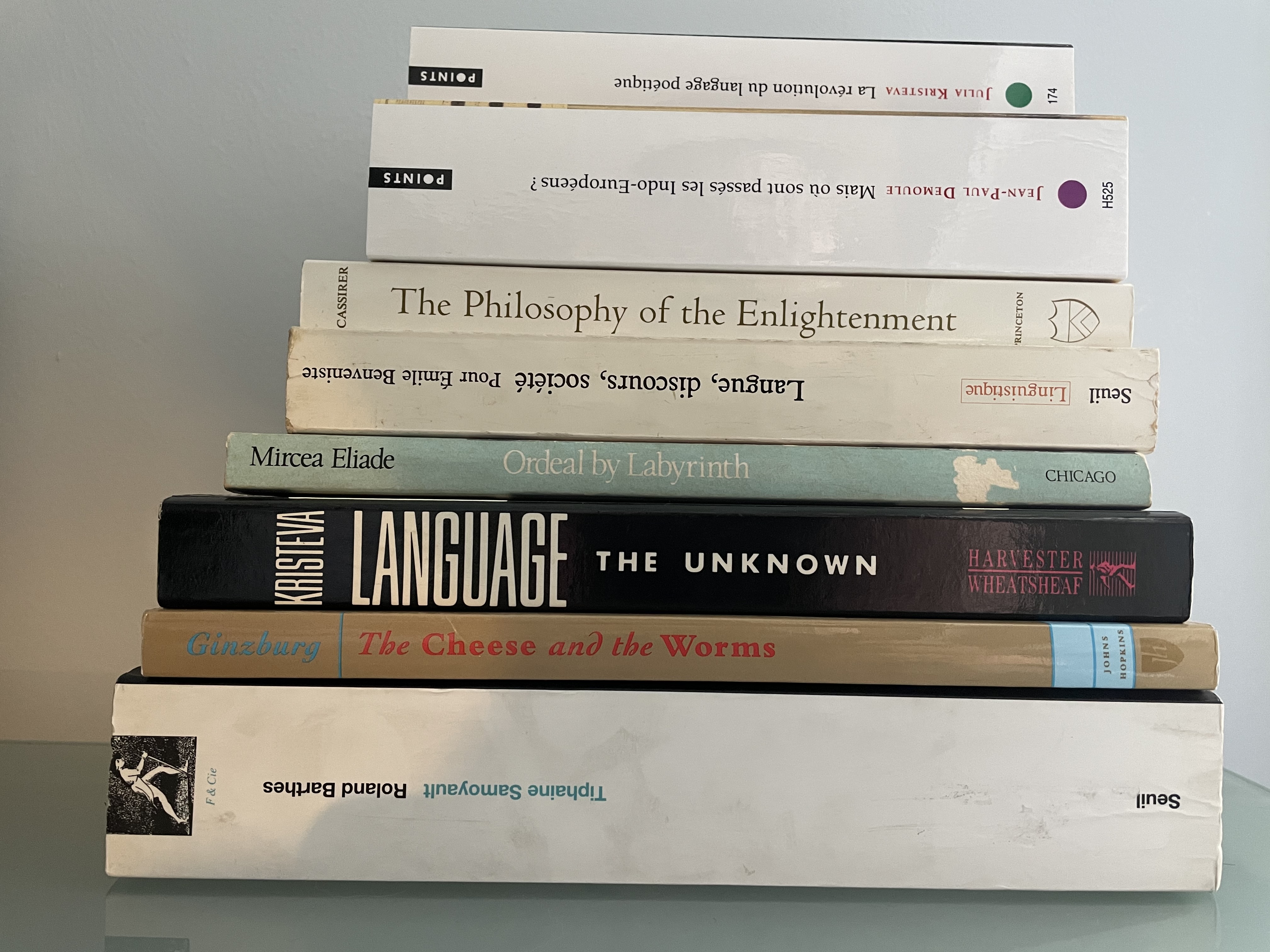
Books received – Kristeva, Demoule, Cassirer, Benveniste, Eliade, Ginzburg, Samayoult

Books received – a couple by Julia Kristeva, Jean-Paul Demoule, Ernst Cassirer, Pour Emile Benveniste, Mircea Eliade, Carlo Ginzburg, and Tiphaine Samayoult on Roland Barthes.

Posted in Uncategorized | 1 Comment

Samantha Rose Hill Reconsiders Hannah Arendt’s Thoughts on Hope, a Year into COVID-19 ‹ Literary Hub

Hosted by Paul Holdengräber, The Quarantine Tapes chronicles shifting paradigms in the age of social distancing. Each day, Paul calls a guest for a brief discussion about how they are experiencing the global pandemic.

On Episode 171 of The Quarantine Tapes, Paul Holdengräber is joined by Samantha Rose Hill. Samantha is the author of an upcoming book on Hannah Arendt. She talks with Paul about her work on Arendt, Walter Benjamin, and more. Then, they discuss how her year of writing, teaching, and researching in quarantine has gone, and Samantha reveals how this time has brought her to question her motto of “embrace despair.”

Samantha and Paul discuss how to think about loneliness in this moment and talk about her Quarantine Journal from last April. Then, Samantha takes Paul back to her first experience entering an archive as a researcher before talking about how she has experienced teaching remotely in the past year.

Posted in Hannah Arendt, Uncategorized | Leave a comment

Andy Merrifield, Lefebvre in the age of COVID: Lessons from The Urban Revolution and Paris Commune – Monthly Review online

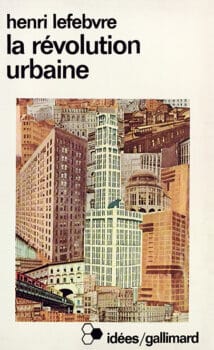
Andy Merrifield, Lefebvre in the age of COVID: Lessons from The Urban Revolution and Paris Commune – Monthly Review online

Henri Lefebvre’s The Urban Revolution (1970) quietly celebrated its 50th birthday under lockdown, and our greatest ever urban revolution, the Paris Commune (1871), just toasted its 150th. Both book and event have lost none of their lustre for helping progressive people think about city life, even as COVID-19 threatens to destroy that life. We might say especially as COVID-19 threatens that life, because both The Urban Revolution and the Paris Commune offer vital instruction about how we might rebuild a post-pandemic urban world, rebuild it democratically.

COVID has upended urban life as we once knew it. But it intensified already existing pathologies, those contaminating “normal,” pre-pandemic life. For decades, business-as-usual exploitation has meant cities have become not only functionally and financially standardised, but also unaffordable and unequal. Recent social distancing disrupts these inequities even more, crimping cities as sites of physical encounters, hurting poorer, immobile denizens the most. Nowadays, our urban reality is one of the de-encounter, a thinning down rather than thickening up, the dispersion and dilution of city life, its fear and loathing. [continues here]

Posted in Uncategorized | 4 Comments

Nick Vaughan-Williams, Vernacular Border Security: Citizens’ Narratives of Europe’s ‘Migration Crisis’ – Oxford University Press, June 2021

Nick Vaughan-Williams, Vernacular Border Security: Citizens’ Narratives of Europe’s ‘Migration Crisis’ – Oxford University Press, June 2021

Since the peak of Europe’s so-called 2015 ‘migration crisis’, the dominant governmental response has been to turn to deterrent border security across the Mediterranean and construct border walls throughout the EU. During the same timeframe, EU citizens are widely represented – by politicians, by media sources, and by opinion polls – as fearing a loss of control over national and EU borders. Despite the intensification of EU border security with visibly violent effects, EU citizens are portrayed as ‘threatened majorities’. These dynamics beg the question: Why is it that tougher deterrent border security and walling appear to have heightened rather than diminished border anxieties among EU citizens? While the populist mantra of ‘taking back control’ purports to speak on behalf of EU citizens, little is known about how diverse EU citizens conceptualize, understand, and talk about the so-called ‘crisis’. Yet, if social and cultural meanings of ‘migration’ and ‘border security’ are constructed intersubjectively and contested politically, then EU citizens —as well as governmental elites and people on the move— are significant in shaping dominant framings of and responses to the ‘crisis’. This book argues that, in order to address the overarching puzzle, a conceptual and methodological shift is required in the way that border security is understood: a new approach is urgently required that complements ‘top-down’ analyses of elite governmental practices with ‘bottom-up’ vernacular studies of how those practices are both reproduced and contested in everyday life.

Posted in Uncategorized | 1 Comment

Henri Lefebvre: The proclamation of the Commune 26th March 1871, translated by David Fernbach at the Verso blog

Henri Lefebvre: The proclamation of the Commune 26th March 1871, translated by David Fernbach at the Verso blog

Henri Lefebvre’s account of the ideology of the Paris Commune, newly translated into English… an extract from La Proclamation de la Commune: 26 Mars 1871 by Henri Lefebvre, La Fabrique, 2019; first published 1965

Posted in Henri Lefebvre | Leave a comment

Tuomo Alhojärvi, For Postcapitalist Studies: Inheriting Futures of Space and Economy – Nordia, March 2021 (open access)

Tuomo Alhojärvi, For Postcapitalist Studies: Inheriting Futures of Space and Economy – Nordia, March 2021

The worldwide social and ecological unravelling of the 21st century presents an unprecedented challenge for thinking and practising liveable economies. As life support systems are annihilated in view of the sustainable accumulation of capital, social and economic alternatives are rapidly emerging to shelter possibilities for life amidst the ruins. Postcapitalism has gained increasing attention as an invitation to amplify existing alternatives to systemic scale. The transformations required are the focus of social movements, political projects and academic research that demand the theorisation and organisation of alternatives to capitalist realism today. What has often received less attention is how such emancipatory alternatives are burdened with problematic legacies living on within, in the epistemic heritage enabling and organising societal transformation. The ‘post-’ prefix, and the break from capitalism that it announces, has largely been treated as a given. This study resists such temptations of the affirmative in order to ask how restrictive and counterproductive burdens are carried along in emancipatory thought and practice, and how their continuous negotiation might have to redefine postcapitalism itself. Taking the ‘post-’ seriously demands critical and theoretical skills capable of examining the complexity of our inherited troubles.

Posted in Uncategorized | 1 Comment

Books received – Eliade, Charachidzé, Mayhew, Hyppolite’s Hegel, Ginzburg, Fujikane, Mayhew

Mainly some older books picked up second-hand, including Jean Hyppolite’s translation of Hegel, and Robert Mayhew’s Malthus: The Life and Legacies of an Untimely Prophet, along with Candace Fujikane, Mapping Abundance for a Planetary Future: Kanaka Maoli and Critical Settler Cartographies in Hawai’i, which was sent by Duke University Press.

Posted in Carlo Ginzburg, Georg Wilhelm Friedrich Hegel, Jean Hyppolite, Mircea Eliade | Leave a comment