The Archaeology of Foucault Update 4: The term from hell, Foucault in Brazil and Tunisia, and the problems of archival research in a pandemic

This was an exceptionally difficult term – probably the hardest I can remember in twenty-five years of working in universities. It was very hard to make any progress on this manuscript – the fourth and final book in this sequence of studies of Foucault’s career and writings, this time looking at 1962-69. 

As I mentioned in the last update some of the work in Wales in the last days of summer was making a long list of things to check when home, back online, with my books and limited access to libraries. This gave a number of small things which I could tick off the list in relatively short periods of time, which does give some sense of progress, however small, when more consolidated periods of writing are harder to get. Warwick’s library was reopened for term, after a long period of closure, although you could order books late in the summer. But getting access to older, non-digitised journals wasn’t possible until it reopened, so when I had a chance I worked through some issues of CritiqueEsprit and Tel Quel.

Some of the other work concerned Foucault’s 1965 visit to Brazil and his time in Tunisia between 1966-68. The Brazil visit is discussed by Heliana de Barros Conde Rodrigues, in a book now translated into French as Michel Foucault au Brésil by Antony David Taïeb, and Marcelo Hoffman has been doing some further research on this theme, including editing an issue of the Carceral Notebooks on this topic. Foucault was in Brazil in 1965 to give a course which was based on his then forthcoming book Les mots et les choses (translated as The Order of Things). He returned to Brazil four times in the 1970s, each time giving some important lectures. The manuscript of the 1965 Brazil course is in Paris, and is due to be published in the new sequence of courses and works. I have read the manuscript, but would like some more time with it before finalising this section. But I think I’ve been able to set the text in a context now.

I’ve tried to do similarly for Foucault’s time in Tunisia. There are quite a lot of sources mentioned in the biographies by Didier Eribon and David Macey, and am tracking these down as I continue the work. One revealing interview from this time is in Dits et écrits. One course from Tunisia is also due to be published in the new series. Again, I’ve read this in manuscript but need more time with it. There are a few other lectures from this period which exist in manuscript, and some are published. Initially this was in unauthorised form on the basis of transcriptions, but they are now available in official editions. There are reports of other courses or lectures for which no manuscript trace seems to have survived. More recently, Marnia Lazreg in Foucault’s Orient and Kathryn Medien in an essay on “Foucault in Tunisia” have done some important work on Foucault’s time there, including uncovering some memoirs by some of his students. Both have given me some useful leads to follow up.

Foucault was often back in Paris while in Tunisia, and spent one summer back in his family home near Poitiers. In Paris he gave some lectures and appeared on some radio shows. There was a brief discussion with Raymond Aron on one of these, which was published as a little book a while ago. I’d bought and read it at the time, and didn’t think much of it then, but have returned again and it is an interesting little part of the story. It makes a bit more sense of a somewhat cryptic reference in Defert’s ‘Chronology’. Unfortunately, there seems to be no archival trace of Foucault’s attendance at Aron’s seminar at the Sorbonne around the same time – perhaps not surprising if it was discussion based, rather than a presentation – but there is another potential source, so that’s something else to try to track down whenever I can get back to Paris. The biography of Aron by Nicolas Baverez has a little detail.

The list of things to check in Paris and London libraries is growing. It’s not at all clear when I can get back to Paris. When I cancelled a trip in September I’d half-hoped I’d be able to get there in reading week this term, but that wasn’t possible. I then hoped that I might get there in the Christmas break and now I’m imagining it will be the spring, at best. All the time there is self-isolation for foreign travel it makes a trip impractical. These were intended shorter visits, which have been difficult enough to arrange. Add in the challenges of a post-Brexit relation with the EU, and teaching spread through the year rather than in blocks, and getting to Paris to do the next consolidated period of archival work is getting a whole lot more complicated.

I did have a couple of half-days in the British Library this week. You need to pre-book slots, and there are various other restrictions. But I had some time in the Newsroom with old French newspapers on microfilm, and in the Rare Books room where I was mainly checking a whole host of small things like journal mastheads, articles or chapters in obscure places, original language publications to compare to translations (or vice versa) and so on. There is loads more on my list, but at least while there are these restrictions I am concentrating on smaller things which can be done in shorter visits.

While getting back to Paris and other archives in France seems unlikely until the spring, getting to the USA to do the planned work at Yale and Princeton, and hopefully Irvine, feels even further into the future. Research leave I had in term 3 has been cancelled, and it’s not clear when it will be reinstated. All this means that my original plan for when I’d complete this manuscript is probably unrealistic, but I’m not yet sure enough of anything to come up with a revised plan. I’ve also been applying for research fellowships for the planned project after this, but so far nothing has worked out. I’ve had some particularly disappointing rejections this term.

I had hoped to get back to work on a couple of articles I’d agreed to write over this teaching break, but I started writing something which went in a quite different direction. I might be able to use elements from it in a talk I’ve agreed to give in the New Year, but it doesn’t work for the writing commitments. So I now have fragments of three possible pieces developing from this Foucault work, but can’t work out how to complete any of them.

A little more on this book is here, and updates for The Early Foucault here. A list of the resources on this site relating to Foucault – bibliographies, audio and video files, some textual comparisons, some short translations, etc. – can be found here. The earlier books Foucault: The Birth of Power and Foucault’s Last Decade are both available from Polity. The Early Foucault is forthcoming in June 2021, and is now listed on the Polity site and some online bookstores.

Posted in Michel Foucault, teaching, The Archaeology of Foucault, The Early Foucault, Universities | 2 Comments

Emanuel Clairizio, Robert Poma and Michel Spanò (eds.), Milieu, mi-lieu, milieux – Éditions Mimesis, 2020

Emanuel Clairizio, Robert Poma and Michel Spanò (eds.), Milieu, mi-lieu, milieux – Éditions Mimesis, 2020

Georges Canguilhem af­firmait que la notion de milieu s’était constituée « comme catégorie de la pensée contemporaine ». En effet, depuis que la biologie de Lamarck a établi le postulat de l’influence des milieux de vie dans l’évolution des espèces zoologiques et que le positivisme a repris à son compte cette notion en guise de charnière entre le biologique et le social, elle a trouvé nombre d’applications dans les domaines les plus disparates, de la technologie à la biologie, de l’ethnologie aux sciences politiques, jusqu’à l’esthétique et au droit. Cet ouvrage se propose de repérer la convergence praxéologique de ces regards très divers, faisant du milieu l’enjeu d’une ethnographie des médiations. Il s’agit de penser l’espace de l’action comme un espace toujours relationnel, et l’action comme étant toujours une interaction. Ainsi le milieu apparaît-il à la fois comme le lieu de toute relation à autrui (lieu interstitiel : mi-lieu) et un espace doté de ses normativités propres, par principe multiples : les milieux.

Posted in Georges Canguilhem, Uncategorized | Leave a comment

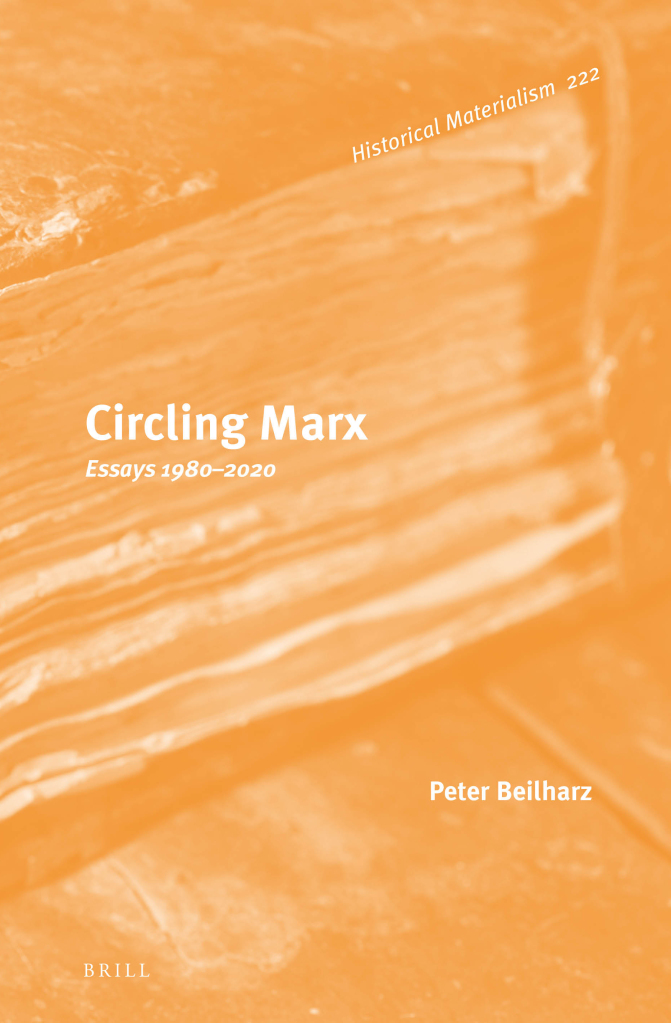
New Book – Circling Marx: Essays 1980-2020

Peter Beilharz with a collection of essays on Marx

t11editor's avatarthesis eleven

A new book of essays by Peter Beilharz, Sichuan University

Circling Marx: Essays 1980-2020 (Brill, 2020)

Karl Marx circles us, and we him. This reflects the power of his legacy, but it also indicates the nature of the intellectual process. We move around objects of interest and insight, working by successive approximations. Peter Beilharz has been circling Marx for forty years. This volume of essays expands the metaphor by working through three circles in the history of Marxism. The first works with Marx; the second with the classical legacy, through to Bolshevism and western marxism; the third steps closer to the present , in thinkers such as Bauman, Heller and Castoriadis. Read together, these essays represent a lifetime’s engagement with Marx and his intellectual consequences.

View original post

Posted in Uncategorized | Leave a comment

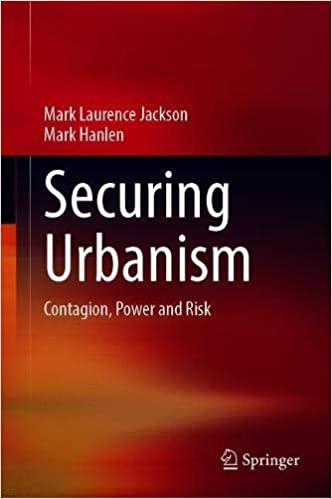
Mark Laurence Jackson and Mark Hanlen, Securing Urbanism: Contagion, Power and Risk – Springer, January 2021

Mark Laurence Jackson and Mark Hanlen, Securing Urbanism: Contagion, Power and Risk – Springer, January 2021

This book is concerned with developing an in-depth understanding of contemporary political and spatial analyses of cities. In the three-part development of the book’s overall argument or premise, the reader is taken in Part I through a range of contemporary critical and political understandings of urban securitizing. This is followed by an historical urban landscape of emerging liberalism and neo-liberalism, in nineteenth-century Britain and twentieth-century United States, respectively. These case-study historical chapters enable the introduction of key political issues that are more critically assayed in Parts II and III. With Part II, the reader is introduced in depth to a series of spatial analyses undertaken by Michel Foucault that have been crucial for especially late-twentieth and twenty-first century urban theory and political geography. With Part III the full ramifications of a paradigmatic shift are explored at the level of rethinking territory, population and design.

This book is timely and useful for readers who want to develop a stronger understanding of what the book’s researchers term a new political paradigm in urban planning, one ultimately governed by global economic forces that define the end of probability.

Just an expensive hardback and slightly cheaper e-book at present, unfortunately.

Posted in Michel Foucault, urban/urbanisation | 2 Comments

Henry V: Historical and Literary Territories at War – videos of 11 December 2020 conference

Online Conference Henry V: Historical and Literary Territories at War (edited)

A selection of the papers and discussions from the 11/12/2020 online conference on Henry V: Historical and Literary Territories at War / Territoires d’histoire, territoires littéraires en guerre (Université Toulouse Jean Jaurès) Programme : https://cas.univ-tlse2.fr/accueil-cas… 

Go further with our speakers’ books and articles: 

Stuart Elden, Shakespearean Geographies (University of Chicago Press, 2018) 

Jean Christophe Mayer, Representing France and the French in Early Modern Drama (University of Delaware Press, 2008) 

Nathalie Rivère de Carles; Diplomatic Parrhesia and the Ethos of Trustworthiness in Hotman’s The Ambassador and Shakespeare’s Henry V. Journal of Medieval and Early Modern Studies 1 September 2020; 50 (3): 609–631. doi: https://doi.org/10.1215/10829636-8626481

Valerie Toureille, Jeanne d’Arc (Perrin, 2020) 

Arnaud Baudin, Valérie Toureille (dir) UN ROI POUR DEUX COURONNES. TROYES 1420 (Snoeck, 2020) 

Patrick Gray, Shakespeare and War, Critical Survey ; 30, 2018. https://doi.org/10.3167/cs.2018.300102

Posted in Shakespearean Territories, Uncategorized, William Shakespeare | Leave a comment

Derek Gregory on the end of his teaching career

Derek Gregory on the end of his teaching career at his blog Geographical Imaginations.

I gave my last UBC lecture on 2 December (below), but I shall – of course! – continue my research and writing. So this isn’t retirement yet – and my tenure as Peter Wall Distinguished Professorship isn’t up yet either – but it does bring me to the end of a long teaching career.

It’s well worth a read. At the end of the post, he talks of the current writing plans:

As I write this, it’s neither a Monday nor the 1st of the month. I may be turning a page on my teaching career, but – as I said at the outset – the research and the writing will continue apace. I have two books in prospect.  Reach from the Sky will bring together my work on genealogies and geographies of aerial violence, and Purple Testament – a title I’ve taken (if you’ve read this far, you will know how doubly appropriate this is) from Shakespeare’s Richard II: ‘the purple testament of bleeding war’ – which extends my work on trauma geographies and woundscapes from the First World War to Afghanistan and Syria.

Posted in Uncategorized | Leave a comment

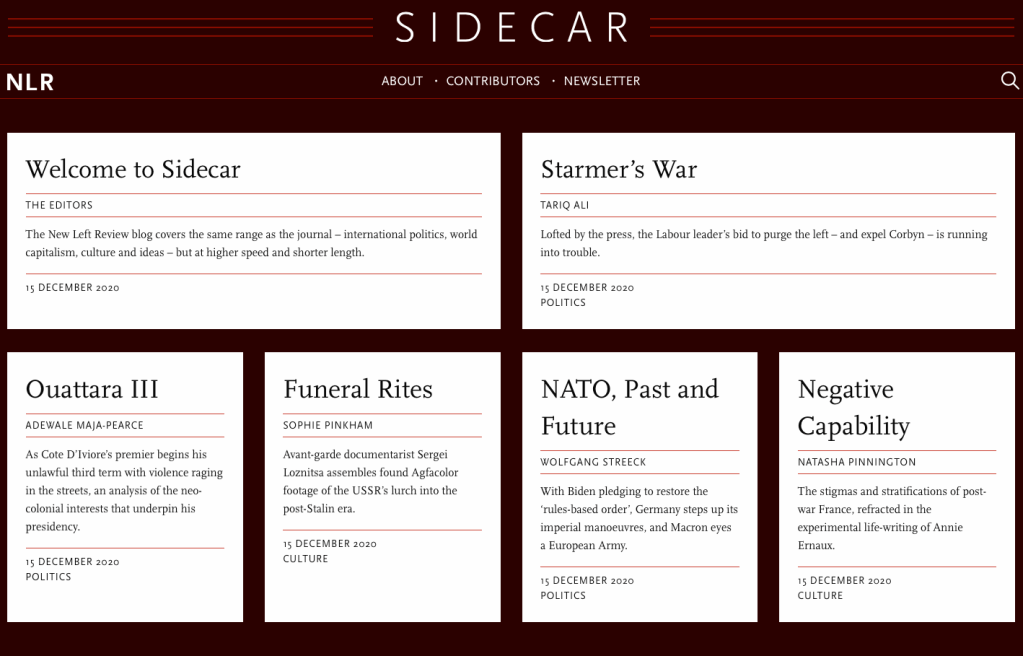
New Left Review new blog – Sidecar

New Left Review has a new blog – Sidecar

Posted in Uncategorized | Leave a comment

Michel Foucault, Interview with Madeleine Chapsal (2020)

A new translation of an important 1966 interview with Foucault, available open access.

Clare O'Farrell's avatarFoucault News

Michel Foucault, Interview with Madeleine Chapsal, The Journal of Continental Philosophy Translated by Mark G. E. Kelly, Volume 1, Issue 1, 2020, Pages 29-35

DOI: 10.5840/jcp2020876

Abstract
In this 1966 interview, published here in English translation for the first time, Michel Foucault positions himself as a representative of a ‘generation’ of French thinkers who turned towards the analysis of ‘structures’ and away from the phenomenological approaches that had previously dominated French philosophy. In this, Foucault claims inspiration not only from older French scholars—namely Georges Dumézil, Jacques Lacan, and Claude Lévi-Strauss—but also from the science of genetics.

View original post

Posted in Uncategorized | Leave a comment

Rob Kitchin, ‘Writing Fiction as Scholarly Work’ at LSE Impact of Social Sciences

Rob Kitchin, Writing Fiction as Scholarly Work at LSE Impact of Social Sciences

Writing for academic publication is highly stylised and formalised. In this post Rob Kitchin describes how writing fiction has shaped his own academic praxis and can provide scholars with an expanded range of conceptual tools for communicating their research.

Posted in Uncategorized | Leave a comment

Stuart Elden, ‘Foucault as Translator of Binswanger and von Weizsäcker’ – video abstract and open access article

Stuart Elden, ‘Foucault as Translator of Binswanger and von Weizsäcker‘ –

The video abstract for this open access article is now available:

Foucault’s Introduction to a translation of Ludwig Binswanger’s essay ‘Dream and Existence’ was published in late 1954. The translation was credited to Jacqueline Verdeaux, with Foucault acknowledged for the notes. Yet Verdeaux herself indicates the intensely collaborative nature of their working process and the translation. In 1958, Victor von Weizsäcker’s Der Gestaltkreis was published in French as Le Cycle de la structure, translated by Foucault and Daniel Rocher. Foucault went on to translate and introduce Immanuel Kant’s Anthropology as his secondary doctoral thesis. His engagement with Kant and Binswanger’s ideas has been discussed in the literature, but his role as translator has generally been neglected. His engagement with von Weizsäcker is almost never mentioned. This article critically discusses Foucault’s role in the Binswanger and von Weizsäcker translations, comparing the German originals with the French texts, and showing how this is a useful additional element to the story of the early Foucault.

The article comes from the research for The Early Foucault, which is forthcoming with Polity in June 2021.

Posted in Ludwig Binswanger, Michel Foucault, The Early Foucault, Uncategorized | 1 Comment