Perry Zurn, Curiosity and Power: The Politics of Inquiry – University of Minnesota Press, March 2021

Perry Zurn, Curiosity and Power: The Politics of Inquiry – University of Minnesota Press, March 2021
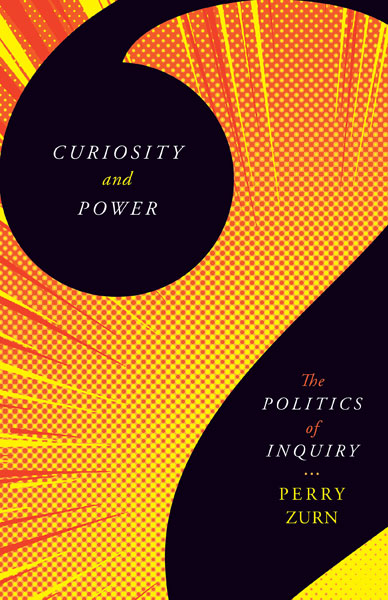
Curiosity is political. Who is curious, when, and how reflects the social values and power structures of a given society. In Curiosity and Power, Perry Zurn explores the political philosophy of curiosity, staking the groundbreaking claim that it is a social force—the heartbeat of political resistance and a critical factor in social justice. He argues that the very scaffolding of curiosity is the product of political architectures, and exploring these values and architectures is crucial if we are to better understand, and more ethically navigate, the struggle over inquiry in an unequal world.

Curiosity and Power explores curiosity through the lens of political philosophy—weaving in Nietzsche, Foucault, and Derrida in doing so—and the experience of political marginalization, demonstrating that curiosity is implicated equally in the maintenance of societies and in their transformation. Curiosity plays as central a role in establishing social institutions and fields of inquiry as it does in their deconstruction and in building new forms of political community. Understanding curiosity is critical to understanding politics, and understanding politics is critical to understanding curiosity.

Drawing not only on philosophy and political theory but also on feminist theory, race theory, disability studies, and trans studies, Curiosity and Power tracks curiosity in the structures of political marginalization and resistance—from the Civil Rights Movement to building better social relationships. Curiosity and Power insists that the power of curiosity be recognized and engaged responsibly.
Posted in Uncategorized | 1 Comment

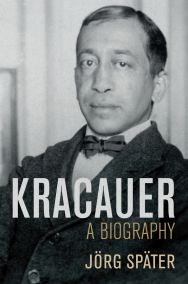
Jörg Später, Kracauer: A Biography – Polity, September 2020

Jörg Später, Kracauer: A Biography – Polity, September 2020, translated by Daniel Steuer

Siegfried Kracauer was one of the most important German thinkers of the twentieth century. His writings on Weimar culture, mass society, photography and film were groundbreaking and they anticipated many of the themes later developed members of the Frankfurt School and other cultural theorists.  

No less remarkable were the circumstances under which he made these contributions. After his early years as a journalist in Germany, the rise of the Nazis forced Kracauer into exile – first in Paris and then, after a protracted flight via Marseilles and Lisbon, to the United States. The existential challenges, personal losses and unrelenting hardship Kracauer faced during these years of exile formed the backdrop against which he offered his acute observations of modern life.

Jörg Später provides the first comprehensive biography of this extraordinary man. Based on extensive archival research, Später’s biography expertly traces the key influences on Kracauer’s intellectual development and presents his most important works and ideas with great clarity.  At the same time, Später ably documents the intensity of Kracauer’s personal relationships, the trauma of his flight and exile, and his embrace of his new homeland, where, finally, the ‘groundlessness’ of refugee existence gave way to a more stable life and, with it, some of the intellectually most fruitful years of Kracauer’s career.

The result is a vivid portrait of a man driven both by an urge to capture reality – to attend to the things that are ‘overlooked or misjudged’, that still ‘lack a name’, as he put it – and by a need to find his place in a hostile, threatening world.

There is a review in the JC here.

Posted in Uncategorized | Leave a comment

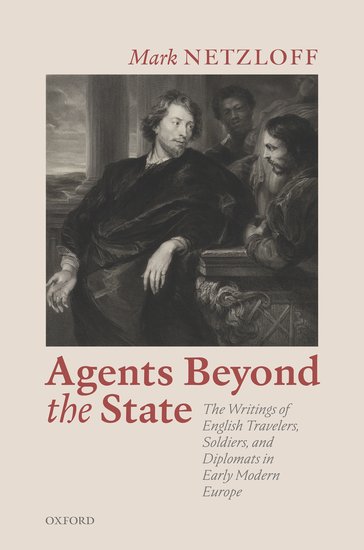
Mark Netzloff, Agents beyond the State: The Writings of English Travelers, Soldiers, and Diplomats in Early Modern Europe – Oxford University Press, November 2020

Mark Netzloff, Agents beyond the State: The Writings of English Travelers, Soldiers, and Diplomats in Early Modern Europe – Oxford University Press, November 2020

The early modern period is often seen as a pivotal stage in the emergence of a recognizably modern form of the state. Agents beyond the State returns to this context in order to examine the literary and social practices through which the early modern state was constituted. The state was defined not through the elaboration of theoretical models of sovereignty but rather as an effect of the literary and professional lives of its extraterritorial representatives. Netzloff focuses on the textual networks and literary production of three groups of extraterritorial agents: travelers and intelligence agents, mercenaries, and diplomats. These figures reveal the extent to which the administration of the English state as well as definitions of national culture were shaped by England’s military, commercial, and diplomatic relations in Europe and other regions across the globe. Netzloff emphasizes the transnational contexts of early modern state formation, from the Dutch Revolt and relations with Venice to the role of Catholic exiles and nonstate agents in diplomacy and international law. These global histories of travel, service, and labor additionally transformed definitions of domestic culture, from the social relations of classes and regions to the private sphere of households and families. Literary writing and state service were interconnected in the careers of Fynes Moryson, George Gascoigne, and Sir Henry Wotton, among others. As they entered the realm of print and addressed a reading public, they introduced the practices of governance to an emerging public sphere.

Posted in Uncategorized | Leave a comment

Adam Kotsko, Agamben’s Philosophical Trajectory – Edinburgh University Press, September 2020

Adam Kotsko, Agamben’s Philosophical Trajectory – Edinburgh University Press, September 2020

  • Focuses on Agamben’s intellectual development
  • Offers the first study of the complete Homo Sacer series
  • Takes into account Agamben’s recently-published memoir
  • Addresses the full range of Agamben’s thought on linguistics, poetics, politics and theology

Giorgio Agamben has emerged as one of the most perceptive and even prophetic political thinkers of his era. Now that he has completed his multi-volume Homo Sacer series – his career-defining work – Adam Kotsko, one of his leading translators, shows how Agamben’s political concerns emerged and evolved as he responded to contemporary events and new intellectual influences while striving to remain true to his deepest intuitions. Kotsko reveals the trajectory of Agamben’s work and shows us what it means to practice philosophy as a living, responsive discipline.

Adam Kotsko’s brilliant study provides a chronological and systematic reading of Giorgio Agamben’s writings that allows us to see the evolution of Agamben’s thought over the years, as it responds to the varied historical contexts and philosophical problems uniquely characteristic of his oeuvre. As Kotsko is particularly attuned to the turn from the poetic to the political, he demonstrates subtle nuances often otherwise missed within Agamben’s work, making Agamben’s Philosophical Trajectory a fascinating portrait of the many twists and turns, continuities and discontinuities alike, within his philosophy. This book will most certainly serve as a definitive account of Agamben’s development for years to come.- Colby Dickinson, Associate Professor of Theology, Loyola University Chicago

Posted in Uncategorized | 1 Comment

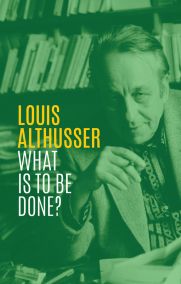
Louis Althusser, What is to be Done? – Polity, December 2020

Louis Althusser, What is to be Done? translated by G.M. Goshgarian, Polity, December 2020

What is to be done? This was the question asked by Lenin in 1901 when he was having doubts about the revolutionary capabilities of the Russian working class. 77 years later, Louis Althusser asked the same question. Faced with the tidal wave of May ‘68 and the recurrent hostility of the Communist Party towards the protests, he wanted to offer readers a succinct guide for the revolution to come. Lively, brilliant and engaged, this short text is wholly oriented towards one objective: to organise the working class struggle. Althusser provides a sharp critique of Antonio Gramsci’s writings and of Eurocommunism, which seduced various Marxists at the time. But this book is above all the opportunity for Althusser to state what he had not succeeded in articulating elsewhere: what concrete conditions would need to be satisfied before the revolution could take place. Left unfinished, it is published here in English for the first time.

Posted in Louis Althusser | Leave a comment

Call for applications: Beyond Borders PhD scholarships

Call for Applications – BEYOND BORDERS supports research about borders and boundaries in past and present times. It promotes interdisciplinary exchange in the social sciences and humanities. The Call for Applications 2020 is open till January 15, 2021 and focuses on “Borders, Democracy and Security”.

The ZEIT-Stiftung offers three types of Ph.D. scholarships: Start Up Scholarships for research project development, Ph.D. Scholarships for up to 3 years and Dissertation Completion Scholarships. We invite applications from Ph.D. students worldwide studying borders and bordering phenomena in different regions of the world. Both empirical research based on extensive fieldwork and projects centered on theoretical reflection are eligible for support. Innovative and challenging research questions as well as comparative approaches are highly welcome. Further information about the programme and application requirements can be found under https://beyondborders.zeit-stiftung.de

Focus 2020 – Borders, Democracy and Security

The unprecedented travel bans and closures of national borders during this time of COVID-19 make borders more visible than ever before. However, the ad-hoc restrictions introduced in spring 2020 were selective: Citizens, permanent residents, migrant workers judged “essential” for health care, social welfare and public services could still enter “sealed” national territories. Other travelers such as temporary residents, visitors, circular migrant workers or refugees were excluded. The numerous images of extensive controls and closed doors, and at the same time, new forms of cross-border political, economic, cultural life that emerged in response, made clear how regionally and globally interdependent we have become.

How does globalization influence the dismantling and the resurrection of borders worldwide, be they political, economic, cultural or intellectual? Which borders and boundaries are shifting and why? What kinds of new pathways of connections and cooperation are emerging in response? What kinds of historical processes have led to the transformation of borders and border regimes? How do these challenge longstanding power hierarchies? To what extent might cultural revolutions transform or pull apart borders and boundaries? Can democracy function beyond national borders? How are the relationships between citizens and state changing with respect to rights and social protection, and how does that differ in different regions of the world? 

Questions concerning borders, state transformation, democracy, social welfare, and security are the focus of the current call for applications for Ph.D. scholarships. We encourage applications for projects concentrating on following aspects, although other topics will also be considered:

– the conceptual construction of borders,

– the changing nature and functionality of national borders and its effect on regionalization,

– materiality and symbolism of borders, 

– transformation of border and regional regimes,

– supra- and sub-national integration,

– citizenship and belonging,

– security and securitization,

– transnational social protection,

– cultural borders and their manifestation in arts and cultural production.

Posted in Uncategorized | Leave a comment

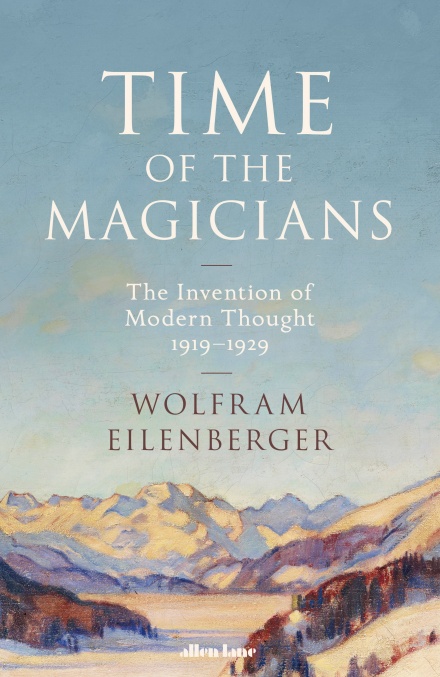
Wolfram Eilenberger, Time of the Magicians: The Invention of Modern Thought 1919-1929 – Allen Lane, August 2020

Wolfram Eilenberger, Time of the Magicians: The Invention of Modern Thought 1919-1929 – Allen Lane, August 2020

The year is 1919. Walter Benjamin flees his overbearing father to scrape a living as a critic. Ludwig Wittgenstein, scion of one of Europe’s wealthiest families, signs away his inheritance, seeking spiritual clarity. Martin Heidegger renounces his faith and aligns his fortunes with Husserl’s phenomenological school. Ernst Cassirer sketches a new schema of human culture on a cramped Berlin tram. The stage is set for a great intellectual drama. Over the next decade the lives and thought of this quartet will converge and intertwine, as each gains world-historical significance, between them remaking philosophy.

Time of the Magicians brings to life this miraculous burst of intellectual creativity, unparalleled in philosophy’s history, and with it an entire era, from post-war exuberance to economic crisis and the emergence of National Socialism. With great art, Wolfram Eilenberger traces the paths of these titanic figures through the tumult. He captures their personalities as well as their achievements, and illuminates with singular clarity the philosophies each embodied as well as espoused. It becomes an intellectual adventure story, a captivating journey through the greatest revolution in Western thought told through its four protagonists, each with their own penetrating gaze and answer to the question which has animated philosophy from the very beginning: What are we?

There is a review in the Financial Times, which concentrates on the Heidegger-Cassirer debate at Davos, which is also explored in Peter E. Gordon, Continental Divide: Heidegger, Cassirer, Davos (Harvard University Press, 2010).

Posted in Uncategorized | Leave a comment

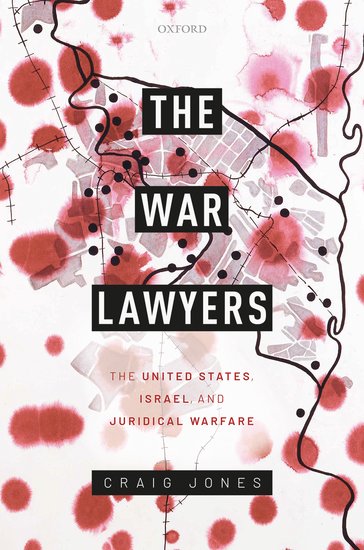
Craig Jones, The War Lawyers: The United States, Israel and Juridical Warfare – Oxford University Press, December 2020

Craig Jones, The War Lawyers: The United States, Israel and Juridical Warfare – Oxford University Press, December 2020

Over the last 20 years the world’s most advanced militaries have invited a small number of military legal professionals into the heart of their targeting operations, spaces which had previously been exclusively for generals and commanders. These professionals, trained and hired to give legal advice on an array of military operations, have become known as war lawyers.

The War Lawyers examines the laws of war as applied by military lawyers to aerial targeting operations carried out by the US military in Iraq and Afghanistan, and the Israel military in Gaza. Drawing on interviews with military lawyers and others, this book explains why some lawyers became integrated in the chain of command whereby military targets are identified and attacked, whether by manned aircraft, drones, and/or ground forces, and with what results. 

This book shows just how important law and military lawyers have become in the conduct of contemporary warfare, and how it is understood. Jones argues that circulations of law and policy between the US and Israel have bolstered targeting practices considered legally questionable, contending that the involvement of war lawyers in targeting operations enables, legitimises, and sometimes even extends military violence.

via Derek Gregory’s Geographical Imaginations blog.

Posted in Uncategorized | Leave a comment

Distinguished Professor Bob Jessop Virtual Festschrift Thursday 29 October 1.00pm-17.00pm GMT (UK Timezone)

Distinguished Professor Bob Jessop Virtual Festschrift Thursday 29 October 1.00pm-17.00pm GMT (UK Timezone)

The Centre for Alternatives to Social and Economic Inequalities and its Director, Distinguished Professor Beverley Skeggs, are pleased to host a Festschrift event to celebrate and recognise the intellectual contribution of Distinguished Professor Bob Jessop on Thursday 29 October 2020 from 1pm-5pm via MS Teams.

Bob arrived as a Professor in Sociology at Lancaster University in 1990, having worked in the Department of Government at the University of Essex since 1975. Whilst at Lancaster Bob served as Head of Department, Director of the Institute of Advanced Studies, and the Founder and Director of the Centre for Cultural Political Economy. Over the course of an academic career spanning fifty years, Bob has contributed immeasurably to our contemporary understanding of society and the intellectual life of Lancaster University.

Bob blazed a trail through his work on state theory. Influenced by the work of the Greek Marxist theorist Nicos Poulantzas and the political economy approaches pioneered by Karl Marx, his contribution continues to shape debates beyond the demise of the Soviet bloc with the rise of neoliberalism. His work has spanned six books including: The Capitalist State: Marxist Theories and Methods (Martin Robertson, 1982), Nicos Poulantzas: Marxist Theory and Political Strategy(Palgrave, 1985), State Theory: Putting Capitalist States in their Place(Polity, 1990), The Future of the Capitalist State (Polity, 2002), State Power: A Strategic-Relational Approach (Polity, 2007) and The State: Past, Present, Future (Polity, 2015).

More recently Bob’s interest in political economy has led to the development of approaches to change in capitalism influenced by Italian Marxist Antonio Gramsci and French social philosopher Michel Foucault. He has developed this approach closely with Dr Ngai-Ling Sum and together they have shaped the field of cultural political economy, notably through Beyond the Regulation Approach: Putting Capitalist Economies in their Place (Edward Elgar, 2005) and Towards a Cultural Political Economy: Putting Culture in its Place in Political Economy (Edward Elgar, 2013).

Beyond his work on state theory and cultural political economy, Bob has shaped our understanding of developments in the postwar British economy and the transition from a Fordist corporate compromise to neoliberalism and growing financialisation. His work has embraced local and global perspectives and his work includes: Traditionalism, Conservatism and British Political Culture (Allen and Unwin, 1974), Thatcherism: The British Road to Post-Fordism (University of Essex Department of Government, 1989), From the Keynesian Welfare to the Schumpeterian Workfare State (Lancaster Regionalism Group, 1992), and with Kevin Bonnett, Tom Ling and Simon Bromley their influential, Thatcherism: A Tale of Two Nations (Polity, 1988).

Bob has also supported generations of scholars to critically engage with Marxist approaches, theories and ideas, and how this analysis shapes our understanding of change under capitalism. He has edited two editions of the four-volume series with Charlie Malcolm-Brownand Russell Wheatley, Karl Marx’s Social and Political Thought(Routledge, 1990; 1999), a five volume series Regulation Theory and the Crisis of Capitalism (Edward Elgar, 2001) and with Neil Brenner, Martin Jones and Gordon MacLeod, State/Space: A Reader (Wiley-Blackwell, 2003). This support for subsequent generations extends beyond intellectual theory to practical politics through his influence on the ideas of Podemos in Spain and Syriza in Greece as a response to the 2008 financial crisis and austerity regimes.

This event celebrates and recognises Bob’s contribution through a series of papers from distinguished colleagues related to different spheres of his intellectual approach paired with a response from Bob. The event will be chaired by the Director of the Centre for Alternatives to Social and Economic Inequalities, Distinguished Professor Bev Skeggs:

Register and further details here

Posted in Uncategorized | Leave a comment

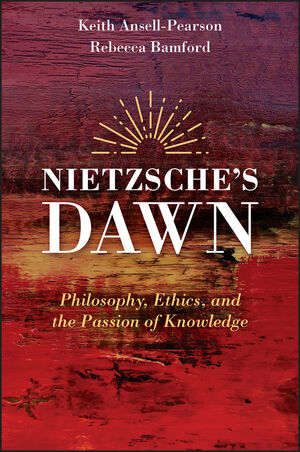
Keith Ansell-Pearson & Rebecca Bamford, Nietzsche’s Dawn: Philosophy, Ethics, and the Passion of Knowledge – Wiley-Blackwell, November 2020

Keith Ansell-Pearson & Rebecca Bamford, Nietzsche’s Dawn: Philosophy, Ethics, and the Passion of Knowledge – Wiley-Blackwell, November 2020

The first focused study of Nietzsche’s Dawn, offering a close reading of the text by two of the leading scholars on the philosophy of Nietzsche

Published in 1881, Dawn: Thoughts on the Presumptions of Morality represents a significant moment in the development of Nietzsche’s philosophy and his break with German philosophic thought. Though groundbreaking in many ways, Dawn remains the least studied of Nietzsche’s work. In Nietzsche’s Dawn: Philosophy, Ethics, and the Passion of Knowledge, authors Keith Ansell-Pearson and Rebecca Bamfordpresent a thorough treatment of the second of Nietzsche’s so-called “free spirit” trilogy. 

This unique book explores Nietzsche’s philosophy at the time of Dawn’s writing and discusses the modern relevance of themes such as fear, superstition, terror, and moral and religious fanaticism. The authors highlight Dawn’s links with key areas of philosophical inquiry, such as “the art of living well,” skepticism, and naturalism. The book begins by introducing Dawn anddiscussing how to read Nietzsche, his literary and philosophical influences, his relation to German philosophy, and his efforts to advance his ‘free spirit’ philosophy. Subsequent discussions address a wide range of topics relevant to Dawn, including presumptions of customary morality, hatred of the self, free-minded thinking, and embracing science and the passion of knowledge. Providing a lively and imaginative engagement with Nietzsche’s text, this book:

Highlights the importance of an often-neglected text from Nietzsche’s middle writings

Examines Nietzsche’s campaign against customary morality

Discusses Nietzsche’s responsiveness to key Enlightenment ideas

Offers insights on Nietzsche’s philosophical practice and influences

Contextualizes a long-overlooked work by Nietzsche within the philosopher’s life of writing

Like no other book on the subject, Nietzsche’s Dawn: Philosophy, Ethics, and the Passion of Knowledge is a must-read for advanced undergraduate and graduate students, instructors, and scholars in philosophy, as well as general readers with interest in Nietzsche, particularly his middle writings.  

Posted in Uncategorized | Leave a comment