Who is Jacques Derrida? For some, he is the originator of a relativist philosophy responsible for the contemporary crisis of truth. For the far right, he is one of the architects of Cultural Marxism. To his academic critics, he reduced French philosophy to “little more than an object of ridicule.” For his fans, he is an intellectual rock star who ranged across literature, politics, and linguistics. In An Event, Perhaps, Peter Salmon presents this misunderstood and misappropriated figure as a deeply humane and urgent thinker for our times.
Born in Algiers, the young Jackie was always an outsider. Despite his best efforts, he found it difficult to establish himself among the Paris intellectual milieu of the 1960s. However, in 1967, he changed the whole course of philosophy: outlining the central concepts of deconstruction. Immediately, his reputation as a complex and confounding thinker was established. Feted by some, abhorred by others, Derrida had an exhaustive breadth of interests but, as Salmon shows, was moved by a profound desire to understand how we engage with each other. It is a theme explored through Derrida’s intimate relationships with writers sucheven as Althusser, Genet, Lacan, Foucault, Cixous, and Kristeva.
Accessible, provocative and beautifully written, An Event, Perhaps will introduce a new readership to the life and work of a philosopher whose influence over the way we think will continue long into the twenty-first century.
The editors of Foucault Studies are pleased to publish this issue containing a review symposium of Verena Erlenbusch-Anderson’s “Genealogies of Terrorism” as well as four original articles and three book reviews.
Editorial
Sverre Raffnsøe et al.
Review Symposium
Preface to Symposium on Verena Erlenbusch-Anderson’s “Genealogies of Terrorism”
Colin Koopman
Examining Genealogy as Engaged Critique
Samir Haddad
Genealogy, Terrorism, and the “Relays” of Thought
Sarah K. Hansen
Situating Genealogies of Terrorism
Cressida J. Heyes
Genealogy as Multiplicity, Contestation, and Relay: Response to Samir Haddad, Sarah Hansen, and Cressida Heyes
Verena Erlenbusch-Anderson
Articles
The carceral existence of social work academics: a Foucauldian analysis of social work education in English universities
Diane Simpson, Sarah Amsler
On the Ways of Writing the History of the State
Eli B. Lichtenstein
Foucault On Psychoanalysis: Missed Encounter or Gordian Knot?
Mark G. E. Kelly
Rejecting claims that migration is a crisis for Europe, this book instead suggests that the ‘migration crisis’ reflects a more fundamental breakdown of a modern European tradition of humanism. Squire provides a detailed and broad-ranging analysis of the EU’s response to the ‘crisis’, highlighting the centrality of practices of governing migration through death and precarity. Furthermore, she unpacks a series of pro-migration activist interventions that emerge from the lived experiences of those regularly confronting the consequences of the EU’s response. By showing how these advance alternative horizons of solidarity and hope, Squire draws attention to a renewed humanism that is grounded both in a deepened respect for the lives and dignity of people on the move, and an appreciation of longer histories of violence and dispossession. This book will be of interest to scholars and researchers working on migration in political science, international relations, European studies, law and sociology.
‘This book masterfully documents how the barbarians appearing at the frontiers of Europe are none other than the European governments themselves and how the European licence to dictate the measure of a human is being revoked by acts of hope and solidarity.’
Engin Isin – Professor of International Politics, Queen Mary University of London
In the last update on the writing of this book, back in May, I talked about how the impact of the coronavirus had made it impossible to complete the manuscript. At that time, it wasn’t clear when I would be able to get to Paris to consult a key text in the archive again. Rather than delay the whole process further, in discussion with my editor at Polity we agreed that I would complete everything else, and the manuscript could be sent to readers with a note in place of the final part of the discussion of that text. The aim would be that I could try to get to Paris to do this work while it was being reviewed, rather than have to wait for the work to be done before that process could begin.
I then moved onto the initial work for the next Foucault book, The Archaeology of Foucault, discussing the 1962-69 period, and waited to see what would happen with travel restrictions and libraries reopening. There was a short period when you could travel to France and return to the UK without quarantine, when the Bibliothèque nationale was open, so I had a week there. I’ve already said a bit about this work in an update on The Archaeology of Foucault, but essentially I was able to work with the material I needed, and finish the relevant section of the manuscript. I’m so glad I made that trip when I did, as I had to cancel another planned trip in September due to reimposed quarantine on return, and it’s not at all clear when I will be able to get back again – both because of travel restrictions and now being in term-time.
The reader reports and editorial comments came in early September, and so I’ve spent the past few weeks revising the manuscript to address them. While one was extremely positive, the other indicated some parts which worked less well. In particular, I reworked the first chapter completely. This chapter is on Foucault’s time studying in Paris from the end of the war until 1951. It covers what he heard in lectures, his diploma thesis on Hegel, and the agrégation, and discusses his teachers including Louis Althusser, Jean Beaufret, Jean Hyppolite, Maurice Merleau-Ponty, Jean Wahl, and others. It also discusses his relation to other formative figures in this period, including Jacques Lacan and Georges Canguilhem. But the chapter was a bit list-like, proceeding largely name by name, and didn’t have a strong narrative thread. I tried a different version where the account was more chronological, but this didn’t work, before settling on one which was more thematic.
Elsewhere there was a bit of reorganisation of material, some cuts to the long discussion of Maladie mentale et personnalité and a lot of more minor changes. I also developed the book’s Coda to recapitulate some of the key themes in previous chapters, and to link more strongly through to what will be discussed in The Archaeology of Foucault, and what I did in Foucault: The Birth of Power and Foucault’s Last Decade. Beginning the work on The Archaeology of Foucault while this manuscript was still in process was a bit strange – I’d have preferred to complete one before really beginning the other – but it’s been helpful in terms of making them work together. Two friends generously read this manuscript at a late stage and made some really helpful suggestions, as well as giving me a confidence boost which helped with the final push to completion. And in the very last days I was given access to something I’ve wanted for a long time.
The final table of contents for The Early Foucault will just have the chapter titles, but the expanded contents list follows, and should give an idea of what I discuss:
The Early Foucault – expanded table of contents
The book is now in production, and we’re hoping for publication in summer 2021. It’s certainly been the hardest of the Foucault books to write – and I’d have said this before the complications of its final stages. It’s taken me to archives in five countries; libraries there and elsewhere to find some really obscure sources; required me to employ some researchers to read material I couldn’t otherwise have accessed, in Swedish, Polish, and Portuguese, and for help with archives in Hamburg; and to spend a lot of time tracking down the smallest scraps of information.
One of the last things I did was to reread this series of research updates. They are quite extensive, and for me at least interesting in seeing how this project developed. There are so many things I’ve discovered in researching and writing this book. I have discussions of texts that I didn’t even know existed, or still existed, when I began writing it. I’ve learned a huge amount, and have tried to convey this in the written version, hopefully without getting too bogged down in detail.
I’m really pleased with the final product, and look forward to the publication and the chance for others to engage with this work. I really like the cover too, which has a photo of Foucault from 1957 for which I found the original in the Uppsala archive. I’ve seen it reproduced in one book, but as far as I am aware, it’s never been used for a cover before. Into production just before term starts. This is going to be hard…
All the updates for The Early Foucault are listed here; and the ones for the ongoing The Archaeology of Foucault here. A list of the resources on this site relating to Foucault – bibliographies, audio and video files, some textual comparisons, some short translations, etc. – can be found here. The earlier books Foucault: The Birth of Powerand Foucault’s Last Decade are both available from Polity.
I’m taking a break from this blog, social media and anything online for two weeks. This blog has been fairly quiet recently, except for various things about the dangers of reopening campuses in the middle of a resurgence of cases, and some book information. I’m heading to a remote farm in Wales, which has no internet and no mobile phone signal. It’s a trip I had booked in the spring, but which had to be rearranged due to restrictions in place then. Part holiday and part working. I hope the break from news and social media will do me good. I’m planning on doing some reading and writing on the next Foucault book, some more general and non-work reading, and some cycling. I’ll be back home and online just before term starts.
I can’t believe universities are about to return to face-to-face teaching when the case numbers are far higher than when campuses were first closed. But a lot can happen in two weeks – either things will start to improve, or they will be so obviously worse that a plan B is inevitable.
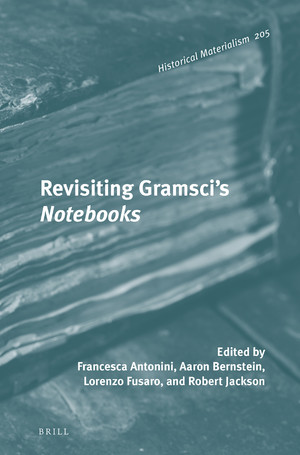
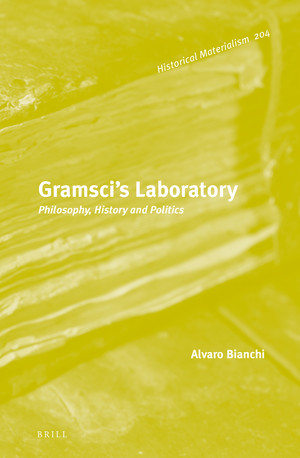
Both only expensive hardback and e-book at the moment, but these books usually appear in paperback with Haymarket fairly soon after initial publication. [Update: Revisiting Gramsci’s Notebooks is available in paper here]
Revisiting Gramsci’s Notebooks offers a rich collection of historical, philosophical, and political studies addressing the thought of Antonio Gramsci, one of the most significant intellects of the twentieth century. Based on thorough analyses of Gramsci’s texts, these interdisciplinary investigations engage with ongoing debates in different fields of study. They are exciting evidence of the enduring capacity of Gramsci’s thought to generate and nurture innovative inquiries across diverse themes.
Gathering scholars from different continents, the volume represents a global network of Gramscian thinkers from early-career researchers to experienced scholars. Combining rigorous explication of the past with a strategic analysis of the present, these studies mobilise underexplored resources from the Gramscian toolbox to confront the actuality of our ‘great and terrible’ world.
The purpose of Gramsci’s Laboratory is to interpret the relationship between philosophy and politics in Gramsci’s Quaderni del carcere. A milestone in contemporary Brazilian Gramsci reception, the book argues that in Gramsci’s work the unity of theory and practice is unfolded theoretically through the unity of philosophy, history and politics.
Bianchi argues that this unity was developed in the research project that Gramsci carried out in prison, and was thus a product of the ‘determination in the last instance’ of politics itself. His book demonstrates that a correct understanding of this unity requires us to recognise that history and philosophy are constitutive elements of the political field from which they claim to keep their distance.
J.B. Harley Research Fellowships in the History of Cartography – details here.
The J.B. Harley Fellowships were set up in London in 1992 in memory of Brian Harley (1932-91). Prof. Harley was a leading thinker in the history of cartography, working in a range of areas including historical geography, the history of the Ordnance Survey and mapping ideology. Together with David Woodward he founded the History of Cartography project in the early 1980s.J.B. Harley
The Harley Fellowships, the only ones of their kind in Europe, are open to anyone pursuing advanced research in the history of cartography, irrespective of nationality, discipline or profession, who wishes to work in London and other parts of the United Kingdom.
Looks really interesting, but shame about the prohibitive price, even for the e-book…
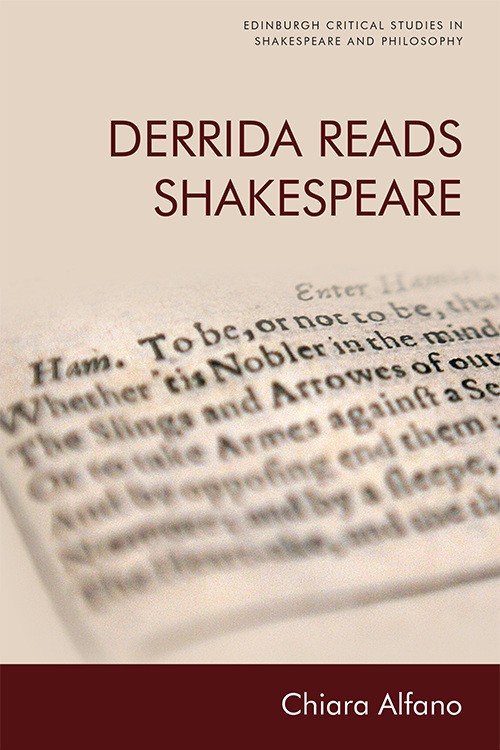
Explores Jacques Derrida’s distinctive approach to Shakespeare
Offers the first comprehensive and accessible account and discussion of Derrida’s engagement with Shakespeare
Challenges the way we have traditionally come to think about the interdisciplinary relationship between literature and philosophy, as well as literary genius
Contextualises Derrida’s readings of Shakespeare within his wider philosophical project and discusses in how far they relate to – or are distinct from – his engagement with other dramatic or literary works
This book brings to light Derrida’s rich and thought-provoking discussions of Shakespearean drama. Contextualising Derrida’s readings of Shakespeare’s Romeo and Juliet, Hamlet, The Merchant of Venice and King Lear within his wider philosophical project, Alfano explores what draws Derrida to Shakespeare and what makes him particularly suitable for philosophical thought. The author also makes the case for Derrida’s singular understanding of the relationship between philosophy and Shakespeare and his radical idea of what literary genius is.
Rebecca Buxton and Lisa Whiting (eds.), The Philosopher Queens – Unbound, September 2020
For all the young women and girls sitting in philosophy class wondering where the women are, this is the book for you. This collection of 21 chapters, each on a prominent woman in philosophy, looks at the impact that women have had on the field throughout history. From Hypatia to Angela Davis, The Philosopher Queens will be a guide to these badass women and how their amazing ideas have changed the world.
This book is written both for newcomers to philosophy, as well as all those professors who know that they could still learn a thing or two. This book is also for those many people who have told us that there are no great women philosophers. Please pledge, read this book and then feel free to get back to us.
Christopher Watkin is Senior Lecturer in French Studies at Monash University, he is also the author of French Philosophy Today and Michel Serres: Figures of Thought. In this episode we discuss Michel Serres’ text The Natural Contractalongside discussion on ecology, pollution, possession and nature.