Books received – Benveniste, Dumézil, Merleau-Ponty, Piel (and a note on the political controversy around Dumézil)

IMG_3360

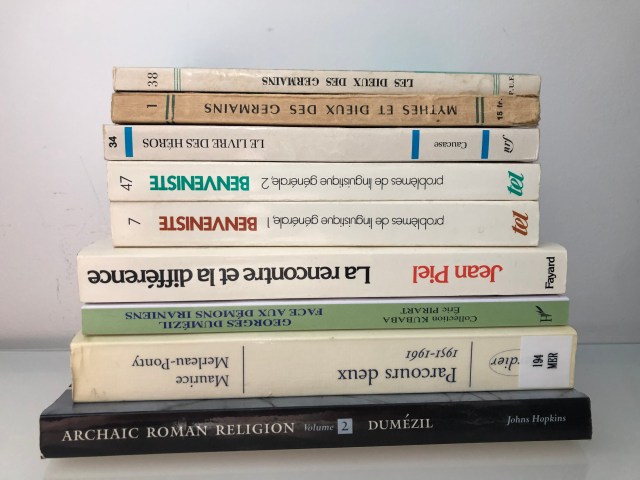
A pile of second-hand books, all for the Foucault work and related projects.

In particular I’m writing a piece on Foucault and Dumézil, which is mainly about their understandings of sovereignty. In that piece, which I think will largely focus on Dumézil’s Mitra-Varuna, I touch on the political controversy about his work – particularly around his writings on Scandinavian mythology and its contemporary resonances. The two books at the top of the pile are at the centre of this controversy – Mythes et dieux des Germains was published in 1939, and Les Dieux des Germains in 1959. The latter was translated as Gods of the Ancient Northmen in 1973, along with some additional essays (I’m still looking for a good quality copy of that translation, long out of print, though it’s available at archive.org). One argument made – by people like Carlo Ginzburg and Arnaldo Momigliano – is that the 1959 book is a sanitised version, avoiding some of the contemporary allusions of the 1939 book. This critique began in the early-mid 1980s, and Dumézil replied to both Ginzburg and Momigliano, though he says he will add more at a later date – a promise that was never fulfilled, since he died in 1986.

For this piece I will say relatively little about the controversy, but I want to at least mention it, since the 1939 book is important for Dumézil’s development of an understanding of sovereignty. I might return to the political question at a later point, though this has been quite extensively discussed – Didier Eribon and Bruce Lincoln have both written about this topic. But it’s good to have copies of the books at the heart of this issue – Mythes et dieux des Germains was quite hard to find, as are many of Dumézil’s early works.

Posted in Georges Dumézil, Maurice Merleau-Ponty, Michel Foucault, The Archaeology of Foucault, The Early Foucault, Uncategorized | 1 Comment

Michel Foucault and Richard Sennett, Sexuality and Solitude – London Review of Books, 1981 (open access)

LRB-0309-01As part of their ‘Diverted Traffic’ series, the London Review of Books has made Michel Foucault and Richard Sennett, ‘Sexuality and Solitude‘ from 1981 open access. Reprints of this piece – Dits et écrits or Essential Works, for example, tend to omit Sennett’s contribution. The pieces come from a 1980 seminar at New York University.

Posted in Michel Foucault, Uncategorized | 1 Comment

Some open access books and journal article] on Protests, Policing and Race – updated

Now with some Taylor & Francis books and articles

stuartelden's avatarProgressive Geographies

Some open access books and journal articles on Protests, Policing and Race

Cambridge University Press (until July 12, 2020)

Verso Books (not sure of end date; 40% of other books at present)

Bristol University Press/Policy Press

Update: Taylor & Francis has made some books and articles available here.

will add others if I see them – please add in comments

View original post

Posted in Uncategorized | Leave a comment

Ruth Wilson Gilmore – two conversations

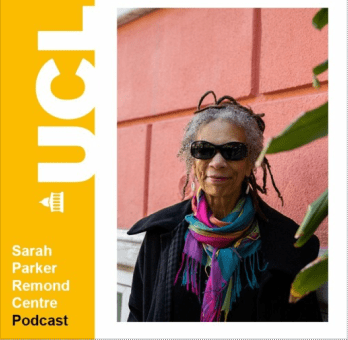
RWGRuth Wilson Gilmore – in conversation with Paul Gilroy (7 June 2020)

We’re joined by Ruth Wilson Gilmore, Professor of Geography in Earth and Environmental Sciences at CUNY, for a conversation on the current crises of Covid-19 and state violence, touching on the desire for learning as a means of activism, the political geography of mobilisation and double consciousness.

Audio at Soundcloud; transcript at Sarah Parker Redmond Centre

And with Chenjerai Kumanyika at Intercepted (10 June 2020) – two parts (audio & transcript)

THE MOVEMENT TO defund the police in the United States is gaining unprecedented momentum as protests continue across the globe. This week on Intercepted: Chenjerai Kumanyika, assistant professor of journalism and media studies at Rutgers University, hosts a special two-part discussion. Kumanyika is co-host of the podcasts “Uncivil” and “Scene on Radio.” He is an organizer with 215 People’s Alliance and the Debt Collective. He is joined for this episode of Intercepted by the iconic geographer and abolitionist Ruth Wilson Gilmore, author of “Golden Gulag: Prisons, Surplus, Crisis, and Opposition in Globalizing California.” Gilmore is one of the world’s preeminent scholars on prisons and the machinery of carceral punishment and policing. In this discussion, she offers a sweeping and detailed analysis of the relentless expansion and funding of police and prisons, and how locking people in cages has become central to the American project. Gilmore offers a comprehensive road map for understanding how we have arrived at the present political moment of brutality and rebellion, and she lays out the need for prison abolition and defunding police forces.

Thanks to dmf for these two links.


Posted in Uncategorized | Leave a comment

The Ends of Autonomy – 7-9 July 2020 online colloquium programme and registration

The Ends of Autonomy – 7-9 July 2020 online colloquium programme and registration

Keynotes from Peter Hallward and Louise Amoore

This colloquium will take place on Zoom. Registration before 5th July is required.

To register please contact Oliver Davis at O.Davis@warwick.ac.uk

Full programme and details here


Posted in Uncategorized | 1 Comment

Paulina Ochoa Espejo, On Borders: Territories, Legitimacy, and the Rights of Place – Oxford University Press, August 2020 [updated with link to discussion and an open access excerpt]

9780190074197Paulina Ochoa Espejo, On Borders: Territories, Legitimacy, and the Rights of Place – Oxford University Press, August 2020

When are borders justified? Who has a right to control them? Where should they be drawn?

Today people think of borders as an island’s shores. Just as beaches delimit a castaway’s realm, so borders define the edges of a territory, occupied by a unified people, to whom the land legitimately belongs. Hence a territory is legitimate only if it belongs to a people unified by a civic identity. Sadly, this Desert Island Model of territorial politics forces us to choose. If we want territories, then we can either have democratic legitimacy, or inclusion of different civic identities—but not both. The resulting politics creates mass xenophobia, migrant-bashing, hoarding of natural resources, and border walls.

To escape all this, On Borders presents an alternative model. Drawing on an intellectual tradition concerned with how land and climate shape institutions, it argues that we should not see territories as pieces of property owned by identity groups. Instead, we should see them as watersheds: as interconnected systems where institutions, people, the biota, and the land together create overlapping civic duties and relations, what the book calls place-specific duties.

This Watershed Model argues that borders are justified when they allow us to fulfill those duties; that border-control rights spring from internationally-agreed conventions—not from internal legitimacy; that borders should be governed cooperatively by the neighboring states and the states system; and that border redrawing should be done with environmental conservation in mind. The book explores how this model undoes the exclusionary politics of desert islands.

“Banging on about ‘broken borders’ is the major leitmotif of contemporary populism in Europe and the United States. This subtle and engaging exploration of borders as a theme in political philosophy shows how much about them is obscured when questions of immigration policy and territorial sovereignty are bundled together with the ‘border question.’ In placing borders at the center of analysis, this book effectively demolishes and replaces the very basis to the current debate about their meaning” – John Agnew, University of California, Los Angeles

“Ochoa Espejo urges us to think place apart from presumed national identities in border politics. Foregrounding the politics of peoples and the earth, and backgrounding nation states, she expands the intellectual space for conceiving, drawing, and governing the proximate territories of borders.” – Wendy Brown, University of California, Berkeley

“Ochoa Espejo argues that we should recognize borders as sites of important place-specific rights and duties. Looking at borders from this perspective, rather than through the lens of questions about collective identities or individual rights, disrupts conventional normative discussions. Her focus on place has a challenging and transformative effect on debates about territory and immigration and enables us to see ethical issues, especially environmental issues, that otherwise largely escape our view. A rich and rewarding read” – Joseph H. Carens, University of Toronto

On Borders is itself a watershed in the political theory of territory, of migration, and of the interactions between human institutions and the natural world. Paulina Ochoa Espejo reframes our picture of the state and its relationship to its members and the places they live and work. Her originality is grounded in both deep insight as well as extensive and careful research across several disciplines. It is political theory for the 21st century.” – Avery Kolers, University of Louisville

Update: there is a discussion on the New Books podcast, and Chapter 4 is available open access.
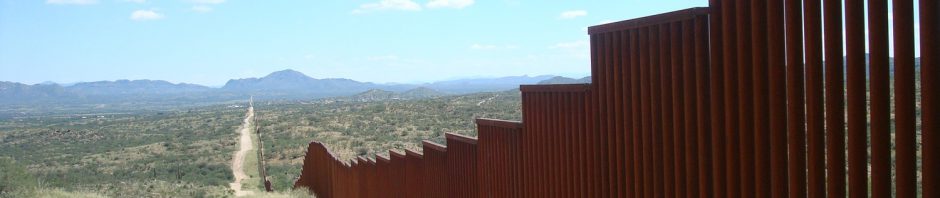
Posted in Boundaries, Territory, Uncategorized | 1 Comment

C.J. Alvarez, Border Land, Border Water A History of Construction on the US-Mexico Divide – University of Texas Press, 2019 – and discussion

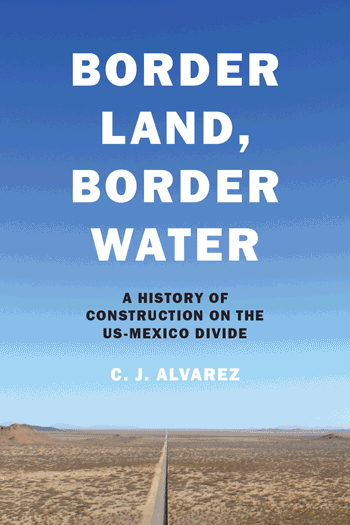
9781477319000_0C.J. Alvarez, Border Land, Border Water A History of Construction on the US-Mexico Divide – University of Texas Press, 2019

From the boundary surveys of the 1850s to the ever-expanding fences and highway networks of the twenty-first century, Border Land, Border Water examines the history of the construction projects that have shaped the region where the United States and Mexico meet.

Tracing the accretion of ports of entry, boundary markers, transportation networks, fences and barriers, surveillance infrastructure, and dams and other river engineering projects, C. J. Alvarez advances a broad chronological narrative that captures the full life cycle of border building. He explains how initial groundbreaking in the nineteenth century transitioned to unbridled faith in the capacity to control the movement of people, goods, and water through the use of physical structures. By the 1960s, however, the built environment of the border began to display increasingly obvious systemic flaws. More often than not, Alvarez shows, federal agencies in both countries responded with more construction—“compensatory building” designed to mitigate unsustainable policies relating to immigration, black markets, and the natural world. Border Land, Border Water reframes our understanding of how the border has come to look and function as it does and is essential to current debates about the future of the US-Mexico divide.

There is a discussion of the book with Elena McGrath at Edge Effects. Thanks to dmf for this link.


Posted in Boundaries, Uncategorized | Leave a comment

Some open access books and journal article] on Protests, Policing and Race – updated

Some open access books and journal articles on Protests, Policing and Race

Cambridge University Press (until July 12, 2020)

Verso Books (not sure of end date; 40% of other books at present)

Bristol University Press/Policy Press

Update: Taylor & Francis has made some books and articles available here.

will add others if I see them – please add in comments

Update 2:

Update 28 June 2020

Political Geography has some papers open access here.


Posted in Uncategorized | 1 Comment

Two reviews of Shakespearean Territories (University of Chicago Press, 2018) by Sarah Dustagheer and Karen Culcasi

9780226559193Two generous and thoughtful reviews of Shakespearean Territories (University of Chicago Press, 2018)

– Karen Culcasi in Journal of Historical Geography (open access)

– Sarah Dustagheer by Social and Cultural Geography (requires subscription, unfortunately)

Here’s the beginning of the first review:

Stuart Elden’s latest book Shakespearean Territories provides, as the title aptly indicates, an examination of how an expansive corpus of Shakespearean literature and plays dealt with the idea and concept of territory. Elden has been a leader in bringing the complexity of the concept of territory into focus within geography for more than a decade now. Alongside his two other books Terror and Territory (2009) and The Birth of Territory (2013), Shakespearean Territories forms a triad examination into the concept of territory. This triad is an unparalleled accomplishment, providing countless contributions to theorizing territory. [continues here]

and given it requires subscription, most of the second:

Shakespearean Territories is a unique book: an account of Shakespeare’s canon, which offers some insightful literary analysis, written by a professor of political theory and geography. Stuart Elden’s monograph draws on Shakespeare’s plays to examine the political, geographical, economic and legal complexities of the concept and practice of ‘territory’. In doing so, Elden is able to demon- strate what he describes as Shakespeare’s ‘profound political geographical imagination’ (p. 1). Elden is well-placed to undertake such work, having a track record in examining territory in previ- ous monographs, The Birth of Territory and Terror and Territory. However, his aim is not simply to use Shakespeare as an exemplar of previous arguments, but rather to ‘open up news ways of thinking’ and ‘to push [him] further in developing this account of the contested and complicated concept and practice of territory’ (p. 3)…

For the most part, Elden offers in-depth readings of Shakespeare’s language and ideas in chapters that focus on one or two plays. Weaker chapters on colonial territories and measuring territo- ries cover a larger number of plays, rather than focused case studies, and subsequent readings can feel rushed. The balance between the quotation of primary text, secondary criticism and the author’s own analysis is sometimes out of kilter; I was left wanting more of the latter. Yet Elden’s intellec- tual ambition and risk-taking is appealing. He brings into dialogue a wide range of subjects – colonialism, navigation, cartography, military technology – that may well be covered in more detail elsewhere but do benefit from being examined alongside one another. In the book’s ‘Coda’, Elden notes the ‘significant transition’ (p. 240) England undergoes during Shakespeare’s career, which spanned the latter part of Elizabeth I’s reign and the early years of James I’s. Elizabeth and James had different ideas about some of the key concepts Elden examines, colonialism, for instance, and ruled under shifting social and economic circumstances. More of a sense of the nuances between Elizabethan and Jacobean conceptualization of territory would have been welcome throughout the book. Yet, this criticism is perhaps unfair to a book that is groundbreaking in its dual aims of illu- minating Shakespeare’s plays, while also examining territory, a contested, complex and transhistorical concept, and thereby appealing to a wide number of scholarly audiences.

My thanks to Karen and Sarah for their generous engagement with this work.


Posted in Shakespearean Territories, Territory, Uncategorized | Leave a comment

Josephat Ezenwajiaku, State Territory and International Law – Routledge, July 2020

9780367353988Josephat Ezenwajiaku, State Territory and International Law – Routledge, July 2020


This book proposes a re-interpretation of Article 2(4) of the Charter of the United Nations to read, or at least include, respect for the inviolability of State territory.

While States purport to obey the prohibition of the Use of Force, they frequently engage in activities that could undermine international peace and security. In this book the author argues that State practice, opinio juris, as well as contentious and advisory opinions of the International Court of Justice, have promoted the first limb of Article 2(4). Although wars between States have decreased, the maintenance of international peace and security remains a mirage, as shown by the increase in intra- and inter-State conflicts across the world. The author seeks to initiate a rethinking of the provision of Article 2(4), which the International Court of Justice has described as the cornerstone of the United Nations. The author argues that the time is ripe for States to embrace an evolutive interpretation of Article 2(4) to mean respect, as opposed to the traditional view of the threat, or the use, of force. He also evaluates the discourse regarding territorial jurisdiction in cyberspace and argues that the efforts made by the international community to apply Article 2(4) to cyberspace suggest that the article is a flexible and live instrument that should be adjusted to address the circumstances that endanger international peace and security.

This book will engineer a serious debate regarding the scope of Article 2(4), which before now has always been limited to the threat or use of force. As a result, it will be of interest to academics and students of public international law, as well as diplomats and policymakers.

Available as expensive hardback and cheaper (though not cheap) e-book.

Posted in Territory, Uncategorized | 3 Comments