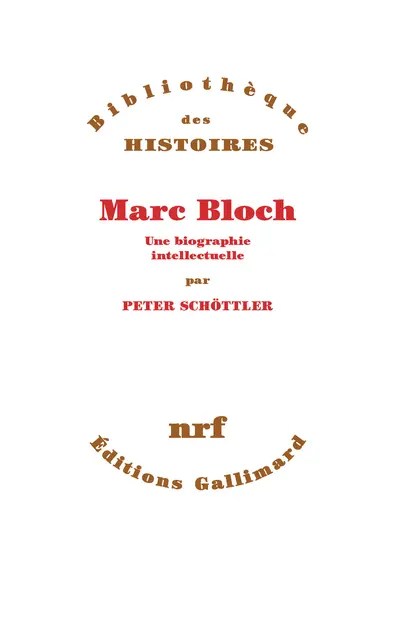
Spécialiste du Moyen Âge européen, fondateur des Annales d’histoire économique et sociale — une revue devenue le porte-étendard du renouveau de la pratique historienne au XXᵉ siècle —, combattant de la Première Guerre mondiale, engagé volontaire dans l’armée en 1939, figure de la Résistance, mort en martyr sous les balles de la Gestapo en juin 1944 : Marc Bloch, l’un des historiens les plus connus et les plus cités au monde, est un symbole d’intelligence et de probité autant que d’engagement. Un « grand homme », dans toute la plénitude de l’expression. Celui dont le propre fils, Étienne Bloch, disait la biographie « impossible » demeure néanmoins, à bien des égards, un mystère. À distance de toutes les tentatives visant à l’accaparer ou à le mettre au goût du jour, ce portrait intellectuel complet, riche et nuancé, s’attache à reconstituer et à replacer dans leur contexte le parcours, le style et la pensée d’un savant chez lequel théorie et pratique ont été, jusqu’à la dernière heure, étroitement unies.
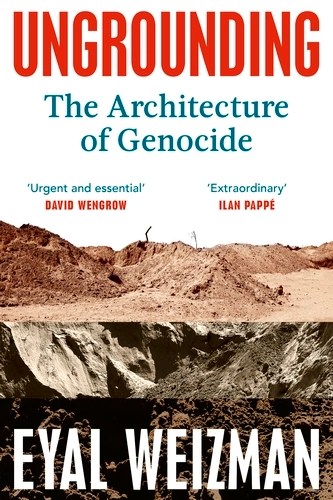
Eyal Weizman is one of the world’s leading experts on the relationship between violence, conflict and the environment, both built and natural. As director of the organisation Forensic Architecture, he and his team of interdisciplinary researchers document acts of state crimes and human rights violations around the world. Since 2023, the group has worked to produce evidence for the International Court of Justice’s genocide case against Israel.
In this revelatory new project, Weizman draws on that research to bring us on an eye-opening journey across time and into the ‘deep cartography’ of the area extending from Gaza’s subterranean tunnels through to its militarised topography, its unique soil, settlements and barriers. He catalogues, in unflinching and forensic detail, the Israeli campaigns of violence and displacement that have reshaped the region in an effort to make Gaza and its surrounding areas unliveable. Taking us through the broader geographic and historical context, from the Nakba in 1948 to the present day, Ungrounding establishes that architectural and territorial analysis is key to understanding the relationship between coloniser and colonised – and how Israel’s actions after 7 October escalated into violence so extreme and so far-reaching as to, Weizman argues, meet the definition of genocide.
Deeply informative and profoundly affecting in its scope and precision, and illustrated with dozens of original images, maps and diagrams, Ungrounding is an essential document of atrocity in our time.
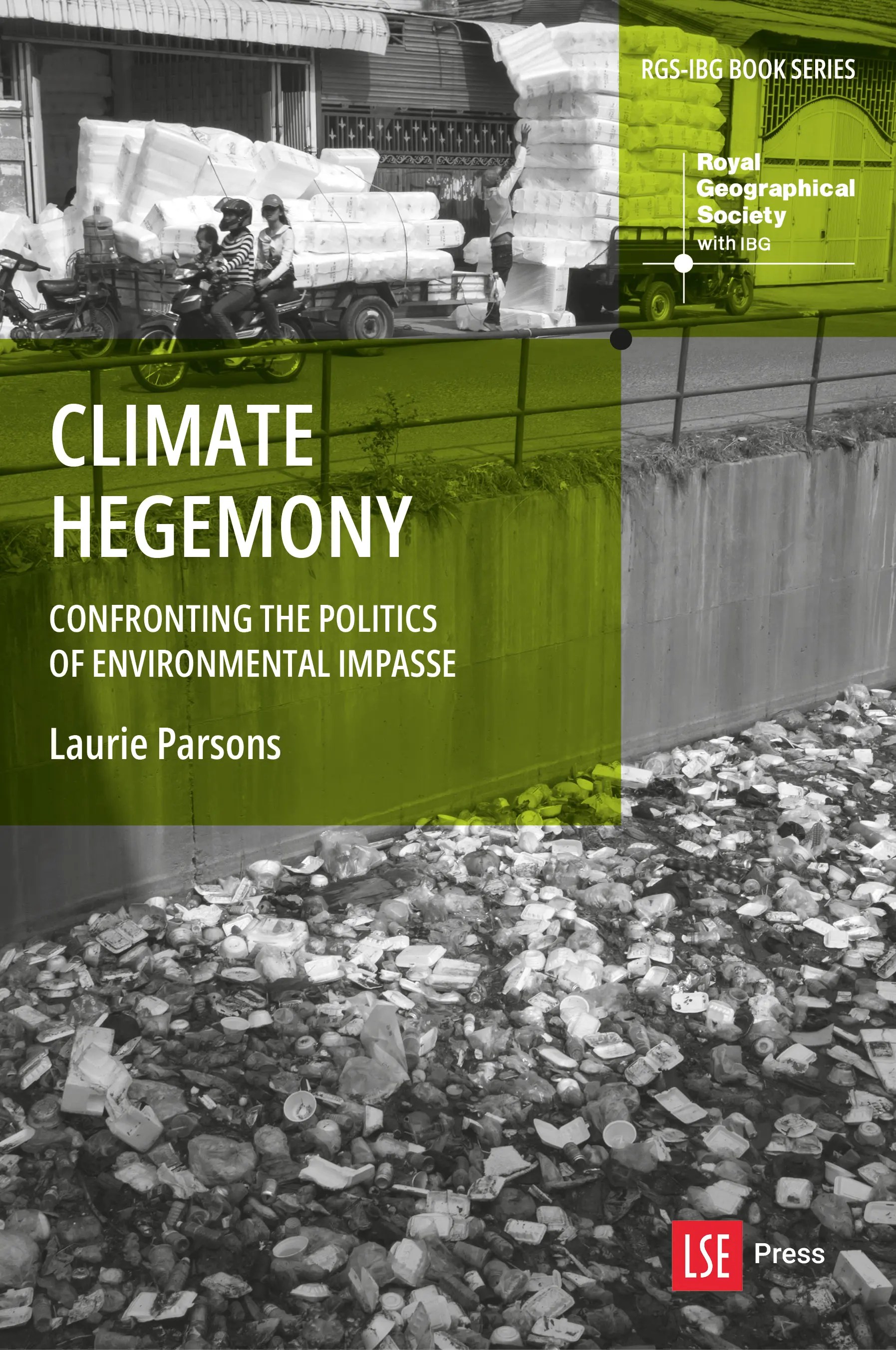
Climate action is at an impasse. Its political opponents are stronger than ever, its advocates powerless. Almost every major government and corporation expresses their commitment to tackling climate change, yet decades of discussion, governance, and action have failed to stop carbon emissions advancing to record annual levels. How has so little been achieved for so long on such an urgent issue?
In Climate Hegemony: Confronting the Politics of Environmental Impasse, Laurie Parsons shows how the architecture of environmental thinking has been locked into ineffective pathways. We don’t need to be coerced into inaction on climate, because our understanding is constrained by metaphors, rhetoric and assumptions so embedded we have long since ceased to see them. To confront this, Climate Hegemony brings us a human’s-eye view of the climate crisis, building up from lived experience to reveal the interests and politics that underpin the impasse. Drawing on almost two decades’ research at the frontline of global development in Cambodia, Parsons reveals the chasm between how climate change appears in a newspaper, or a policy bulletin, and how it appears to those immersed in the places it affects. From this perspective, the limitations of current environmental thinking become clear, but so too do a great many alternatives.
In this powerfully argued work, Parsons set out how, if we were to rethink the perspective from which we understand climate change, we can build knowledge from and for marginalised communities, from the ground upwards, challenging the impasse and creating new pathways to address and adapt to the social impacts of climate breakdown.
When we speak of morals, what are we speaking of? Is morality singular (as many philosophers tend to assume, even if they don’t agree on what it is) or are there multiple moralities (which social scientists, notably anthropologists, study)? In The Diversity of Morals, Steven Lukes brings together these differing perspectives. Drawing on philosophy, sociology, social anthropology, psychology, and political theory, Lukes considers what the moral domain includes and what it excludes; how what is moral differs from what is conventional or customary in different contexts; whether morality is unified or a series of fragments; and, if there is a diversity of morals, what that diversity consists of.
Lukes looks both ways—toward philosophers’ quest for a single best answer to the question of morality and toward sociologists’ and anthropologists’ assumption that there are several, even many, even very many, answers—to make sense of their divergence. He traces the two approaches back to their beginnings, linking them to the differences between the ideas of David Hume, Johann Gottfried Herder, and Adam Smith. Lukes examines how we went from viewing the social world as “us” versus “them” to thinking of morality as universal, envisioning shared humanity and the sacredness of the human person, and what prevents this vision from being realized. Considering the breakdown of moral constraints in the perpetration of mass atrocities, Lukes asks if there are phenomena that are beyond moral justification. And he raises this crucial question: in light of the vast variation that history and the ethnographic record display, how wide and how deep is the diversity of morals?
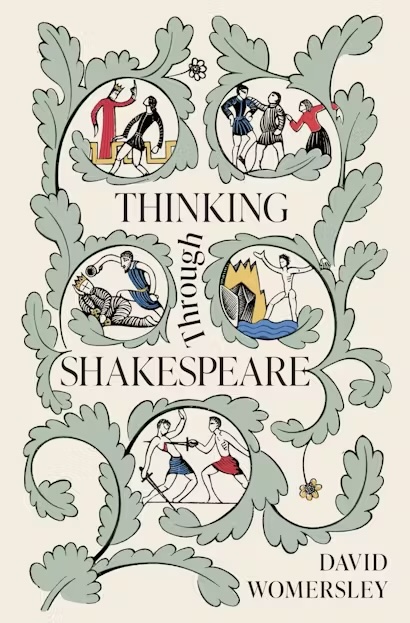
In the eighteenth century, Samuel Johnson famously argued that Shakespeare is enduringly popular because he “is above all writers, at least above all modern writers, the poet of nature; the poet that holds up to his readers a faithful mirror of manners and of life.” Johnson’s view largely prevailed until the late twentieth century, when it was challenged by a growing scepticism about the existence of a general human nature. In Thinking Through Shakespeare, eminent literary critic David Womersley pushes back against this change by exploring how Shakespeare’s plays think through—and invite us to think through—deep human questions of lasting importance.
Thinking Through Shakespeare explores four perennial human problems: personal identity, the distinction between civilization and barbarism, the relation between political power and religious authority and the tension between means and ends. It examines the history of these problems, from antiquity to today, and traces how Shakespeare engages with them in the great tragedies—Othello, Hamlet, Macbeth and King Lear—but also in his other plays. Without arguing that human nature is universal or unchanging, or that Shakespeare has some special access to timeless wisdom, the book makes the case that his drama is powerful because it serves as a forensic tool, probing rival perspectives on questions that have preoccupied many people in many societies over many centuries.
By revealing in new ways how Shakespeare’s plays are animated and driven by central human problems, and why he should again be viewed as the great poet of human nature, Thinking Through Shakespeare opens up a richer understanding and appreciation of his work.
On this page I’ve made a list of his articles and contributions to books, with links to those which are available open access online. I’m sure I will have missed things, so additions and corrections welcome.
There are some other research resources related to my Indo-European thought project here, on Émile Benveniste, Georges Dumézil and Ferdinand de Saussure, and a lot more – especially on Foucault, Bataille, Lefebvre, Ebola, Boko Haram, writing and publishing, and other thinkers and themes here.
This note is a supplement to recent pieces in the ‘Sunday histories‘ series, posted every Sunday throughout 2025, and now in a second year. The posts are short essays with indications of further reading and sources. A few, usually shorter, pieces in a similar style have been posted mid-week.
The full chronological list of ‘Sunday histories’ is here, with a thematic ordering here.
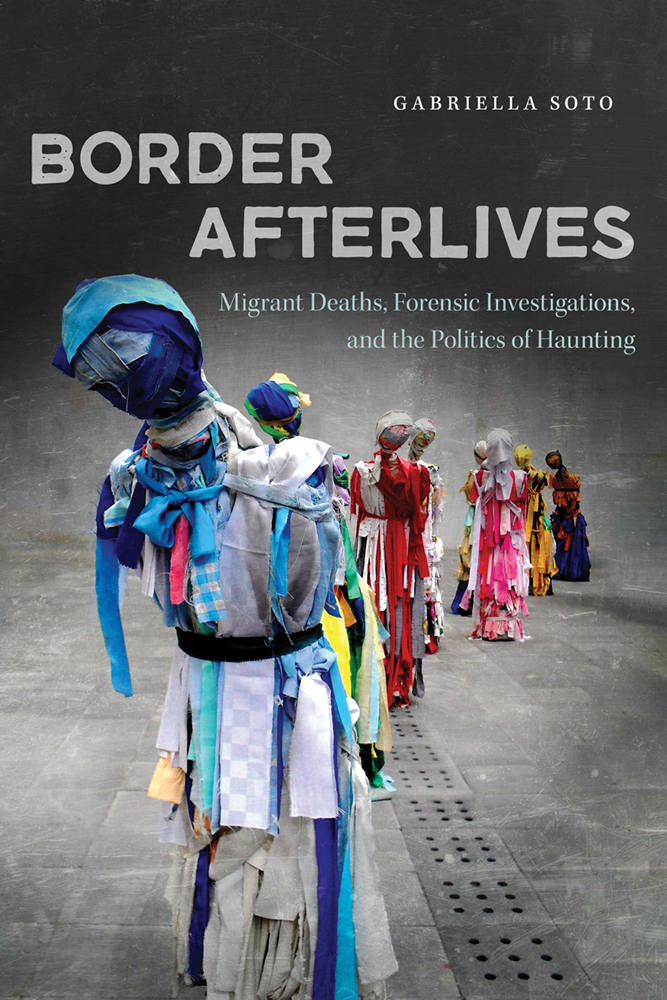
Border Afterlives begins with the undocumented individuals who die crossing the U.S.-Mexico border—deaths that are both preventable and politically produced.
Drawing on over a decade of ethnographic, participatory, and community-engaged research, author Gabriella Soto examines the postmortem journeys of these migrants through the fragmented infrastructure of medicolegal death investigation in the U.S. Southwest. She reveals how the state’s deterrence-based border policies not only generate death but also fail to provide adequate care for the dead. Soto argues that these deaths should be understood as structural homicides and that the forensic neglect they face is a form of ongoing violence.
Moving between the practical and the philosophical, Soto asks what it means to care for the dead and what society owes to those who die in its name. Through the lens of haunting, she explores how the dead continue to shape the living, not as objects of horror but as moral agents whose presence demands justice. Border Afterlives offers a border-scale comparative account of forensic practices, critiques the limits of “best practices” in under-resourced systems, and calls for a reimagining of forensic humanitarianism grounded in reciprocity and dignity, beyond human rights. This is a book that insists on remembering the dead.
Very expensive hardback and e-book only at the moment.
In the 1930s, activists with France’s Popular Front mobilized culture against fascism. Examining music, theater, film, art, and festivals in Paris, Marseille, and Rouen, this book analyses approaches to antifascism and how they varied and interacted across different regions and left-wing traditions.
By combining revolutionary, republican, and working-class heritage, antifascists aimed to foster unifying identities to mobilize the French people. Simultaneously, the distinct outlooks of Communists, Radicals, and Socialists, in addition to the different visions among national figures in Paris and local activists, produced divergent understandings of antifascist culture, ultimately weakening the coalition. This study explains the political, social, and cultural context of the 1930s that generated these movements to break down barriers between ordinary citizens and French culture. It also explores how antifascists constructed the “French people,” an ambiguous concept that carried both social and civic connotations.
Aimed at a scholarly audience, this volume engages with historians of modern France and the interwar period in Europe and will interest researchers in antifascist and fascist studies, as well as the fields of cultural politics, republicanism, communism, socialism, and national and regional identity.
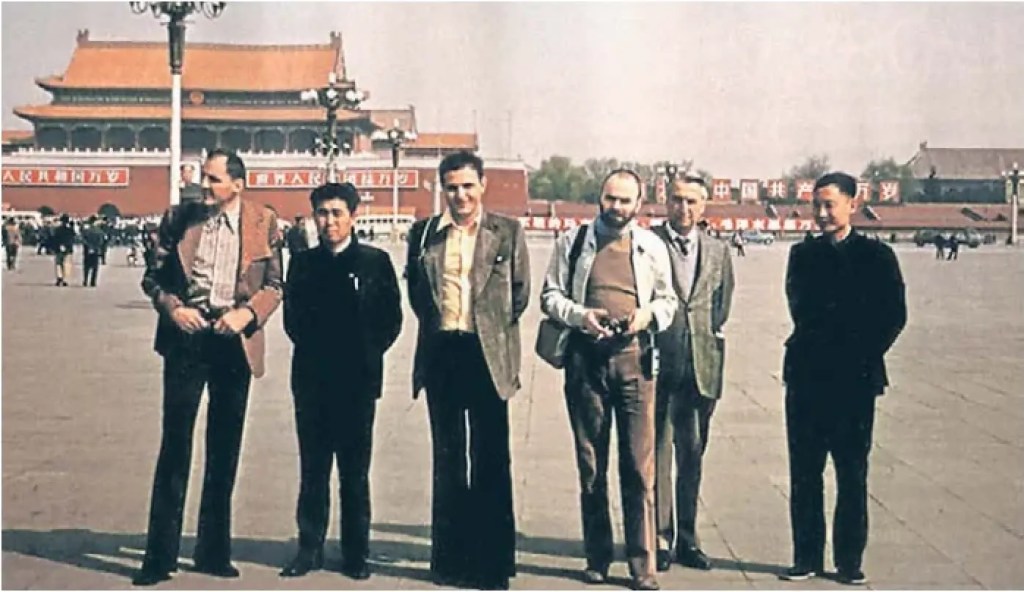
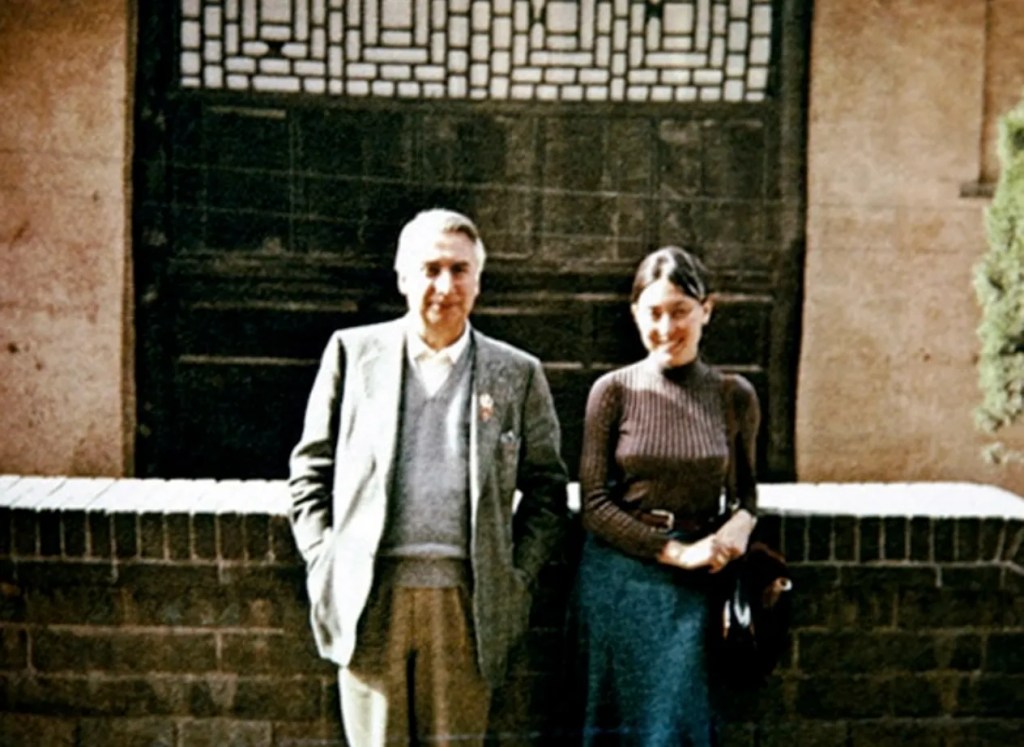
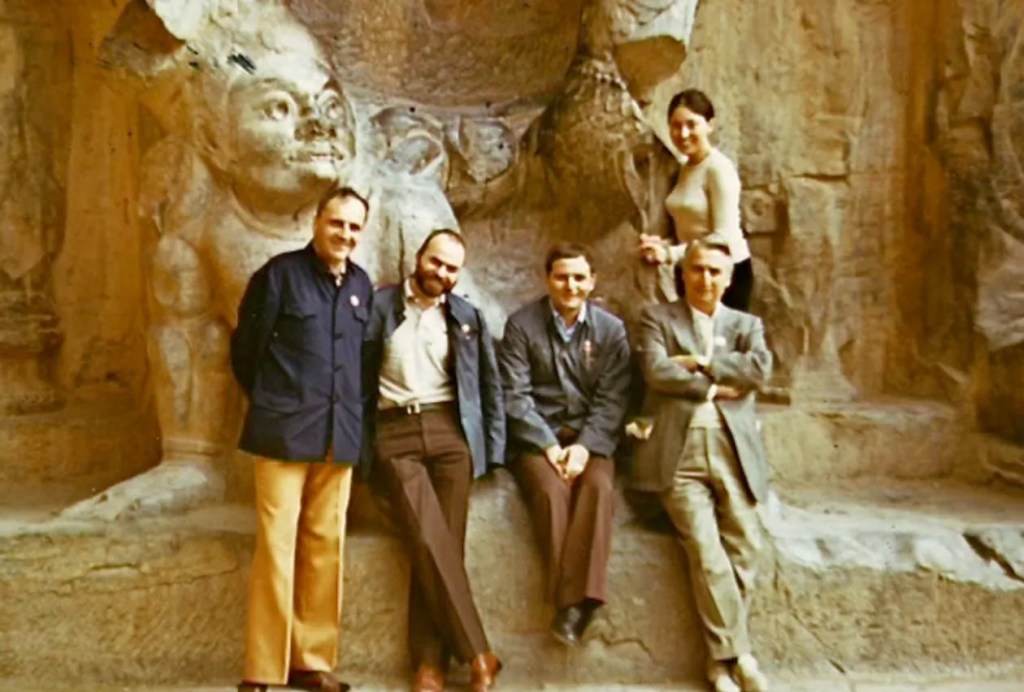
Tel Quel famously went to China in 1974. Tel Quel was an important literary journal founded in 1960, to which many of the major names of ‘French theory’ contributed, including Michel Foucault, Maurice Blanchot and Jacques Derrida. The journal was edited by Philippe Sollers, who along with Julia Kristeva, Roland Barthes, Marcelin Pleynet and the Éditions du Seuil editor François Wahl made the group for the China trip. Jacques Lacan was supposed to go but decided against at the last minute, according to Sollers using the pretext that his mistress had been unable to get a visa. They spent three weeks there, from 11 April to 4 May. The group were invited by the Chinese Embassy, through the mediation of Italian journalist and communist politician Maria Antonietta Macciocchi (on whom more in a future piece), but they paid for their own travel. It was an organised tour by the Luxingshe Travel Agency, with a planned itinerary including visits to schools, factories, farms, a hospital, museums and historical sites, dance and theatre performances, and political lectures. They visited Beijing, Shanghai, Nanjing, Luoyang, Xi’an and then returned to Beijing. A planned visit to Yan’an was abandoned due to bad weather. They had no contact with non-approved Chinese people.
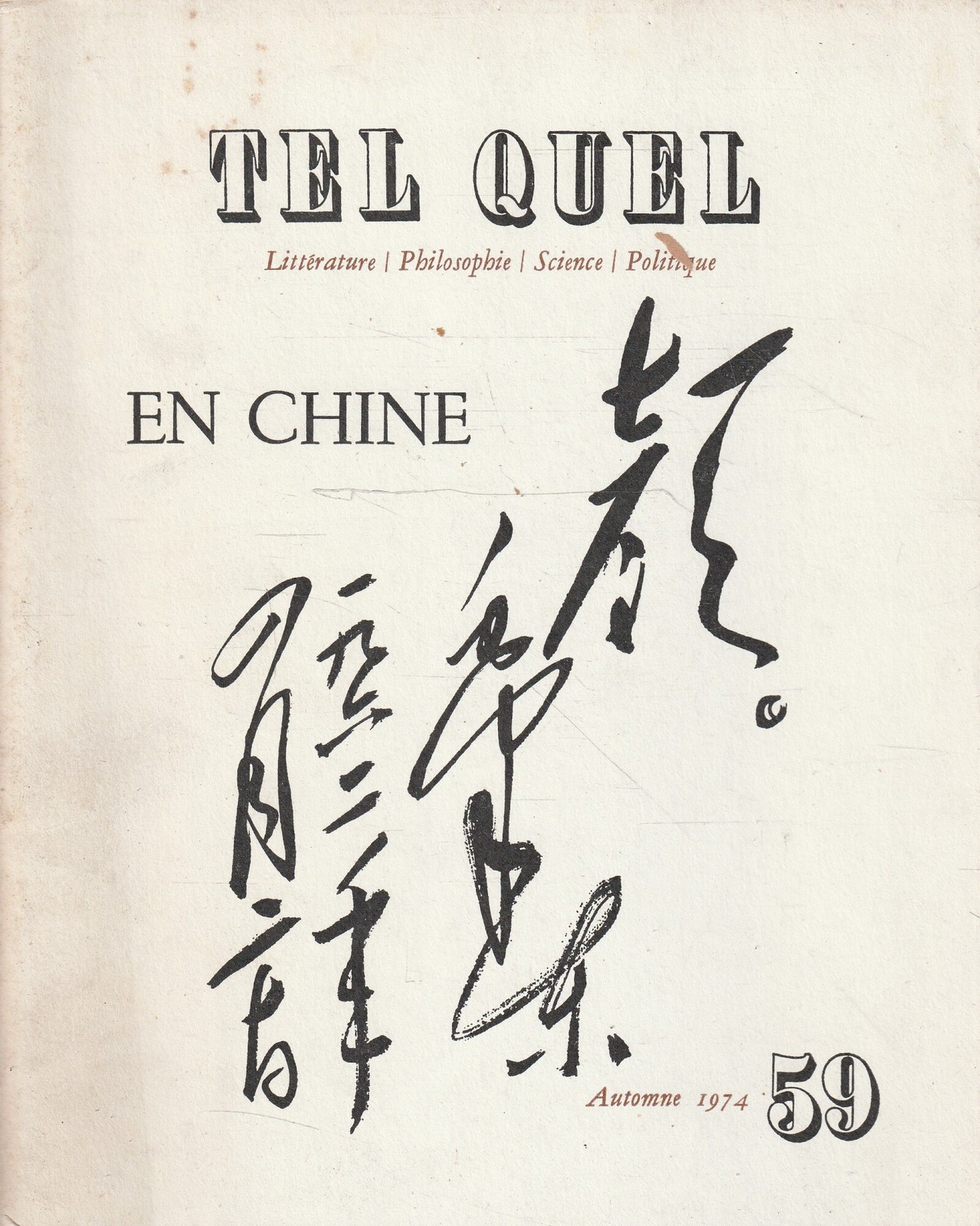
Three photographs of the Tel Quel group in China (taken from Threads), and the cover of the issue published later that year
All of the group subsequently wrote about the trip and China more generally – Tel Quel was going through a brief Maoist phase after breaking with the French Communist Party. Wahl’s articles appeared in four parts in Le Monde, between 15 and 19 June 1974.The journal devoted their autumn 1974 issue to the trip, “En Chine”, in which they criticised Wahl’s essays as reactionary. Pleynet contributed to that issue, and also published a piece in the next one. The second article says that it was an extract of a forthcoming book, Pourquoi la Chine to appear in the 10/18 series, though this never appeared (“Du discours sur la Chine”, 12 n. *). Not long afterwards, Kristeva wrote a book De Chinoises, published in October 1974. It was translated a few years later as About Chinese Women. It has been commissioned and written in a rush on her return:
These notes do not make up a book. They are simply a journal of facts and inquiries inspired by a trip… Women: the women of China. These notes have their origin in my attempt to deal with the tremendous and rapid changes in their condition. That is indeed the reason I wrote them, in such haste… Neither a scholarly book nor a subjective essay. This work leaves something to be desired (p. 5/p. 7).
This book was severely criticised by Gayatri Chakravorty Spivak in an essay included in In Other Worlds.
Kristeva would also discuss the trip in some autobiographical pieces (such as “My Memory’s Hyberbole”, and her 1990 novel The Samurai has thinly disguised portraits of many of the people around the journal and dramatizes this trip. I believe at least parts of it are, however, fully fictional (Liliane Lazar is good on the novel generally, and I write about her portrayal of Émile Benveniste in it here). In place of his planned book, Pleynet published excerpts from his diary in 1980, with a preface from 1979 which reflects on the experience from a position of subsequent political disenchantment. There are reports that Barthes was often unhappy on the trip, staying in the minibus on one excursion, and spending the train journey to Nanjing reading Flaubert’s Bouvard et Péchuchet instead of looking at the scenery or talking to the rest of the group (Pleynet, Le Voyage en Chine, p. 51). With that book as his reading matter it feels like there is a joke to be made about people blundering into areas of knowledge they are little suited to comprehending fully, before moving onto another topic when they become disillusioned with it.
After a previous trip to Asia, Barthes had written a short book about Japan, The Empire of Signs. His editor Anne Herschberg Pierrot says he planned to do similar here: “Right from the start, Barthes had been thinking of bringing back a text from China. He filled three notebooks on this theme, in blue biro or felt-tip” (Carnets, 8; Travels,p.viii). He also made an index of those notebooks, presumably as a next step to turning the notes into a more thematic treatment. The Empire of Signs is made up of a series of short texts and images, rather than presenting an overall argument. But in his lifetime, Barthes published only a short piece about his experience in China – “Alors, la Chine?” “So, how was China?” It first appeared in Le Monde and was reprinted as a small brochure in October 1975, with a brief additional afterword. Among other themes, Barthes indicates the ‘briques’ of discourse, of pre-prepared political speeches, a “series of commonplaces (topoi and clichés) analogous to those sub-routines that cybernetics refers to as briques”, bricks, modules or building blocks (“Alors, la Chine?” p. 14; “So, how was China?” p. 100). At the time of the Cultural Revolution, this was often the campaign against Lin Biao and Confucius, or “Pi Lin Pi Kong”. Barthes also briefly mentions the trip in an interview with Bernard-Henri Levy in 1977 (“A Quoi sert un intellectuel”, pp. 369-70; “Of What Use is an Intellectual?”, pp. 264-65).
From early in his notebooks Barthes realised he was struggling to find a purpose to writing about the trip:
All these notes will probably attest to the failure, in this country, of my writing (in comparison with Japan). In fact, I can’t find anything to note down, to enumerate, to classify (Carnets, 73; Travels,p. 57).
[For a week, I haven’t felt any opening up in my writing, any jouissance in it. Dry. Sterile.] (Carnets, 92;Travels,p. 75).
One possibility for a text on China would be to sweep across it [balayer], from the most serious, the most structured (the burning political issues) to the subtlest, most futile things (chilli, peonies). (Carnets, 111;Travels,p. 95).
In the end he abandoned the idea, and the published version is of course fragmentary and thematically disparate. It is interesting and revealing, although private and unguarded.
A few pages of Barthes’s notebooks were reproduced in the catalogue of a Centre Pompidou exhibition in 2002 – R/B: Roland Barthes (pp. 208-25). The notebooks were transcribed and published in full in 2009, and translated into English in 2011. It is sometimes remarked that the English title Travels in China misses the notebook aspect of the Carnets du voyage en Chine, making it seem a bit more like a finished work. A report he had made to his students at the EPHE was also included in Le Lexique de l’auteur in 2010. In his notebooks he spends a lot of time complaining, about boredom, insomnia, migraines, the weather and the ideological limits placed on the Chinese and their access to them. He did like the food and calligraphy but found other aspects less appealing. He was disturbed by the “complete absence of fashion. Clothing degree zero” (Carnets, 23; Travels,p.9). He was troubled by the lack of any sexual sensibility and bored of the endless political lectures. When they were published, Barthes’s notebooks were discussed by both China experts and Barthes scholars – see, for example, Harold Swindall’s review and the special issue of Textual Practice. A piece by Dora Zhang also appeared in the Los Angeles Review of Books.While the Textual Practice issue has articles on other parts of Barthes’s journals, notably the Mourning Diary he kept after the loss of his mother, it includes three pieces on the China notebooks: Lucy O’Meara, “Barthes and Antonioni in China: The Muffling of Criticism”; Andy Stafford, “Roland Barthes’s Travels in China: Writing a Diary of Dissidence within Dissidence?” and Neil Badmington, “Bored with Barthes: Ennui in China”. Ottmar Ette, “Roland Barthes ou la multiplication des paysages de l’Est”, discusses it in terms of a wider intellectual geography of Barthes’s work. Swindell sees the notebooks as a valuable insight into a specific historical moment, revealing both for what they say of China but also for the perspective of a Westerner, “a record of a highly unusual East-West encounter that took place in a bygone era” (p. 423).
It’s hardly an unknown story, and the trip has been discussed in lots of other places including Patrick ffrench’s study of Tel Quel, The Time of Theory, the books on Tel Quel by Danielle Marx-Scouras, Niilo Kauppi and Philippe Forest, the biographies of Barthes and Kristeva… Some of the other references I know include Lisa Lowe, Critical Terrains: French and British Orientalisms, chapter 5; Eric R.J. Hayot, Chinese Dreams: Pound, Brecht, Tel Quel, chapter 3; Alex Hughes’s article “Bodily Encounters with China: On Tour with Tel Quel”. Chapter 6 of Richard Wolin’s The Wind from the East criticises the wider political issues around the group’s Maoism; Catherine Dossin looks at the wider interest in Maoism, particularly the work of Macciocchi and the painter Gérard Fromanger, who visited China shortly after the Tel Quel group. The wider phenomenon of Western visits to China during the Cultural Revolution is discussed by Paul Hollander in Political Pilgrims, Chapter 7, and in Gavin Healy’s forthcoming book A Guide to Mao’s China: Showing the Nation to Foreign Guests (Cornell University Press, June 2026).
In 2019 Qingya Meng wrote a book about the trip, L’échec du voyage en Chine (1974), de Sollers, Kristeva, Pleynet et Barthes, based on a thesis from 2017. It’s a useful discussion of the different sources for information about the trip. Most recently, Jean Berthier has written about this visit in a book-length study: Voyage tranquille au pays des horreurs: Sollers, Barthes, Kristeva, Pleynet, Wahl… en Chine. It’s described as a novel, but it is so documentary that it reads almost as a history. Of course, the dialogue has had to be imagined, but it matches with most of what the voyagers recorded and the other accounts.
The photographs above are taken from Threads; there are some others on Philippe Sollers’s website. There are some of Chinese women in Kristeva’s book.
References
Marianne Alphant and Nathalie Léger eds. R/B: Roland Barthes, Paris: Centre Pompidou, 2002.
Neil Badmington, “Bored with Barthes: Ennui in China”, Textual Practice 30 (2), 2016, 305-25.
Roland Barthes, L’Empire des signes, Geneva: Skira, 1970, reprinted in Œuvres complètes, ed. Eric Marty, Paris: Seuil, five volumes, 2002, Vol III, 347-444; Empire of Signs, trans. Richard Howard, New York: Hill and Wang, 1982.
Roland Barthes, “Alors, la Chine?” Le Monde, 24 May 1974, 1, 14; republished with postface as Alors la Chine? Christian Bourgois, 1975; reprinted in Œuvres complètes, ed. Eric Marty, Paris: Seuil, five volumes, 2002, Vol IV, 516-20; “So, How Was China?” in ‘The “Scandal” of Marxism’ and Other Writings on Politics, trans. Chris Turner, Calcutta: Seagull Books, 2015, 94-104.
Roland Barthes, “A Quoi sert un intellectuel”, Œuvres complètes, ed. Eric Marty, Paris: Seuil, five volumes, 2002, Vol V, 364-82; “Of What Use is an Intellectual?” in The Grain of the Voice: Interviews 1962- 1980, trans. Linda Coverdale, Berkeley and Los Angeles: University of California Press, 1991, 258-80.
Roland Barthes, Carnets du voyage en Chine,ed. Anne Herschberg Pierrot, Paris: Christian Bourgois/IMEC, 2009; Travels in China, trans. Andrew Brown, Cambridge: Polity, 2011.
Roland Barthes, “Compte rendu du voyage en Chine”, in Le Lexique de l’auteur: Séminaire à l’École pratique des hautes études 1973–1974, ed. Anne Herschberg Pierrot, Paris: Seuil, 2010, 227-45.
Roland Barthes, Journal de deuil: 26 octobre 1977—15 septembre 1979, ed. Nathalie Léger, Paris: Seuil/IMEC, 2009; Mourning Diary: October 26, 1977—September 15, 1979, trans. Richard Howard, New York: Hill and Wang, 2010.
Jean Berthier, Voyage tranquille au pays des horreurs: Sollers, Barthes, Kristeva, Pleynet, Wahl… en Chine, Le Cherche Midi, 2026.
Catherine Dossin, “«Alors la Chine?» The Journeys of Parisian Intellectuals to China in 1974”, in Zheng Yangwen ed. The Chinese Chameleon Revisited: From the Jesuits to Zhang Yimou, Newcastle-Upon-Tyne: Cambridge Scholars, 2013.
Ottmar Ette, “Roland Barthes ou la multiplication des paysages de l’Est”, Revue belge de Philologie et d’Histoire 94 (3), 2016, 583-95.
Patrick ffrench, The Time of Theory: A History of Tel Quel 1960–1983, Oxford, Clarendon Press, 1995.
Philippe Forest, Histoire de Tel Quel: 1960-1982, Paris: Éditions du Seuil, 1995.
Eric R.J. Hayot, Chinese Dreams: Pound, Brecht, Tel Quel, Ann Arbor: University of Michigan Press, 2003.
Paul Hollander, Political Pilgrims: Western Intellectuals in Search of the Good Society, New Brunswick and London: Transaction, 1998 [1981].
Alex Hughes, “Bodily Encounters with China: On Tour with Tel Quel”, Modern and Contemporary France 14 (1), 2006, 49-62.
Niilo Kauppi, The Making of an Avant-Garde: Tel Quel, Berlin: Mouton, 1994.
Julia Kristeva, Des Chinoises,Éditions des Femmes, 1974; About Chinese Women, trans. Anita Barrows, New York: Urizen, 1977.
Julia Kristeva, Les samouraïs, Paris: Fayard, 1990; The Samurai: A Novel, trans. Barbara Bray, New York: Columbia University Press, 1992.
Julia Kristeva, “Mémoires”, L’Infini 1, 1983, 39-54; “My Memory’s Hyperbole” in The Portable Kristeva,ed. Kelly Oliver, New York: Columbia University Press, 1997, 3-21.
Liliane Lazar,“When the ‘Samurai’ Meet the ‘Mandarins’”, Simone de Beauvoir Studies 13, 1996, 66-77.
Lisa Lowe, Critical Terrains: French and British Orientalisms, Ithaca: Cornell University Press, 1991.
Lucy O’Meara, “Barthes and Antonioni in China: The Muffling of Criticism”, Textual Practice 30 (2), 2016, 267-86.
Danielle Marx-Scouras, The Cultural Politics of Tel Quel: Literature and the Left in the Wake of Engagement, University Park: Pennsylvania State University Press, 1996.
Gayatri Chakravorty Spivak, “French Feminism in an International Frame”, In Other Worlds: Essays in Cultural Politics, London: Routledge, 1998, Chapter 9.
Andy Stafford, “Roland Barthes’s Travels in China: Writing a Diary of Dissidence within Dissidence?” Textual Practice30 (2), 2016, 287-304.
Harold Swindell, “Roland Barthes. Travels in China”, China Review International 19 (3), 2012, 419-23.
“En Chine”, Tel Quel 59, 1974.
François Wahl, “La Chine sans utopie I: Pi Lin pi Kong”, Le Monde, 15 June 1974, 1, 7.
François Wahl, “La Chine sans utopie II: Tien an men ou l’explication avec le modèle soviétique”, Le Monde, 17 June 1974, 4.
François Wahl, “La Chine sans utopie III: Staline, ou l’ennemi principal, c’est le révisionnisme”, Le Monde, 18 June 1974, 6.
François Wahl, “La Chine sans utopie IV: Révolution Culturelle ou occidentalisation”, Le Monde, 19 June 1974, 8.
Richard Wolin, The Wind from the East: French Intellectuals, the Cultural Revolution, and the Legacy of the 1960s, Princeton: Princeton University Press, 2010.
This is the 70th post of a weekly series, posted every Sunday throughout 2025, and continuing into a second year. The posts are short essays with indications of further reading and sources. They are not as formal as something I’d try to publish more conventionally, but are hopefully worthwhile as short sketches of histories and ideas. They are usually tangential to my main writing focus, a home for spare parts, asides, dead-ends and possible futures. I hope there is some interest in them. They are provisional and suggestions are welcome. A few, usually shorter, pieces in a similar style have been posted mid-week. I’m not sure I’ll keep to a weekly rhythm in 2026, but there will be at least a few more pieces.
The full chronological list of ‘Sunday histories’ is here, with a thematic organisation here.