
Warwick Graduate Conference in Political and Legal Theory, Saturday 15th February 2020
The keynote lectures are being given by Clare Chambers (Cambridge) and Elizabeth Cripps (Edinburgh). All queries to PLTGradConf@warwick.ac.uk
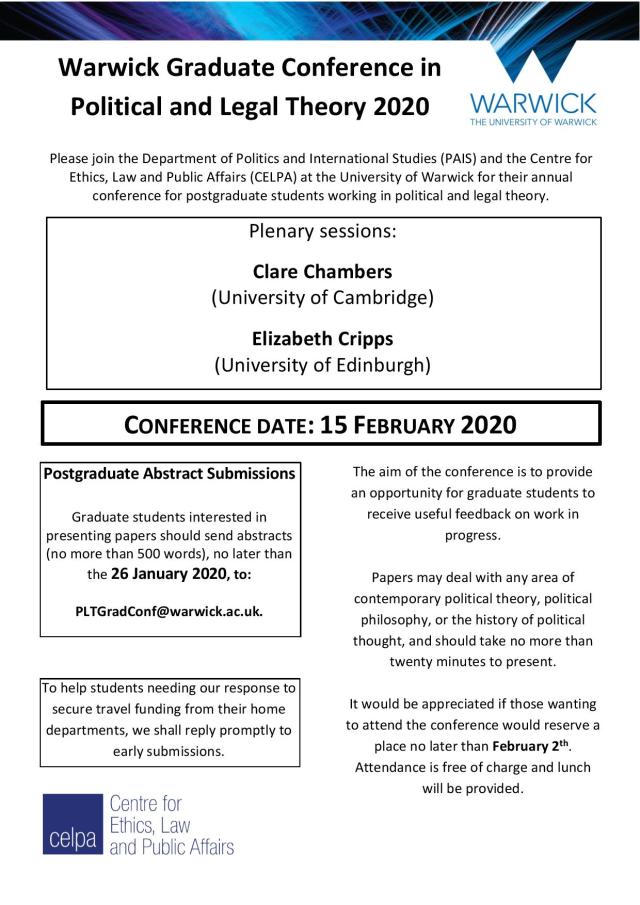
Warwick Graduate Conference in Political and Legal Theory, Saturday 15th February 2020
The keynote lectures are being given by Clare Chambers (Cambridge) and Elizabeth Cripps (Edinburgh). All queries to PLTGradConf@warwick.ac.uk
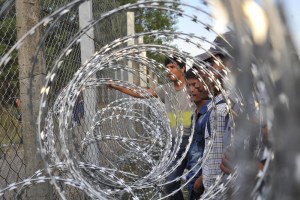 Thomas Nail, “The Climate-Migration-Industrial Complex” at Public Seminar
Thirty years ago there were fifteen border walls around the world. Now there are seventy walls and over one billion national and international migrants. International migrants alone may even double in the next forty years due to global warming. It is not surprising that over the past two decades, we have also seen the rise of an increasingly powerful global climate-security market designed to profit from (and help sustain) these crises. The construction of walls and fences to block rising sea levels and incoming people has become one of the world’s fastest growing industries, alongside the detention and deportation of migrants, and is projected to reach $742 billion by 2023. I believe we are witnessing the emergence of what we might call a “climate-migration-industrial complex.”
Etienne Balibar – Being Communist, Becoming Other (audio)
Etienne Balibar will reflect on his relationship to reading Marx, starting with Reading Capital, his early work co-written with Louis Althusser. He will seek to reconstruct his relation to Marx’s thought, communism, and engage the question of communism for the present and future.
Etienne Balibar teaches at Columbia every Fall semester. He is Professor Emeritus of moral and political philosophy at Université de Paris X – Nanterre and Professor Emeritus of Humanities at the University of California, Irvine. He also holds a part-time Anniversary Chair in Modern European Philosophy at Kingston University, London. He has published widely in the areas of epistemology, Marxist philosophy, and moral and political philosophy in general. His works include Lire le Capital (with Louis Althusser, Pierre Macherey, Jacques Rancière, Roger Establet) (1965); The Philosophy of Marx (1995); Spinoza and politics (1998); Politics and the Other Scene (2002); We, the People of Europe? (2003) ; Equaliberty (2014); Violence and Civility. On the Limits of Political Philosophy (2015); Citizen Subject. Foundations for Philosophical Anthropology (2017); Secularism and Cosmopolitanism (2018).
This event is co-sponsored by the Program in Critical Theory and the International Consortium of Critical Theory Programs with support from the Andrew W. Mellon Foundation.
thanks to dmf for this link
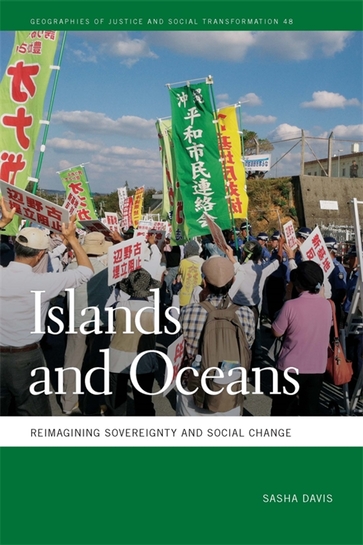 Sasha Davis, Islands and Oceans: Reimagining Sovereignty and Social Change, University of Georgia Press, April 2020 – in the Geographies of Justice and Social Transformation series.
Sovereignty is a term used by stateless people seeking decolonization as well as by dominant social groups struggling to reassert their socially privileged positions. All sorts of political actors, it seems, are interested in sovereignty. It is less clear, however, just what the term means, and whether calls for sovereignty promote a politically progressive or conservative agenda. Examining how sovereignty functions allows us to better understand the dangers, promise, and limitations of relying on it as a political strategy.
Islands and Oceans explores how struggles for decolonization, self- determination, and political rights permeate conceptualizations of how sovereignty operates. To support his theoretical claims, Sasha Davis works through a series of case studies, drawing on research that he conducted between 2013 and 2017 in Korea, Guam, Yap, Palau, the Northern Marianas, Hawai’i, and Honshu and Okinawa in Japan. Because of the hybridized and contested arrangements of sovereignty in these territories, these places are excellent sites to tease out some of the differences between official regimes of sovereignty and the actual control of social processes on the ground. In addition, analysis of the tensions and acute debates over sovereignty in these regions lays bare how sovereignty works as a process. Davis’s study of these political cases within the Asia-Pacific region advances our understanding the nature of sovereignty more generally.
Stuart Hall’s documentary on Marx and Marxism
This has been circulating on social media – I got it from Jussi Parikka.
Update: looks like it’s been removed from vimeo. Here’s a youtube link:
 Power and Time: Temporalities in Conflict and the Making of History, edited by Dan Edelstein, Stefanos Geroulanos and Natasha Wheatley – University of Chicago Press, December 2020
Time is the backdrop of historical inquiry, yet it is much more than a featureless setting for events. Different temporalities interact dynamically; sometimes they coexist tensely, sometimes they clash violently. In this innovative volume, editors Dan Edelstein, Stefanos Geroulanos, and Natasha Wheatley bring together essays that challenge how we interpret history by focusing on the nexus of two concepts— “power” and “time”—as they manifest in a wide variety of case studies. Analyzing history, culture, politics, technology, law, art, and science, this engaging book shows how “temporal regimes” are constituted through the shaping of power in historically specific ways. Power and Time includes seventeen essays on a wide variety of subjects: human rights; sovereignty; Islamic, European, and Indian history; slavery; capitalism; revolution; the Supreme Court; and even the Manson Family. Power and Time will be an agenda-setting volume, highlighting the work of some of the world’s most respected and innovative contemporary historians and posing fundamental questions for the craft of history.
Ann Stoler, The New School“What a gift this magnificent edited volume will be for those of us who have long sought to identify the implicit and violent ways in which power is garnered in battles over timing and time. With conceptual and empirical acuity, this is a volume that ‘harasses’ disciplinary strictures as it explodes the most revered canons. Moving from ‘multiple temporalities’ to conflictual ones is at the heart of this collective agenda, each author showing why such a conceptual and methodological move disrupts the seamlessness of linear histories and are critical moves we need to make. Here is a volume of depth, creativity, and inspiration for those long obsessed with thinking time and temporalities and for those who have not broached how profoundly such thinking recalibrates our collective futures—both their dark diagnostics and enabling horizons.”Udi Greenberg, Dartmouth College“This exciting and wide-ranging collection explores a crucial nexus of modern life: how social-political visions and conceptions of time shape each other. Its dazzling collection of case studies brings to life political leaders, scientists, economists, activists, and jurists as the authors chart how the interaction between temporality and authority transformed life across the globe. With original research and fresh methodological insights, Power and Time is a vital contribution to our understanding of contemporary history.”Ethan Kleinberg, Wesleyan University“In Power and Time, Edelstein, Geroulanos, and Wheatley have curated a constellation of essays that take up the fascinating and vexed relation between the history of time and the times of history. The essays provide incredible range but maintain a tight thematic focus through the analytical pairing of power and time. In doing so, they offer an original and comprehensive survey of temporal regimes and the reciprocal feedback loop between the nodes of power that create them and the means by which that power is maintained. Power and Timeis impressive in scope and depth and an important contribution to the new metaphysics of time.”
 Architecture in Global Socialism by Łukasz Stanek (Princeton University Press) reviewed in The Guardian by Owen Hatherley – “a book that rewrites the cold war”
This is one of those books that turns a discipline upside down – the cold war, state socialism, eastern Europe and 20th-century architecture all look different in the light of its findings. Based on multilingual research, it concentrates on how the development of several postcolonial cities – mainly, but not exclusively, Accra, Lagos, Baghdad, Abu Dhabi and Kuwait City – were in large part the product of architects and planners from the USSR, Yugoslavia, Poland, East Germany, Hungary, Bulgaria and Romania. It sketches in a strange geography, where an architect couldn’t legally go from one end of Berlin to the other, but could travel across the world and reconstruct it. Each state’s foreign trade organisation kept a close eye on travelling architects – and took as much as a third of salaries in hard cash – but the notion of state socialist insularity and autarchy is blown to pieces. So too is the idea of total Soviet control, both over its satellites and its postcolonial “proxies”. Each of the countries discussed here was in the Non-Aligned Movement set up in the 50s by India, Indonesia and Yugoslavia; they ranged from the statist developmentalism of Kwame Nkrumah’s Ghana and Ahmed Hassan al-Bakr’s Iraq to the rentier capitalism of 70s Nigeria, ending in the oil monarchies of the Gulf. Most of these governments harshly repressed their local communists, but welcomed foreign ones to plan and build their towns and industries – in the age of Sputnik, they gambled that the Soviet path to modernity would be faster and fairer.
 Foucault Studies, Number 27, December 2019 – now out, open access (via Foucault News)
The editors of Foucault Studies are pleased to publish this issue of Foucault Studies containing seven original articles and three book reviews. Among the themes highlighted in the seven original articles are: norms, normalization, normativity, law and rule; genealogy and the diagnosis of the present; regimes of truth and truth-telling; ethics, ethical invention and transformation; the Panopticon and surveillance; as well as the relationship between Foucault and Deleuze, and Sartre and Foucault.
Editorial
Sverre Raffnsøe et al.Articles
What’s In a Norm? Foucault’s Conceptualisation and Genealogy of the Norm
Mark KellyFoucault, Normativity, and Freedom: A Reappraisal
Giovanni MascarettiRe-thinking Thought: Foucault, Deleuze, and the Possibility of Thinking
Wendyl LunaFoucault as an Ethical Philosopher: The Genealogical Discussion of Antiquity and the Present
Dimitrios LaisEthical Invention in Sartre and Foucault: Courage, Freedom, Transformation
Kimberly EngelsSirens in the Panopticon: Intersections Between Ainslean Picoeconomics and Foucault`s Discipline Theory
Yevhenii Osiievskyi, Maksym YakovlyevThe Paradoxes in the Use of the Panopticon as a Theoretical Reference in Urban Video-surveillance Studies: A Case Study of a CCTV System of a Brazilian city
Iafet Leonardi BricalliBook Reviews
Colin Koopman: “How We Became Our Data: A Genealogy of the Informational Person”
Leonard D’CruzTom Boland: “The Spectacle of Critique: from Philosophy to Cacophony”
Stephanie MartensRosi Braidotti and Maria Hlavajova: “Posthuman Glossary”
Asker Bryld Staunæs, Mads Rosendahl Thomsen
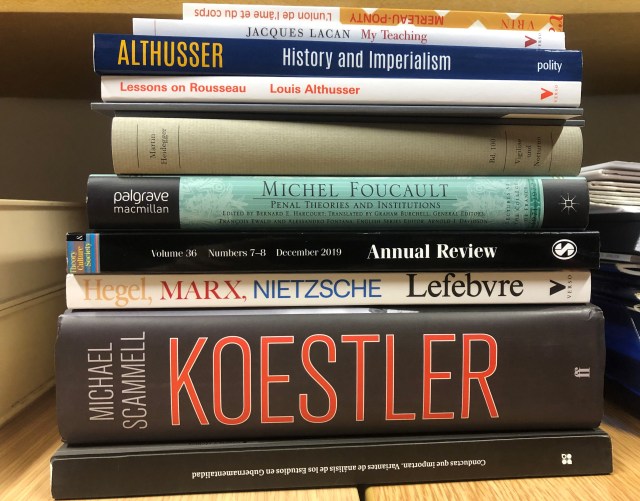
A mixed pile of books to come back to in the office. They include –
Some good news – this book is now available in paperback
https://www.sunypress.edu/p-6670-militant-acts.aspx
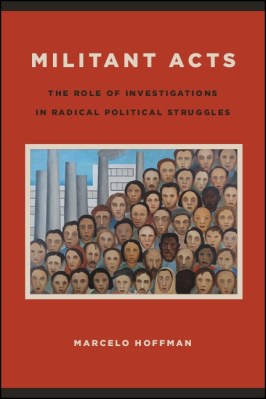 Marcelo Hoffman, Militant Acts: The Role of Investigations in Radical Political Struggles – SUNY Press, January 2019
Offers a history of the role of investigations in radical political struggles from the nineteenth century forward.
Militant Acts presents a broad history of the concept and practice of investigations in radical political struggles from the nineteenth century to the present. Radicals launched investigations into the conditions and struggles of the oppressed and exploited to stimulate their political mobilization and organization. These investigations assumed a variety of methodological forms in a wide range of geographical and institutional contexts, and they also drew support from the participation of intellectuals such as Marx, Lenin, Mao, Dunayevskaya, Foucault, and Badiou. Marcelo Hoffman analyzes newspapers, pamphlets, reports, and other source materials, which reveal the diverse histories, underappreciated difficulties, and theoretical import of investigations in radical political struggles. In so doing, he challenges readers to rethink the supposed…
View original post 167 more words


