
 I’m slow to link to the news about Agnes Heller (1929-2019), who died recently. There is a tribute at Daily Nous along with links to obituaries from Reuters, Hungary Today, Deutsche Welle, Le Monde.
I’m slow to link to the news about Agnes Heller (1929-2019), who died recently. There is a tribute at Daily Nous along with links to obituaries from Reuters, Hungary Today, Deutsche Welle, Le Monde.
 Nadia Bou Ali and Rohit Goel (eds.), Lacan Contra Foucault: Subjectivity, Sex, and Politics, Bloomsbury, 2019 – reviewed at NDPR. Sounds an interesting, if uneven collection. Shame about the prohibitive price.
This book grew out of a 2015 conference at the American University of Beirut. Its six chapters are technical and require prior familiarity with both Foucault and Lacan. Most of the authors have a background in both philosophy and psychoanalysis, but other disciplines are represented as well. The influence of the Slovenian approach to Lacan is particularly pronounced: at least four of the six contributors have studied or taught at the University of Ljubljana. Despite the title, only half of the chapters bear directly on the complex relationship between Foucault and Lacan. Lacan specialists are heavily represented in this volume, but Foucault scholars are missing.
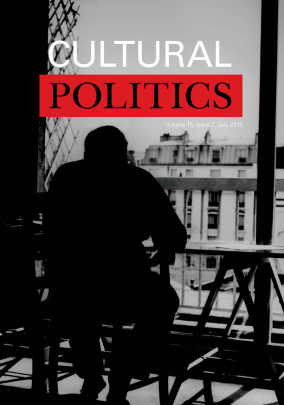 Remembering Paul Virilio: New Issue of Cultural Politics July 2019 (requires subscription)
An excerpt from Irina Dumitrescu is available here – https://longreads.com/2019/07/22/reading-lessons/
 How We Read: Tales, Fury, Nothing, Sound, edited by Suzanne Conklin Akbari and Kaitlin Heller- Punctum, summer 2019 – the follow-up to How We Write: Thirteen Ways of Looking at a Blank Page
What do we do when we read?
Reading can be an act of consumption or an act of creation. Our “work reading” overlaps with our “pleasure reading,” and yet these two modes of reading engage with different parts of the self. It is sometimes passive, sometimes active, and can even be an embodied form.
The contributors to this volume share their own histories of reading in order to reveal the shared pleasure that lies in this most solitary of acts – which is also, paradoxically, the act of most complete plenitude. Many of the contributors engage in academic writing, and several publish in other genres, including poetry and fiction; some contributors maintain an active online presence…
View original post 50 more words
The next in this sequence of workshops on Shakespeare in philosophy
David Garrick built his Shakespeare Temple beside the Thames at Hampton in 1755, as a place where ‘the thinkers of the world’ would meet to reflect on the plays. He hoped Voltaire would come. Now the Kingston Shakespeare Seminar is realising the great actor’s vision, with a series of symposia on
Each of these Saturday events features talks by leading philosophers and Shakespeare scholars, coffee and tea in the riverside garden designed by Capability Brown, and lunch at the historic Bell Inn.

On Saturday September 7 2019 the Temple symposium will be on
with contributions from
Richard Burt, Howard Caygill, Paul Kottman,
Caroline Lion, Avraham Oz, Björn Quiring, Cecilia Sjöholm
To register for the event go to
Call for papers – Second Annual Conference: Capitalism, Social Science and the Platform University
 Michel Foucault, Folie, Langage, Litterature, edited by Henri-Paul Fruchaud, Daniele Lorenzini and Judith Revel, Vrin, September 2019
The latest collection of pieces from the archive, with an introduction by Judith Revel.
La folie, le langage et la littérature ont longtemps occupé une place centrale dans la pensée de Michel Foucault. Quels sont le statut et la fonction du fou dans nos sociétés « occidentales », et en quoi se différencient-t-ils de ce qu’ils peuvent être dans d’autres sociétés? Mais également : quelle étrange parenté la folie entretient-elle avec le langage et la littérature, qu’il s’agisse du théâtre baroque, du théâtre d’Artaud ou de l’œuvre de Roussel? Et, s’il s’agit de s’intéresser au langage dans sa matérialité, comment l’analyse littéraire s’est-elle elle-même transformée, en particulier sous l’influence croisée du structuralisme et de la linguistique, et dans quelle direction évolue-t-elle?
Les conférences et les textes, pour la plupart inédits, réunis ici illustrent la manière dont, à partir des années 1960 et pendant plus d’une décennie, Foucault n’a eu de cesse de tisser, de reformuler et de reprendre ces questionnements. Éclairant d’un jour nouveau des thématiques que l’on croyait connaître, ils permettent également de percevoir l’étonnant regard de lecteur que Foucault portait par exemple sur La Recherche de l’Absolu de Balzac, ou sur La Tentation de saint Antoine et Bouvard et Pécuchet de Flaubert.
Books received in recompense for review work – Dario Melossi & Massimo Pavarini, The Prison and the Factory; Samuel Talcott, Georges Canguilhem and the Problem of Error; Michel Foucault, Discourse and Truth and Parrēsia, and Stuart Hall, Familiar Stranger: A Life between Two Islands.

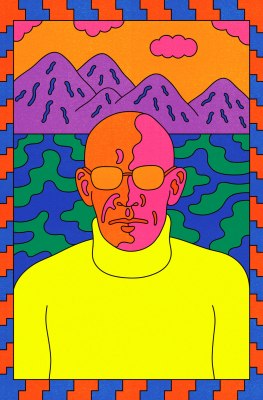 ‘Foucault in the Valley of Death‘ – Andrew Marzoni on Simeon Wade’s Foucault in California in The Baffler (online and in issue #46).
I spoke to Marzoni by phone during his research for this piece, and am briefly quoted in it. Although it uses the Wade memoir, it goes quite a way beyond that, and quotes the correspondence between Foucault and Wade which is now archived at USC.
THE FIRST TIME that Simeon Wade read Michel Foucault was in a graduate seminar at Harvard in the 1960s. Madness and Civilization had been translated into English in 1965, and the book excited Wade, who had been vice president of the Baptist student union at the College of William and Mary only a few years earlier. But it was The Order of Things, a bestseller in France upon its publication in 1966, that caused the young Marxist to “discard Hegelianism,” as he later explained, for the humanistic “equivalent of Watson and Crick’s analysis of the double helix.” Wade earned a doctorate in the intellectual history of Western civilization in 1968, writing a thesis on “The Idea of Luxury in Eighteenth-Century England,” and after teaching in Boston for a couple of years, hitched a ride with his fraternity brother Jet Thomas, who had officiated the wedding of Gram Parsons, to California, where Thomas owned a cabin on Mount Baldy. [continues here]
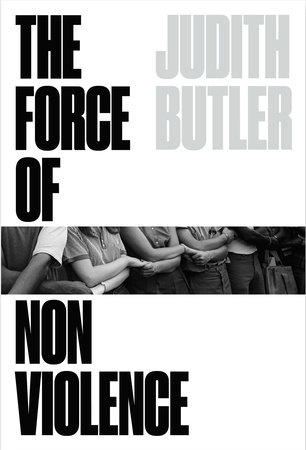 Judith Butler: When Killing Women Isn’t a Crime – interview with George Yancy in The New York Times. Thanks to Morris Kaplan for the link.
Among other things it talks of her forthcoming book The Force of Non-Violence, forthcoming with Verso (and distributed by Penguin).
I reached out to the philosopher Judith Butler last year, not long after I wrote an article titled “I Am A Sexist,” as the #MeToo movement was in full swing. I hoped to get an unvarnished critique of the essay. I got much more: A bracing and profound exchange that led to this interview and the reminder that violence against women, in its many forms, is a global tragedy.
Judith Butler is known for her decades of work in philosophy, feminism and activism worldwide. A professor in the department of comparative literature and the program of critical theory at the University of California, Berkeley, she is the author of numerous influential books, including “Notes Toward a Performative Theory of Assembly” and the forthcoming book, “The Force of Non-Violence.” The interview was conducted by email.


