The UK National Student Survey: An amalgam of discipline and neo-liberal governmentality (2019)

Discussion of the UK national student survey – one of the many metric-driven aspects of contemporary universities.

Clare O'Farrell's avatarFoucault News

Thiel, J.
The UK National Student Survey: An amalgam of discipline and neo-liberal governmentality
(2019) British Educational Research Journal, 45 (3), pp. 538-553.

DOI: 10.1002/berj.3512

Abstract
The UK National Student Survey (NSS) has high status on the agenda of UK universities. Its rise in status is linked to its influence on national rankings and associated funding streams referenced to the Teaching Excellence Framework (TEF). Consequently, many universities have implemented further assessments of student satisfaction, thereby putting additional internal performative pressures on courses and individual lecturers. The research contribution of this article comprises an analysis of the NSS through Foucault’s notion of ‘governmentality’, with a particular focus on his work on ‘discipline’ and ‘neo-liberal governmentality’. More specifically, by utilising qualitative data from interviews, research diaries and observations, it will be demonstrated how the NSS functions as a ‘disciplinary’ technology of government which subjects lecturers, departments and universities to intersecting panoptic…

View original post 96 more words

Posted in Uncategorized | Leave a comment

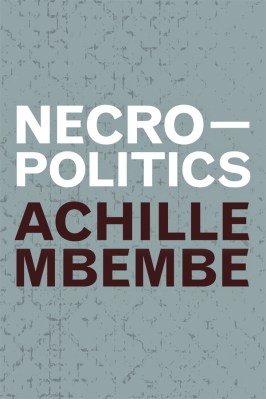
Achille Mbembe, Necropolitics – Duke University Press, October 2019

978-1-4780-0651-0_pr.jpgAchille Mbembe, Necropolitics – Duke University Press, October 2019

Posted in Achille Mbembe, Uncategorized | Leave a comment

‘Why should people interested in territory read Shakespeare?’ article in Territory, Politics, Governance now published

final-2019-e1547638894560My article ‘Why should people interested in territory read Shakespeare?‘ is now published in Territory, Politics, Governance. It’s been available online for a while, but is now officially in an issue of the journal. If you don’t have institutional access, then the first 50 downloads are open access (here), but if that no longer works, please email me for a copy. The article is a summary of some of the themes of my book Shakespearean Territories (University of Chicago Press, 2018). My thanks to the editors of the journal, particularly Martin Jones for the invitation to write this piece.

This paper argues that territory is more than a simple concept, and that William Shakespeare is a valuable guide to understanding its complexities. Shakespeare’s plays explore many aspects of geography, politics and territory. They include ideas about the division of kingdoms in King Lear, the struggle over its control in Macbeth and many of the English history plays, to the vulnerability of small territories with powerful neighbours in Hamlet. However, the plays also help us to understand the legal and economic issues around territory, of the importance of technical innovations around surveying and cartography, and the importance of landscapes and bodies. Shakespeare is especially interesting because debates in political theory at this time concerned a recognizably modern understanding, and European states were consolidating their own rule, marking boundaries and seizing colonial possessions. Shakespeare dramatizes many of these themes, from The Tempest to plays set in the Eastern Mediterranean such as Othello. Territory is a word, concept and practice, and their interrelation is explored with Shakespeare as a guide. This builds on the author’s previous work on territory, but also develops the understanding further, especially around the colonial, corporeal and geophysical. Historical work on our contemporary concepts can also be revealing of our present.

Posted in Shakespearean Territories, Territory, Uncategorized | Leave a comment

Hannah Arendt on What Freedom and Revolution Really Mean – previously unpublished essay (open access)

Hannah Arendt on What Freedom and Revolution Really Mean – previously unpublished essay at LitHub (also in print in The New England Review). Thanks to Peter Gratton for the link.

In the 1960s, some years after the publication of her book On Revolution, Hannah Arendt lived in a world of revolutionary events, to which she was particularly sensitive. Such events included the expulsion of Krushchev in the Soviet Union; the construction of the Berlin Wall dividing Germany into two states; the Cuban missile crisis; the so-called “Quiet Revolution” in Canada, nationalistic in character; the Civil Rights movements here and abroad; anti-war protests, some of which were deadly, here and in Europe; military coups in South Korea, Vietnam, and Greece; Pope John XXIII’s profoundly revolutionary Second Vatican Council; the horror of the Cultural Revolution in China; the scientific revolution best known as “the conquest of space”; and the ongoing decolonization and independence battles in formerly imperial domains.

This manuscript, never before published, is marked “A Lecture” and dated “1966-67.” Where and when it was delivered, or if it was delivered, is not known. The manuscript seems too long for a single lecture. It might have been given at the University of Chicago where Arendt was teaching at the time in the School on Social Thought. Or it could have been at the Graduate Faculty of the New School for Social Research, which Arendt agreed to join in 1967, primarily to be in New York, close to her husband, Heinrich Bluecher, who was unwell. The where and when of the lecture have not been confirmed, though extant records have been thoroughly searched.

–Jerome Kohn

Posted in Uncategorized | Leave a comment

The Truth That Hurts, or the Corps à Corps of Tongues: An interview with Jacques Derrida, translated in Parallax

The Truth That Hurts, or the Corps à Corps of Tongues: An interview with Jacques Derrida” – new translation in Parallax (requires subscription), No abstract, so first note below:

1 Translator’s note [TN]: What follows is a translation of an interview with Jacques Derrida conducted by Évelyne Grossman in December 2003. The interview, entitled ‘La vérité blessante, ou le corps à corps des langues’, was published in the French journal Europe in May 2004, five months before Derrida’s death. A portion of the interview was translated into English by Thomas Dutoit and published in 2005 in the collection Sovereignties in Question: The Poetics of Paul Celan. I would like to thank the editor-in-chief of Europe, Jean-Baptiste Para, as well as Évelyne Grossman, Thomas Dutoit, and Pierre Alferi for allowing us to translate and publish the interview in this special issue of parallax. I would also like to express my gratitude to Donald Cross and Eric Prenowitz, who helped me revise this translation. A few words about the title: the phrase ‘La vérité blessante’ is a play on the French expression il n’y a que la vérité qui blesse – a rough equivalent of ‘only truth hurts’. The French verb blesser can refer to a physical wounding but also to a moral offence, to the hurting of someone’s feelings. The homophony with the English ‘blessing’ might be a deliberate choice by Derrida and Grossman – a hypothesis that the themes addressed in the interview could certainly back up. I have decided to leave the French expression corps à corps as such, both in the title and in the interview. The French phrase literally means ‘body(ies)-to-body(ies)’. It usually refers to a close encounter, a duel, a hand-to-hand combat or attack that involves bodily contact. It can be a form of wrestling, generally without mediation, at least without long-distance weaponry: ‘body-to-body’. But the expression is also used to refer to sexual embrace, intercourse or lovemaking. Both dimensions are present in the interview; in the title, the erotic, corporeal connotation is highlighted by the proximity of langues, ‘languages’ or ‘tongues’.


Posted in Uncategorized | 2 Comments

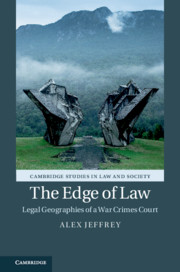
Alex Jeffrey, The Edge of Law: Legal Geographies of a War Crimes Court – Cambridge University Press, December 2019

9781107199842Alex Jeffrey, The Edge of Law: Legal Geographies of a War Crimes Court – Cambridge University Press, December 2019

The Edge of Law explores the spatial implications of establishing a new legal institution in the wake of violent conflict. Using the example of the establishment of the War Crimes Chamber of the Court of Bosnia and Herzegovina, Alex Jeffrey argues that legal processes constantly demarcate a line of inclusion and exclusion: materially, territorially and corporally. In contrast to accounts that have focused on the judicial outcomes of these transitional justice efforts, The Edge of Law draws on long-term fieldwork in Bosnia and Herzegovina to focus on the social and political consequences of the trials, tracing the fraught mechanisms that have been used by international and local political elites to convey their legitimacy. This book will be of interest to socio-legal and geographical scholars working in the fields of transitional justice, legal systems, critical geopolitics and criminology.

Posted in Uncategorized | Leave a comment

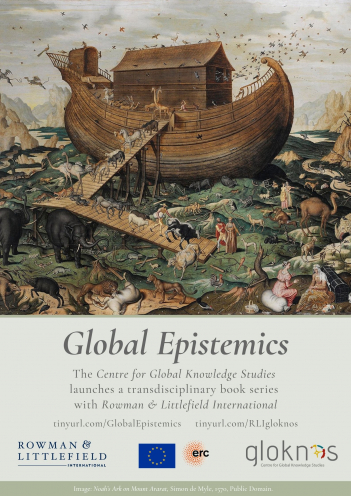
The Global Epistemics Book Series

The Global Epistemics Book Series – now launched, edited by Inanna Hamati-Ataya (Centre for Global Knowledges, University of Cambridge).

Global-Epistemics-Launch-Poster-copy.jpg

Global Epistemics is a transdisciplinary series established in partnership with Rowman & Littlefield International, that aims to foster, promote, and disseminate empirically grounded and theoretically ambitious research on knowledge as a cultural and natural phenomenon.

The series invites individual and collaborative works that efficiently transgress contemporary disciplinary boundaries across the historical, social, and natural sciences, to fruitfully advance our understanding of the nature, history, politics, pragmatics, and normative dimensions of human knowledges – their constitution, co-evolution, diffusion, cultural and material impacts, forms, and uses – as well as their relation to non-human knowledges and to evolving socio-ecological environments. We also invite approaches to animal (human and non-human) cognition that can redefine classical philosophical questions on knowledge and knowing, or delineate new areas and horizons for philosophical and ethical inquiry, on the basis of advanced empirical research and new research methodologies.

Grounded in an anthropologically holistic understanding of knowledge that encompasses its ideational, artistic, institutional, and material manifestations across history, as well as the full spectrum of historical modes of practical and intellectual validation (from ‘prehistorical’ to ‘modern’ paradigms, practices, and technologies and from ‘ancient’ to ‘modern’ science), the series also approaches globality simultaneously as totality, extension, and connectivity. It thus aims to advance naturalist, artisanal, and historical epistemologies beyond classical ontological and temporal divides; to explore the patterns of epistemic emergence, diffusion, and exchange across historical times, geocultural spaces, ecological contexts, and sociopolitical configurations; and to investigate modes of knowing and doing that illuminate human commonalities while making sense of our differences as manifestations of our cultural and behavioural plasticity.

The series welcomes empirically grounded and intellectually robust contributions that serve its mission, regardless of their methodologies, conceptual frameworks, levels of analysis, temporal scope, or specific objects of investigation. This includes investigations of contemporaneous natural and cultural structures, processes, actors, and media of epistemic activity, as well as studies inscribed in the longue durée or deep-historical time, or addressing past or present knowledge from a comparative perspective. We are looking for projects that can speak to audiences across academic specialties, whether they aim to initiate new transdisciplinary work, disseminate the results of such research, or develop ambitious syntheses.

In addition to its transdisciplinary ambitions, the series hopes to showcase, and facilitate access to, cross-sectorial contributions to the understanding of human and non-human knowledge, especially in domains wherein epistemic activity is strongly grounded in artisanal, social, and technical praxis. We therefore encourage the submission of projects that engage with, and include, epistemic actors beyond the community of academics, scientists, and scholars, without deviating from the series’ commitment to robust research standards and clarity of scholarly communication. Such projects will be subjected to the same process and expectations of academic peer-reviewing.

Full details here.

Posted in Uncategorized | Leave a comment

Andrea Ballestero, A Future History of Water – Duke University Press, June 2019

978-1-4780-0389-2_pr.jpgAndrea Ballestero, A Future History of Water – Duke University Press, June 2019

Based on fieldwork among state officials, NGOs, politicians, and activists in Costa Rica and Brazil, A Future History of Water traces the unspectacular work necessary to make water access a human right and a human right something different from a commodity. Andrea Ballestero shows how these ephemeral distinctions are made through four technolegal devices—formula, index, list and pact. She argues that what is at stake in these devices is not the making of a distinct future but what counts as the future in the first place. A Future History of Water is an ethnographically rich and conceptually charged journey into ant-filled water meters, fantastical water taxonomies, promises captured on slips of paper, and statistical maneuvers that dissolve the human of human rights. Ultimately, Ballestero demonstrates what happens when instead of trying to fix its meaning, we make water’s changing form the precondition of our analyses.

Posted in Uncategorized | Leave a comment

L’aventure Althusser – 1 hour documentary with interviews with Macherey, Balibar, Rancière, etc, available until 7 July 2019

L’aventure Althusser – 1 hour documentary with interviews with Macherey, Balibar, Rancière, etc, available until 7 July 2019. Thanks to Nadim Khoury for sending the link.

Le portrait passionnant du philosophe marxiste Louis Althusser qui, avant de sombrer dans la folie, a forgé une pensée aujourd’hui réinvestie par ceux qui contestent le capitalisme.

Le 16 novembre 1980, le philosophe Louis Althusser étrangle sa femme Hélène Rytmann dans leur appartement de l’École normale supérieure de la rue d’Ulm, à Paris, où il enseigne depuis plus de trente ans. Ce crime commis dans une crise de démence, son long internement en institution psychiatrique, puis sa mort, dix ans plus tard, auraient pu l’engloutir dans l’oubli. Il en allait de même pour l’idéologie communiste qu’il a toujours revendiquée, et que la chute du mur de Berlin semblait avoir condamnée. Mais après le triomphe de l’individualisme post-1968 et du néolibéralisme des années 1980, le marxisme d’Althusser et de ses disciples, d’Alain Badiou à Étienne Balibar, connaît un regain de faveur, notamment auprès de la jeunesse, à l’heure du capitalisme mondialisé. En s’appuyant sur de riches archives, mais aussi sur les passionnants témoignages de ses élèves et compagnons – les philosophes Étienne Balibar, Yves Duroux, Jacques Rancière, Lucien Sève, Pierre Macherey… –, Bruno Oliviero et Adila Bennedjaï-Zou dressent le portrait intellectuel et intime du philosophe français qui a voulu réinventer le marxisme sans tourner le dos au communisme, ni quitter le PCF, parce qu’il était, disait-il, “le parti des masses“.

Catastrophe annoncée
Ces intervenants montrent combien les livres (sur Marx, Montesquieu ou Machiavel), les articles et l’enseignement de Louis Althusser, fondés sur un travail collectif avec ses disciples, ont modelé une génération, faisant de lui un maître à penser des années 1960, à l’égal de Lacan, Foucault et Barthes. Ils expliquent aussi comment l’ensevelissement progressif du marxisme dans le débat contemporain, notamment après 1968, a marqué l’œuvre du philosophe, et jusqu’à sa vie intime. Pris peu à peu dans un compte à rebours inexorable, Althusser se débattra pour tenter de dégager le marxisme de la catastrophe annoncée, désespérant d’achever la tâche titanesque qu’il s’est fixée : concevoir la philosophie que le Marx du Capital n’a pas eu le temps d’écrire. Sans prétendre expliquer le meurtre qui, deux décennies durant, fera l’essentiel de sa triste célébrité, ce documentaire évoque aussi, en filigrane, les contradictions amoureuses et les assauts de la maladie psychique qui l’entraîneront dans le gouffre.

Posted in Etienne Balibar, Jacques Rancière, Louis Althusser, Pierre Macherey, Uncategorized | 1 Comment

John Agnew awarded the 2019 Prix Vautrin-Lud

John Agnew has been awarded the 2019 Prix Vautrin-Lud – the highest award in Geography and sometimes called the equivalent of the discipline’s Nobel prize. There is a news report in French here. Thanks to Sally Hardy for the alert.

Posted in John Agnew, Uncategorized | Leave a comment