Shakespeare in Philosophy symposia at the Temple 2019

The further events in this series of encounters between Shakespeare and philosophy.

kingstonshakespeareseminar's avatarKingston Shakespeare Seminar

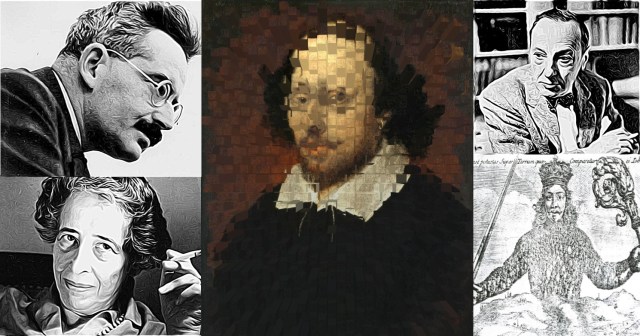
Shakespeare in Philosophy collage

After last’s summer’s series of days on French theorists, we turn this year to twentieth-century political theology, and to three thinkers whose work has powerfully shaped recent interpretations of Shakespearean theatre. This is our programme:

Saturday April 6: Walter Benjamin and Shakespeare

Saturday June 22: Ernst Kantorowicz and Shakespeare

Saturday September 7: Hannah Arendt and Shakespeare

On Friday June 21 we are also co-hosting with Historic Royal Palaces what we hope will be the first of an annual series of midsummer conferences at Hampton Court Palace: ‘The Hollow Crown: Shakespeare and Coronation’. With two sections, on ‘Crown’ and ‘Crowd’, this event has been planned to double with the Temple symposium on Kantorowicz the following day, to provide a focus for our discussion of current thinking about Shakespeare and Political Theology.

Mark your diaries and further details to follow!

View original post

Posted in Uncategorized | Leave a comment

CFP: Baudelaire and Philosophy, 5-6 June 2019, Centre for Philosophy and Critical Thought, Goldsmiths, University of London and the Institut Français

Baudelaire and Philosophy: A Conference sponsored by the British Society of Aesthetics

5-6 June 2019, Centre for Philosophy and Critical Thought, Goldsmiths, University of London and the Institut Français

CALL FOR PAPERS
Deadline for submissions: 21 March 2019

INVITED SPEAKERS

Isabelle Alfandary (Paris 3/CIPh)

Jennifer Bajorek (Hampshire)

Patrick ffrench (King’s College London)

Elissa Marder (Emory)

Adrian Rifkin (Goldsmiths)

Richard Rand (Paris)

Charles Baudelaire is a pivotal reference for debates on modernity, criticism and poetics, though in the domains of philosophy and critical theory his work is often approached solely through the prism of contemporary commentary. Baudelaire’s own engagement with the philosophical – for instance in his pairing of Joseph de Maistre and Edgar Allan Poe as critics of the metaphysics of “progress” – has also been insufficiently mined. Yet Baudelaire has been key for thinking about the transformations of the very conditions of aesthetic experience since the 19th century; his writings on the dandy and the poetic significance of intoxication, as well as his work as a critic of fine art and music, have arguably expanded notions of what counts as aesthetic experience, opening it up beyond questions of taste, value, or didactic ends. For Nietzsche, Sartre, Merleau-Ponty, Lukács, Benjamin, Lacan and others, Baudelaire reimagined the poet and the poetic as inseparable from their relations to the social, psychological, material and sexual and, as such, as figures through which such relations may be reevaluated. After Baudelaire, the urban and the technological are no longer mere themes but the very element in which aesthetic experience and poetic production take shape; after Baudelaire, the poem assumes the form of a crucible for new and altered states of “experience.” This had led to Baudelaire often being made synonymous with the notion of modernity, and in particular with the idea that novelty becomes a (or even the) key category for aesthetic experience and artistic production from the mid-nineteenth century onwards. Taking Baudelaire’s own references to philosophy seriously, this conference will also explore the complexity of the relation between the received understanding of Baudelaire as a prophet of modernity and his opposition to any idea of progress that would reduce poetic beauty to a vehicle for social and moral development.

The conference will alternate between delving into specific poetic and critical texts by Baudelaire and tackling some of the key interpretations and uses of his work within philosophy and critical theory, from Georges Bataille to Jacques Derrida, Walter Benjamin to Jacques Rancière. The conference aims to do justice to the richness, complexity and ambiguity of Baudelaire’s critical and poetic writing, to explore his relation to philosophy and the philosophical, and to interrogate his place as a synonym for a certain conception of modernity.

Selected papers will be published as an edited collection or special journal issue.

PAPERS

Proposals for 20 minute papers are invited in all areas pertaining to Baudelaire’s relation to philosophical aesthetics and related areas (e.g. ethics and political philosophy, metaphysics, theology, philosophy of mind, critical theory). Please send abstracts of not more than 250 words together with a brief (50-100 word) biographical statement including affiliation, status (student or not) and contact details to: j.ng [at] gold.ac.uk and a.toscano [at] gold.ac.uk. Please also direct any questions to these addresses.

CONFERENCE ORGANISERS

Julia Ng and Alberto Toscano, CPCT, Goldsmiths, University of London

Posted in Uncategorized | Leave a comment

Books received – Wade, Towarnicki, Althusser, Foucault

books

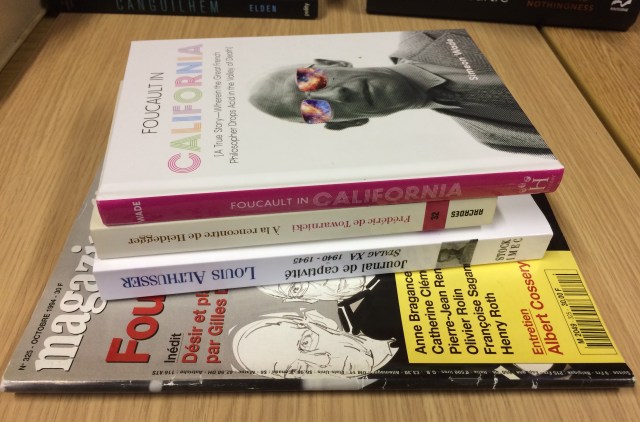
Simeon Wade’s memoir, Foucault in California, Frédéric de Towarnicki, À la rencontre de Heidegger, Louis Althusser, Journal de captivité: Stalag XA 1940-1945, and one of the several issues of Magazine littéraire on Foucault.

Wade’s memoir is the infamous Death Valley acid trip, and is discussed in an interview with Boom California, conducted by Heather Dundas. Dundas writes a foreword to this edition, which also has two of the photos from the trip as endpapers.

Posted in Louis Althusser, Martin Heidegger, Michel Foucault, Uncategorized | Leave a comment

Atsuko Watanabe, Japanese Geopolitics and the Western Imagination – Palgrave 2019

9783030043988Atsuko Watanabe, Japanese Geopolitics and the Western Imagination – Palgrave 2019

This book is the first attempt to comprehensively introduce Japanese geopolitics. Europe’s role in disseminating knowledge globally to shape the world according to its standards is an unchallenged premise in world politics. In this story, Japan is regarded as an enthusiastic importer of the knowledge. The book challenges this ground by examining how European geopolitics, the theory of the modern state, traveled to Japan in the first half of the last century, and demonstrates that the same theory can invoke diverged imaginations of the world by examining a range of historical, political, and literary texts. Focusing on the transformation of power, knowledge, and subjectivity in time and space, Watanabe provides a detailed account to reconsider the formation of contemporary world order of the modern territorial states.

Posted in Uncategorized | 1 Comment

An excellent review of “k-punk: The Collected and Unpublished Writings of Mark Fisher” 

Posted in Uncategorized | Leave a comment

Antipode at 50 – free download of book of ‘Keywords in Radical Geography’

The journal Antipode is 50. The editors have put together an e-book of ‘Keywords in Radical Geography‘, free to download.

Posted in Uncategorized | Leave a comment

After Capital by Couze Venn – book discussion, Goldsmiths, 25 March 2019, 6pm – CANCELLED

I’ve just been told the event has been cancelled.

stuartelden's avatarProgressive Geographies

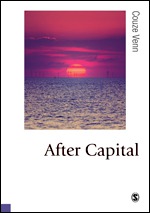
90453_9781526450135After Capital by Couze Venn – book discussion, Goldsmiths, 25 March 2019, 6pm

Update 12 March 2019: I’ve just been told the event has been cancelled due to ill-health.

Panel discussion on this ground-break new work and its political implications with presentations form Jeremy Gilbert, Shela Sheikh and Paul Gilroy; and quick responses from Mike Featherstone, Will Davis, Lisa Blackman and Tiziana Terranova (on video).

6 to 7.30 pm, Monday 25th March with drinks reception afterwards LG01, Professor Stuart Hall Building, Goldsmiths

The present crisis of capitalism has a history. A history of the private accumulation of wealth through property regimes that allows increasing commodification and the privatisation of resources: from land to knowledge and even to life itself. Understanding that history may allow us to imagine alternatives after Capital that are no longer private but common. After Capital explores this history, showing how the economy is linked to environmental…

View original post 179 more words

Posted in Uncategorized | 1 Comment

Foucault’s Immanent Contradictions by Thomas Lemke (2019)

Short excerpt from Thomas Lemke’s excellent book on Foucault and politics, at last available in English

Clare O'Farrell's avatarFoucault News

Thomas Lemke, Foucault’s Immanent Contradictions, Verso Blog, 22 February 2019

From Habermas to Honneth, critics have been keen to portray Foucault as a paradox-prone thinker. Thomas Lemke argues that we should embrace the recurring contradictions in Foucault’s thought as symptoms rather than inherent problems.

This is an excerpt from the introduction to Thomas Lemke’s Foucault’s Analysis of Modern Governmentality: A Critique of Political Reason which is currently 30% off on the Verso website

Were not Foucault’s critics right to fault him for the contradictions immanent in his work? Did they not accurately describe the theoretical incoherence of calling for political resistance on the basis of a neutral conception of power? Was it not necessary to dissolve these aporias, contradictions and paradoxes in one direction or another? It seems Foucault had only two possibilities. According to the first line of reasoning, he overcame the problem and affirmed the validity of…

View original post 81 more words

Posted in Uncategorized | Leave a comment

British Academy/Leverhulme grant for archival work on the early Foucault

Foucault-with-Hair.jpgI’m very pleased to say that I’ve been awarded a British Academy/Leverhulme small grant for a project entitled ‘The Early Foucault: Retracing Intellectual History through Archival Sources’. As regular readers of the blog will know, I’ve been working on the first part of Foucault’s career for the past couple of years, building on the books on his later career – Foucault’s Last Decade (Polity, 2016) and Foucault: The Birth of Power (Polity, 2017). The research will involve further work with archives of Foucault’s papers in Paris and Normandy, his personal library held at Yale, and papers and libraries in Tübingen, Princeton and Irvine. It will also involve a month-long visit to the Carolina Rediviva library in Uppsala, where Foucault researched his History of Madness. The research will lead to a book entitled The Early Foucault (under contract with Polity), and the initial work for a planned book on Foucault’s career in the 1960s.
More detail on the project on the early Foucault can be found here.

Posted in Foucault's Last Decade, Foucault: The Birth of Power, Michel Foucault, The Early Foucault, Uncategorized | 1 Comment

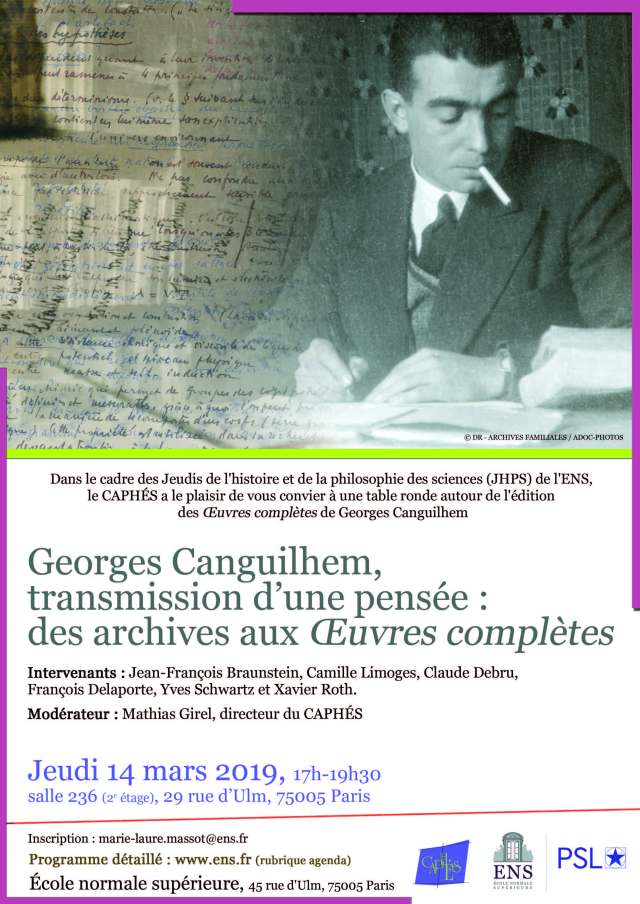
Georges Canguilhem, transmission d’une pensée : des archives aux Œuvres complètes – CAPHÉS, Paris, 14 March 2019

Georges Canguilhem, transmission d’une pensée : des archives aux Œuvres complètes – CAPHÉS, Paris, 14 March 2019

Jeudi 14 mars 2019 — École normale supérieure, 29, rue d’Ulm, salle 236 (2e étage), 75005 Paris — 17h à 19h 30

Intervenants : Jean-François Braunstein, Camille Limoges, Claude Debru, François Delaporte, Yves Schwartz et Xavier Roth.

Modérateur : Mathias Girel, directeur du CAPHÉS

Le Centre documentaire du CAPHÉS a le plaisir d’accueillir à l’ENS depuis plusieurs années l’équipe éditoriale qui s’est constituée autour de l’entreprise des Œuvres complètes de Georges Canguilhem. Après la publication de trois des six tomes, l’équipe du CAPHÉS souhaite réunir quelques anciens élèves de Georges Canguilhem et participants à l’entreprise éditoriale pour évoquer la question de la transmission : témoignages d’anciens élèves, travail des éditeurs de textes à partir des archives, ou comment les Œuvres complètes donnent à voir les « traces du métier » du professeur de philosophie qu’a tenu à être Georges Canguilhem.

Canguilhem20190314.jpg

Posted in Georges Canguilhem, Uncategorized | Leave a comment