AAG Announces 2018 Book Awards

AAG Announces 2018 Book Awards

The John Brinckerhoff Jackson Prize

This award encourages and rewards American geographers who write books about the United States which convey the insights of professional geography in language that is both interesting and attractive to lay readers.

Bombs AwayDavid G. Havlick, Bombs Away: Militarization, Conservation, and Ecological Restoration (University of Chicago Press, 2018)

David Havlick’s Bombs Away takes us on a rich journey to some of the world’s best examples of former military lands undergoing ecological restoration. He probes the cultural and environmental consequences of this process and explores what happens to localities that were once bombed, fortified, and militarized spaces. The result is a beautifully-written and theoretically-informed narrative that exemplifies a new area of nature-society research, asks relevant questions about ecological restoration on former military lands, and illuminates an important, previously underappreciated type of cultural landscape, both in the United States and beyond.

The AAG Globe Book Award for Public Understanding of Geography

This award is given for a book written or co-authored by a geographer that conveys most powerfully the nature and importance of geography to the non-academic world.

Unjust ConditionsTara Patricia Cookson, Unjust Conditions: Women’s Work and the Hidden Cost of Cash Transfer Programs (University of California Press, 2018)

Tara Patricia Cookson’s outstanding book Unjust Conditions: Women’s Work and the Hidden Cost of Cash Transfer Programs is an elegantly written and accessible portrait of how rural women in Peru experience and cope with the often hidden and detrimental socioeconomic demands of a much-heralded development program. Through careful, self-aware ethnographic methods, Cookson (currently a Postdoctoral Research Scholar in the Department of Geography at the University of British Columbia) presents a powerful counter-argument to the fashionable yet problematic practice of “data-driven development”. Unjust Conditions should be required reading for students, scholars, the general public, and—most importantly—practitioners of development searching for innovative and socially just alternatives to conventional development thinking.

The 2018 AAG Meridian Book Award for Outstanding Scholarly Work in Geography

This award is given for a book written by a geographer that makes an unusually important contribution to advancing the science and art of geography.

The SourceMartin Doyle, Duke University, The Source: How Rivers Made America and America Remade its Rivers (W.W. Norton, 2018)

Martin Doyle’s The Source is one of those rare books that advances both the science and art of geography. The Source is at once an environmental and political history of the United States. Doyle simultaneously provides an invaluable story of how rivers are intimately entangled with both the construction of the physical landscape, and an empirical study of how power has been etched onto that same landscape. Doyle adeptly picks apart some of the most intriguing connections among the various levels of governing bodies that are charged with dealing with water in the United States. The analysis shows how rivers not only contribute to the organization of a household via running water and indoor plumbing but also link to shaping cities beyond mere settlement, into the building of the nation itself. Well-researched and accessibly written, Doyle’s The Source embodies the spirit of the AAG Meridian Award.

Posted in Uncategorized | Leave a comment

The sudden, tragic death of Stewart Williams, UTas

I was deeply saddened to hear the news of the sudden, tragic death of Dr Stewart Williams, senior lecturer in Geography at University of Tasmania. I got to know Stewart when I spent three happy months at UTas in 2006, and we’d met a few times since – when I’d been back to Tasmania, or at conferences. One of his first post PhD papers, ‘On Islands, Insularity, and Opium Poppies: Australia’s Secret Pharmacy‘ was published in Society and Space when I was its editor. It’s very hard to know what else to say – he was a great scholar and good friend. I’ve been in touch with friends there, and through them, his family, but wanted to mark his passing on this site.

Posted in Uncategorized | Leave a comment

LSE Festival 2019: The Haunting of Neo-liberalism (Audio) with Robert Eaglestone, Simon Glendinning, Maja Zehfuss and Danielle Sands

LSE Festival 2019: The Haunting of Neo-liberalism (Audio) with Robert Eaglestone, Simon Glendinning, Maja Zehfuss and Danielle Sands

Speaker(s): Professor Robert Eaglestone, Professor Simon Glendinning, Professor Maja Zehfuss | Marx famously wrote of the spectre of communism haunting Europe in the nineteenth century, and the end of the Cold War might be considered to mark its exorcism. But has communism really been laid to rest? Despite the fall of the Berlin Wall, Derrida certainly thought not. He argued that in the ‘new world disorder’, ideologies like neo-liberalism were enmeshed with communism, haunted by the spectre of communisms yet to come. Is Derrida’s analysis still applicable to the post-9/11 world? And have new spectres appeared in our midst?

Robert Eaglestone (@BobEaglestone) is Professor of Contemporary Literature and Thought at Royal Holloway, University of London. Simon Glendinning(@lonanglo) is Professor of European Philosophy, London School of Economics. Maja Zehfuss is Professor of International Politics, University of Manchester Danielle Sands (@DanielleCSands) is a Fellow at the Forum for Philosophy & Lecturer in Comparative Literature and Culture, Royal Holloway, University of London. This event is co-organised by the European Institute and the Forum for Philosophy.

Posted in Jacques Derrida, Maja Zehfuss, Uncategorized | Leave a comment

Volumetric Sovereignty – series of short pieces in Society and Space, edited by Franck Billé

dorin-moise-359008-unsplash-1200x675.jpgFollowing those pieces in Cultural Anthropology, Franck Billé has put together another 25 short pieces on Volumetric Sovereignty, the first group of which has appeared in Society and Space.

Ground
Tim Ingold
Lines
Dylan Brady
Interference
Aditi Saraf
Vortex
Jeremy W. Crampton
Eddy
Paul Richardson
Broadcast
Ekaterina Mikhailova

Here’s the opening part of Franck’s Introduction:

The last five years have witnessed a veritable efflorescence of publications on the topic of volume. A seminal intervention that appears to have given the impetus for much of this “volumetric turn” was Stuart Elden’s 2013 paper, Secure the Volume, in which he argued for the necessity to rethink geography in terms of volumes rather than areas. While Elden was not the first scholar to draw attention to volumes—indeed Elden’s article quotes an extensive literature engaging with spaces beyond the surface—he was nonetheless instrumental in identifying commonalities shared by scholars interested in aerial spaces, such as Peter Adey (2010), Derek Gregory (2017),  or Alison Williams (2010), and subterranean realms, like Eyal Weizman (2007) or Bradley Garrett (2013). Elden’s work served to integrate these various strands into a more comprehensive and coherent volumetric framework. Heeding his agenda-setting call, many geographers, and in more recent years an increasing cohort of anthropologists as well, have been actively engaging with the volumetric, both in new research and in revisiting past work. The present collection of essays, involving over fifty scholars in both disciplines across two journals, is in many ways an outcome of this research zeitgeist. [continues here]

Posted in Uncategorized | Leave a comment

Speaking Volumes – series of short pieces in Contemporary Anthropology, edited by Franck Billé

Speaking-Volumes_thumbnail.jpgSpeaking Volumes – series of short pieces in Contemporary Anthropology, edited by Franck Billé.

I’d posted about this before (I had a piece on Terrain), but there are some newer pieces added which I don’t think I linked to previously.

[Editor’s Note: I am pleased to share eleven additional contributions to this series: Barb, Echolocation, Flyways, Gravity, Scaleless, Sensing, Sluice, Spongiform, Volatility, Views, and Watershed. Stay tuned for news about the forthcoming book, which will include extended versions of seventeen of these interventions as well contributions by Arjun Appadurai and Debbora Battaglia. A follow-up collection of twenty-five short essays will also be published at Society and Space in early 2019.]

The full list of pieces in Cultural Anthropology is available here; The Society and Space forum begins here.

Posted in Uncategorized | Leave a comment

NDPR reviews back – reviews of books on character and Spinoza

After a short break following Gary Gutting’s sad death, NDPR is back with reviews. The most recent reviews are listed here.

Posted in Uncategorized | Leave a comment

David Beer, Writings about old ideas: A year with Georg Simmel – Medium

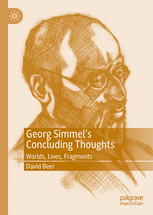
9783030129903David Beer, Writings about old ideas: A year with Georg Simmel at Medium

An interesting piece on the process of writing his forthcoming book Georg Simmel’s Concluding Thoughts: Worlds, Lives, Fragments (Palgrave, 2019)

For several years I’d been trying to write a book on Georg Simmel’s social thought. Simmel is a tricky thinker to work with, he moves between topics, styles and disciplines, plus his writings are dense with ideas theories and speculations. Initially, around early 2014, I did some background work, secured a book contract and did a little bit of writing. I quickly realised that I couldn’t get my original plan to work. I wanted to look at a variety of ways in which Simmel’s theories were relevant today, but it got out of hand. I couldn’t work out how to make Simmel’s lively ideas containable in a single project. The bits of writing were shelved and I worked on some other projects for a while. [continues here]

Posted in Uncategorized | Leave a comment

Stuart Schrader, Badges without Borders: How Global Counterinsurgency Transformed American Policing – U California Press, November 2019

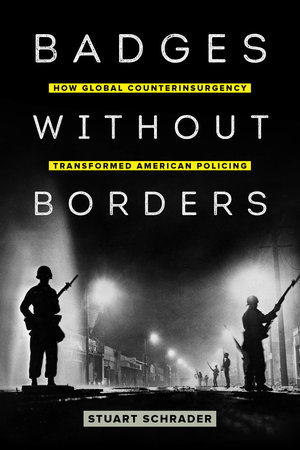
9780520295629.jpgStuart Schrader, Badges without Borders: How Global Counterinsurgency Transformed American Policing – University of California Press, November 2019

From the Cold War through today, the U.S. has quietly assisted dozens of regimes around the world in suppressing civil unrest and securing the conditions for the smooth operation of capitalism. Casting a new light on American empire, Badges Without Borders shows, for the first time,  that the very same people charged with global counterinsurgency also militarized American policing at home.

In this groundbreaking exposé, Stuart Schrader shows how the United States projected imperial power overseas through police training and technical assistance—and how this effort reverberated to shape the policing of city streets at home. Examining diverse records, from recently declassified national security and intelligence materials to police textbooks and professional magazines, Schrader reveals how U.S. police leaders envisioned the beat to be as wide as the globe and worked to put everyday policing at the core of the Cold War project of counterinsurgency. A “smoking gun” book, Badges without Borders offers a new account of the War on Crime, “law and order” politics, and global counterinsurgency, revealing the connections between foreign and domestic racial control.

Posted in Uncategorized | 1 Comment

Books received – Macherey, Mezzadra & Neilson, Zevnik, Gotman, Owens and Almqvist, Sartre

books.jpg

Pierre Macherey, A Theory of Literary Production; Tim Smith-Lang, Michel Foucault’s What is an Author?; Sandro Mezzadra and Brett Neilson, The Politics of Operation: Excavating Contemporary Capitalism; Andreja Zevnik, Lacan, Deleuze and World Politics; Kelina Gotman, Essays on Theatre and Change; Owens and Ahmqvist (eds.), Studying Lacan’s Seminars IV and V; and the new translation of Sartre’s Being and Nothingness. These were mainly in recompense for review work for Routledge, but The Politics of Operations was kindly sent by the publisher. Here’s the description:

In The Politics of Operations Sandro Mezzadra and Brett Neilson investigate how capital reshapes its relation with politics through operations that enable the extraction and exploitation of mineral resources, labor, data, and cultures. They show how capital—which they theorize as a direct political actor—operates through the logistical organization of relations between people, property, and objects as well as through the penetration of financialization into all realms of economic life. Mezzadra and Neilson present a capacious analysis of a wide range of issues, from racial capitalism, the convergence of neoliberalism and nationalism, and Marx’s concept of aggregate capital to the financial crisis of 2008 and how colonialism, empire, and globalization have shaped the modern state since World War II. In so doing, they illustrate the distinctive rationality and logics of contemporary capitalism while calling for a politics based on collective institutions that exist outside the state.
Posted in Gilles Deleuze, Jacques Lacan, Jean-Paul Sartre, Michel Foucault, Pierre Macherey, Uncategorized | Leave a comment

Alexandre Kojève, Atheism, translated by Jeff Love – Columbia UP 2018

9780231180009.jpgAlexandre Kojève, Atheism, translated by Jeff Love, Columbia UP 2018

One of the twentieth century’s most brilliant and unconventional thinkers, Alexandre Kojève was a Russian émigré to France whose lectures on Hegel in the 1930s galvanized a generation of French intellectuals. Although Kojève wrote a great deal, he published very little in his lifetime, and so the ongoing rediscovery of his work continues to present new challenges to philosophy and political theory. Written in 1931 but left unfinished, Atheism is an erudite and open-ended exploration of profound questions of estrangement, death, suicide, and the infinite that demonstrates the range and the provocative power of Kojève’s thought.

Ranging across Heidegger, Buddhism, Christianity, German idealism, Russian literature, and mathematics, Kojève advances a novel argument about freedom and authority. He investigates the possibility that there is not any vantage point or source of authority—including philosophy, science, or God—that is outside or beyond politics and the world as we experience it. The question becomes whether atheism—or theism—is even a meaningful position since both affirmation and denial of God’s existence imply a knowledge that seems clearly outside our capacities. Masterfully translated by Jeff Love, this book offers a striking new perspective on Kojève’s work and its implications for theism, atheism, politics, and freedom.

The book is discussed by Jeff Love and Carrie Lynn Evans at the New Books Network. Thanks to dmf for the link.

Posted in Uncategorized | Leave a comment