Shakespeare and Derrida, 1 September 2018, Garrick’s Temple, Hampton – programme

Tomorrow –

stuartelden's avatarProgressive Geographies

Featured Image -- 34432Kingston Shakespeare Series Conference: Shakespeare and Derrida, 1 September 2018, Garrick’s Temple, Hampton – details here; full programme here. Registration required (£20).

Papers by Nicholas Royle, Tina Chanter, Christopher Prendergast, John Joughin, Andrew Cutrofello and Howard Caygill.

This is part of the Kingston Shakespeare Seminar – follow the blog here.

View original post

Posted in Uncategorized | Leave a comment

John H. Zammito, The Gestation of German Biology: Philosophy and Physiology from Stahl to Schelling – University of Chicago Press, 2018 (and review at NDPR)

9780226520797.jpgJohn H. Zammito, The Gestation of German Biology: Philosophy and Physiology from Stahl to Schelling – University of Chicago Press, 2018 – reviewed at NDPR by Lenny Moss

The emergence of biology as a distinct science in the eighteenth century has long been a subject of scholarly controversy. Michel Foucault, on the one hand, argued that its appearance only after 1800 represented a fundamental rupture with the natural history that preceded it, marking the beginnings of modernity. Ernst Mayr, on the other hand, insisted that even the word “biology” was unclear in its meaning as late as 1800, and that the field itself was essentially prospective well into the 1800s.

In The Gestation of German Biology, historian of ideas John Zammito presents a different version of the emergence of the field, one that takes on both Foucault and Mayr and emphasizes the scientific progress throughout the eighteenth century that led to the recognition of the need for a special science. The embrace of the term biology around 1800, Zammito shows, was the culmination of a convergence between natural history and human physiology that led to the development of comparative physiology and morphology—the foundations of biology. Magisterial in scope, Zammito’s book offers nothing less than a revisionist history of the field, with which anyone interested in the origins of biology will have to contend.

Posted in Uncategorized | Leave a comment

Kélina Gotman, Choreomania: Dance and Disorder – OUP 2018

9780190840426Kélina Gotman, Choreomania: Dance and Disorder – OUP 2018

When political protest is read as epidemic madness, religious ecstasy as nervous disease, and angular dance moves as dark and uncouth, the disorder being described is choreomania. At once a catchall term to denote spontaneous gestures and the unruly movements of crowds, choreomania emerged in the nineteenth century at a time of heightened class conflict, nationalist policy, and colonial rule. In this book, author Kélina Gotman examines these choreographies of unrest, rethinking the modern formation of the choreomania concept as it moved across scientific and social scientific disciplines. Reading archives describing dramatic misformationsof bodies and body politicsshe shows how prejudices against expressivity unravel, in turn revealing widespread anxieties about demonstrative agitation. This history of the fitful body complements stories of nineteenth-century discipline and regimentation. As she notes, constraints on movement imply constraints on political power and agency. In each chapter, Gotman confronts the many ways choreomania works as an extension of discourses shaping colonialist orientalism, which alternately depict riotous bodies as dangerously infected others, and as curious bacchanalian remains. Through her research, Gotman also shows how beneath the radar of this colonial discourse, men and women gathered together to repossess on their terms the gestures of social revolt.

Introduction: Choreomania, Another Orientalism
Part I: Excavating Dance in the Archives
1. Obscuritas Antiquitatis: Institutions, Affiliations, Marginalia
2. Madness after Foucault: Medieval Bacchanals
3. Translatio: St. Vitus’s Dance, Demonism and the Early Modern
4. The Convulsionaries: Antics on the French Revolutionary Stage
5. Mobiles, Mobs and Monads: Nineteenth-Century Crowd Forms
6. Médecine Rétrospective: Hysteria’s Archival Drag
Part II: Colonial and Postcolonial Stages: Scenes of Ferment in the Field
7. “Sicily Implies Asia and Africa”: Tarantellas and Comparative Method
8. Ecstasy-belonging in Madagascar and Brazil
9. Ghost Dancing: Excess, Waste and the American West
10. “The Gift of Seeing Resemblances”: Cargo Cults in the Antipodes
11. Monstrous Grace: Blackness and the New Dance “Crazes”
12. Coda: Moving Fields, Modernity and the Bacchic Chorus


Posted in Uncategorized | 1 Comment

Alexandre Gefen reviews Foucault’s Les Aveux de la Chair at the Critical Inquiry blog

BHI_Foucault_Le_souci_Plat.inddAlexandre Gefen briefly reviews Foucault’s Les Aveux de la Chair at the Critical Inquiry blog. Thanks to Michael O’Rourke for the link.

A roundup of news stories and other pieces – mostly in French and some in English is here. My review essay is on the Theory, Culture and Society blog (open access), and is forthcoming in the journal.

Posted in Michel Foucault, Uncategorized | 1 Comment

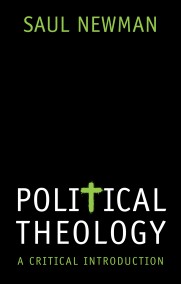
Saul Newman, Political Theology: A Critical Introduction – Polity Oct 2018

9781509528394-e1526028240406Saul Newman, Political Theology: A Critical Introduction – Polity Oct 2018

God is dead, but his presence lives on in politics. This is the problem of political theology: the way that theological ideas find their way into secular political institutions, particularly the sovereign state.

In this intellectual tour-de-force, leading political theorist Saul Newman shows how political theology arose alongside secularism, and relates to the problem of legitimising power and authority in modernity. It is not about the power of religion so much as the religion of power.  Examining the current crisis of the liberal order, he argues that recent phenomena, such as the rise of populism, the renewed demand for strong national sovereignty and the return of religious fundamentalism may be understood through this paradigm. He illustrates his argument through an exploration of themes such as sovereignty, democracy, economics, technology, ecological catastrophe, messianism and the future of radical politics, engaging with thinkers ranging from Schmitt and Hobbes to Stirner, Foucault, and Agamben.

This book will be a crucial text for all students, scholars and general readers interested in the meaning and significance of political theology for political theory.

Posted in Uncategorized | Leave a comment

The London Of Charles Dickens: Mapped

Screen Shot 2018-08-27 at 09.17.01 (2).png

The London Of Charles Dickens: Mapped – not new, but new to me. An interesting mapping project of Dickens’s life and novels.

Charles Dickens is intimately associated with London like no other author. The city features in all of his novels, usually as the main setting.
Two years ago, we set ourselves the task of reading every novel and mapping their London locations. Here are the results. We’ve also included the many addresses that Dickens called home, so you can see how his novels often feature those areas he was most familiar with.

Londonist article about the project here; map itself here.

Posted in Uncategorized | Leave a comment

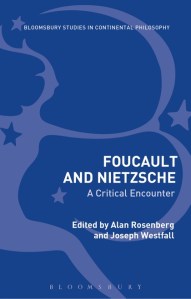
Foucault and Nietzsche A Critical Encounter edited by Joseph Westfall and Alan Rosenberg (and NDPR review)

stuartelden's avatarProgressive Geographies

9781474247399Foucault and Nietzsche A Critical Encounter edited by Joseph Westfall and Alan Rosenberg, due out with Bloomsbury in February 2018. Looks great, but what a shame about the prohibitive price.

Foucault’s intellectual indebtedness to Nietzsche is apparent in his writing, yet the precise nature, extent, and nuances of that debt are seldom explored. Foucault himself seems sometimes to claim that his approach is essentially Nietzschean, and sometimes to insist that he amounts to a radical break with Nietzsche. This volume is the first of its kind, presenting the relationship between these two thinkers on elements of contemporary culture that they shared interests in, including the nature of life in the modern world, philosophy as a way of life, and the ways in which we ought to read and write about other philosophers.

The contributing authors are leading figures in Foucault and Nietzsche studies, and their contributions reflect the diversity of…

View original post 197 more words

Posted in Uncategorized | Leave a comment

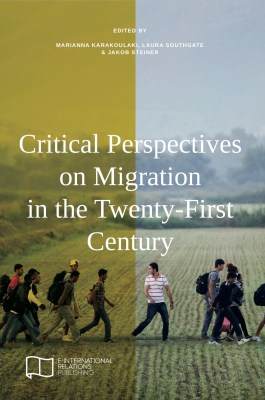
Critical Perspectives on Migration in the Twenty-First Century – open access book from E-IR

Migration-coverCritical Perspectives on Migration in the Twenty-First Century – open access book from E-IR

Thousands of people risk their lives daily by crossing borders in search of a better life. During 2015, over one million of these people arrived in Europe. Images of refugees in distress became headline news in what was considered to be the worst humanitarian crisis in Europe since 1945. This book provides a critical overview of recent migration flows and offers answers as to why people flee, what happens during their flight and investigates the various responses to mass migratory movements. Divided in two parts, the book addresses long-running academic, policy and domestic debates, drawing on case studies of migration in Europe, the Middle East and the Asia-Pacific. Coming from a variety of different fields, the contributors provide an interdisciplinary approach and open the discussion on the reasons why migration should be examined critically.

Edited by: Marianna Karakoulaki, Laura Southgate & Jakob Steiner

Contributors: Sally Clark, Kamel Doraï, Susana Ferreira, Andriani Fili, Benjamin Hulme, Amadu Wurie Khan, Dora Kostakopoulou, Anitta Kynsilehto, Nicola Langdon, Emma Larking, Valsamis Mitsilegas, Thomas Nail, Özlem Özdemir and Jenny Poon

Thanks to dmf for the link.

Posted in Uncategorized | Leave a comment

Andrea Mubi Brighenti and Mattias Kärrholm (eds.) Urban Walls: Political and Cultural Meanings of Vertical Structures and Surfaces – Routledge, 2018

9781138304338Andrea Mubi Brighenti and Mattias Kärrholm (eds.) Urban Walls: Political and Cultural Meanings of Vertical Structures and Surfaces  – Routledge, 2018 (usual pricing issues)

In recent years, an increasing number of separation walls have been built around the world. Walls built in urban areas are particularly striking in that they have exacted a heavy toll in terms of human suffering. As territorialising devices, walls can be protective, but the protection they grant is never straightforward. This collection invites inquiry into the complexities of the social life of walls, observing urban spaces as veritable laboratories of wall-making – places where their consequences become most visible. A study of the relationship between walls and politics, the cultural meaning of walls and their visibility, whether as barriers or as legible – sometimes spectacular – surfaces, and their importance for social processes, Urban Walls shows how walls extend into media spaces, thus drawing a multidimensional geography of separation, connection, control and resistance. As such, the collection will appeal to scholars of sociology, anthropology, geography, architecture and politics with interests in urban studies and social theory.

“Walls and cities have long been partners, but their relationship has been understudied. This creative and important collection takes the social and political work of the urban wall seriously. Rather than a self-evident object, the wall becomes lively, talkative, mobile and ambivalent, dividing yet also connecting. A valuable and original contribution.”

Nicholas Blomley, Simon Fraser University, Canada

“It is a remarkable feat for an edited volume to read as cohesively and with such strong focus as Urban Walls. The walls included here (violent walls, but also vulnerable ones; aquatic, immunising, yet totally exposed and medialised walls; affective and playful, immaterial and palimpsestic walls) are marked by the wounds of history, geography and politics that surround them but also that are generated by them. These walls feel as material and fleshy as if we were placing our hand on their surface.”

Andreas Philippopoulos-Mihalopoulos, , University of Westminster, UK

“An instructive and compelling examination of walls in their multiple present forms. The emphasis on the material and vertical puts this at the heart of contemporary debates. Historically situated, richly illustrated, and with a view to wider themes as much as empirical detail, this is an important contribution to politics, geography and urban studies.”

Stuart Elden, University of Warwick, UK

Posted in Uncategorized, urban/urbanisation | Leave a comment

Books received – Chevalier & Greacen on Foucault, Fanon x 2, McCormack, Baring on Derrida

IMG_3559 copy.jpgPhilippe Chevalier and Tim Greacen (eds.), Folie et justice: Relire Foucault; Frantz Fanon, Black Skin, White Masks; Derek McCormack, Atmospheric Things: On the Allure of Environmental Envelopment; Edward Baring, The Young Derrida and French Philosophy, 1945-1968 and Frantz Fanon, Alienation and FreedomDerek’s book was sent by Duke University Press; Fanon may be part of next year’s teaching,.

Posted in Frantz Fanon, Jacques Derrida, Michel Foucault, Uncategorized | 2 Comments