Territory’s Value: An Interdisciplinary Workshop with Charles Maier, Queen Mary, University of London, 14 February 2018

QM Territory14 February 2018, Territory’s Value: An Interdisciplinary Workshop with Charles Maier, Queen Mary, University of London,Francis Bancroft Building, Room 3.26 (see here for a map of the campus).

I’ll be speaking about my forthcoming book Shakespearean Territories.

Registration is free, but required.

A half-day symposium bringing together scholars from across London and the UK to discuss themes of territory and its relationship to political struggle and to the history of the political more broadly. From empire to secessionism to populism, what work does territory do? How is it imagined and reconstructed over time? Professor Maier will respond to the papers presented.

Co-hosted by the Schools of History, Law and Geography and the QMUL Centres for Law and Society in a Global Context (CLGSC) and History of Political Thought(CHPT).

Chaired by Simon Reid-Henry (QMUL)

Participants

Territory and States – Joe Painter (Durham)

Territory beyond Terra – Phil Steinberg (Durham)

Territory and Shakespeare – Stuart Elden (Warwick)

Territory and the International – Benno Teschke (Sussex)

Territory and Contingent Sovereignty – Sara Kendall (Kent)

Territory and Colonialism – Gerry Kearns (Maynooth)

Territory and Borders – Henry Jones (Durham)

Response – Charles Maier (Harvard)

Posted in Boundaries, Conferences, Philip Steinberg, Shakespearean Territories, Territory, Uncategorized | 2 Comments

Advice from Writing Manuals by famous authors

A roundup of advice from Writing Manuals by famous authors. Mainly fiction, but I think academic writing can learn a lot from the process.

There are countless books that purport to teach you how to write. Many of them are good. Some of them are not quite as good. This is the usual way of things. However, I am always most excited to come across a book about writing by an author whose work I already admire. That is, it’s one thing to get advice from a professor or a critic or an editor, but quite another to hear it from someone who has been in the mines and come up with gold—those who can teach and do. To that end, I’ve put together a list of 25 writing manuals and book-length musings on craft from famous authors, along with a bit of advice drawn from each book. An amuse-bouche, you might say. NB that I have excluded anthologies of essays from multiple authors, even if one or more of them (and/or the book’s editor) are famous writers, as well as how-to books by famous authors who are primarily known for their how-to books, like Natalie Goldberg and John Gardner. This list, of course, is ever expanding and incomplete (I see that Dean Koontz published a book on how to write best-sellers, but it’s out of print!), so add on as you see fit below.

Posted in Publishing, Uncategorized, Writing | Leave a comment

Cornell Open – open access out of print Cornell University Press books

Cornell Open – open access out of print Cornell University Press books

Cornell Open is the new global open access portal for classic out-of-print titles from the distinguished catalog of  Cornell University Press. Funded by the newly created Humanities Open Book Program, a collaborative effort between the National Endowment for the Humanities (NEH) and The Andrew W. Mellon Foundation, Cornell Open offers for the first time open access to key titles in literary criticism and theory, German studies, and Slavic studies.

“As America’s first university press we are extremely honored to receive this generous grant from the NEH and Mellon, and expand our role as a leader in open access scholarship through our new Cornell Open initiative,” said Cornell University Press Director Dean Smith. “Our close collaboration with the Cornell University Library and noted scholars in the field has ensured that the Cornell books chosen for this project are ones that will truly make a significant global impact in each of their respective fields.”

“These first open books from Cornell University Press reflect a long-standing legacy of publishing classic scholarship in German Studies and Slavic Studies,” said Brett Bobley, Director of the NEH’s Office of Digital Humanities. “We are pleased that the titles are accessible and open for the next generation of scholars.”

Slated to feature twenty ebooks in its first year, available from both Cornell as well as collaborative partners JSTOR and Project MUSE, Cornell Open aims to expand this list to 150 titles for the Press’s 150th anniversary in 2019.

“Project MUSE is delighted to provide a stable, long-term, and highly functional platform for the digital open access versions of these influential works of scholarship, “ said Wendy Queen, Director of Project MUSE. “The titles enhance our offerings in core humanities and area studies disciplines and our global user base will benefit from unrestricted access to these classic scholarly books.”

Cornell University Library and Press staff began the process of selecting the first twenty books to be digitized with the NEH grant by examining over two decades of the library’s circulation statistics for influential Press titles which are currently out-of-print. Scholars and subject specialists in selected fields were then asked to evaluate the list of prospective titles using both this quantitative data and their own knowledge of research and teaching needs in their specialty areas, to choose those books of greatest continuing interest and relevance.

“As an advocate for open access and sustainable publishing, Cornell University Library is thrilled to see the digital versions of Cornell University Press titles made openly accessible to all readers,” said Anne R. Kenney, Carl A. Kroch University Librarian for the Cornell University Libraries. “Previously available in print form only, the titles selected were not only well received when initially published but remain relevant to scholars and students today.”

“I’m particularly pleased that this initial round of Cornell Open books includes titles that will be important complements to books in our Signale series in Modern German Letters, Cultures, and Thought,” added Kizer Walker, Director of Collections for Cornell University Library, and Managing Editor of the Signale series. “The program will acquaint new readers with three seminal works in criticism, theory, and literary history by Signale’s editor, Peter Uwe Hohendahl, originally published with Cornell Press in the 1980s and ‘90s.”

Posted in Uncategorized | 3 Comments

Readings on Urbicide

A very useful reading list on Urbicide from Ian Shaw at Understanding Empire

understandingempire's avatarUnderstanding Empire: Technology, Power, Politics

Readings on Urbicide

Abujidi, N. (2014). Urbicide in Palestine: Spaces of Oppression and Resilience. Oxon: Routledge.

Adams, N. (1993). Architecture as the target. Journal of the Society of Architectural Historians, 52(4): 389-390.

Berman, M. (1987). Among the ruins. new internationalist, available at https://newint.org/features/1987/12/05/among

Berman, M. (1996). Falling towers: city life after urbicide. In: Crow, D. (ed.) Geography and Identity: Exploring and Living Geopolitics of Identity. Washington: Maisonneuve, pp. 172–192.

Bevan, R. (2005). The Destruction of Memory: Architecture at War. London: Reaktion Books.

Bogdanovic, B. (1993) ‘Murder of the City.’ The New York Review of Books, 40:10. Available: http://www.nybooks.com/articles/1993/05/27/murder-of-the-city/

Campbell, D., Graham, S. and Monk, D. B. (2007). Introduction to urbicide: the killing of cities? Theory and Event 10(2), https://muse.jhu.edu/article/218080

Coward, M. (2006). Against anthropocentrism: the destruction of the built environment as a distinct form of political violence. Review of International Studies 32: 419-437

Coward, M…

View original post 495 more words

Posted in Uncategorized | 1 Comment

Foucault and Nietzsche A Critical Encounter edited by Joseph Westfall and Alan Rosenberg
9781474247399Foucault and Nietzsche A Critical Encounter edited by Joseph Westfall and Alan Rosenberg, due out with Bloomsbury in February 2018. Looks great, but what a shame about the prohibitive price.

Foucault’s intellectual indebtedness to Nietzsche is apparent in his writing, yet the precise nature, extent, and nuances of that debt are seldom explored. Foucault himself seems sometimes to claim that his approach is essentially Nietzschean, and sometimes to insist that he amounts to a radical break with Nietzsche. This volume is the first of its kind, presenting the relationship between these two thinkers on elements of contemporary culture that they shared interests in, including the nature of life in the modern world, philosophy as a way of life, and the ways in which we ought to read and write about other philosophers.

The contributing authors are leading figures in Foucault and Nietzsche studies, and their contributions reflect the diversity of approaches possible in coming to terms with the Foucault-Nietzsche relationship. Specific points of comparison include Foucault and Nietzsche’s differing understandings of the Death of God; art and aesthetics; power; writing and authorship; politics and society; the history of ideas; genealogy and archaeology; and the evolution of knowledge.

Table of contents
AcknowledgmentsIntroduction
Alan Rosenberg (Queens College) and Joseph Westfall (University of Houston-Downtown)

1 ‘Foucault, Nietzsche and the History of Truth’
Paul Patton (UNSW Australia)

2 ‘Nietzsche and Foucault’s “Will to Know”’
Alan D. Schrift (Grinnell College)

3 ‘“We are Experiments”: Nietzsche, Foucault’
Keith Ansell-Pearson (University of Warwick)

4 ‘Nietzsche and Foucault: Modalities of Appropriating the World for an Art of Living’
Alan Rosenberg and Alan Milchman (Queens College)

5 ‘Foucault and Nietzsche: Sisyphus and Dionysus’
Michael Ureand Federico Testa (Monash University)

6 ‘Truth and Becoming Beyond the Liberal Regime’
Jill E. Hargis (California State Polytechnic University, Pomona)

7 ‘Twice Removed: Foucault’s Critique of Nietzsche’s Genealogical Method’
Brian Lightbody (Brock University)

8 ‘The Religion of Power: Between Nietzsche and Foucault’
James Urpeth (University of Greenwich)

9 ‘Nietzsche and Foucault on Power: From Honneth’s Critique to a New Model of Recognition’
João Constâncio and Marta Faustino (Universidade NOVA de Lisboa)

Posted in Uncategorized | 1 Comment

The Uses and Futures of Interdisciplinary Legal Studies – PhD conference at the University of Kent, Canterbury 15th June 2018

The Uses and Futures of Interdisciplinary Legal Studies – PhD conference at the University of Kent, Canterbury 15th June 2018 – full details here; or website

Kent Law School is proud to launch and host the inaugural Interdisciplinary Legal Studies (ILS) Network and bi-annual Conference. The inaugural postgraduate research conference titled The Uses and Futures of Interdisciplinary Legal Studies aims to provide an initial forum towards the critical exploration of interdisciplinary research/studies in and of law, as well as the formation of an informal research network between cognate PhD students (Interdisciplinary Legal Studies Network – ILS) and Law Schools. The following Schools have already joined the ILS network: Kent Law School, Westminster Law School, Birkbeck Law School, Warwick Law School, Universidad de los Andes, Law School, Melbourne Law School, LSE Law School, Science Po, Law School and the Universidade Federal de Minas Gerais Law School.

The Conference will not follow the conventional pattern of papers and plenaries, but rather aim for collective discussion at first in small groups, and then more widely with the support of 6 Guest Scholars: Prof. Diamond Ashiagbor (Institute of Advanced Legal Studies); Prof. Kate Bedford (Birmingham Law School, University of Birmingham); Prof. Emilios Christodoulidis (School of Law, University of Glasgow); Dr. Emilie Cloatre (Reader in Law, Kent Law School, University of Kent); Prof. Marieke de Goede (Department of Politics, University of Amsterdam); and Prof. Ambreena Manji (School of Law and Politics, Cardiff University).

In order to facilitate participation and collective reflection PhD students in law, as well as PhD students in other disciplines, with an interest in thinking about law, however widely conceived) are invited to submit:

(1) a 200-word summary of their doctoral research project; and

(2) a 200-word summary brief on their experience of/reflection on interdisciplinary research in/of law.

Please email your briefs to: KLSResearch@kent.ac.uk by 15th March 2018

More details on the Conference, Travel, Accommodation and related matters will be regularly updated at the Conference’s site which can be visited at http://ils2018.weebly.com/

If you have any questions please feel free to contact:

Thanos Zartaloudis at t.zartaloudis@kent.ac.uk

Donatella Alesandrini d.alessandrini@kent.ac.uk

Posted in Uncategorized | Leave a comment

David Harvey interview with Jeremy Scahill on The Intercept

David Harvey interview with Jeremy Scahill on The Intercept

Posted in Uncategorized | Leave a comment

Adam Kotsko, Political Theology: A Reading List

Adam Kotsko, Political Theology: A Reading List

Some Facebook friends have asked me about my personal “canon” of political theology, and I decided it would make a good idea for a blog post. This list, like any attempt at a canon, does not simply reflect the state of a field but aims to change it. It is about what political theology is and also about what it could and should be. While some of my choices are presumably obvious, others reflect my conviction that political theology must grapple with questions of economics, race, gender, and sexuality, that our contemporary neoliberal order is an order of political theology, that political theology is a genealogical discipline, and that the root of political theology is not the homology between politics and theology but the problem that motivates both — in political terms, the problem of legitimacy, and in theological terms, the problem of evil. In other words, this could be taken as a reading list to understand the style of political theology I practice in The Prince of This World and Neoliberalism’s Demons. But more broadly, it is an attempt to group together a body of works that can be productively read with and against each other.

Posted in Uncategorized | 1 Comment

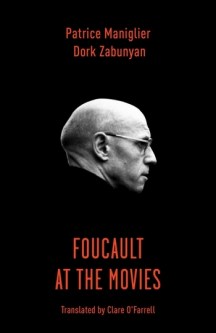
Foucault at the Movies (Columbia UP 2018), translated and edited by Clare O’Farrell, edited Patrice Maniglier and Dork Zabunyan

9780231167079

Foucault at the Movies (Columbia UP 2018), translated and edited by Clare O’Farrell, French edition edited by Patrice Maniglier and Dork Zabunyan. Forthcoming in July, this is a translation of Foucault va au cinéma (2011).

Michel Foucault’s work on film, although not extensive, compellingly illustrates the power of bringing his unique vision to bear on the subject and offers valuable insights into other aspects of his thought. Foucault at the Movies brings together all of Foucault’s commentary on film, some of it available for the first time in English, along with important contemporary analysis and further extensions of this work.

Patrice Maniglier and Dork Zabunyan situate Foucault’s writings on film in the context of the rest of his work as well as within a broad historical and philosophical framework. They detail how Foucault’s work directly or indirectly inspired both film critics and directors in surprising ways and discuss his ideas in relation to significant movements within film theory and practice. The book includes film reviews and discussions by Foucault as well as his interviews with the prestigious film magazine Cahiers du cinéma and other journals. Also included are his dialogues with the noted French feminist writer Hélène Cixous and film directors Werner Schroeter and René Féret. Throughout, Foucault and those he is in conversation with reflect on the relationship of film to history, the body, power and politics, knowledge, sexuality, aesthetics, and institutions of internment. Foucault at the Movies makes all of Foucault’s writings on film available to an English-speaking audience in one volume and offers detailed, up-to-date commentary, inviting us to go to the movies with Foucault.

Via Foucault News

Posted in Michel Foucault, Uncategorized | Leave a comment

Gregynog Ideas Lab VII – International Politics summer school, 8 – 13 July 2018, Newtown, Wales

We are delighted to be able to announce that the Gregynog Ideas Lab VII will take place from 8 – 13 July 2018 in Newtown, Wales, UK. Set up in 2012, the Gregynog Ideas Lab is a unique opportunity for graduate students and academics working in international politics from a range of critical, postcolonial, feminist, post-structural and psychoanalytic traditions to re-examine their own work and meet new people in an open space for thinking and generating new ideas. It offers guest professor seminars, round table discussions, methodology workshops and one-to-one tutorials with the guest professors. For more information, please see the documents attached.

Provisionally, our guest professors for 2018 are: Andrew Davison (Vassar), Jenny Edkins (Aberystwyth), Himadeep Muppidi (Vassar), Erzsebet Strausz (Warwick), Rob Walker (Victoria) and Andreja Zevnik (Manchester). More on Guest Professors to follow soon.

There is a reduced rate for bookings received before 20 February 2018.

For more information about the Ideas Lab, visit our blog at http://gregynog.blogspot.co.uk/ , join our Facebook group at  https://www.facebook.com/groups/675435315871900/  or email us on gregynogideaslab@gmail.com  .

Posted in Uncategorized | Leave a comment