Michelle Terry appointed as new artistic director of Shakespeare’s Globe

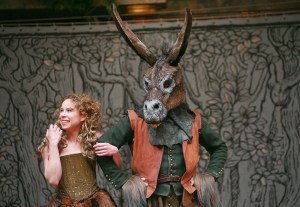
tumblr_otl59qLiF41t96b19o1_r2_1280.jpgEarlier this week it was announced that Michelle Terry had been appointed as the new artistic director of Shakespeare’s Globe. This follows the premature end to Emma Rice’s time in that role (which I reported and briefly commented on last year). Terry is a fine actress and I’ve seen her in a few productions – as Rosalind in As You Like It at the Globe, in the RSC’s pairing of Love’s Labour’s Lost and Love’s Labour’s Won (a retitled Much Ado About Nothing), and as Henry V in Regent’s Park. She’s a largely unknown quantity as a director, so this will be interesting to watch.


Posted in Uncategorized, William Shakespeare | Leave a comment

Adam Kotsko interview in The Revealer on The Prince of this World

pid_23793Adam Kotsko interview in The Revealer – The Prince of This World: Adam Kotsko and Patrick Blanchfield in Conversation

Adam Kotsko is a prolific writer and scholar whose work has tackled subjects ranging from the Church Fathers to prestige TV to contemporary American politics. His latest book, The Prince of This World, offers a remarkable genealogy of the idea of the Devil, from the Hebrew Bible to the New Testament to the Church Fathers to the Middle Ages to the Reformation and beyond. It’s also a nonpareil exploration of the work the concept of the Devil does in terms of political theology, both in those eras and in ostensibly secular, contemporary ideologies. Adam joins The Revealer’s Patrick Blanchfield to talk about his latest book and more.

Posted in Uncategorized | 1 Comment

Words in Worlds: An Interview with Kathleen Stewart in Cultural Anthropology

Words in Worlds: An Interview with Kathleen Stewart in Cultural Anthropology, conducted by Andrés Romero and Toby Austin Locke. Thanks to Ben Anderson for the link.

Posted in Uncategorized | 3 Comments

The Guardian on ‘the insidious creep of pseudo-public space in London’

untitled.pngThe Guardian has an interesting and disturbing feature on ‘the insidious creep of pseudo-public space in London‘; along with a commentary by Bradley L. Garrett.

The map itself is here.


Posted in Uncategorized, urban/urbanisation | Leave a comment

Marianne Janack, María Pía Lara, Eduardo Mendieta, and Martin Woessner – A Forum on Richard Rorty

phpThumb_generated_thumbnailMarianne Janack, María Pía Lara, Eduardo Mendieta, and Martin Woessner – A Forum on Richard Rorty in the Los Angeles Review of Books

AFTER DONALD J. TRUMP was elected president of the United States, the American philosopher Richard Rorty (1931–2007) returned to the pages of many of the major newspapers of the world as one of the few thinkers who had predicted the election of a “strongman” with Trump’s homophobic and racist features. The relevant passage can be found in the lectures Rorty delivered on the history of leftist thought in 20th-century America at Harvard University in 1997, and published as Achieving Our Country a year later. While reprints of this book were hitting several political philosophy best seller lists, Rorty’s Page-Barbour lectures — titled Philosophy as Poetry — were also released. If in Achieving Our Country, Rorty predicted the election of a right-wing populist, in the latter he stresses how valuable the imagination is for the future of philosophy, which is, in many ways, an imperiled discipline. Although these are not his most important books, they indicate that Rorty was a philosopher ahead of his time, a philosopher for the future.

The goal of this forum is not simply to remember Rorty 10 years after he passed away on the June 8, 2007, but also to continue the conversation which he urged all philosophers to pursue. I have invited Marianne Janack, María Pía Lara, Eduardo Mendieta, and Martin Woessner to cover specific aspects of Rorty’s thought, including feminism, social hope, and post-truth. Their concise contributions underscore the significance of Rorty’s writings for the 21st century. My introduction recalls important moments of the American thinker’s life as well as his outstanding contribution to continental philosophy.

— Santiago Zabala

Posted in Eduardo Mendieta, Uncategorized | Tagged | Leave a comment

Stuart Hall: In Conversations

Stuart Hall: In Conversations

Explore the life, work and legacy of a thinker that some call the last of the great public intellectuals and a figure widely credited with being the founder of cultural studies: this man is Stuart Hall. Through conversations with his former students, colleagues, and friends, we’ll seek to better understand this seminal writer and academic. More from Stuart Hall: In Conversations »

Thanks to dmf for the link

Posted in Stuart Hall | Leave a comment

Rhetoric, Fascism and the Planetary: A Conversation between William Connolly and Nidesh Lawtoo

Connolly 2017NLRhetoric, Fascism and the Planetary: A Conversation between William Connolly and Nidesh Lawtoo at The Contemporary Condition.

As well as talking about Connolly’s recent book, Facing the Planetary, it also discusses themes from his next, the forthcoming Aspirational Fascism.

Posted in Uncategorized, William E Connolly | Leave a comment

Pamela L Gay, ‘The Unacknowledged Costs of Academic Travel’ at Medium

Pamela L Gay, The Unacknowledged Costs of Academic Travel at Medium

An interesting discussion of the procedures for academic travel and its reimbursement. It’s US focused, but the issue is much wider. I seem to be continually owed money by three or more different universities – not always for travel to conferences or lectures, but also for service roles like travelling to examine a PhD or attend a meeting. When you’re in an established position this is usually just a minor inconvenience, but for those at the start of career, being owed these amounts of money can be much more significant.

There are surely things that could be done to improve this – more booking of tickets by the host university, or at least having the reimbursement ready to go immediately after the event, rather than waiting for the event to begin the long, slow process. Some places are good at this, so it’s clearly not impossible.

Posted in Travel, Universities | Leave a comment

Remigiusz Ryziński discusses Foucault’s time in Poland

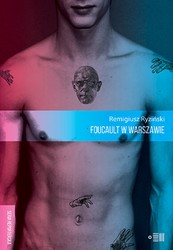
161514-foucault-w-warszawie-remigiusz-ryzynski-1Remigiusz Ryziński discusses his book Foucault w Warszawie, an account of the short period Foucault spent in Poland in the late 1950s – between his time in Uppsala and Warsaw. While the interview is in Polish, machine translation seems to give a good gist.

The book sounds fascinating, as it has used previously unaccessed archive sources. Hopefully some publishers are exploring translation rights. Thanks to James Tyner for the link.


Posted in Michel Foucault, The Early Foucault, Uncategorized | 1 Comment

Marcus Doel’s Geographies of Violence in the Society and Space book series now published

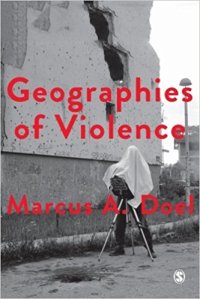
doel_geographies-of-violence_333_499Marcus Doel’s book Geographies of Violence: Killing Time, Killing Space is now published. This is the third book to appear in the Society and Space book series I edit with Sage.

We experience violence all our lives, from that very first scream of birth. It has been industrialized and domesticated. Our culture has not become totally accustomed to violence, but accustomed enough. Perhaps more than enough.

Geographies of Violence is a critical human geography of the history of violence, from Ancient Rome and Enlightened wars through to natural disasters, animal slaughter, and genocide. Written with incredible insight and flair, this is a thought-provoking text for human geography students and researchers alike

The other books published in the series so far are Dan Bulley’s Migration, Ethics and Power: Spaces of Hospitality in International Politics and Francisco R. Klauser’s Surveillance and Space. Other books in the series are under contract or review. If you’re interested in the series, please contact me.

Posted in Publishing, Society and Space, Uncategorized | 3 Comments