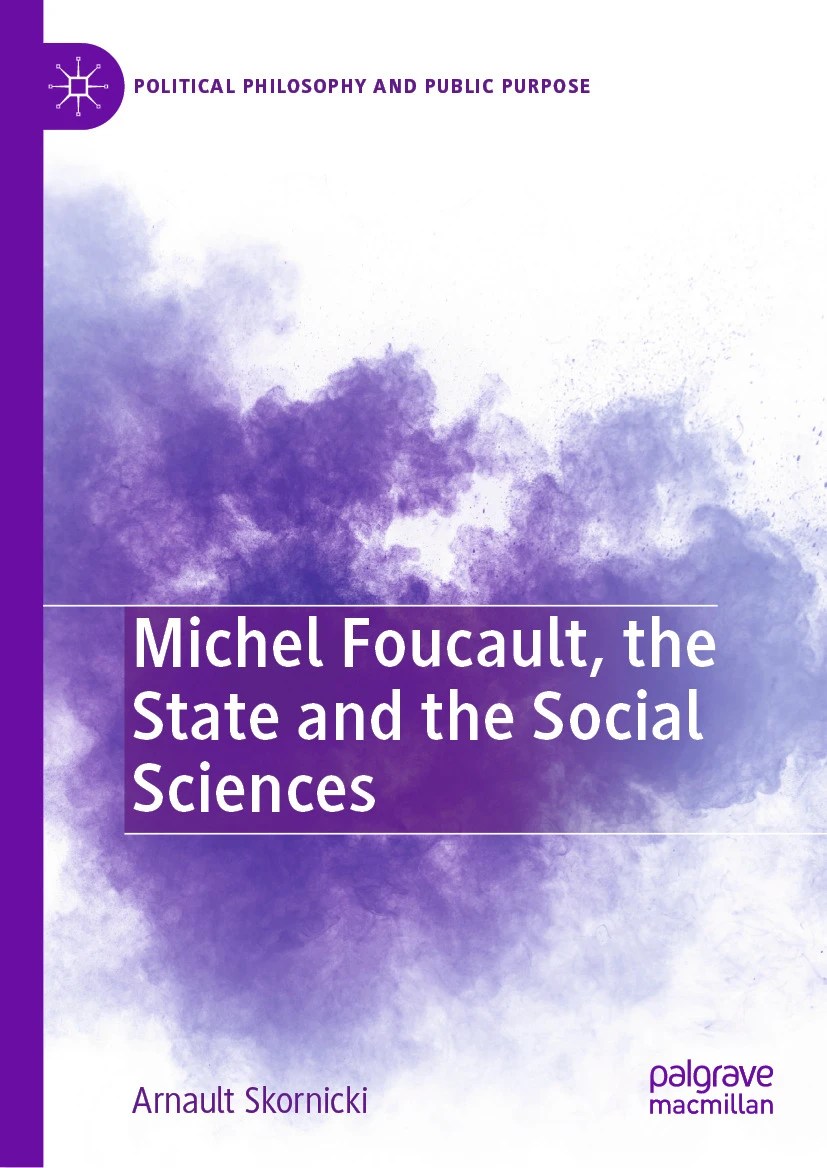
Michel Foucault’s early English translations – indications from the archives of the Georges Borchardt literary agency, the memoirs of André Schiffrin and the Susan Sontag connection

Now it is almost automatic: a new book by Foucault in French is translated within a couple of years. The Collège de France courses, the Vrin series of critical editions of lecture courses and now other material, the fourth volume of the History of Sexuality, the pre-Collège de France courses and works – all have followed this pattern. All of these are, of course, posthumous. In the second half of his career, the pattern was similar –Discipline and Punish and the three volumes of the History of Sexuality were all translated quite quickly. Even the studies of Herculine Barbin and Pierre Rivière were translated in Foucault’s lifetime (1980 and 1982). His 1982 collaborative book with Arlette Farge is a key exception, since the English Disorderly Families only appeared in 2016.

The beginning of his career was quite different. Folie et déraison: Histoire de la folie à l’âge classique was published in 1961, but a complete English translation as History of Madness did not appear until 2005. The abridged version from 1964 was translated in 1965 as Madness and Civilization – the quickest of Foucault’s early works. (On the different editions, see here.) Naissance de la Clinique was published in 1963 and in a second edition in 1972. The 1973 English translation The Birth of the Clinic is an erratic mix of material from both editions, with a new translation of the 1972 text forthcoming, with an apparatus comparing it to the first editionRaymond Roussel was published in 1963, but in English as Death and the Labyrinth only in 1986, a couple of years after Foucault’s death. Les Mots et les choses took four years before it was translated as The Order of Things (1966 to 1970); L’Archéologie du savoir was translated three years later as The Archaeology of Knowledge (1969 to 1972). Most of these early books appeared with Pantheon in the USA and Tavistock in the UK, and are now published by Penguin Random House and Routledge.

Archives in New York give a little insight into the discussions of the translations of Foucault’s first few works. The main one I’m drawing on here is the Georges Borchardt literary agency, held at Columbia University. Here are some of the things that this archive reveals, also adding information from a few other sources I know about.

Madness and Civilization

Foucault’s first major book was his principal doctoral thesis Folie et déraison: Histoire de la folie à l’âge classique. The literary agency did try to get Folie et déraison translated, but this was a challenge for a 700-page book by a relatively unknown author. The front-page review of Folie et déraison in The Times Literary Supplement in October 1961 would have helped raise his profile. That review is anonymous, though I’ve seen it credited to Richard Howard. I did ask him about this, but he said it was not by him. Howard went on to translate the abridged version of Histoire de la folie as Madness and Civilization, but he was also a reader of the longer text when it was being considered for translation by George Braziller Inc. in February 1962. His view was that it was more suited for a University Press. Macmillan, The Free Press of Glencoe, McGraw-Hill, Alfred A. Knopf, Inc., and Basic Books also considered the full original book, but all declined. In November 1961 Gerald Gross turned down Histoire de la folie as “a bit special for Pantheon”.

Pantheon were much more enthusiastic about doing a translation of the abridged French version. Foucault made the abridgement himself, and the changes are quite interesting (see The Early Foucault, pp. 185-88.) Pantheon asked if Foucault wanted to make any changes to the text for the translation, and the only one passed on was a correction of a mention of an English king, which I’ve written about here. The English Madness and Civilization does include a chapter not in the abridged French edition, “Passion and Delirium”, but I’ve not seen when or by whom that decision was made. Pantheon editor André Schiffrin has a slightly different story where he says Histoire de la folie was something he was keen to translate after finding it in a Paris bookstore (The Business of Books, p. 48). In the longer account in his memoir A Political Education, he adds that he would meet with Foucault in Paris once a year to discuss his forthcoming works, which Pantheon would translate. He also says that once Foucault was being invited to speak in the United States they would meet in New York too, and it was there that he introduced Foucault to Susan Sontag (pp. 201-2). (Edmund White recalls though that Foucault didn’t like socialising with Sontag.) Schiffrin also admits it was his fault Histoire de la folie was “needlessly retitled Madness and Civilization”. This book appeared with Tavistock Publications in the UK and British Commonwealth a few years later through the interest of R.D. Laing. (His very brief reader report is in the frontmatter of the Routledge translation of History of Madness.) In her memories of working for ‘Tavipubs’, Diana Burfield recalls introducing Schiffrin to Laing “in a NW1 bistro” (p. 220 n. 13). She says that Tavistock did a lot of co-publications with US presses, making books viable through distribution deals (p. 209), but that some were slow to sell:

Editors were increasingly compelled to justify to semi-literate executives their choice of titles that did not return an immediate profit. For example, since only 300 copies of one of Foucault’s works were sold in its first year, it was suggested that the remaining sheets should be pulped. Much time was wasted explaining that difficult, innovative books do not make an immediate impact and that the 300 copies were bought by influential heads of department who would generate a steady readership. Forty years later this book and others by the same author are still in print (p. 220 n. 21).

After Madness and Civilization in 1965, I think the next translation of Foucault was in 1966, when the second chapter of Les Mots et les choses was excerpted to appear in the journal Diogène and was published in English as “The Prose of the World” in the parallel-journal Diogenes, translated by Victor Velan. Diogène/Diogenes was edited by Roger Caillois and supported by UNESCO’s International Council for Philosophy and Human Sciences. Caillois had invited Foucault to contribute personally. Reports differ as to whether Caillois read the book for Gallimard, or was introduced to Foucault’s work by Dumézil. Both may well be true. Caillois certainly did editorial work for Gallimard, and Dumézil called him “the most brilliant of my students”. A 1965 letter from Foucault to Caillois agreeing to an excerpt, and recognising their “shared Dumézilian ancestry”, was published in 1981 (for more details, see my The Archaeology of Foucault, pp. 70-71). A different translation of this chapter was used when the English version of the book itself was published. 

The Order of Things

I’ve written before about the peculiarity of not naming the translator of The Order of Things. Like most people, I think, I’d been content to follow Alan Sheridan’s claim – in his book on Foucault and on his website – that he was the translator. But then I found a letter in the Zone books archives, also at Columbia University, in which Derek Coltman claims that he translated it. I discuss that, and the different bits of evidence more fully in that earlier post. In the Borchardt archives there is a June 1966 letter reporting that Sontag was encouraging US presses to consider Les Mots et les choses, which helps support Coltman’s claim that she and Howard persuaded him to translate it. (It also indicates that Sontag knew Foucault’s work before Schiffrin introduced them to each other.) Although Tavistock and Pantheon published this translation, whoever translated it, other presses were interested. The Archaeology of Knowledge was also translated by Pantheon, who had an option after doing The Order of Things, though they wanted to see how that book had done first, which might explain part of the time lag between editions. Another factor is that all these books seem to have been discussed for translation after the appearance of the French edition, rather than the rights being discussed when the book was in production. That in itself helps explain some of the time gaps between French and English.

The early book which I’ve not been able to find out about from the Borchardt archive is Naissance de la clinique, which is a shame given my involvement in the new edition. I suspect this is because it was published by Presses Universitaires de France (PUF), rather than Plon (Folie et déraison) or Gallimard (almost all the others). I don’t know if PUF used a different agency to negotiate foreign rights, but it seems likely. I’ve found no evidence his shorter 1954 book Maladie mentale et personnalité, also with PUF, was discussed at the time. It was a book Foucault tried to disown, but unable to prevent its republication he agreed to revise it in 1962 as Maladie mentale et psychologie. The changes are discussed in detail in The Early Foucault (pp. 174-84) and outlined in full here. That revision was translated after Foucault’s death as Mental Illness and Psychology (now republished as the confusingly titled Madness: The Invention of an Idea). University of California Press had wanted to translate the 1954 version, but were prevented by PUF. As I discuss in The Early Foucault, p. 184, their officious view on this, claiming to be defending the “thought and memory” of Foucault, is at odds with their own republication of a book Foucault wanted to bury.

Two other little curiosities from the Borchardt archive. One is that a translation of Raymond Roussel was discussed in 1975, with Donald J. McDonell as a translator. (McDonell wrote a piece on Foucault in 1976, published in the Canadian Journal of Philosophy in 1977, at a time when articles on Foucault were still uncommon.) A copy of Foucault’s letter to McDonell supporting him as its translator is in the Borchardt archive. I don’t know what prevented this, since the book wasn’t actually translated until the mid-1980s, by Charles Ruas. Ruas interviewed Foucault about that book in 1983, which is included in the English translation, and I’ve discussed the differences between the French and English versions of the interview before. Ruas himself replied to that post clarifying why they are different. What this means is that there isn’t an English translation of the Dits et écrits text; nor a French version of the English.

Another curiosity is that James Harkness translated Foucault’s little 1973 book on René Magritte, Ceci n’est pas une pipe, before the English rights were sold. He approached Borchardt in August 1978 to try to negotiate the rights and then to find a publisher. The book did appear with University of California Press as This is Not a Pipe, translated by Harkness, but not until 1983. This is another piece with two French versions, an earlier article and then the expanded book. Again, Essential Works mangles the text. In this case it uses the translation of the book as the basis, revising it to approximate the French article, but missing importance differences and therefore providing a misleading English version which relates to neither French text. Howard had previously translated the article for October. There is more about Foucault’s revised texts, with some comparisons, here.

The Borchardt archive also has some letters concerning requests to publish excerpts of Foucault’s work in different places. When these are parts of books, Borchardt are able to negotiate that; when separate articles they indicate that they are not responsible. I’m sure much more could be done with the question of Foucault’s early translations, but this archive seems to me to reveal quite a lot. The Pantheon archives are also at Columbia, but the ones listed are from 1944 until 1968, while the Tavistock archives are in the Wellcome Collection, largely uncatalogued. Neither appear to have any records relating to Foucault. 

Archives

MS#0135, Georges Borchardt Inc. records, 1949-2024, box 234, Foucault, Michel, Rare Books and Manuscript Library, Columbia University, https://findingaids.library.columbia.edu/archives/cul-4078396

Pantheon Books records, 1944-1968, Rare Books and Manuscript Library, Columbia University, https://findingaids.library.columbia.edu/archives/cul-4079194

SA/TIH, Tavistock Institute of Human Relations, Wellcome Collection, https://wellcomecollection.org/works/faa7y7bd

Zone Books records, Rare Books and Manuscript Library, Columbia University, https://findingaids.library.columbia.edu/archives/cul-10080831

References

(I’ve not referenced all the French editions and English translations of Foucault’s books mentioned, for reasons of space.)

“The Story of Unreason”, The Times Literary Supplement, 6 October 1961, 663-64.

Diana Burfield, “Tavistock Publications: A Partial History”, Management & Organizational History 4 (2), 2009, 207-22.

Stuart Elden, The Early Foucault, Cambridge: Polity, 2021.

Stuart Elden, The Archaeology of Foucault, Cambridge: Polity, 2023.

André Schiffrin, The Business of Books: How International Conglomerates Took Over Publishing and Changed the Way We Read, London: Verso, 2000.

André Schiffrin, A Political Education: Coming of Age in Paris and New York, Hoboken, NJ: Melville House, 2007.

Edmund White, “Love Stories”, London Review of Books, 4 November 1993, https://www.lrb.co.uk/the-paper/v15/n21/edmund-white/love-stories

Acknowledgements

Many thanks to Patrick ffrench for leading me to the Schiffrin and Burfield recollections, and to Clare O’Farrell, Maya Gavin and Colm McAuliffe for discussions of related questions.

This is the 34th post of a weekly series, where I post short essays with some indications of further reading and sources, but which are not as formal as something I’d try to publish more conventionally. They are usually tangential to my main writing focus, a home for spare ideas, asides, dead-ends and possible futures. I hope there is some interest in them. They are provisional and suggestions are welcome. A few shorter pieces in a similar style have been posted mid-week.

The full list of ‘Sunday histories’ is here.

Posted in Georges Dumézil, Michel Foucault, Roger Caillois, Sunday Histories, The Archaeology of Foucault, Uncategorized | 5 Comments

Gilles Deleuze, Sur Spinoza, ed. David Lapoujade, Minuit, 2024

Gilles Deleuze, Sur Spinoza, ed. David Lapoujade, Minuit, 2024

Juste après la destruction de l’université de Vincennes en 1980, Deleuze consacre ses premiers cours dans les nouveaux locaux de Saint-Denis à l’Éthique de Spinoza. Ce n’est certainement pas un hasard, étant donné la place centrale chez Deleuze de cette œuvre immense, unique dans l’histoire de la philosophie, à laquelle il a consacré deux livres.
Ce cours est constitué de quinze séances au cours desquelles Deleuze veut montrer l’importance, non pas théorique, mais profondément vitale de la philosophie de Spinoza. Dans cette traversée, sont abordées des questions fondamentales du spinozisme. Comment se défaire de la négativité des passions mauvaises (haine, ressentiment, envie) ? Comment en finir avec le jugement moral (bien et mal) pour lui substituer une éthique du bon et du mauvais ? Ces questions engagent chez Spinoza une nouvelle théorie des signes. Quels signes doivent guider les existences si elles veulent atteindre, au cours même de cette vie, une forme d’éternité ? Dès lors, quelle différence entre l’éternité – expérimentée ici et maintenant – et l’immortalité que philosophies et religions nous promettent ? De séance en séance, Deleuze montre comment Spinoza met fin à un monde fortement hiérarchisé dont Dieu était le sommet autoritaire et impénétrable, un monde où les individus étaient égarés par des signes sombres et équivoques, pour proposer un monde où règne la lumière de la raison, où Dieu se confond avec les puissances de la nature, où désormais les êtres sont tous à égalité, capables de posséder leur puissance de vie, pourvu qu’ils apprennent à en connaître la logique et la valeur.

Posted in Uncategorized | Leave a comment

Quinn Slobodian and Philip J. Stern on Political Economy – New Books discussion with Erika Monahan

Quinn Slobodian and Philip J. Stern on Political Economy – New Books discussion with Erika Monahan

Philip J. SternEmpire, Incorporated. The Corporations That Built British Colonialism (Belknap Press of Harvard University Press in 2023)

Quinn Slobodian, Crack-Up Capitalism: Market Radicals and the Dream of a World Without Democracy (Penguin, 2023)

Adam Smith wrote that, “Political economy belongs to no nation; it is of no country: it is the science of the rules for the production, the accumulation, the distribution, and the consumption of wealth.”

However Adam Smith regarded the science of political economy, in practical terms, one is quite hard pressed to find a case where governments—be it an empire, republic, or nation—were completely left out of the picture. At least, that is how it’s been historically. 

Questions about how people and other types of entities organize and generate capital, AND the role that governments play in all of this, fill libraries. The ramifications of the dynamics and rules surrounding money have proved so consequential—and increasingly so, in our increasingly technologized world—that it is no surprise that historians have devoted much energy to the study of political economy. Political economy, in the broadest terms, is the subject of our conversation today. Today on History Ex we put two recent books that bring important perspectives to these questions in conversation with each other. Today’s books both deal with entrepreneurial endeavors, usually “abroad”, or beyond the Metropole. While Philip Stern’s examination of early modern British corporations explains the myriad ways private initiatives sought government legitimacy and became entangled in the business of governance during the age of empires, Quinn Slobodian trenchantly reveals how some entrepreneurs and ideologues seek to escape governments in the age of nation-states. 

Our authors find points of convergence as well as divergence in aims, methods, and outcomes of the people at the center of their books. Stern and Slobodian discuss methodologies and chronologies, the ideologies that animated their actors, how memory and history were mobilized in promoting various visions; they probe the historian’s perennial challenges of disentangling ideologies from interest, explain how similar actions in different historical contexts can demand different interpretations; and more. Listen in!

Philip Stern is an associate professor of History at Duke University in Durham, North Carolina. His work focuses on various aspects of the legal, political, intellectual, and business histories that shaped the British Empire. He is also the author of The Company-State: Corporate Sovereignty and the Early Modern Foundations of the British Empire in India (Oxford University Press, 2011) and many other scholarly works. 

Quinn Slobodian is a professor of the history at Wellesley College in Massachusetts. He is also the author of the award-winning Globalists: The End of Empire and the Birth of Neoliberalism (Harvard University Press, 2018), which has been translated into six languages, and a frequent contributor to the Guardian, New Statesman, The New York, Times, Foreign Policy, Dissent and the Nation.

Posted in Uncategorized | Leave a comment

Gilles Deleuze, On Painting: Courses, March-June 1981, ed. David Lapoujade, trans. Charles J. Stivale – University of Minnesota Press, August 2025

Gilles Deleuze, On Painting: Courses, March-June 1981, ed. David Lapoujade, trans. Charles J. Stivale – University of Minnesota Press, August 2025

A translation of Gilles Deleuze, Sur la peinture – ed. David Lapoujade, Minuit, 2023

Update October 2025: New Books discussion of the Deleuze book with Charles Stivale, Dan Smith and Nathan Smith; November 2025 Claire Colebrook reviews the book at NDPR.

Available for the first time in English: the complete and annotated transcripts of Deleuze’s 1981 seminars on painting

From 1970 until 1987, Gilles Deleuze held a weekly seminar at the Experimental University of Vincennes and, starting in 1980, at Saint-Denis. In the spring of 1981, he began a series of eight seminars on painting and its intersections with philosophy. The recorded sessions, newly transcribed and translated into English, are now available in their entirety for the first time. Extensively annotated by philosopher David Lapoujade, On Painting illuminates Deleuze’s thinking on artistic creation, significantly extending the lines of thought in his book Francis Bacon

Through paintings and writing by Rembrandt, Delacroix, Turner, Cézanne, Van Gogh, Klee, Pollock, and Bacon, Deleuze explores the creative process, from chaos to the pictorial fact. The introduction and use of color feature prominently as Deleuze elaborates on artistic and philosophical concepts such as the diagram, modulation, code, and the digital and the analogical. Through this scrutiny, he raises a series of profound and stimulating questions for his students: How does a painter ward off grayness and attain color? What is a line without contour? Why paint at all? 

Written and thought in a rhizomatic manner that is thoroughly Deleuzian—strange, powerful, and novel—On Painting traverses both the conception of art history and the possibility of color as a philosophical concept.

Posted in Gilles Deleuze, Uncategorized | 1 Comment

Stockholm Studies in Indo-European Language and Culture series – two volumes open access

Stockholm Studies in Indo-European Language and Culture series

Jenny Larsson, Thomas Olander, Anders Richardt Jørgensen eds. Indo-European Interfaces: Integrating Linguistics, Mythology and Archaeology – Stockholm University Press, 2024

Current scientific advances are reshaping our understanding of prehistory, offering unprecedented insights into the movements and kinship patterns of prehistoric populations. These new advances provide us with detailed information on several aspects of the early speakers of Indo-European and their lives. However, the prehistoric humans that we know through bones and potsherds were once real people speaking real languages and having specific beliefs, mythological tales and poetic expressions. 

With this book, we want to apply a multidisciplinary approach that combines historical linguistics, archaeology, and comparative religion in order to improve our understanding of the early speakers of Indo-European. The book is a collection of papers by specialists in historical linguistics, archaeology and comparative religion, each examining different facets of the early Indo-European speakers, including their language, culture, and religious practices.

Jenny Larsson, Thomas Olander, Anders Richardt Jørgensen eds. Indo-European Ecologies: Cattle and Milk – Snakes and Water – Stockholm University Press, 2025

This volume brings together scholars from different fields, exploring how early Indo-European communities understood and mythologized their natural and social environments. From sacred cattle and milk rituals to the chthonic symbolism of serpents and the mythological periphery of water, this interdisciplinary volume uncovers deep-rooted ecological imaginaries embedded in language, archaeology, and comparative mythology. With contributions spanning from the Indo-Iranian plains to the Baltic forests, the book reveals how beliefs about animals, agriculture and the household shaped Indo-European worldviews.

Rich in detail and accessible in style, Indo-European Ecologies offers new perspectives for scholars and curious readers alike. It is the second volume in the book series Stockholm Studies in Indo-European Language and Culture.

Posted in Uncategorized | Leave a comment

Joshua Comaroff, Spectropolis: The Enchantment of Capital in Singapore – University of Minnesota Press, November 2025

Joshua Comaroff, Spectropolis: The Enchantment of Capital in Singapore – University of Minnesota Press, November 2025

In Singapore, the financial center of Southeast Asia, hyperurbanization and commercial development exist alongside enduring belief in the economic power of ghosts: in their ability to control the flows of money and value and to determine the outcome of investments and wagers. Spectropolis explores the unlikely collusion of these two systems, demonstrating both the productive role of popular beliefs in the modern world and the surprising correlations between “late” capitalism and the workings of the spirit realm. 

Detailing the logic and practices of Singapore’s ghost economy—from performing exorcisms on real estate development sites to offering money and commodities to the dead as a hedge against precarious real-world transactions—Joshua Comaroff shows how speculative finance, largely governed by chance and volatility, is understood via its inherently spectral qualities. Through the influence of Chinese Buddhist-Taoist thought, the movement of capital is placed under the sway of cosmology and geomancy, resulting in a built environment that is both technologically advanced and quite literally enchanted. 

Based on detailed case studies and years of extensive fieldwork, Spectropolis argues for the power of popular belief systems to theorize contemporary socioeconomic conditions and to give form to collective affect as well as shared aspirations and anxieties. As Comaroff demonstrates, the uniquely all-consuming nature of Singapore’s tightly compressed urban economy is such that it may subsume even that which lies beyond the threshold of life itself.

Posted in Uncategorized | Leave a comment

Felia Allum, Women in the Mafia: Power and Influence in the Neapolitan Camorra – Cornell University Press, July 2024

Felia Allum, Women in the Mafia: Power and Influence in the Neapolitan Camorra – Cornell University Press, July 2024

Women of the Mafia dives into the Neapolitan criminal underworld of the Camorra as seen and lived by the women who inhabit it. It tells their life stories and unpacks the gender dynamics by examining their participation as active agents in the organization as leaders, managers, foot soldiers, and enablers. Felia Allum shows that these women are true partners in crime.

The author offers an innovative interdisciplinary analysis that demystifies the notion that the Camorra is a sexist, male-centric organization. She links her analysis of Camorra culture within the wider Neapolitan context to show how mothers and women act and are treated in the private sphere of the household and how the family helps explain the power women have found in the Neapolitan Camorra. 

It is civil society and law enforcement agencies that continue to see the Camorra using traditional gender assumptions which render women irrelevant and lacking independent agency in the criminal underworld. In Women of the Mafia, Allum debunks these assumptions by revealing the power and influence of women in the Camorra.

Posted in Uncategorized | Leave a comment

Christopher R. Rossi, The Arctic Großraum: Geopolitics and the High North – Bloomsbury, September 2025

Christopher R. Rossi, The Arctic Großraum: Geopolitics and the High North – Bloomsbury, September 2025

How should the Arctic be viewed in the 21st century? In this book, a leading commentator assesses the competing players for the Arctic, looking at broad questions of governance and security.

The author challenges the view that the Arctic is a passive space which is the focus of competitive advances from superpowers, arguing that it is more correctly understood as a dynamic pluriverse. Drawing on international law, international relations and diplomacy, this is an important re-assessment of the Arctic and its position in geo-politics.

Posted in Uncategorized | Leave a comment

Indo-European Thought in Twentieth-Century France update 29: working on Benveniste’s Vocabulaire, Dumézil’s Bilan and other work

I’ve been back in the UK for a few months, though I continue to work through the archival material I saw in the United States, some of which is in the form of notes, some photos of things, and a few scans requested from archives. I’ve also had a steady stream of things I ordered for duplication from archives, all of which are feeding into different parts of this project.

A pile of books related to the project, and the new Ernst Kantorowicz collection on which I’m writing a review – and, yes, the big Dumézil book does really misspell ‘mythe’ on the spine…

But I really needed to get back to working on the Benveniste part of Chapter 9, before moving to the Dumézil discussion. Roger Woodard asked me to write a chapter on “Benveniste, Dumézil and Indo-European Thought in Twentieth Century France”, for the Cambridge History of Mythology and Mythography, which he is editing. This was a useful exercise in trying to distil some of the overall claims I am making in my book manuscript. While Dumézil’s status as a mythologist is of course well established, this isn’t a conventional way of reading Benveniste. Silvia Fregeni has done the most extensive work in this register, and reading Benveniste as making contributions to sociology and anthropology alongside linguistics runs through my manuscript. 

The most thorough work on this comes in Benveniste’s Vocabulaire – the Dictionary of Indo-European Concepts and Society. It’s a book I keep returning to, and have a discussion I’m now fairly happy with in place. I thought that with the discussion of the Vocabulaire it made sense not to use the same examples across the Cambridge chapter and the manuscript – there are so many interesting analyses that it is impossible to discuss them all. I’ve already posted here about how the book has things to say about territory, and in the book chapter I discuss the way Benveniste analyses “Hellenic Kingship” through a discussion of the words basileús and wánaks. Although basileus is the later word for king, Benveniste argues that earlier Mycenaean sources indicate that “the basileús was merely a local chieftain, a man of rank but far from a king”, without “political authority”, whereas the wánaks was “the holder of royal power” (Vocabulaire, Vol II, p. 24; Dictionary, p. 320). That changes in later Greek. I develop that reading a bit more here.

I had been debating what analyses to use in the book manuscript. I discuss hospitality, partly because I want to return to it as an example of how Derrida engages with the reading in a concluding chapter. I also want to say something about marriage and kinship, gift and exchange, and economic values, since these are themes he discussed in separate publications, and I think help with questions about the dating and composition of the text. I think this is sufficient to give a sense of the richness of the book.

I then moved to discuss Dumézil’s works of his bilan period – a programme begun around the time of his retirement, where he produced consolidated, updated and extended analyses of the major themes of his career. There are various indications of what he had in mind, in a series of prefaces and other places. The series includes his massive Archaic Roman Religion, the first of his books to be translated into English, and the three volumes of Mythe et épopée, which is only partially available in English. (For a list of the parts available, see here, recently updated.) The bilan sequence also includes his updated versions on books on the warrior and Saxo Grammaticus, and some other works. I still have work to do on this, but I’m aiming to complete the draft this summer. This will leave Dumézil’s 1980s books, particularly the Esquisses series, and his later works on Caucasian linguistics, for separate discussions.

I had a week in Paris in early July, in which I worked through a series of boxes of the Émile Benveniste papers at the Bibliothèque nationale, mainly relating to the Vocabulaire book. I’ve seen all these boxes at least once before, but will need some time going back over things – the numerical order is neither chronological nor thematic, so now I know better where materials are I can go back in a more logical order. I also looked at a few folders at the Collège de France, mainly in relation to Benveniste. I’ll next be back in September.

Outside this project, I’ve been trying to keep commitments to a minimum. In late May I was part of a discussion of Chris Philo’s important new book Adorno and the Antifascist Geographical Imagination for the London Group of Historical Geographers. My piece should be published along with some other commentaries and a response from Chris. I have also written a short review of Juliet Fall’s remarkable book Along the Line: Writing with Comics and Graphic Narrative in Geography for a session at the Royal Geographical Society-Institute of British Geographers conference in Birmingham in late August, and revisited a lecture on Shakespeare for a book chapter. I have one more book review to write, on the new collection of Ernst Kantorowicz essays, but other than that, the two priorities for the foreseeable future are the Indo-European book manuscript and the work for the new translation and edition of Foucault’s Birth of the Clinic. I’ve been doing a little work on that.

I’ve also been continuing the ‘Sunday Histories’ series of posts. Some of these are not connected to this project, with updated pieces on Henri Lefebvre (here and here), or continuing the side-project on Foucault’s early reception in the United States (pieces on Josué Harari and his and Foucault’s work on the Marquis de SadeEdward Said; and the Structuralist Controversy conference and Eugenio Donato). I also spoke about that work in Oxford in June, and the audio recording of my talk is here. Others connect much more directly to the Indo-European work, such as a piece on Gillian Rose and the Indo-Europeanists, on Benveniste’s work on auxiliary verbs, and on the book series in which translations of Benveniste and André Martinet appeared. I wrote pieces on connected but not central figures in the story I’m telling – on Hermann Lommel and the ancient Aryans and Lucien Gerschel and Dumézil’s readings of the story of Coriolanus – and updated a piece on Claude Lévi-Strauss’s Fondation Loubat lectures, who might yet play a more significant role.

Roman Jakobson is an important figure in the careers of many of the people I’m discussing in this project, and I wrote a short piece about his work for Franz Boas on the Paleo-Siberian and Aleutian material at the New York Public Library, based on the archival sources. I gave a short talk on Jakobson to my department in late June, and hope to develop that into something more substantial, and have another piece on Jakobson’s 1972 Collège de France courses nearly ready.

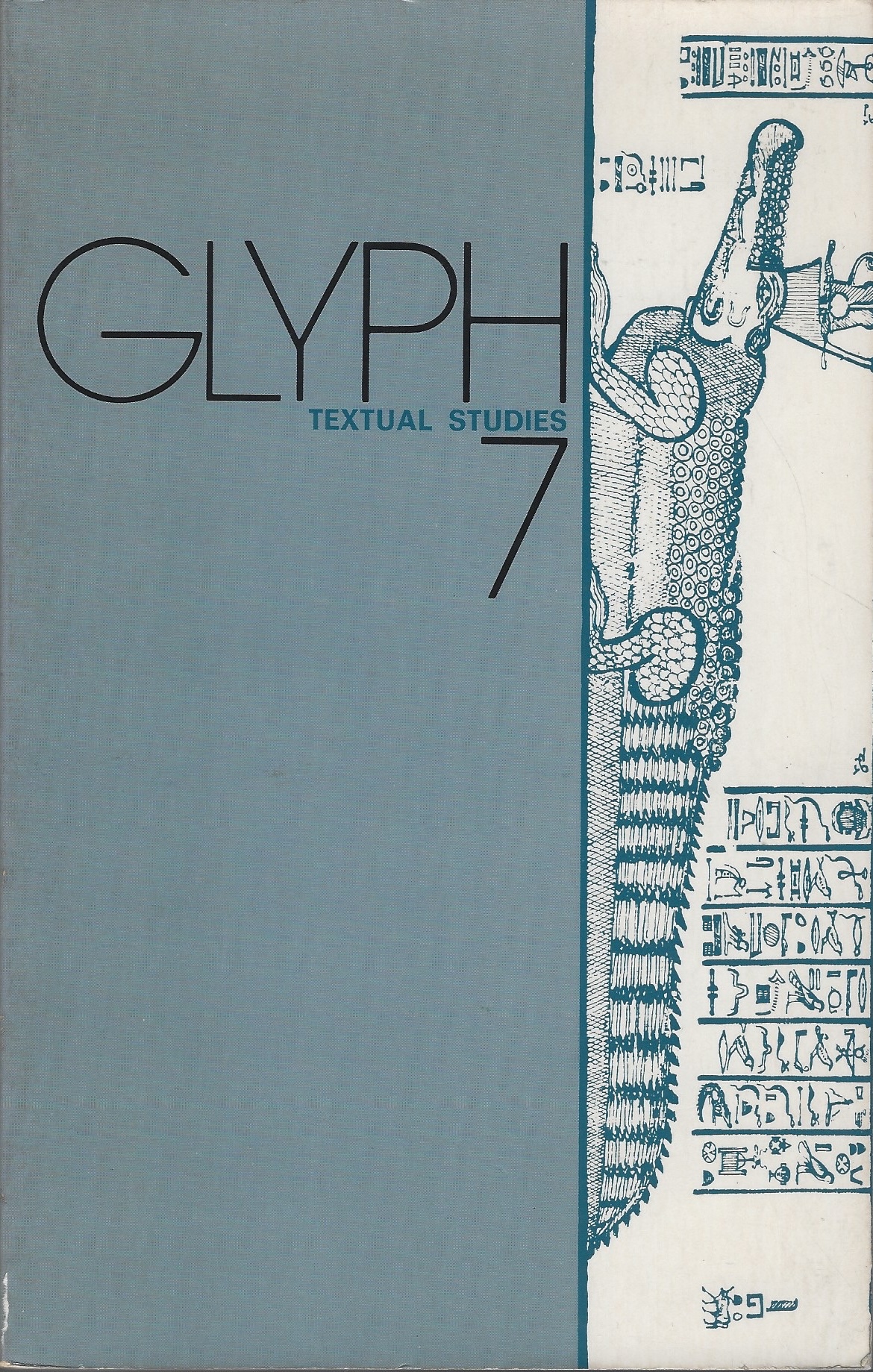
Future ‘Sunday Histories’ will look at some more themes relating to the Indo-European project, though the intention is not to share draft material from the developing manuscript, but rather connected discussions. I have also have some pieces in development which are not connected to this work including on the biologist Étienne Wolff, on the Glyph journal, and on Foucault’s early English translations [now available here].


Previous updates on this project can be found here, along with links to some research resources and forthcoming publications. The re-edition of Georges Dumézil’s Mitra-Varuna is available open access. There is a lot more about the earlier Foucault work here. The final volume of the series is The Archaeology of Foucault, and the special issue of Theory, Culture & Society I co-edited on “Foucault before the Collège de France” has some important contributions on the earlier parts of Foucault’s career, with some pieces free to access. My recent articles include “Foucault, Dynastics and Power Relations” in Philosophy, Politics and Critique and “Foucault and Dumézil on Antiquity” in Journal of the History of Ideas (both require subscription, so ask if you’d like a copy); and “Alexandre Koyré and the Collège de France” in History of European Ideas (open access).

Posted in Claude Lévi-Strauss, Emile Benveniste, Ernst Kantorowicz, Georges Dumézil, Gillian Rose, Mapping Indo-European Thought in Twentieth Century France, Michel Foucault, Roman Jakobson | 1 Comment

Lucien Gerschel, Georges Dumézil, William Shakespeare and the history of Coriolanus 

One of Georges Dumézil’s most loyal students was Lucien Gerschel. He seems to have begun attending his classes at the École Pratique des Hautes Études in 1937-38, but certainly was there for the 1938-39 course which became Dumézil’s 1940 book Mitra-Varuna. Other students in that course included Roger Caillois, who in the middle of the year gave five presentations on the sacred, soon published as L’Homme et le sacré(Man and the Sacred), as well as Marie-Louise Sjoestedt and Élisabeth Raucq, both of whom I’ve written about before in this series. Gerschel also attended many of Émile Benveniste’s classes, and his notes were used in the production of Benveniste’s 1969 book Vocabulaire des institutions indo-européens (translated as the Dictionary of Indo-European Concepts and Society), which I’ve discussed before in relation to territory (here and here). Gerschel was Jewish, and Dumézil notes that this meant he was excluded from some debates in the war-years (Mariages indo-européens, 26). In the late 1940s to the early 1950s Dumézil was supervising Gerschel’s research, and he includes parts of Gerschel’s mémoire in his own Jupiter Mars Quirinus IV (pp. 170-76). Gerschel attended Dumézil’s classes until the 1960s, and provided research support including correcting proofs to books.

Dumézil’s most famous idea is the trifunctional analysis, analysing divisions of society and pantheons of gods in three main areas. The first is the sovereign class of kings and priests, the second warriors, and the third producers or farmers. This can be found in the caste system of India, or the groupings of Jupiter, Mars, Quirinus; Odin, Thor, Njördr or Freyr; Mitra-Varuna, Indra, Nasarya or Asvina. He stresses the first function is itself split, with a legal, contractual god often pairing a more terrible, magical one – Mitra alongside Varuna, Tyr with Odin, Dius Fidius with Jupiter. Gerschel’s work generally either extends Dumézil’s work or applies trifunctional analysis to different sources. The mémoire, for example, uses the trifunctional analysis to examine Roman law. Gerschel published a series of articles on mythology from 1950 to 1966. His interests range from ancient Rome to Germanic legend, Norse sagas and Celtic studies. Two of his articles appeared in Revue de l’histoire des religions, two in Annales and others in the Journal de Psychologie normale et pathologiqueLatomus (a Belgian Latin studies journal), Études Celtiques and an English piece in Midwest Folklore. He also wrote a lot of book reviews, including of Dumézil’s work, but also the Dutch Germanist (and Nazi collaborator) Jan de Vries, most of which were for the Revue de l’histoire des religions.

Dumezil wrote a short introduction, “Sur quelques expressions symboliques de la structure religieuse tripartie à Rome”, to Gerschel’s 1952 essay, “Structures augurales et tripartition fonctionnelle dans la pensée de l’ancienne Rome”. This is another example of how Dumézil was willing to use his status to support Gerschel’s work – he was generally loyal to his former students and allies, often citing their work at length. In Gerschel’s case he particularly makes references to his work in the 1966 book Archaic Roman Religion. In July 1967, in the preface to the first volume of the Mythe et Épopée series, Dumézil mentions the “varied and original contribution… of my longest-standing collaborator” (p. 17). But he mentions his death in the second edition preface of 1973, and C. Scott Littleton refers to him as “the late Lucien Gerschel” in the 1973 introduction to Dumézil’s Gods of the Ancient Northmen (p. xv). This seems relatively young if he was a student in the late 1930s.

Some of Gerschel’s early work is in danger of being too much of an acolyte, with an extension of Dumézil’s work into different areas. Later in his career he began to write more distinctive pieces on numbers and their relation to alphabets, especially in Roman, Irish and Greek thought – “Comment comptaient les anciens Romains?” “L’Ogam et le nombre” and “Le conquête du nombre”. Another late piece, possibly his last, is a discussion of colours and dyes. Many of Gerschel’s articles are fairly substantial, but he seems never to have written a book-length study. In 1979, Dumézil indicates that a collection of Gerschel’s essays will be published, edited by another of his students, Georges Charachidzé, but this seems not to have been completed (Mariages indo-européens, 22 n. 1). Gerschel  also wrote an introductory essay on Dumézil’s work, translated into English in 1957, which was surely one of the first, and certainly one of the most enthusiastic, anglophone presentations of the work. Littleton provides the fullest discussion of his contributions in his book on Dumézil, The New Comparative Mythology (especially pp. 161-67); Udo Strutynski situates his work on one theme in “The Survival of Indo-European Mythology in Germanic Legendry”. 

My interest here is in Gerschel’s 1953 discussion of the Roman warrior Coriolanus. Coriolanus is a figure from early Roman history, Gaius Martius, who took on the honorific name of Coriolanus following a battle with the Volscians at the city of Corioli. The classic sources are primarily Plutarch’s Lives, Livy’s Ab Urbe condita and Dionysius of Halicarnassus’s Roman Antiquities. It is questionable how much the Coriolanus presented in these sources is a genuinely historical person, or is either a legendary figure or a real person embellished with mythical elements. 

Gerschel presented his reading in a Festschrift for the Annales historian, Lucien Febvre, Éventail de l’histoire vivante. His essay is simply titled “Coriolan” (Vol II, pp. 33-40). Gerschel recognises that Coriolanus is a warrior above all, but he sees elements of all three functions on Dumézil’s model in the story. After his military triumphs Coriolanus attempts a political career, but comes into conflict both with the plebians who are petitioning for grain, and elements within the patrician class. He is expelled from the city, or goes into voluntary exile, and eventually allies with the Volscians to lead an attack on Rome. Rome tries to dissuade him, sending representations of the priesthood and the political hierarchy, but with no success. Only through the petition of Roman women, including his wife, children and mother, does he relent. The classical accounts of his fate differ, but suggest either that the Volscians kill Coriolanus, that he dies by suicide, or goes into exile. His crimes against the Roman state are threefold – refusal to grant sustenance to the people, a clash with the sovereign, political class, and a military assault on the city. Gerschel indicates that the struggles in the story go beyond a simple patrician-plebian divide, but exemplify “a truly ideological-functional conflict [un véritable conflit idéologique fonctionnel]” (p. 38). The petitions to Coriolanus when he is leading the assault on Rome also represent elements of the three functions – the two aspects of the first function, priests and politicians, challenging the second function of the warrior, and the warrior ultimately limited by the third function of fertility.

Dumézil wrote the previous essay in Volume II of the Febvre tribute, on the three functions in Greece. In 1958, he discussed the story of Coriolanus in relation to Gerschel’s reading in an article in the Latomus journal, “L’idéologie des trois fonctions dans quelques crises de l’histoire romaine”. Indeed, much of this piece is about Gerschel. He praises Gerschel as his “learned and ingenious collaborator” (p. 432) and discusses his 1952 article “Structures augurales et tripartition fonctionelle dans la pensée de l’ancienne Rome” (pp. 432-34). He then quotes quite a long passage from Gerschel’s essay on Coriolanus (pp. 435-36), but does not substantially develop the analysis. He gives Gerschel credit for discovering the trifunctional elements of the Coriolanus story, which he sees as embodying elements of the “very archaic ideal of the warrior class” and recognising that this may be “incompatible with the morality of the citizen” (p. 435). 

Fifteen years later he returned to Gerschel’s reading. This came in the third volume of Mythe et Épopée in 1973, of which a large part has been translated as the English book Camillus. (For a list of what is, and what isn’t translated in this series, see here.) In the third chapter of the third part of that book, not translated into English, Dumézil discusses the story of Coriolanus at length and builds on Gerschel’s account (pp. 239-62). Part of the point of Dumézil’s discussion is to systematise Gerschel’s insights, but also to provide a comparison with Camillus. Gerschel’s death around this time was, it seems, a significant factor in his paying tribute to him through this detailed reading. Indeed, in a note, Dumézil indicates that on one point Gerschel’s original manuscript had a different interpretation, but that he advised him to make a change (pp. 257-58, n. 1). Regretting that now, he presents the original analysis, giving Gerschel credit. 

As Littleton outlines the argument of the piece:

In the case of Coriolanus, Dumézil seems finally to have accepted the basic interpretation offered many years ago by Gerschel (1954), to the effect that Coriolanus acts as a thoroughly disturbing element in the body politique and that he, like Camillus, commits a series of offenses against ‘the system’. These include, again in chronological order, refusing to sell grain to the poor at a reasonable price (third function), a sacrilegious attack on a Tribune, who was considered inviolable (first function), and raising a private army and paying it with illgotten gains (i.e. the praeda, which he had usurped; second function) (Littleton, The New Comparative Mythology, p. 239).

Littleton adds that the account Dumézil offers is another indication of Indo-European ideology being replicated in the histories of early Rome.

Thus, although they are ostensibly historical figures, the accounts of the crimes of Camillus and Coriolanus demonstrate once again how deeply the inherited Indo-European had penetrated Roman historical thought. Not, of course, at the conscious level; but Livy, Plutarch, et. al., were indeed unconsciously drawing upon an ideological model already over three millennia old at the time they wrote (Littleton, The New Comparative Mythology, pp. 239-40).

Coriolanus is of course also one of William Shakespeare’s last tragedies, probably composed around the same time as Antony and Cleopatra. Plutarch was Shakespeare’s main source. I have written about Shakespeare’s play before in “Bellies, Wounds, Infections, Animals, Territories: The Political Bodies of Shakespeare’s Coriolanus”, which was revised as Chapter 8 of my book Shakespearean Territories

Neither Gerschel nor Dumézil mention Shakespeare’s dramatic retelling of the story. The literature on Coriolanus more generally is, of course, huge, but I know of only a few pieces that discuss Gerschel or Dumézil’s work in relation to Shakespeare. Richard Wilson mentions Dumézil in relation to Julius Caesar in Shakespeare in French Theory, while for this play Roger Woodard’s article “Coriolanus and Fortuna Muliebris” acknowledges the importance of Gerschel and Dumézil’s accounts. Woodard uses a quote from Shakespeare’s play as the epigraph to his article, but does not otherwise mention Shakespeare. His essay is primarily concerned with the different sources of the classical figure, and the way Coriolanus exhibits elements of an archetype. It is an extension of the arguments in his book Myth, Ritual, and the Warrior in Roman and Indo-European Antiquity, where he looks at the returning warrior who, because of their experience of combat, becomes a threat to their own community. Coriolanus certainly fits that role. In an earlier piece Tim Cornell discusses the Coriolanus story, in terms of the historical sources, Shakespeare’s dramatization, and the readings of Gerschel and Dumézil. He suggests that 

As so often in the work of Dumézil and his pupils, this analysis is brilliantly argued and expressed with great lucidity. The insights are often acute but their utility is limited by the procrustean framework of the three functions, and the idea that the historical tradition of early Rome was constructed by a person or persons possessing a genetically inherited ‘Indo-European’ mental outlook—a pseudo-scientific notion that is as implausible as it is potentially dangerous (“Coriolanus: Myth, History and Performance”, p. 82).

These pieces are interesting and useful sources for a wider discussion. I wonder if it might be worthwhile to explore Shakespeare’s play further in the light of these readings.

References

Roger Caillois, L’Homme et le sacré, Paris: Librairie Ernest Leroux, 1939, second edition, Paris: Gallimard, 1950; Man and the Sacred, trans. Meyer Barash, Glencoe, IL: The Free Press of Glencoe, 1959. 

Tim Cornell, “Coriolanus: Myth, History and Performance”, in David Braund and Christopher Gill (eds.), Myth, History and Culture in Republican Rome: Studies in Honor of T. P. Wiseman, Exeter: University of Exeter Press, 2003, 73-97.

Georges Dumézil, Mitra-Varuna: Essai sur deux représentations indo-européennes de la souveraineté, Paris: Gallimard, second edition, 1948 [1940]; Mitra-Varuna: An Essay on Two Indo-European Representations of Sovereignty, trans. Derek Coltman, ed. Stuart Elden, Chicago: Hau, 2023 (open access).

Georges Dumézil, Jupiter Mars Quirinus IV: Explication de textes indiens et latins, Paris: Presses Universitaires de France, 1948.

Georges Dumézil, “Sur quelques expressions symboliques de la structure religieuse tripartie à Rome”, Journal de Psychologie normale et pathologique XLV, 1952, 43-46.

Georges Dumézil, “Les Trois fonctions dans quelques traditions grecques”, Éventail de l’histoire vivante: Hommage à Lucien Febvre, Paris: Armand Colin, two volumes, 1953, Vol II, 25-32.

Georges Dumézil, “L’idéologie des trois fonctions dans quelques crises de l’histoire romaine”, Latomus 17 (3), 1958, 429-46.

Georges Dumézil, Mythe et Épopée I: L’idéologie des trois fonctions dans les épopées des peuples indo-européens, Paris: Gallimard, fifth edition, 1986 [1968].

Georges Dumézil, Mythe et Épopée III: Histoires romaines, Paris: Gallimard, 1973.

Georges Dumézil, Mariages indo-européens, suivi de Quinze questions romaines, Paris: Payot, 1979.

Georges Dumézil, Camillus: A Study of Indo-European Religion as Roman History, trans. Annette Aronowicz and Josette Bryson, ed. Udo Strutynski, Berkeley and Los Angeles: University of California Press, 1980.

Stuart Elden, “Bellies, Wounds, Infections, Animals, Territories: The Political Bodies of Shakespeare’s Coriolanus”, in Jenny Edkins and Adrian Kear (eds.), International Politics and Performance: Critical Aesthetics and Creative Practice, London: Routledge, 2013, 179-200.

Stuart Elden, Shakespearean Territories, Chicago: University of Chicago Press, 2018.

Lucien Gerschel, “Saliens de Mars et Saliens de Quirinus”, Revue de l’histoire des religions 138 (2), 1950, 145-51.

Lucien Gerschel, “Structures augurales et tripartition fonctionelle dans la pensée de l’ancienne Rome”, Journal de Psychologie normale et pathologique XLV, 1952, 47-77.

Lucien Gerschel, “Coriolan”, Éventail de l’histoire vivante: Hommage à Lucien Febvre, Paris: Armand Colin, two volumes, 1953, Vol II, 33-40.

Lucien Gerschel, “Sur un schème trifonctionnel dans une famille de légendes germaniques”, Revue de l’histoire des religions 150 (1), 1956, 55-92.

Lucien Gerschel, “Georges Dumezil’s Comparative Studies in Tales and Traditions”, trans. Archer Taylor, Midwest Folklore 7 (3), 1957, 141-48.

Lucien Gerschel, “Varron logicien”, Latomus 17 (1), 1958, 65-72.

Lucien Gerschel, “Un episode trifonctionnel dans la saga de Hrólfr Kraki”, Hommages à Georges Dumézil, Bruxelles: Latomus, 1960, 104-16.

Lucien Gerschel, “Comment comptaient les anciens Romains?” Hommages à Léon Herrmann, Bruxelles: Latomus, 1960, 386-97.

Lucien Gerschel, “L’Ogam et le nombre: Préhistoire des caractères ogamiques”, Études Celtiques 10 (1), 1962, 127-66.

Lucien Gerschel, “La conquête du nombre: des modalités du compte aux structures de la pensée”, Annales: Histoire, Sciences sociales 17 (4), 1962, 691-714.

Lucien Gerschel, “L’Ogam et le nom”, Études Celtiques 10 (2), 1963, 516-57.

Lucien Gerschel, “Couleur et teinture chez divers peuples indo-européens”, Annales: Histoire, Sciences sociales 21 (3), 1966, 608-31.

C. Scott Littleton, The New Comparative Mythology: An Anthropological Assessment of the Theories of Georges Dumézil, Berkeley: University of California Press, third edition, 1982 [1966].

William Shakespeare, Coriolanus, ed. Peter Holland, London: Arden Shakespeare, 2013.

Udo Strutynski, “The Survival of Indo-European Mythology in Germanic Legendry: Toward an Interdisciplinary Nexus”, The Journal of American Folklore 97 (383), 1984, 43-56.

Richard Wilson, Shakespeare in French Theory: King of Shadows, London: Routledge, 2007.

Roger D. Woodard, Myth, Ritual, and the Warrior in Roman and Indo-European Antiquity, Cambridge: Cambridge University Press, 2013.

Roger D. Woodard, “Coriolanus and Fortuna Muliebris”, JASCA 4 (2), 2020, 1-32.

Archives

Fonds Georges Dumézil, Collège de France


It is the 33rd post of a weekly series, where I post short essays with some indications of further reading and sources, but which are not as formal as something I’d try to publish more conventionally. They are usually tangential to my main writing focus, a home for spare ideas, asides, dead-ends and possible futures. I hope there is some interest in them. They are provisional and suggestions are welcome. A few shorter pieces in a similar style have been posted mid-week.

The full list of ‘Sunday histories’ is here.

Posted in Emile Benveniste, Georges Dumézil, Mapping Indo-European Thought in Twentieth Century France, Shakespearean Territories, Sunday Histories, William Shakespeare | 1 Comment