Since the emergence of ChatGPT, generative AI has been heralded as a technology poised to revolutionize our world. But beyond the hype and hyperbole, who truly wields power over this transformative technology?
In Silicon Empires, Nick Srnicek explores the geopolitical economy of artificial intelligence, revealing how a handful of powerful corporations and states are engaged in a monumental struggle to control its future. Srnicek moves beyond the headlines to lay bare the elaborate strategies that these silicon empires – from tech giants to great powers – are deploying to capture the immense value of AI. This incisive analysis uncovers the deep-seated tensions between corporate ambitions and national interests, and the profound consequences of this new era of technological competition.
As the race for AI supremacy accelerates, Srnicek compellingly demonstrates that the decisions being made in the boardrooms of Silicon Valley and the halls of government will shape the distribution of wealth and power on a global scale for decades to come.
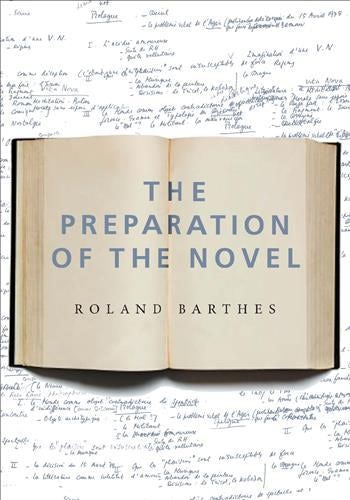
In 1978-79 Roland Barthes held a seminar at the Collège de France on “The Metaphor of the Labyrinth”. It was another spatial theme, after his discussion of territory and territoriality in Comment Vivre Ensemble/How to Live Together the previous year, which I write about here. The seminar on the labyrinth ran alongside his first course on “The Preparation of the Novel”.
Barthes led the first and last sessions of the seminar, on 2 December 1978 and 10 March 1979, but the other sessions were given by guest speakers. In the original edition of the lecture course, La Préparation du roman (I et II), based on his notes, Barthes’s own opening and closing contributions to the seminar are included (pp. 165-79) and they are translated in The Preparation of the Novel (pp. 113-24). Barthes briefly wrote about the seminar in his report on the year’s teaching for the Annuaire du Collège de France, which is also included in the publication of his course (La Préparation du roman (I et II),pp. 459-60; The Preparation of the Novel, p. 378).The seminar notes are not included in the revised edition of La Préparation du roman, which is based on recordings of the lecture course. The other sessions of the seminar have generally not been published at all. They included a presentation by the classicist Marcel Detienne on the labyrinth and the minotaur in Greek mythology on 9 December 1978, and one by Gilles Deleuze on the labyrinth in Nietzsche on 16 December.
I was curious about those two sessions in particular, mainly because Detienne’s contribution was one of relatively few instances of Barthes showing an interest in classical mythology, although his analysis of modern myths is of course well known. I think his work on modern myth is informed by work in comparative mythology, but this is relatively rarely mentioned by him. Detienne spoke about the famous story of the minotaur who lived in the labyrinth designed by Daedalus for King Minos of Crete. Human sacrifices from Athens were made each year, but Theseus was able to kill the minotaur and navigate his way out of the maze following the thread given to him by the King’s daughter, Ariadne. Detienne would publish on this question in his 1983 article “La Grue et le labyrinthe”, in which he briefly indicates his involvement in Barthes’s seminar (p. 553 n. 61). For a discussion of the mythology, historical and archaeological evidence, I also found an article by Philippe Bourgeaud, “The Open Entrance to the Closed Palace of the King: The Greek Labyrinth in Context”, helpful.
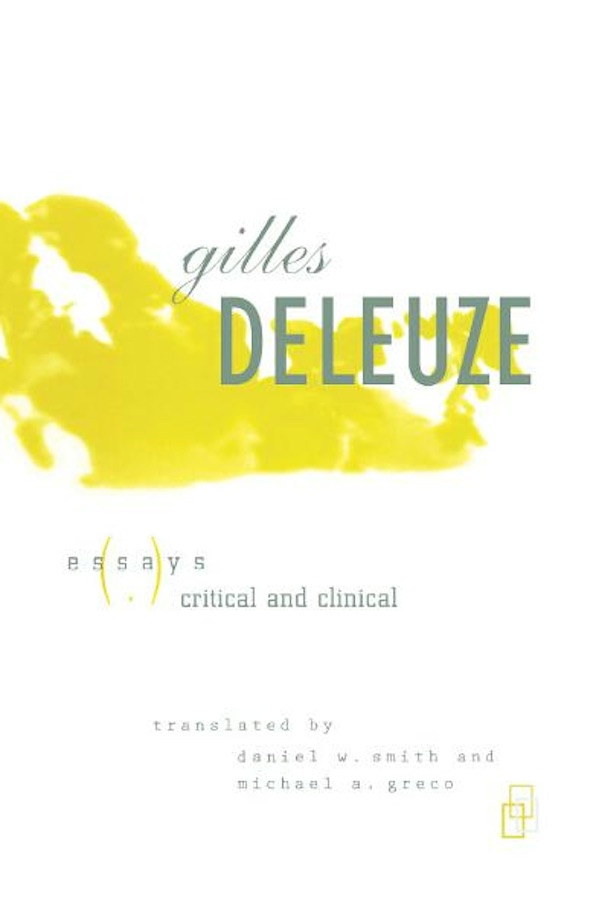
The Deleuze session is also intriguing, because it dates from some time after his famous 1962 book on Nietzsche. As Deleuze’s English editors and translators Charles Stivale and Daniel Smith indicated to me, the key piece published by Deleuze connecting to Nietzsche around the time of the seminar was his introduction to the 1978 French edition of D.H. Lawrence’s Apocalypse, a book which was translated by his wife Fanny Deleuze. This introduction, “Nietzsche and Saint Paul, Lawrence and John of Patmos”, was reprinted in his Essays Critical and Clinical in 1993. While a Nietzschean discussion of Lawrence, it doesn’t relate to the seminar’s theme of the labyrinth.
The other presentations to Barthes’s seminar were given by a very interdisciplinary group: the philosopher of aesthetics Hubert Damisch on Egyptian labyrinths and chessboards; by Claire Bernard and Hélène Campan on Russian and Spanish literature; by the film director Pascal Bonitzer on cinema; the lawyer, and later diplomat, Hervé Cassan on the Medina of Fèz; the architectural historian Françoise Choay; Jean-Louis Bouttes, who published his La Destructeur d’intensité in 1979, and would go on to write a book on Jung, on Labyrinths and ruses (and on whom see this piece by Blake Smith); the mathematician Pierre Rosenstiehl; and the psychoanalyst Octave Mannoni on labyrinths and enunciation.
As the end of the report on the seminar Barthes says:
After listening to such very different presentations, it was noted that the Labyrinth is perhaps a ‘pseudo’ metaphor in the sense that its form is so particular, so pregnant, the literal meaning predominates over the symbolic: the Labyrinth engenders narratives, not images. The seminar ended not with a conclusion but with a new question: not ‘What is a Labyrinth?’ nor indeed ‘How do you get out of one?’ but rather ‘Where does a Labyrinth begin?’ In this way, the seminar shares an affinity with what would appear to be a timely epistemology of degrees of consistency, of thresholds, intensities (La Préparation du roman (I et II),p. 460; The Preparation of the Novel, p. 378).
The Barthes archive at the Bibliothèque nationale de France contains some materials relating to the seminar. Box 31, folders 5-8 has some correspondence from attendees and presenters; Barthes’s own texts, written out by him and transcribed for the publication; some photocopies of texts on the labyrinth theme, and related material. The transcription of the opening and closing session of the seminar is complete, including a small note taped to p. 2 of the Introduction, reproduced as the note on p. 166/428 n. 2, in which he is critical of Paolo Santarcangeli’s recently translated Le livre des labyrinthes: histoire d’un mythe et d’un symbole. “Quite a confused book, primarily an archaeological and ethnological dossier; very little on the symbolic, and banal, we’ll come back to this”. He clearly used the book a lot, though, with marginal page references in his own notes for the seminar marked as ‘S’. Detienne reviewed the book in 1980 – a brief review which says little about the book but makes some interesting comments on Greek myth.
Roland Barthes, The Preparation of the NovelGilles Deleuze, Essays Critical and Clinical
Barthes took brief notes on the presentations by others to this seminar, which are contained in a yellow Gibert Joseph notebook in folder 7. Unfortunately, there are only about a page of notes per presentation, which are therefore very abbreviated. There is one letter from Detienne, but nothing from Deleuze. Folder 8 also contain a typescript of a text by Rosenstiehl, “Les mots du labyrinthe”, which he published in 1980 in a collection edited by the Centre Pompidou, Cartes et figures de la terre. On the first page of the typescript it says that this was the presentation made to the seminar, with an accompanying letter to Barthes dated to 6 February 1980. The published version has some reproduced images and drawings by Augustin and Agnès Rosenstiehl.
From Barthes’s notes, it seems that Deleuze’s presentation concerned the labyrinth in Nietzsche’s work and the relation between the labyrinth and the ear. These ideas are close to material he discussed in his 1962 book on Nietzsche. The first key passage is:
Every truth is truth of an element, of a time and a place: the minotaur does not leave the labyrinth (VP III 408). We are not going to think unless as we are forced to go where the forces which give food for thought are, where the forces that make thought something active and affirmative are made use of. Thought does not need a method but a paideia, a formation, a culture. Method in general is a means by which we avoid going to a particular place, or by which we maintain the option of escaping from it (the thread of the labyrinth). “And we, we beg you earnestly, hang yourselves with this thread!” Nietzsche says that three anecdotes are sufficient to define the life of a thinker (PTG) – one for the place, one for the time and one for the element. The anecdote is to life what the aphorism is to thought: something to interpret. Empedocles and his volcano – this is an anecdote of a thinker. The height of summits and caves, the labyrinths; midday-midnight; the halcyon aerial element and also the element of the subterranean. It is up to us to go to extreme places, to extreme times, where the highest and the deepest truths live and rise up. The places of thought are the tropical zones frequented by the tropical man, not temperate zones or the moral, methodical or moderate man (Nietzsche et la philosophie, pp. 125-26; Nietzsche and Philosophy, p. 110).
The quotations are from the French edition of The Will to Power and Philosophy in the Tragic Age of the Greeks. The second relevant passage from Deleuze’s book reads:
3) The labyrinth or the ears. The labyrinth is a frequent image in Nietzsche. It designates firstly the unconscious, the self; only the Anima is capable of reconciling us with the unconscious, of giving us a guiding thread for its exploration. In the second place, the labyrinth designates the eternal return itself: circular, it is not the lost way but the way which leads us back to the same point, to the same instant which is, which was and which will be. But, more profoundly, from the perspective of the constitution of the eternal return, the labyrinth is becoming, the affirmation of becoming. Being comes from becoming, it is affirmed of becoming itself, in as much as the affirmation of becoming is the object of another affirmation (Ariadne’s thread). As long as Ariadne remained with Theseus the labyrinth was interpreted the wrong way round, it opened out onto higher values, the thread was the thread of the negative and ressentiment, the moral thread. But Dionysus teaches Ariadne his secret: the true labyrinth is Dionysus himself, the true thread is the thread of affirmation. “I am your labyrinth.” Dionysus is the labyrinth and bull, becoming and being, but becoming is only being insofar as its affirmation is itself affirmed. Dionysus not only asks Ariadne to hear but to affirm affirmation: “You have little ears, you have my ears: put a shrewd word there.” The ear is labyrinthine, the ear is the labyrinth of becoming or the maze of affirmation. The labyrinth is what leads us to being, the only being is that of becoming, the only being is that of the labyrinth itself. But Ariadne has Dionysus’ ears: affirmation must itself be affirmed so that it can be the affirmation of being. Ariadne puts a shrewd word into Dionysus’ ear. That is to say: having herself heard Dionysian affirmation, she makes it the object of a second affirmation heard by Dionysus (Nietzsche et la philosophie, pp. 215-16; Nietzsche and Philosophy, p. 188).
The quotations here are from Nietzsche’s poem “Ariadne’s Complaint” in Dionysian Dithyrambs (adapted from text originally in Thus Spoke Zarathustra).
These themes are developed by Deleuze in a 1963 article “The Mystery of Ariadne”, which was reprinted in 1987, revised in 1992 and included in Essays Critical and Clinical.(Timothy S. Murphy’s bibliography indicates the references.) It seems Barthes’s seminar was an occasion to return to themes in a book and article from about fifteen years before. It would be interesting to know if Deleuze had additional notes for his presentation or if there is a recording somewhere. It’s not listed in the extremely useful records of The Deleuze seminars.
Barthes died in March 1980, and while he delivered 11 lectures of the second course on “The Preparation of the Novel”, his planned seminar for that academic year, on Proust and photography, did not take place. It was due to begin in February 1980, and apparently Barthes had gone to the Collège to check on the slide projector he planned to use shortly before he was hit by a laundry van on the road outside. This led to his hospitalisation, from which he never recovered. The introductory text and the preparatory notes he made on the photographs for this seminar are included in the original Préparation volume (pp. 385-457/pp. 305-75). The same text and images are also included in the posthumous Marcel Proust volume (pp. 167-237). Kathrin Yacavone has written an interesting study of this seminar, and is my source for the story about the slide projector and subsequent accident (p. 110 n. 3).
I’m not sure other presenters developed their work into published texts beyond those I’ve indicated here. Rosenstiehl also wrote another piece on the labyrinth, published in the Barthes tribute issue of Critique in 1982, which was translated for October in 1983. It’s interesting that, already having published his contribution to the seminar, he returned to this theme in homage. He mentions the seminar, and those who were “invited ‘to witness his words’” (“Le dodécadédale ou l’éloge de l’heuristique”, p. 793 n. 3; “The ‘Dodécadédale’, or in Praise of Heuristics”, p. 24 n.3):
The goal of the seminar on the labyrinth, the last seminar, which Barthes had twice postponed, was one we all shared: an attempt to isolate some aspects of a method of research. Nothing seemed better to suggest research than writing (in the act of being written) or Ariadne’s thread (as it is unwound). Questioning our own heuristic proceedings is certainly an ambitious undertaking! The method adopted was that of allowing the imagination to speak freely about the metaphors that might convey the labyrinth…
The seminar gathers all the delusions into a heap. The distillations of all the sciences are brought into the labyrinth. Yet Barthes remains dazzled by his stochastic anxiety: ‘The labyrinth is the typical form of the nightmare’. The last seminar at the Collège is swathed in the labyrinth’s deepest layers (“Le dodécadédale ou l’éloge de l’heuristique”, pp. 793-95; “The ‘Dodécadédale’, or in Praise of Heuristics”, pp. 24-25).
The exploration of the labyrinth – as architectural form, as metaphor, in mythology and the present moment, in music, art, mathematics and thought – seems to have remained an undeveloped fragment of Barthes’s work, even if others in the seminar would publish on these themes.
Update 2 February 2026: Adrian Paul Martin and Patrick ffrench both helpfully comment below that Pascal Bonitzer’s presentation to this seminar was published – “Cinéma et labyrinthe: la vision partielle”, Cahiers du cinéma 301, 1979), 35-41; “Partial Vision: Film and the Labyrinth”, trans Fabrice Ziolkowski, Wide Angle 4 (4), 1981, 56-63.
References
Roland Barthes, Comment Vivre Ensemble: Simulations Romanesques de quelques espaces quotidiens: Notes de cours et de séminaires au Collège de France, 1976-1977, ed. Claude Coste, Paris: Seuil/IMEC, 2002; How to Live Together: Novelistic Simulations of Some Everyday Spaces, trans. Kate Briggs, New York: Columbia University Press, 2013.
Roland Barthes, La Préparation du roman (I et II): Cours et séminaires au Collège de France (1978-1979 et 1979-1980), ed. Nathalie Léger, Paris: Seuil, 2003; The Preparation of the Novel: Lecture Courses and Seminars at the Collège de France (1978-1979 and 1979-1980), trans. Kate Briggs, New York: Columbia University Press, 2011.
Roland Barthes, La Préparation du roman: Cours au Collège de France (1978-1979 et 1979-1980), ed. Nathalie Léger and Éric Marty, Paris: Seuil Points, 2019 [2015].
Roland Barthes, Marcel Proust: Mélanges, ed. Bernard Comment, Paris: Seuil, 2020.
Philippe Bourgeaud, “The Open Entrance to the Closed Palace of the King: The Greek Labyrinth in Context”, History of Religions 14 (1), 1974, 1-27.
Jean-Louis Bouttes, La Destructeur d’intensité, Paris: Seuil, 1979.
Jean-Louis Bouttes, Jung: La Puissance de l’illusion, Paris: Seuil, 1990.
Gilles Deleuze, Nietzsche et la philosophie, Paris: PUF, 1962; Nietzsche and Philosophy, trans. Hugh Tomlinson, London: Athlone, 1983.
Gilles Deleuze, “Mystère d’Ariane selon Nietzsche”, in Critique et clinique, Paris: Minuit, 1993, 126-34 (developed from an essay first published in Bulletin de la Société français d’études nietzschéennes, 1963, 12-15);“The Mystery of Ariadne according to Nietzsche”, Essays Critical and Clinical, trans. Daniel W. Smith and Michael A. Greco, London: Verso, 1998, 99-106.
Gilles Deleuze, “Nietzsche et Saint Paul, Lawrence et Jean de Patmos”, in D.H. Lawrence,Apocalypse, trans. Fanny Deleuze, Paris: Desjonquères, 2002 [1978], 11-39, reprinted in Critique et clinique, Paris: Minuit, 1993, 50-70;“Nietzsche and Saint Paul, Lawrence and John of Patmos”, Essays Critical and Clinical, trans. Daniel W. Smith and Michael A. Greco, London: Verso, 1998, 36-52.
Marcel Detienne, “Santarcangeli (Paolo) Le Livre des labyrinthes: Histoire d’un mythe et d’un symbole (1967)”, Archives de sciences sociales des religions,50 (2), 1980. 338.
Marcel Detienne, “La Grue et le labyrinthe”, Mélanges de l’école française de Rome, 95 (2), 1983, 541-53.
Pierre Rosenstiehl, “Les mots du labyrinthe”, Cartes et figures de la terre, Paris: Centre Pompidou, 1980, 94-103.
Pierre Rosenstiehl, “Le dodécadédale ou l’éloge de l’heuristique”, Critique 423-24, 1982, 785-96;“The ‘Dodécadédale’, or in Praise of Heuristics”, trans. Thomas Repensek, October 26, 1983, 17-26.
Paolo Santarcangeli, Le livre des labyrinthes: Histoire d’un mythe et d’un symbole, trans. Monique Lacau, Paris: Gallimard, 1974.
Kathrin Yacavone, “Reading through Photography: Roland Barthes’s Last Seminar ‘Proust et la photographie’”, French Forum 34 (1), 2009, 97-112.
Archives
Fonds Roland Barthes, Bibliothèque nationale de France, NAF 28630, box 31.
This is the 57th post of a weekly series, posted every Sunday throughout 2025, and now entering a second year. The posts are short essays with indications of further reading and sources. They are not as formal as something I’d try to publish more conventionally, but are hopefully worthwhile as short sketches of histories and ideas. They are usually tangential to my main writing focus, a home for spare parts, asides, dead-ends and possible futures. I hope there is some interest in them. They are provisional and suggestions are welcome. A few, usually shorter, pieces in a similar style have been posted mid-week. I’m not sure I’ll keep to a weekly rhythm in 2026, but there will be at least a few more pieces.
The full chronological list of ‘Sunday histories’ is here, with a thematic ordering here.
Darkness has become legible—and contested. Blending archival narrative with on-the-ground ethnography, Sara B. Pritchard traces how four fields—astronomy, remote sensing, conservation science, and ecology—have investigated artificial light at night, turning a ubiquitous convenience into a category of harm. From observatories chasing ever-receding darkness to the satellite images that first rendered a nocturnal planet from space and recent “Black Marble” maps, Pritchard shows how methods, instruments, and field sites shape what scientists can know about night and light—and what remains unseen.
Across these encounters, night emerges not as a backdrop but as an environment in its own right—one transformed by rapidly expanding, brightening illumination in the Anthropocene. The book chronicles the ascent of “light pollution,” as well as the new challenge of space-based brightness from satellite constellations, even as dark-sky advocates fight to preserve the starry firmament. Attentive to politics as much as photons, Pritchard brings environmental justice to the fore—highlighting tensions among light poverty, forced illumination, and surveillance and calls for “beneficial darkness.” She takes seriously Indigenous astronomers’ critiques of dispossession and “astro-colonialism,” asking what it means to site world-class telescopes on sacred land.
Sweeping from local parks to planetary vistas, Transforming Night reframes a familiar story of modern light as a history of changing nights—past, present, and possible. It will engage readers in environmental history and humanities, science and technology studies, and the sciences themselves, along with dark-sky activists and anyone drawn to the beauty and politics of the world after nightfall.
When in danger, humans search for places of refuge — whether in states, homes, or religions. Political communities have their origins in our desire for shelter. Throughout history, what have we thought of as places of refuge? We have many reasons to seek refuge. Sometimes, we leave our homes in search of greater economic or educational opportunities. Other times, the places we knew as home no longer exist. How have people justified the need to leave, and what legitimises appeals for refuge in the eyes of receiving states and communities? And what happens when a place of refuge turns out to be just as unsafe as the place we have left behind?
This year’s conference will focus on these questions through the lens of political theory and the history of political thought. It will showcase papers addressing such topics as the relation between refuge and territorial sovereignty, statehood, religious and civil conflict, trade and the market, the family, sexual politics, racial politics, and the environment. It will also take account of these questions in order to address some of the basic themes in political theory, such as the purpose of civil association, the relation between protection and obedience, and the boundaries of legitimate force.
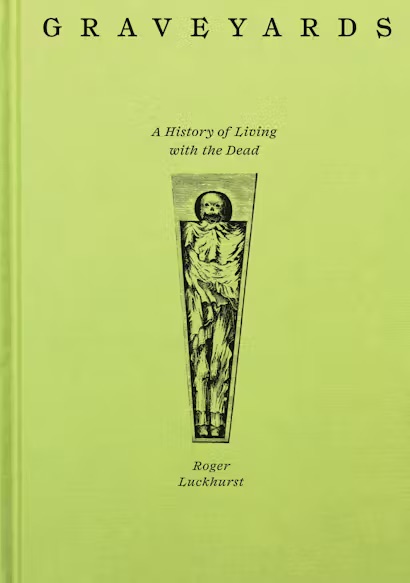
Why, how, and where do we inter our dead? How have people throughout history responded to the problem of laying their dead to rest? Roger Luckhurst sets out in search of answers in this arresting book. Taking readers on an unforgettable tour of the rich and unusual visual culture of the grave, he visits locales such as the pyramids of Giza, the catacombs and columbaria of Rome, and the cenotaphs erected to the world’s war dead. Along the way, he examines the diverse role of graveyards in literature, art, film, and television.
In engaging chapters that look at all aspects of the treatment of the dead, Luckhurst covers topics ranging from early burials and the emergence of necropolises and catacombs to grave robbing, garden cemeteries, the perilous overcrowding of the urban dead, and the emergence of modern funerary culture. Exploring the cultural afterlives of burial and memorial sites in the popular imagination, he shows how graves have served as guides to the underworld, poignant dedications to those we have lost, as reminders of our own mortality, and settings in gothic horror.
Blending lively storytelling with a wealth of stunning illustrations, Graveyards is a lyrical, frequently unexpected account of the grave as a signpost to the afterlife, a site of remembrance and self-reflection, and an object of enduring fascination.
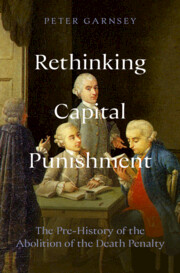
The death penalty was accepted almost universally until the eighteenth century, when Giuseppe Pelli of Florence and Cesare Beccaria of Milan produced works calling for its abolition. Why was this form of punishment so integrated into laws and customary practices? And what is the pre-history of the arguments in favour of its abolition? This book is the first to trace the origins of these ideas, beginning with the Lex Talionis in the Code of Hammurabi and moving across the Bible, Plato, to the Renaissance, and the emergence of utilitarianism in the 18th century. It also explores how the advance of the abolition of the death penalty was held up for a time in Britain, and stalled, apparently permanently, in America. Peter Garnsey ranges across philosophy, theology, law, and politics to provide a balanced and accessible overview of the beliefs about crime and punishment that underlay the arguments of the first abolitionists. This study is a compelling and original contribution to the history of ideas about capital punishment.
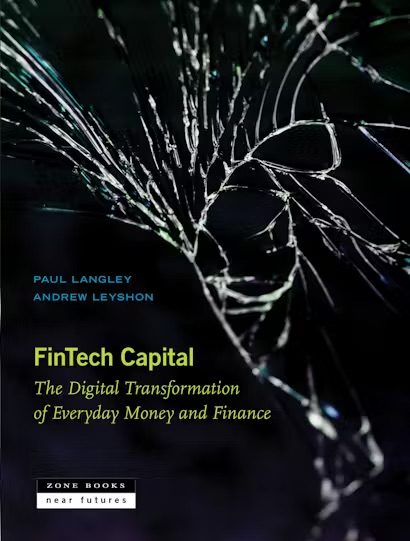
How people pay, make savings and investments, buy insurance, and take on debt is undergoing digital transformation across the globe. This book argues that FinTech is a distinct form of intermediary and rentier capital that is radically reorganizing the routine social relations of money and finance. People are being configured by FinTech capital as users and data rather than as consumers, a phenomenon we increasingly take for granted in our everyday lives.
Langley and Leyshon analyze the rise of FinTech capital through the intersecting processes of digital and financial capitalism that underpin it: platformization, datafication, monopolization, colonization, and capitalization. Platformization and datafication provide novel technologies and business models that reset the competitive coordinates and informational imperatives of monetary and financial intermediation. Monopolization and colonization dynamics reaffirm and renew institutional and geographical hierarchies and relations of plunder. And, all the while, FinTech has been sustained by huge volumes of investment from capitalization processes that are core to financial capitalism.
Illustrated by case studies of the FinTech operations of specialist startups, banks, telcos, and BigTechs based in Africa, Asia, Europe, Latin America, and the United States, FinTech Capital will be of interest to social scientists of money, finance, and digital capitalism and all who want to understand this major transformation of contemporary economic life.
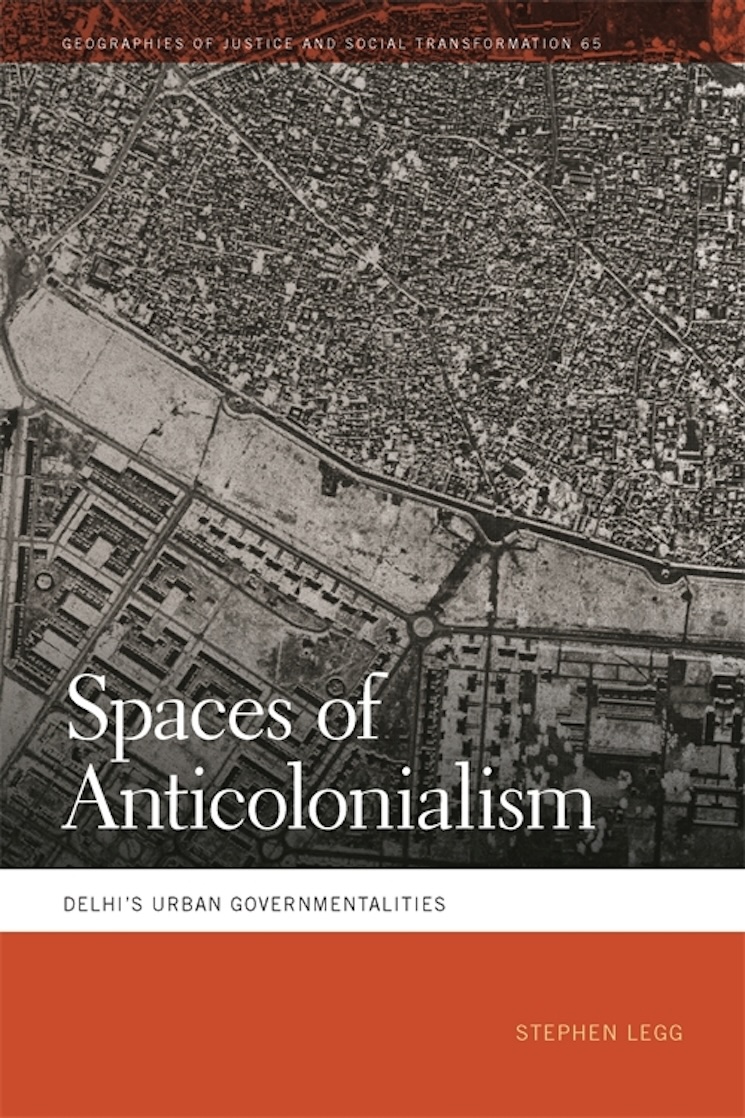
Spaces of Anticolonialism: Delhi’s Urban Governmentalities provides a spatial analysis of the anticolonial governmentalities that emerged in the colonial capital of British India. Reading across imperial and nationalist archives, newspapers, memoirs, oral histories, and interviews it exposes the subaltern geographies and struggles which have traditionally been overshadowed by the presence of national leaders in Delhi. It reads the new capital and the old city as one interconnected political landscape and tracks the efforts of the Indian National Congress to mobilise and marshal support for the mass movements of Civil Disobedience (1930-34), Quit India (1942-43), and beyond. This bottom-up analysis, focused on the streets, bazars, neighbourhoods, homes, and undergrounds of the two cities, emphasises the significance of the articulation of physical and political space; it highlights the pioneering role of women in crafting these spaces; and it exposes the micro-techniques that Congress used to encourage Gandhi’s nonviolence. Michel Foucault’s final lectures on parrhesia (courageous speech and actions) are used to analyse these spaces of anticolonialism as coherent governmentalities which were themselves rejected by those who turned to violence in the years before independence in 1947. This volume provides an innovative study of anticolonial geography and a restive history of the capital of contemporary India’s 1.4 billion people.
István Hont (1947–2013) defected from Communist Hungary in the 1970s and became renowned globally as a scholarly visionary in European political ideas. Following his death, a wealth of unpublished material from an early project rewriting the history of liberty, politics and political economy from Samuel Pufendorf to Karl Marx was discovered. This book brings together seven of Hont’s previously unpublished papers, providing a revolutionary intellectual history of the Marxian notion of communism and revealing its origin in seventeenth-century natural jurisprudence. Hont aspired to integrate the history and theory of politics and economics, to infuse present-day concerns with a knowledge of past events and theoretical responses. The essays selected for this volume realise Hont’s historical imagination, range and intellectual ambition, exploring his belief that Marxism ought to be abandoned and explaining how to do it.
Gives a new perspective on the work of István Hont, one of the greatest intellectual historians
Provides a new interpretation of the history of Marx and Marxism
Brings clarity to Hont’s vision of past and present, and to the significance of the history of political thought as a discipline