Peter E. Gordon, Adorno and Existence reviewed at NDPR

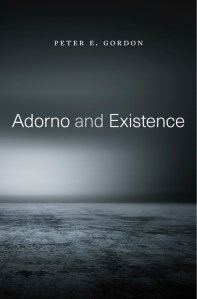
9780674734784-lgPeter E. Gordon, Adorno and Existence is reviewed at NDPR.

Peter Gordon addresses a much-neglected topic in the complex intellectual history of the Frankfurt School. He traces Adorno’s lifelong engagement with existentialism and concludes that Adorno owes more to existentialism than usually meets the eye. What underlies Adorno’s sustained critique of this philosophical tradition, Gordon claims, is the fact that Adorno utilizes existentialism and its radical conception of subjectivity as a foil to develop his own materialism.

Posted in Uncategorized | Leave a comment

“Una finestra irlandese su Foucault”, di Teresa Degenhardt

A report on the Foucault in Ireland conference – from Teresa Degenhardt (in Italian)

centrostudiricerca's avatarNuova serie dei delitti e delle pene

Pubblichiamo un commento di Teresa Degenhardt (Queen’s University Belfast e membro della nostra rivista) a margine del Simposio “Foucault in Ireland“, giornata di studi su Foucault organizzata presso la Royal Irish Academy lo scorso 24 marzo. 

Approfittiamo di questo spazio per invitare i nostri lettori e le nostre lettrici ad inviarci interventi di resoconto e commento di simposi/workshop/conferenze che vi abbiano visto a qualche titolo partecipi, sia come speakers o anche solo come uditorio.

Ringraziamo Teresa Degenhardt per il post. Buona lettura!

Un finestra irlandese su Foucault

di Teresa Degenhardt

Ho avuto la fortuna di essere invitata a una bella giornata di studi su Foucault alla Royal Irish Academy di Dublino lo scorso venerdì 24 marzo 2017, organizzata da Gerry Kearns (Maynooth University). È stato molto interessante vedere come tante e tanti in svariate materie abbiano adottato alcuni degli attrezzi fornitici da Michel Foucault per interpretare e ragionare di contesti…

View original post 691 more words

Posted in Uncategorized | Leave a comment

Freud’s papers on technique in English – a summary of the suggestions

Earlier this week I asked this question:

As part of my work on the early Foucault, I’m working through Lacan’s early seminars. I want to read the texts of Freud which Lacan is discussing first. The first extant volume of Lacan’s seminar is on ‘Freud’s Papers on Technique’. I have most of the volumes of the Penguin Freud library, but the papers on technique are largely excluded from that collection. I know the individual papers are in the Standard Edition, but since that is organised chronologically, they are spread between multiple volumes. There is a collection of the technical papers in French, and a volume of them was published in Freud’s lifetime in German. But is there a single English volume that contains them, or most of them?
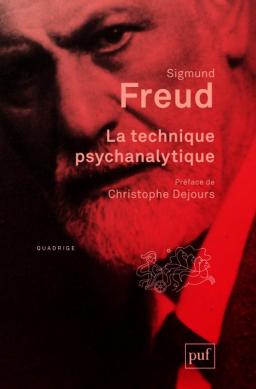
9782130619543_v100I received various suggestions, all of which were appreciated. As I said, the Standard Edition has these, but in multiple volumes. Volume XII has ‘papers on technique’ as part of its title, but there are more papers in other volumes. Steven Ellman’s Freud’s Technique Papers: A Contemporary Perspective includes several along with commentary (the subtitle and authored nature of the book is misleading, I think). There are various ‘complete works’ available online, of variable quality. The 1924 Collected Papers, Vol II (freely available online) comprises two parts – one on ‘Clinical Papers’ and one on ‘Papers on Technique’. That seems the most comprehensive single volume in English. The French La technique psychanalytique (or the German Schriften zur Behandlungstechnik) doesn’t seem to have a simple equivalent.

Update: thanks to John Russell in a comment below, who has pointed out that there is indeed an English volume which covers this material – Therapy or Technique, edited by Philip Rieff, New York: Collier, 1963 (and reprints).

Posted in Michel Foucault, Sigmund Freud, The Early Foucault, Uncategorized | 2 Comments

Books received – Freud, Yates, Wilson, Toal

IMG_2284

Two volumes of Freud for the Foucault work; Julian Yates, Of Sheep, Oranges, and Yeast: A Multi-Species Impression sent by the publisher; Richard Wilson’s Will Power: Essays on Shakespearean Authority; and Gerard Toal’s Near Abroad: Putin, the West and the Contest over Ukraine and the Caucasus in recompense for review work.

Posted in Michel Foucault, Sigmund Freud, The Early Foucault, Uncategorized, William Shakespeare | 2 Comments

A question on Freud’s papers on technique in English

As part of my work on the early Foucault, I’m working through Lacan’s early seminars. I want to read the texts of Freud which Lacan is discussing first. The first extant volume of Lacan’s seminar is on ‘Freud’s Papers on Technique’. I have most of the volumes of the Penguin Freud library, but the papers on technique are largely excluded from that collection. I know the individual papers are in the Standard Edition, but since that is organised chronologically, they are spread between multiple volumes. There is a collection of the technical papers in French, and a volume of them was published in Freud’s lifetime in German. But is there a single English volume that contains them, or most of them?

Update: Thanks to the various suggestions. Yes, the Standard Edition has these, but in multiple volumes. Volume XII has ‘papers on technique’ as part of its title, but there are more in other volumes. Steven Ellman’s Freud’s Technique Papers: A Contemporary Perspective includes several along with commentary. There are various ‘complete works’ available online, of variable quality. The 1924 Collected Papers, Vol II (freely available online) comprises two parts – one on ‘Clinical Papers’ and one on ‘Papers on Technique’. That seems the most comprehensive single volume in English. The French La technique psychanalytique doesn’t seem to have a simple equivalent.

Posted in Michel Foucault, Sigmund Freud, The Early Foucault, Uncategorized | 4 Comments

Marking Up Your Text

Some interesting reflections on editing your own text – on a generally very useful site.

Rachael Cayley's avatarExplorations of Style

The most popular post on this blog is consistently the one on reverse outlines. I’m sure this popularity is driven by the fact that reverse outlining is a powerful act of regaining control over a text. This renewed sense of control comes in part from the way that a reverse outline encourages us to mark up a text. There can be something so powerless about reading a text that we know to be flawed; as we move through the pages, we can end up mesmerized or demoralized rather than energized. This passivity can then impede our ability to revise since, needless to say, revision is essentially active. Doing a reverse outline can give us a sense of agency because we have to overcome our passivity in favour of actively marking up a text. In this post, I would like to discuss two other examples of gaining insight through marking up…

View original post 1,094 more words

Posted in Uncategorized | Leave a comment

Carceral Notebooks Vol 12 now out – Foucault and the Prisons Information Group

book-vol12Carceral Notebooks Vol 12 now out – Foucault and the Prisons Information Group. Edited by Andrew Dilts and Perry Zurn, it includes essays by Bernard Harcourt, Nicolas Drolc, Lisa Guenther, Kevin Thompson, Joy James and others.

All the essays can be downloaded as pdfs, or the whole volume can be ordered as a hardcopy for $10.

Posted in Michel Foucault, Politics, Uncategorized | 1 Comment

Roberto Esposito, The Origin of the Political: Hannah Arendt or Simone Weil?reviewed at Berfrois by Gerardo Muñoz

R9780823276271_9oberto Esposito, The Origin of the Political: Hannah Arendt or Simone Weil? is reviewed at Berfrois by Gerardo Muñoz

Posted in Hannah Arendt, Roberto Esposito, Uncategorized | Leave a comment

Christopher Watkin, Research Hacks 8 and 9 – arguments and knowing when to stop

Christopher Watkin, Research Hacks series continues.

#8: How to know when “good enough” is good enough in academic writing

#9: Building an argument with the “it’s not as simple as that” tool

You can read the rest here.

There are several posts from Progressive Geographies about writing and publishing, and a lot more links, archived here.

Posted in Publishing, Uncategorized, Writing | Leave a comment

Michel Foucault, Dire vrai sur soi-même – 1982 Toronto lectures out from Vrin

2711627497.jpgMichel Foucault, Dire vrai sur soi-même: Conférences prononcées à l’Université Victoria de Toronto from Vrin is now published.

The volume comprises previously unpublished lectures from 1982. There are connections between them and Collège de France lectures, and the Vermont Technologies of the Self seminar, but they are distinct and important.

À la fin du premier semestre 1982, Michel Foucault prononce à l’Université Victoria de Toronto un cycle de conférences intitulé Dire vrai sur soi-même. Le thème de ces conférences, s’inscrivant dans le cadre du projet d’une généalogie du sujet occidental moderne, est la formation historique de l’herméneutique de soi. Après avoir analysé le type très particulier de connaissance de soi et de rapport à soi qui caractérise l’askêsis gréco-romaine, où il s’agit pour le sujet d’établir avec lui-même une relation de possession et de souveraineté, Foucault étudie le renversement qui conduit, aux premiers siècles du christianisme, et tout particulièrement dans les communautés monastiques, à la naissance d’une herméneutique de soi conçue comme l’exploration et le déchiffrement par le sujet de sa propre intériorité. Pour définir ce renversement, Foucault introduit ici une distinction inédite entre deux formes d’ascèse, l’une tournée vers la vérité, l’autre tournée vers la réalité. Parallèlement aux conférences, Foucault conduit à Toronto un séminaire consacré à l’étude détaillée de textes des auteurs anciens sur lesquels s’appuient ses analyses de la culture de soi antique. Il y présente également une esquisse des différentes significations de la notion de parrêsia dans l’Antiquité, qui allait devenir le thème principal de ses derniers travaux.

Ces conférences et ce séminaire sont publiés ici pour la première fois, dans une édition critique.

Posted in Foucault's Last Decade, Michel Foucault, Uncategorized | 1 Comment