Architecture’s Environmental Complex: A Review of Felicity Scott’s Outlaw Territories

Ross Exo Adams reviews Felicity Scott’s Outlaw Territories

rossexo's avatarmachines of urbanization

Pre-Publication draft; forthcoming in The Journal of Architecture, Vol 22, No. 2 (March 2017)

Felicity Scott, Outlaw Territories: Environments of Insecurity/Architectures of Counterinsurgency, 560 pages, 104 illustrations, Zone Books, 2016, New York City, ISBN: 1935408739, $39.95 (hardcover).


Reflecting on music culture, the late Mark Fisher spoke of what he called a ‘temporal malaise’ that had beset contemporary society, a term that describes a growing sense that the future, as a category, has disappeared. Late neoliberal, communicative capitalism, he argues, has colonised life in its phenomenological dimensions, an effect of which is to slowly cancel the possibility of perceiving a future. We’re trapped, he claims, in the 20th century; our 21st century cultural experience looks a lot like ‘20th century culture on higher definition screens’.[i]

Reading Felicity Scott’s Outlaw Territories: Environments of Insecurity/Architectures of Counterinsurgency may reaffirm such a claim. Indeed, what is striking about the histories Scott recounts are the…

View original post 2,710 more words

Posted in Uncategorized | Leave a comment

Professor of Political Theory post at University of Warwick

Professor of Political Theory post at University of Warwick – details here.

Posted in Uncategorized | Leave a comment

Some thoughts on Andrew Scott as Hamlet at the Almeida

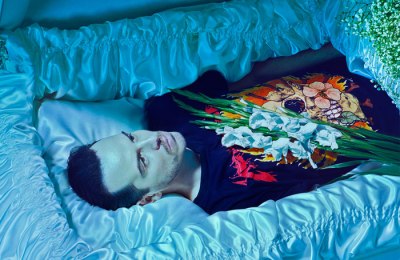
hamlet_andrew-scott-photographed-by-miles-aldridgeThere were many things I liked about the new production of Hamlet, at the Almeida theatre, starring Andrew Scott. Unfortunately, Andrew Scott wasn’t one of them. I found his Hamlet just too shouty, and ultimately not very sympathetic. There were elements which were good, with his clear grief done well at the beginning. Some of his soliloquies were delivered in a conversational tone. But then it just became too much, with not enough contrast between his ‘antic disposition’ and the norm. I had the sense there was a very good Hamlet in him, but it was just a bit overpowering at present. This was still a preview night, so perhaps it will settle down. In a four-hour production, his vocal volume must have been exhausting for him; it certainly was for me.

Yet even in a play which is so dominated by this character, there were many stronger things. It was a fully contemporary production, in modern dress and with guns rather than swords. The supporting cast was generally excellent. Juliet Stevenson was a very good Gertrude, moving from newly wedded bliss to a dawning realisation of Claudius’s crimes and manipulations. Angus Wright, who I’d previously seen as Agamemnon in director Robert Icke’s Oresteia, was a strong Claudius, more reserved and statesman-like than he is sometimes played. Polonius, Ophelia, and the Ghost were all well done. Switching Guidenstern to a female role, played by Amaka Okafor, gave a different sense to Hamlet’s attachment to his old friends. Of the other key roles, perhaps only Horatio was a little disappointing.

My favourite thing about the production was the use of film. Initially this showed documentary footage of King Hamlet’s funeral, in a news style reporting with Danish subtitles. It then switched to the night watch observing surveillance cameras on multiple screens. The initial engagements with the ghost were over an intercom. The scenes with Fortinbras was also done through film, with the character never actually appearing on stage, but sending video messages and being interviewed on camera. It certainly made the Norwegian army seem more convincing, with footage of troop and artillery manoeuvres. The Mousetrap was done well with an on-stage camera capturing the audience of Claudius and his court on screen. I was less sure about the use of Bob Dylan songs; and the ending was a bit muddled, with the dead characters walking backwards to join the already dead Rosencrantz and Guildenstern at the back of the stage.

Overall this was worth seeing, and I don’t feel that four hours is, in itself, too long. This is a long play, after all, and I was pleased that there were not some of the severe cuts some productions have. Two intervals might be rethought – there is a slightly strange one when Claudius walks out of The Mousetrap, which needed a member of theatre staff to announce the break, and then one only about half an hour later when Hamlet passes the Norwegian army on his way to England. Press night is Monday, so perhaps more will be reworked over the weekend: initial reports and a cancelled first night suggest there have been some changes already.

Just for contrast, there are much more positive reviews here and here. And for my takes on some previous productions, see these posts – Peter Sarsgaard in New YorkBenedict Cumberbatch at the Barbican; and on three productions and three texts.

Posted in Uncategorized, William Shakespeare | 2 Comments

Call for Papers: Fieldwork in Political Geography

This gallery contains 3 photos.

Call for Papers: Fieldwork in Political Geography – Royal Holloway, 12-13 June

More Galleries | Leave a comment

London Review of International Law lecture on ‘Legal Terrain’ – thanks and future plans

lril-lecture-2

Thanks to Rachael Squire for the photograph

Last night I gave the London Review of International Law annual lecture at SOAS. The title was ‘Legal Terrain’, and I added a subtitle ‘The Political Materiality of Territory’. Many thanks to all who attended, especially those whose journeys were difficult as a result of the storm. There were some good questions from the floor, and these continued over a nice dinner. Thanks to the journal board for the invitation, to Matthew Craven for chairing the lecture and his generous introduction, and to OUP for hosting the event and dinner.

The lecture will be written up and the plan is for it to appear in the journal, perhaps later this year. It was also videoed, and I will share the link when available. I’ll also be speaking about this terrain work in Oslo, Maynooth, Amsterdam, and Stockholm over the coming months.

Posted in terrain, Territory, Uncategorized | Leave a comment

London Review of International Law lecture – Legal Terrain, 23 February 2017

Tomorrow at 6.30pm I’ll be giving the London Review of International Law lecture on the topic of ‘Legal Terrain’.

lrilannuallecturelegalterrainelden

Posted in Politics, terrain, Territory | Leave a comment

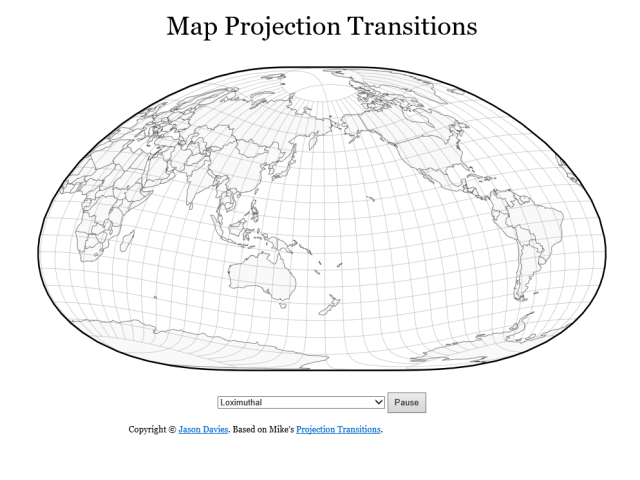
Map Projection Transitions – animated versions

I usually begin my courses on geopolitics and territory with some discussion of map projections. Jason Davies has provides some good animated versions here – thanks to Rob Kitchin for the link.

https://www.jasondavies.com/maps/transition/

Posted in Politics, teaching, Territory, Uncategorized | 1 Comment

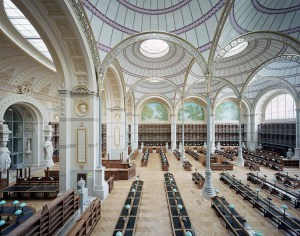
Bibliothèque nationale – pictures of the renovated Richelieu building

In my reports of my work on Foucault, I’ve often talked about the Richelieu building of the Bibliothèque nationale where I’ve been working on his archive. Initially this was in a temporary space, passing through portacabins and past a lot of fenced off-spaces. The last couple of visits have been in the part of the site which has now reopened, and there are some very nice pictures of the renovation at My Modern Met. The first tiny photo below shows the Salle Labrouste; the second the manuscript room I’ve been working in. Worth a look at the full article for these and more views.

richelieu-quadrangle-paris-national-library-france-gaudin-1richelieu-quadrangle-paris-national-library-france-gaudin-3

Posted in Michel Foucault, The Early Foucault | Leave a comment

Books received – Merleau-Ponty, Lecourt, Foucault, Canguilhem, Moore

untitled

Some books picked up in Paris and London – mainly for the early Foucault work, but also Margaret Moore’s A Political Theory of Territory, just out from OUP.

Posted in Georges Canguilhem, Michel Foucault, The Early Foucault | 1 Comment

Apocalypse, Now! Peter Sloterdijk & Bernard Stiegler on the Anthropocene

dmf's avatarDeterritorial Investigations

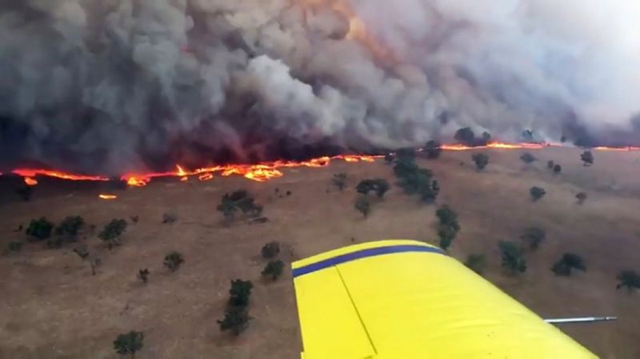
Aerial view of a bushfire in New South Wales, Australia, 12 February 2017. While bushfires ravage the Australian landscape every year, in 2017, land and sea temperatures were pushed up due to climate change, increasing the severity of fire seasons. Photo: AFP Photo

“We would finally like to ask here, most likely in deviation from Stiegler’s own intentions, whether it would be possible to conceive of such an internation as an enabling strategy for what Antonio Negri and Judith Revel have called “the invention of the common” (Negri and Revel 2008), i.e. as an intermediate step toward the establishment of a “global commons” of knowledge and capabilities and ultimately a common global authority not only beyond the private but also beyond the public. This return to Negri does not mean that we are proposing to undermine the role of the state, which we have invoked earlier. On the contrary, if the global economy in the past decades has been running on the principle of privatization and marketization, as Slavoj Žižek has rightly argued (Žižek 2009), and if the recent triumph of Donald Trump as well as the Brexit signal a return to a…

View original post 94 more words

Posted in Uncategorized | 1 Comment