

This gallery contains 3 photos.
Call for Papers: Fieldwork in Political Geography – Royal Holloway, 12-13 June
This gallery contains 3 photos.
Call for Papers: Fieldwork in Political Geography – Royal Holloway, 12-13 June

Thanks to Rachael Squire for the photograph
Last night I gave the London Review of International Law annual lecture at SOAS. The title was ‘Legal Terrain’, and I added a subtitle ‘The Political Materiality of Territory’. Many thanks to all who attended, especially those whose journeys were difficult as a result of the storm. There were some good questions from the floor, and these continued over a nice dinner. Thanks to the journal board for the invitation, to Matthew Craven for chairing the lecture and his generous introduction, and to OUP for hosting the event and dinner.
The lecture will be written up and the plan is for it to appear in the journal, perhaps later this year. It was also videoed, and I will share the link when available. I’ll also be speaking about this terrain work in Oslo, Maynooth, Amsterdam, and Stockholm over the coming months.
Tomorrow at 6.30pm I’ll be giving the London Review of International Law lecture on the topic of ‘Legal Terrain’.

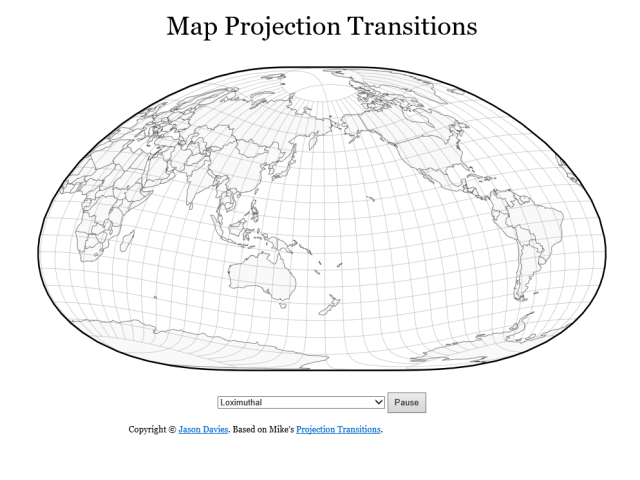
I usually begin my courses on geopolitics and territory with some discussion of map projections. Jason Davies has provides some good animated versions here – thanks to Rob Kitchin for the link.
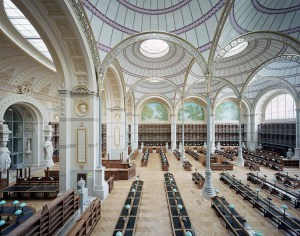
In my reports of my work on Foucault, I’ve often talked about the Richelieu building of the Bibliothèque nationale where I’ve been working on his archive. Initially this was in a temporary space, passing through portacabins and past a lot of fenced off-spaces. The last couple of visits have been in the part of the site which has now reopened, and there are some very nice pictures of the renovation at My Modern Met. The first tiny photo below shows the Salle Labrouste; the second the manuscript room I’ve been working in. Worth a look at the full article for these and more views.


Some books picked up in Paris and London – mainly for the early Foucault work, but also Margaret Moore’s A Political Theory of Territory, just out from OUP.
A discussion of Sloterdijk and Stiegler on the Anthropocene at b2o. http://www.boundary2.org/2017/01/pieter-lemmens-and-yuk-hui-apocalypse-now-peter-sloterdijk-and-bernard-stiegler-on-the-Anthropocene/
“We would finally like to ask here, most likely in deviation from Stiegler’s own intentions, whether it would be possible to conceive of such an internation as an enabling strategy for what Antonio Negri and Judith Revel have called “the invention of the common” (Negri and Revel 2008), i.e. as an intermediate step toward the establishment of a “global commons” of knowledge and capabilities and ultimately a common global authority not only beyond the private but also beyond the public. This return to Negri does not mean that we are proposing to undermine the role of the state, which we have invoked earlier. On the contrary, if the global economy in the past decades has been running on the principle of privatization and marketization, as Slavoj Žižek has rightly argued (Žižek 2009), and if the recent triumph of Donald Trump as well as the Brexit signal a return to a…
View original post 94 more words

Update September 2025: the Berfrois site is now closed and the archive has been removed. My piece can now be found here.
My review of Robert E. Lerner, Ernst Kantorowicz: A Life has just appeared at Berfrois.
Beyond the ranks of medievalists, Ernst Kantorowicz (1895-1963) is largely known for his magisterial 1957 book The King’s Two Bodies: A Study in Medieval Political Theology. Praised by Michel Foucault in Discipline and Punish, and a reference point for Giorgio Agamben, The King’s Two Bodies is almost certainly a book now more cited than read. Yet Kantorowicz was the author of other important books, as well as several articles and chapters, some of which were collected in the posthumous Selected Studies in 1965. In 1927, he had published a major German-language biography of the Holy Roman Emperor Friedrich II, an immense though very readable study which was roundly criticised by more traditional historians. Not to be put off, Kantorowicz followed it with a second volume in 1931 proving sources and further readings, as impressive in its ostentatious erudition as the first volume had been in its accessibility. In 1946, after delays in press due in part to the war, he published a study in English entitled Laudes Regiae: A Study of Liturgical Acclamations and Medieval Ruler Worship. In October 1950, for reasons to be discussed, he self-funded the publication of a pamphlet The Fundamental Issue: Documents and Marginal Notes on the University of California Loyalty Oath. The King’s Two Bodies was a late work, much delayed, which appeared only a few years before his death. He never wrote, nor even began, another book. Of these works, only The King’s Two Bodies remains in print in English, despite the 1931 translation of Fredrick the Second and the other books being written in that language. [continues here]
 The past few weeks have felt like I am running a few different research careers in parallel, with ongoing things around Lefebvre, Shakespeare and the terrain work. This has meant dealing with publishers, grant bodies, and writing projects, as well as giving a talk at the British Library on the theme of power, territory and borders; and a public lecture at Durham on the terrain project. The next talk on terrain will be the London Review of International Law annual lecture on Thursday – February 23rd.
Nonetheless, as time has allowed, I’ve also done some work on Foucault, including beginning work with some of Maurice Merleau-Ponty’s lecture courses at the Sorbonne, which we know that Foucault attended. While based on student notes, they were initially edited by Merleau-Ponty himself. There are now multiple editions of these lectures, individually or collectively, in French, and English translations of several individually. These initially confused me as to what was what, and why there were duplicate courses and translations published. The definition edition is Psychologie et pédagogie de l’enfant: Cours de Sorbonne 1949-1952; translated as Child Psychology and Pedagogy: The Sorbonne Lectures 1949-1952. There are also some other lectures from Lyon and some radio addresses from around this time, which I’ve also been looking at. Once Merleau-Ponty takes up his chair at the Collège de France in 1952, I’m less sure that Foucault followed his courses. Once Foucault goes to Sweden it’s unlikely (though he was regularly back in Paris), and Merleau-Ponty dies in 1961, just before Foucault defends his thesis. But I think that digging into Merleau-Ponty’s work will be useful – there is one early work which looks very important.
I also have been doing some further reading of Georges Canguilhem’s work, which I knew in part before, and some of Georges Dumézil’s writings, which I knew less about. Both of these are writers who Foucault said were important to his early work. Canguilhem has proved to be especially interesting and time consuming, and while I had some of his works in English and French already, I’ve begun building up a more complete collection. I’m especially interested in the project of his Oeuvres complètes, of which two volumes are currently published.
Last week was reading week at Warwick, so I’ve also been back in Paris to do some more work with the manuscripts at the Bibliothèque Nationale. This visit I spent some time with boxes of material relating directly to the 1950s, at the Richelieu site. I found a lot of surprises in these, though as ever the cataloguing is a bit erratic and things are rather jumbled. There are materials which clearly relate to much later concerns in here or, at least, material which informed later concerns. As I’ve said before, Foucault doesn’t date his notes, so it’s really hard to be certain about anything. But there are multiple clues to organization, from handwriting to type of paper, to the scrap paper he used, especially to group notes. There are notes taken in lectures mixed up with reading notes. Some of my favourite finds included lots of early notes on sexuality; loads of material on theatre and literature, including on Roussel and Flaubert; an almost complete typescript of the introduction to Kant’s Anthropology, tonnes of notes on Husserl; and what I was expecting to find – the extensive notes on Binswanger and other psychiatry. These were very detailed, and his reading really was wide-ranging. As well as the Binswanger introduction, Maladie mentale et personnalité and some short texts, we know that Foucault lectured on psychology at Lille and at the ENS. Lots of useful leads here for the research I’m doing.
If and when I eventually get to working on The Order of Things and The Archaeology of Knowledge, I’ll be sure to return to the references here, because Foucault read very extensively in analytic philosophy, literary theory, history of science, history of ideas and so on. As ever, I took extensive notes – over 16,000 words in four days. Often this was just building up a detailed inventory of what was here. I didn’t quite finish the boxes I’d ordered – two of them were divided into ‘a’ and ‘b’ boxes, so there was a lot more material than I expected. Once the archive closed I also made a couple of short evening visits to the Mitterand site to look at some Canguilhem texts which are hard to find in London, and of course did my usual tour of favourite bookshops. On the trip, I also read and wrote a review of Robert E. Lerner’s excellent Ernst Kantorowicz: A Life, which should be published very shortly.
My research on the early Foucault was presented to an audience for the first time when I gave a talk at the Institute of Historical Research in London, to their Philosophy of History seminar. The first half discussed Foucault’s Last Decade and Foucault: The Birth of Power and the general approach I’ve been taking to this work – textual, contextual, archival. The second half outlined some of the themes and questions I’m trying to examine with the early period. Much of this was, at this stage, necessarily provisional and more of a survey of issues rather than a thorough treatment, but I said something about Foucault’s role in the translations of Ludwig Binswanger and Viktor von Weizsäcker. I did record the talk and will likely share it at some point, but I plan to give versions of this at other places so it might be a little while before I do. I’ll next be speaking about this work at Goldsmiths University of 10 March.
On my final day in the archive I received two reader reports on The Early Foucault proposal. These were extremely generous and supportive, and just yesterday the book was given the green light by Polity. So this project is now very much under way…
The previous updates on this project are here; and Foucault’s Last Decade and Foucault: The Birth of Power are now both available from Polity. Several Foucault research resources such as bibliographies, short translations, textual comparisons and so on are available here.

I’ll be spending several weeks between April and June 2017 as a visiting scholar at ACCESS Europe at the University of Amsterdam. ACCESS is the Amsterdam Centre for Contemporary European Studies.
While there I will be giving a public lecture, leading a PhD reading seminar on urban territory, and we will host the first workshop of the Territory sub theme of the ICE-LAW project. More details on the lecture and workshop soon.


