
David Harvey Marx & Capital Lecture 5: Use Values: The Production of Wants, Needs and Desires
 Stuart Hall, Selected Political Writings – forthcoming with Lawrence & Wishart.
In one sense, of course, all of Stuart Hall’s writing was political, but this collection focuses on the essays he wrote throughout his life that directly engaged with political issues. From the beginning, his analyses focused strongly on the central role of culture in politics, and his insights are evident across the whole selection, whether he is writing about Thatcher’s authoritarianism or the double shuffles of Tony Blair.
These essays come from three broad periods: the 1950s and 1960s, when Hall was involved in the New Left; the 1970s and 1980s, when he evolved his critique of Thatcherism; and from the 1990s until the end of his life, when he focused on the emergence of neoliberalism.
The editors have brought together the best and most representative works of a writer with a unique and conjunctural approach to understanding politics, and have collected those works that have a general application to broader political questions. The collection is therefore valuable for readers interested in the politics of the past sixty years, in specific political questions, such as around political commitment, or the politics of empire, and specific political moments, such as the Cuban Crisis, or the actions of New Labour. But Hall’s engaging writing and the connections here between his more obviously political writing and the other areas of his work—including identity politics and race—also make the collection an essential resource for those interested in politics more generally.
This collection also contains an introduction by the editors.
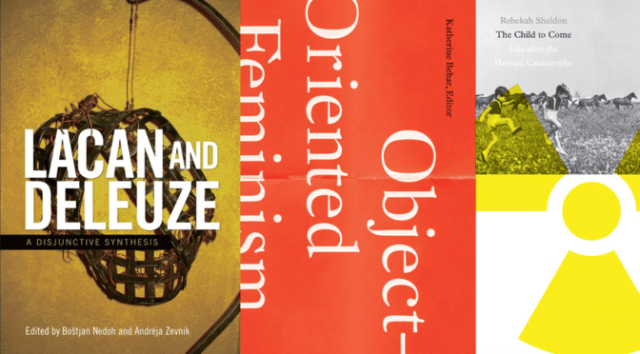
13 Critical Theory books that came out in November – as ever, a very useful roundup.
Luke Bennett provides a preview of his forthcoming book on bunkers.
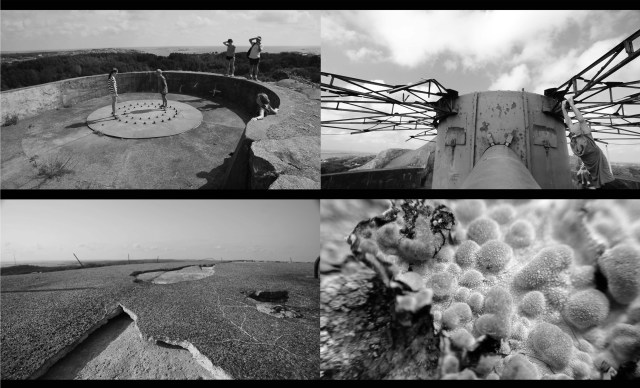
Nearly there – the manuscript will be with the publisher by the end of this week. Here’s a sneak peek at the 14 essays that make up my bunker book (due for publication by Rowman & Littlefield International in August 2017, as part of their Place, Memory, Affect series…
Part I – Introducing the Bunker: Ruins, Hunters and Motives – features a general introduction followed by a second chapter written by me, Entering the Bunker with Paul Virilio: the Atlantic Wall, Pure War and Trauma, in which I discuss the importance of the seminal bunker hunting of French cultural theorist Paul Virilio, who between 1958 and 1965 systematically visited, photographed and researched the imposing bunker formations of the Nazi Atlantic wall, and who did so at the height of the Cold War. I outline Virilio’s affective engagement with these bunkers, their impact upon his later theorising and argue that…
View original post 1,552 more words
Jacques Lacan began his weekly seminars in 1951, and these moved to the Sainte-Anne hospital in 1952. There are reports that from the first Sainte-Anne series these were typed by a shorthand typist. These shorthand typescripts were the basis for the editing work of Jacques-Alain Miller. But the first seminar in the publication history is the 1953-54 one, Les écrits techniques de Freud. And that seminar only has a fragment of the first session (18 November 1953) and the only complete transcripts are from the 1954 sessions. So, what happened to the notes from 1952-53? I assume they were lost, but Foucault attended the seminar from 1953, so I’d be very curious to read what he heard!
The British Academy has begun a series of short podcasts where fellows talk about aspects of their work. I’m featured in the second of these, just released. The task was to speak about our work, but to keep to six minutes. Given the 400th anniversary of Shakespeare’s death, they asked me to speak about my Shakespeare and territory work. Six minutes is quite a challenge. The other contributions are by Patricia Clavin, Joanna Bourke, and Simon Goldhill. My contribution begins at 21.45 minutes.
https://soundcloud.com/britishacademy/from-our-fellows-02-december-2016
When I was in Australia early last year I bumped into Mark Kelly on the University of Melbourne campus. We had a conversation about the work each of us was doing on Foucault, and I said that after I’d finished Foucault: The Birth of Power I thought I might turn to ‘Foucault in the 1960s’. Mark’s reply was that ‘Foucault in the 1950s’ would be the really interesting book.
At the time I replied to say that this would be an incredibly difficult book to write, since there would be so few sources on which to draw. Foucault published only a handful of texts in the 1950s, and these have all been available for some time. They include the short book Maladie mentale et personnalité and the long introduction to the translation of Ludwig Binswanger’s Dream and Existence, both from 1954, plus a couple of short book chapters published in 1957. Maladie mentale et personnalité is not available in English translation, though we do have a translation of the revised 1962 version Maladie mentale et psychologie. The two texts are quite different in the first part, and entirely distinct for the second. The Binswanger introduction is in the standard English edition of Binswanger’s text; though the original French is hard to find. This is partly because the translation by Jacqueline Verdeaux, to which Foucault added the introduction and notes, has been superseded by a translation by Françoise Dastur. The original translation sold very poorly, and much of the original print run was pulped. Neither of the two chapters from 1957 are available in English, though they are of course included in Dits et écrits. There are only a couple of other minor pieces published between 1954 and 1961.
So, I thought, not much to draw upon. In the later 1950s Foucault was working in Uppsala, briefly in Warsaw and then in Hamburg. In Uppsala he wrote most of History of Madness, which he redrafted in Poland and completed in Germany, though some of the archival and bibliographical research was conducted back in Paris. There is a long-known story that his attempt to get this work accepted as a thesis in Uppsala was unsuccessful, but a later version was submitted, with Georges Canguilhem’s support, as a doctorat d’état in France. It was this thesis which appeared with Plon in 1961. The four year gap from the two 1957 essays to that book, or the seven years between substantive publications can be explained by the huge amount of work undertaken for the thesis. There are strong indications the 1957 essays, and the 1958 co-translation of Viktor von Weizsäcker’s Der Gestaltkreis: Theorie der Einheit von Wahrnehmen und Bewegen were all completed before he left for Uppsala. Nonetheless, this was not all he was doing. While in Hamburg he translated Kant’s Anthropology from a Pragmatic Point of View, which is still the main French translation of that text. When it first appeared in print in 1964 it had only a brief ‘notice historique’, but Foucault’s long introduction, which alongside the translation served as his secondary thesis, has appeared both in French and English translation more recently.
I kept thinking about this period of Foucault’s work, and intended that there would be a discussion of this material, over a chapter or two, in any book I wrote about Foucault in the 1960s. My thinking on this continued to develop though, especially when at IMEC I read the notes Jacques Lagrange took as one of Foucault’s students at the ENS in the early 1950s. These notes covered several courses and single lectures which treated a range of themes in existential psychology, connected to the Binswanger and von Weizsäcker translations and his wider work.
Then in conversations with Daniel Defert and Henri-Paul Fruchaud I learned of the plans to publish some of Foucault’s pre-Collège de France courses, which would include one on ‘philosophical anthropology’ from the 1950s, given in Lille. A related course was given at the ENS. I’ve also looked at some of the boxes at the Bibliothèque Nationale de France that relate to that early period, including the detailed notes on Nietzsche and Heidegger which Foucault talks about in one of his last interviews. There have also been a couple of books published recently which shed some light on this period, and more might come to light.
So I’ve begun to think about whether there might actually be two books to write in order to complete my multi-volume study of Foucault. One, under the working title of ’The Early Foucault’ would look at his work up to and including The History of Madness, a kind of ‘genesis’ of the book on the model of Theodore Kisiel’s The Genesis of Heidegger’s Being and Time. (That book was very much on my mind as I wrote Foucault’s Last Decade.) I’m quite interested in doing some work comparing Foucault’s translations of German texts with the originals, as well more recent translations into French or English, where those exist. The sources for early lectures are partial at present, but may become more extensive as things are published or the archive further opened up. And the story of the development of History of Madness might be interesting. Second, I could write the book on ‘Foucault in the 1960s’ I’d intended, but by beginning with Birth of the Clinic and continuing to The Archaeology of Knowledge I have a better sense of how to keep that within a single volume. Birth of the Clinic is a relatively neglected work, and the parallel interest in literature might be worth reappraising, especially in the light of some recently published lectures. There is quite a lot of archival material which sheds light on this period, and there are plans to publish a few courses from this era, from Tunisia and Vincennes, too.
There are some good books on Foucault’s early-mid period work, so this project felt it was only worth doing if there was new material which earlier studies – Dreyfus & Rabinow, Lecourt, Gutting, Han, Webb, et al. – had not had access to. I’m now beginning to think this is, or at least will, be the case. But in sketching out how such a study might be undertaken, I’m increasingly clear that it could not be a single volume and that the story could begin a bit earlier. How and when these books might be done will, in large part, depend on the availability of the archive and the publication schedule for these earlier courses. With all, as I’ve made clear, these are not biographies, but intellectual history.
The Flagship on Critical Thought in African Humanities hosted a panel discussion on The University and its Worlds with Achille Mbembe, Judith Butler, Wendy Brown and David Theo Goldberg on 26 May 2016 at the University of the Western Cape.
The Past & Present reading group at the University of Sydney has just completed reading Jason W. Moore’s major new book Capitalism in the Web of Life: Ecology and the Accumulation of Capital (Verso, 2015). The book provided very fertile ground for lively and critical discussions on capitalism, ecology, value, method, ontology, politics, history, space and much more. To reflect the richness of the discussions, we are publishing a collective review of the book, in the form of 10 talking points contributed by members of the reading group.
10 Talking Points from Jason W. Moore’s Capitalism in the Web of Life
Update: McKenzie Wark discusses Moore’s work here – The Capitalocene


