Henri Lefebvre, Marxist Thought and the City -forthcoming in November

Henri Lefebvre, Marxist Thought and the City is forthcoming in November from University of Minnesota Press. It is translated by Robert Bonnano and has a short preface by me.

image

One of the most influential Marxist theorists of the twentieth century, Henri Lefebvre first published Marxist Thought and the City in French in 1972, marking a pivotal point in his evolution as a thinker and an important precursor to his groundbreaking work of urban sociology, The Production of Space. Marxist Thought and the City—in which he reviews the work of Karl Marx and Friedrich Engels for commentary and analysis on the life and growth of the city—now appears in English for the first time.

Rooted in orthodox Marxism’s analyses of capitalism and the capitalist mode of production, with extensive quotations from the works of Marx and Engels, this book describes the city’s transition from life under feudalism to modern industrial capitalism. In doing so it highlights the various forces that sought to maintain power in the struggles between the medieval aristocracy and the urban guilds, amid the growth of banking and capital.

Providing vital background and supplementary material to Lefebvre’s other books, including The Urban Revolution and Right to the City, Marxist Thought and the City is indispensable for students and scholars of urbanism, Marxism, social geography, early modern history, and the history of economic thought.
Posted in Henri Lefebvre, Uncategorized | Leave a comment

The UCU and the industrial action – research and ineffective strategies

The UCU has, following a ballot on industrial action, announced that there will be a two-day strike on 25-26 May 2016, followed by “an instruction to members to work to contract with effect from 25/05/2016”.

Four years ago I had an email exchange with Matt Waddup, national head of campaigns for the University and College Union. It concerned the ‘action short of a strike’ and the problems that this caused for writing, research, and external duties of academics. You can read my original questions here; and a couple of rounds of responses here.

In the current FAQs, the only time ‘research’ is mentioned is concerning the strike day. There is nothing in the discussion of what it means to ‘work to contract’ concerning research. I find this staggering given the proportion of time, expectation and management, for a research-active academic, that concerns research. In the short-term, I really think that an academic, perhaps especially someone early career, trying to only work their contractual hours will disadvantage themselves first and foremost.

I remain unconvinced that the UCU leadership, most of whom seem to have a background in unions or further education, really understand the working life of a research-active higher education academic. This is not to denigrate further education of course, but just to suggest that there are noticeably different types of work involved between sectors.

One thing that was in the union email, but not in their press release, was this message:

Finally, outside the action,  the union will also be appealing to all members to resign, giving due notice, from currently held external examiner positions and not to take up new ones until the  dispute is settled.

I’m not quite sure how this is ‘outside the action’, but it actually sounds like the most powerful thing being proposed.

In the press release, but not in the email, was the following:

If no agreement is reached in the coming weeks, members have agreed to target further strike action in June and July, and are considering additional action in August to coincide with the release of A-level results. The union is also beginning preparations for a boycott of the setting and marking of students’ work, to begin in the autumn if an acceptable offer has still not been made.

If the union, and its members, are serious about getting employers to reopen negotiations then it is these kinds of hard-hitting action that will be needed. A full boycott of anything to do with REF or TEF might be still more effective. Otherwise we will be back to the pattern of previous action – short strike, ‘work to contract’, minor concession, suspension of action, ballot, resigned acceptance, and statu quo ante.

Posted in Uncategorized, Universities | Leave a comment

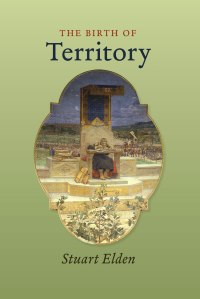
The Birth of Territory reviewed in Law, Culture and the Humanities by Thanos Zartaloudis

9780226202570The Birth of Territory is reviewed in Law, Culture and the Humanities by Thanos Zartaloudis (requires subscription). It’s a generous summary of the book and says a few things about the legal aspects of the argument.

To the legal audience the numerous references and remarks on the role of law in the eventual conception of territory (and sovereignty), as well as the explanatory note on the tension and co-existence of, for instance, civil and canon law, would certainly be a useful entry point into the book for students and scholars. The book is, further, a welcome call for continuous exploration of the lines of questioning that are offered in a historically sensitive map of territory and of its relation to law and spatial strategies of power.

You can read more about this book, with links to all the reviews I know of, on this page.

Posted in Territory, The Birth of Territory, Uncategorized | 1 Comment

Elsevier buy Social Science Research Network (SSRN)

News yesterday that Elsevier had bought Social Science Research Network (SSRN) has caused a lot of controversy. SSRN is used to share work in progress, Elsevier is a controversial publisher with expensive subscriptions. The Duck of Minerva has one take on this – ‘Selling out to the enemy of open access‘.


Posted in Publishing, Uncategorized | Leave a comment

Royalties

A recent conversation on social media about royalties reminded me of this post from some years ago…

stuartelden's avatarProgressive Geographies

Conversation with a (smart) undergraduate student yesterday, about the amount of money academics make from book sales. I asked him how much he thought an academic got in royalties for a £20 book. ‘About £9?’ It’s actually closer to 50p; perhaps £1 if you’ve struck a good deal…

View original post

Posted in Uncategorized | Leave a comment

Mark Neocleous, The Universal Adversary: Security, Capital and the ‘Enemies of All Mankind’ – a few thoughts

As I’ve previously mentioned, Mark Neocleous, The Universal Adversary: Security, Capital and the ‘Enemies of All Mankind’ is now out with Routledge. Here’s the backcover description:

9781138955165

The history of bourgeois modernity is a history of the Enemy. This book is a radical exploration of an Enemy that has recently emerged from within security documents released by the US state: the Universal Adversary. Neocleous shows how the concept of the Universal Adversary draws on several key figures in the history of ideas, said to pose a threat to state power and capital accumulation. Within the Universal Adversary there lies the problem not just of the ‘terrorist’ but, more generally, of the ‘subversive’, and what the emergency planning documents refer to as the ‘disgruntled worker’. Taking the figure of the disgruntled worker as its starting point, the book introduces some of this worker’s close cousins – figures often regarded not simply as a threat to security and capital but as nothing less than the Enemy of all Mankind: the Zombie, the Devil and the Pirate. In situating these figures of enmity within debates about security and capital, the book engages an extraordinary variety of issues that now comprise a contemporary politics of security, from crowd control to contagion, from the witch-hunt to the apocalypse, from pigs to intellectual property, in a compelling analysis of the ways in which security and capital are organized against nothing less than the ‘Enemies of all Mankind’.

I’ve now read the book, which I greatly enjoyed. Mark taught me as an undergraduate, and supervised my PhD thesis, and the book is very much a reflection of his spoken style. While a serious topic, the nature of the figures examined is obviously entertaining as well as challenging. People familiar with Mark’s other work – on administration, police, security, monsters and fascism and so on – will find plenty of connections, and it’s interesting how these themes connect up together here. Indeed, it’s possibly the first thing of Mark’s I’ve read where I could see the connection between all these aspects of his work – the police and security work obviously connected to his first book on administration, and he’s shown how domestic politics and international politics often work in related ways, but The Monstrous and the Dead book (which was of course a development of his work on fascism) now clearly appears as central to that other work too.

The book ranges from serious readings of canonical political theory – Hobbes and Bodin, for example – to engagement with figures from popular culture and contemporary news events. The figure of the ‘universal adversary’ comes from US security doctrine, but as the description above indicates, draws on a much wider range of political, racist, imperial and class issues. The book retains a strong Marxist perspective, and stresses how class politics has often been written out of critical perspectives on terrorism and security. Foucault is another figure discussed and used, and it is interesting to think about how these emblematic figures – the disgruntled worker, the zombie, the pirate – function in a similar way to Foucault’s constitutive subjects of sexuality – the pervert, the hysteric, the masturbating child.

It’s quite a short book, and I read it on a couple of train journeys. Given the direction of my current work it’s not a book I expect I will be using for my research any time soon, though I’m sure I’ll return to it at some point. It’s a useful antidote to those who think that thinking about the ‘enemy’ means you need to read Carl Schmitt. People interested in, for example, Daniel Heller-Roazen’s work on pirates, or Grégoire Chamayou’s book on Manhunts will find much to consider here, as well as those working on the ongoing ‘war on terror’, security, and anticipation.

Posted in Daniel Heller-Roazen, Karl Marx, Mark Neocleous, Michel Foucault, Uncategorized | 2 Comments

Books received 2 – Shakespeare and Heidegger

IMG_1519.JPGTwo (poor quality) second-hand Shakespeare books and the last of the Oxford sale books I’d ordered, plus the first volume of Heidegger’s lectures from the Gesamtausgabe.
 

Posted in Martin Heidegger, Uncategorized, William Shakespeare | 1 Comment

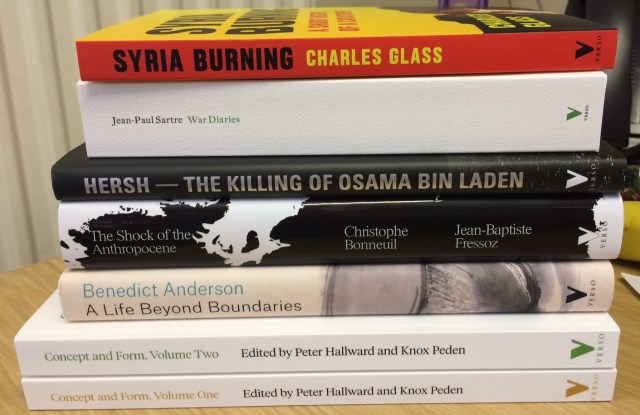
Books received 1 – review work for Verso

A number of recent and not-so-recent books from Verso after I wrote a report for them. IMG_1517.JPG

Posted in Uncategorized | 1 Comment

Graham Harman, Dante’s Broken Hammer

9781910924303Graham Harman, Dante’s Broken Hammer, forthcoming in October 2016 from Repeater Books. His Immaterialism: Objects and Social Theory recently appeared with Polity.

In this book the founder of object-oriented philosophy transforms one of the classic poets of the Western canon, Dante Alighieri, into an edgy stimulus for contemporary continental thought. It is well known that Dante’s poetic works interpret love as the moving force of the universe: as embodied in his muse Beatrice from La Vita Nuova onward, as well as the much holier persons inhabiting Paradiso. Likewise, if love is the ultimate form of sincerity, it is easy to interpret the Inferno as a brilliant counterpoint of anti-sincerity, governed by fraud and blasphemy along with the innocuous form of fraud known as humor (strangely absent from all parts of Dante’s cosmos other than hell). In turn, the middle ground of Purgatorio is where Harman locates Dante’s clearest theory of sincerity. Yet this is only the beginning. For while Dante provides a suitable background for the metaphysics of commitment found in such later thinkers as Pascal, Kierkegaard, Sartre, and Badiou, he also provides even more important resources for overcoming two centuries of philosophy shaped by Immanuel Kant.

Posted in Graham Harman, Uncategorized | Tagged | Leave a comment

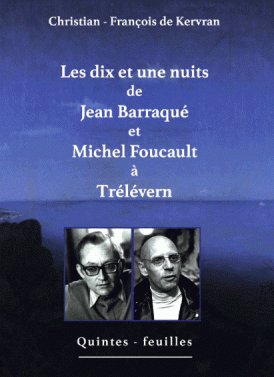
Christian-François de Kervran, Les dix et une nuits de Jean Barraqué et Michel Foucault à Trélévern

couverture-Kervran-411x565This looks a curious new book on the very early Foucault – Christian-François de Kervran, Les dix et une nuits de Jean Barraqué et Michel Foucault à Trélévern.

Au printemps 1952 le philosophe Michel Foucault et Jean Barraqué, compositeur de musique sérielle, passent onze nuits au bord de mer dans le village de Trélévern (Côtes-du-Nord). Ils sont jeunes, respectivement vingt-six et vingt-quatre ans et encore inconnus.
En 1951 Foucault a été reçu à l’agrégation de philosophie. En 1952 il obtient un diplôme de psychologie pathologique. Barraqué vient d’achever l’écriture de sa Sonate pour piano commencée deux années auparavant.
Barraqué est pratiquement un enfant du pays et il fait découvrir sa Bretagne au poitevin Foucault. Ils sont amis depuis quelques mois seulement. La liaison, passionnelle et orageuse, de ces deux écorchés, dont ce texte fait résonner quelques échos, durera jusqu’en 1956, Barraqué prenant l’initiative de la rupture.
D’après documents et témoignages familiaux, l’auteur, tout en restituant les pompes et les œuvres de ce coin de Bretagne au tout début des années 50, fait valoir les paris idéologiques et culturels, entre doutes et espoirs, des jeunes Foucault et Barraqué, qui, malgré leur actuelle différence de notoriété, deviendront tous deux d’importants novateurs dans la pensée et dans l’art du XXe siècle.

Christian-François de Kervran est le pseudonyme d’un universitaire et essayiste, fin connaisseur de la Bretagne et de son folklore. Il a publié des études sur poètes et romanciers de l’Ouest, entre autres Tristan Corbière, Max Jacob et Henri Queffélec.

Posted in Michel Foucault, Uncategorized | Tagged | 1 Comment