The Biopolitics of Gender (2015)

News of Jemima Repo’s book The Biopolitics of Gender

Clare O'Farrell's avatarFoucault News

repoJemima Repo (2015) The Biopolitics of Gender. Oxford and New York: Oxford University Press

  • Introduces a new theoretical and methodological approach to gender
  • Conducts a genealogy of gender similar to Foucault’s mid-twentieth century genealogy of sexuality
  • Argues that gender is an apparatus of biopower invented in the postwar period in order to regulate the reproduction of capital and population
  • Demonstrates how gender forges biopolitical connections between sexology, psychiatry, feminism, demography, economics, and public policy
  • Reconsiders the emancipatory potential of the idea of gender for feminist theory and politics today

Description
Michel Foucault identified sexuality as one of the defining biopolitical technologies of the nineteenth and twentieth centuries. As Jemima Repo argues in this book, “gender” has come to be the major sexual signifier of the mid-twentieth and early twenty-first century. In fact, in this historical excavation of the biopolitical significance of the term, she argues that it could not…

View original post 296 more words

Posted in Uncategorized | Leave a comment

Top posts on Progressive Geographies this week

  1. Remembering Edward Soja (1940-2015) (see also Derek Gregory’s tribute)
  2. Michel Foucault on refugees – a previously untranslated interview from 1979
  3. 8 Critical Theory books that came out in October – Golder, Adorno and Lenk, Nealon, King, Withers, Coombs, Barthes, Holub
  4. Pierre Macherey, ‘The Productive Subject’ in Viewpoint magazine
  5. Which philosopher would fare best in a present-day university?
  6. AAG Names Judith Butler as the 2016 Honorary Geographer
  7. Articles and Chapters (free downloads)
  8. How to give a conference paper – some excellent advice to read and share
  9. Frequently Asked Questions
  10. The Birth of Territory
Posted in Uncategorized | Leave a comment

The Martian, Matt Damon, and Outer Space Law

Phil Steinberg analyses the territorial and extraterritorial aspects of the recent film The Martian.

philsteinberg's avatar

A bit belatedly, after getting a number of ‘Does Matt Damon know what he’s talking about?’ emails, I finally got to see The Martian last night. Since it’s not fair that Klaus Dodds and Rachael Squire get to have all the fun analysing this month’s movies, I thought I’d take a stab at parsing the international law beneath The Martian.

COPUOS-Image

The United Nations meets The Martian

View original post 1,652 more words

Posted in Uncategorized | Leave a comment

Review forum of Jenna Loyd’s 2014 Health Rights Are Civil Rights

Review forum of Jenna Loyd’s 2014 Health Rights Are Civil Rights at the Society and Space open site

Posted in Uncategorized | Leave a comment

Everything you always wanted to know about territory, but were afraid to ask Shakespeare – talk to Cambridge University Geographical Society, 25 November 2015

I’ll be giving the talk I gave at Warwick on Shakespeare’s King John again on the 23rd November at UCL at 6pm (abstract and details here). Then two days later I’ll be giving a talk to the Cambridge University Geography Society, at 6pm in Emmanuel College. They asked me to speak about the Shakespeare project, which I was pleased to do. Rather than a narrow reading of one play, which is how I’ve tended to talk about this work in the past, I’ve decided to draw on a number of plays. Part of the thinking is that most people there will know at least something about one of the plays I discuss, but it’s also a lighter version of the work with a predominantly undergraduate audience in mind – the closest version of this is a talk I gave in a pub in Newfoundland back in 2013.

Everything you always wanted to know about territory, but were afraid to ask Shakespeare

The political, economic and strategic aspects of territory are well known, and many of Shakespeare’s plays dramatise them – from the division of the kingdom in King Lear, to the question of property in land in Richard II, the vulnerable territory of Hamlet’s Denmark or Macbeth’s Scotland, and the colonial aspects of The Tempest. But other aspects of territory feature in Shakespeare’s plays – the legal wrangling over possession and succession in the opening scene of Henry V, the geophysical in Henry IV, Part One and a small semantic shift in King John. Drawing especially on these history plays, and my previous work The Birth of Territory, this talk will examine how Shakespeare can help us to understand territory in multiple ways.

Posted in Conferences, Shakespearean Territories, The Birth of Territory, William Shakespeare | Leave a comment

Journal of Historical Geography review forum on The Birth of Territory published (Legg, Heffernan, McDonagh, Cohen, Sassen, Elden)

9780226202570The review forum on The Birth of Territory in Journal of Historical Geography is now published. Reviews by Stephen Legg, Michael Heffernan, Briony McDonagh, Jeffrey Jerome Cohen and Saskia Sassen, and a response by me.

The full article requires subscription, but there is a preprint on academia.edu

Thanks again to Steve for organising this, and to Michael, Briony, Jeffrey and Saskia for their engagement with the book.

Posted in Jeffrey Jerome Cohen, My Publications, Politics, Saskia Sassen, Territory, The Birth of Territory | Leave a comment

Territory — Rene Magritte

How did I not know there was a painting by Magritte called ‘Le territoire’ until now?

Biblioklept's avatarBiblioklept

View original post

Posted in Uncategorized | Leave a comment

Foucault Circle meeting at UNSW June 29-July 2, 2016 – call for papers

Deadline for call for papers is 20th November 2015

stuartelden's avatarProgressive Geographies

The sixteenth annual meeting of the Foucault Circle will be held in Sydney, Australia, June 29-July 2, 2016 (hosted by the University of New South Wales).

The Foucault Circle at UNSW will be held immediately before the Australasian Association of Philosophy Conference which in 2016 is being hosted by Monash University at the Caulfield campus. AAP Dates are: Sunday 3rd July – Thursday 7th July 2016. Scholars planning to attend the Foucault Circle may also wish to attend the AAP. Full details before or here.

We invite individualpapers and roundtable proposals(4-5 panelists) on any aspect of Foucault’s work. Studies, critiques, and applications of Foucauldian thinking are all welcome. We will aim for a diversity of topics and perspectives.

Abstracts should be prepared for anonymous review, and are to be submitted to the program committee chair, Richard A. Lynch, by email (lynchricharda@sau.edu) on/before Friday, Nov. 20, 2015. Please indicate “Foucault…

View original post 150 more words

Posted in Uncategorized | Leave a comment

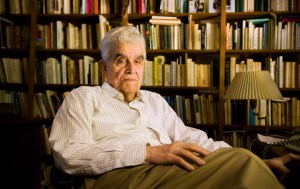
René Girard – tribute from the Stanford news service

girardobit_newsThe theorist and historian René Girard died yesterday. There is a good obituary which discusses his important work at the Stanford news service. Thanks to Robert Tally for the first alert to this story.

Update: also a brief piece at the Stanford University Press blog.

Posted in Uncategorized | Tagged | Leave a comment

AAG Names Judith Butler as the 2016 Honorary Geographer

Butler_Judith_2016_Honorary_GeogAAG Names Judith Butler as the 2016 Honorary Geographer – news here. Here’s one key paragraph.

AAG Past President Mona Domosh will confer the 2016 AAG Honorary Geographer Award upon Judith Butler at the 2016 AAG Annual Meeting in San Francisco during her plenary session, “Demography in the Ethics of Non-Violence,” on Tuesday, March 29. Butler’s plenary will focus on “A principled approach to non-violence that often admits to exceptions where violence is conceded as legitimate. To what extent does the exception to nonviolence in the name of self-defense or for close kin implicitly make a distinction between lives worth saving and dispensable lives? A practice of non-violence has to take into account the demographic distribution of grievability that establishes which lives are worthy of safeguarding and which are less worthy or not worthy at all. Otherwise, both biopolitics and the logic of war can permeate calculations about when and where non-violence can be invoked. Does the demographic challenge revise our approach to non-violence? and if so, how?”

Back in 2007, the last time the AAG was in San Francisco, we invited Butler to give the Society and Space lecture for the journal’s 25th anniversary. The AAG scheduled the lecture in a very small room, and I had to ask them to give us the biggest room they had. (Eventually they did, and it was still packed to bursting.) It took a bit of work back then to get the big room, and at one point I asked the conference organiser ‘you don’t realise who Butler is, do you?’ His reply was that he didn’t, and wasn’t sure why he should. It seems that they do now – a good thing. I’m sure her lecture will be a big draw again, and I’m sorry I’ll miss it.

Posted in Judith Butler, Society and Space | Tagged | 1 Comment