This book offers a multifaceted understanding of how the 9/11 attacks and the subsequent War on Terror affected the Caribbean.
This book dives deeper into how the 9/11 attacks and the subsequent War on Terror impacted the region’s tourism industry, anti-terrorism legislation, and the banking/financial and immigration system. This book analyzes the US-led War on Terror through a broader conceptual lens, i.e., using two Schmittian perspectives (the friend–enemy and the sovereign in times of exception), which offers an opportunity for the methodological interpretation of Bush’s counterterrorism policy to give a novel conceptual understanding of the War on Terror in relation to the Caribbean. Thus, this book offers a nuanced and novel perspective on the subject matter.
This book will be of much interest to students studying about terrorism, Caribbean studies, political theory, and international relations.
Günther Anders, The Obsolescence of the Human, ed. Christian Dries and Christopher John Müller, trans. Christopher John Müller – University of Minnesota Press, December 2025
Now available in English—one of the twentieth century’s most important works on the philosophy of technology
With this first English translation of influential German philosopher Günther Anders’s 1956 masterpiece of critical theory, The Obsolescence of the Human, a new generation of readers can now engage with his prescient and haunting vision of a “world without us” dominated by technology.
Looking at technological events such as the detonation of the nuclear bomb and the arrival of televisions in our living rooms, Anders advances a warning of what humanity looks like in a world where it has surrendered all agency. He outlines the new emotional landscapes that shape our relationship to increasingly capable technology, including Promethean shame, the human sense of unease our own superior technological innovations can instill. Confronting the growing gap between what we can collectively create and what we can individually comprehend, Anders speculates on the trajectory of a developing technological world that rapidly exceeds our ability to control or even foresee its negative consequences.
The Obsolescence of the Human prefigures contemporary posthumanist discourse and is eerily predictive of current debates around automation, global warming, and artificial intelligence. Providing new ways to conceptualize the intersection of technology and emotion, it offers groundbreaking frameworks for future-oriented ethics. Radical in both its stylistic experimentation and its theoretical insights, this new translation presents a cautionary tale regarding the human capacity to usher in its own destruction.
Since the 1980s, readers and scholars alike have celebrated migrant literature for not only depicting migration, but for inspiring reflections on class, race, gender, nations, and mobility. But, beyond depicting migration, is it possible for migrant literature to be a force of movement itself? Poetics of the Migrant calls upon the philosophy of movement and a counter-history of migration to invent a theory and method for analysing migrant literature. The text uncovers patterns of movement that migrant texts enact and create – in other words, a movement-oriented poetics. Poetics of the Migrant understands movement as the defining force of human history; and the migrant is the primary figure of cultural and political transformation. Migrant literature makes it possible to transform how we process and interpret social history through social motion. Perhaps, from here, we can imagine a different world: one where movement and migrancy are legible and thinkable.
This book has been put back to August 2025, but looking forward to this.
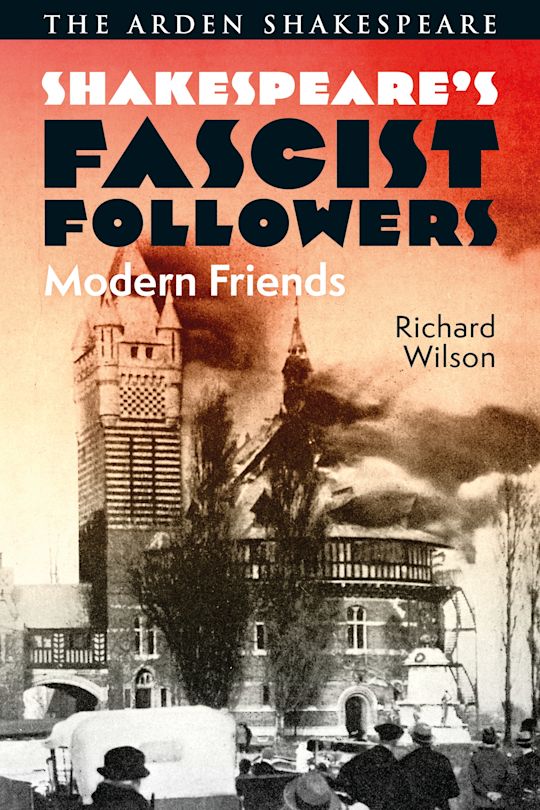
‘Richard Wilson’s meticulously researched, powerfully argued and brilliantly written account of Shakespeare’s 20th-century fascist followers is not just an important but a genuinely essential book.’ Robert Shaughnessy, Guildford School of Acting, UK In this illuminating book, Richard Wilson demonstrates how in the 20th century Shakespeare and his plays were subjected to a sustained institutionalized misreading, which served the purposes of proto-, present and future fascism. It exposes how Shakespeare was misappropriated by the far right to represent Britain’s supposedly glorious history, and the ways in which they utilized him and the cultural capital of his work. Wilson argues that in Britain the plays were invoked as a way to anglicize fascism, as its leaders campaigned ‘to recover theatre for the national cause’ by ‘looking back fondly to Elizabethan England’. His extensive and rigorous research also gestures beyond Britain, taking in case studies from North America, Germany and France.
Some of the names this book unearths will surprise: many of the right-wing political views or leanings of the prominent figures discussed have been brushed under the carpet, left unexplored or ignored. Across its ten chapters, this book provides in-depth case studies of a wide variety of figures, from A. K. Chesterton, who was both editor of the British Union of Fascists’ newspaper Blackshirt and former manager of press and publicity at the Shakespeare Memorial Theatre, to celebrated Shakespeareans such as G. Wilson Knight, through to writers, artists and theatre practitioners including W. B. Yeats, T. S. Eliot, Edward Gordon Craig and Philip Larkin, among many others. At a time when democracy is under threat, populism is on the rise and far right views are increasingly prominent in our political landscape, Richard Wilson’s book makes an especially vital and timely contribution to Shakespeare scholarship.
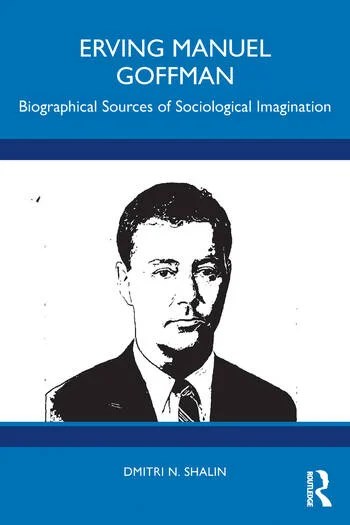
Erving Goffman is the most cited American sociologist. There is no shortage of studies exploring Goffman’s scholarship but no extant biography of Erving Goffman. The chief reason is that a man who looked behind the facades people erect to protect their private selves, zealously guarded his own backstage. This book is the first comprehensive biography of Goffman, an intellectual of Russian-Jewish descent, who turned the “Potemkin village” trope into a powerful research program. The present study shows how key turns in Goffman’s career reflected dramatic events in his family and personal history. It is based on the materials gathered in the Erving Goffman Archives, a repository curated by the author who has been collecting documents and conducting interviews with Goffman’s relatives, colleagues, and friends. The archival work turned up documents which improve our understanding of Goffman the scholar, the teacher, and the man. The approach adopted in this investigation sheds new light on Goffman’s scholarship which has had an enormous and continuous impact across the social sciences and humanities.
Contested Territory presents a critical, non-sovereign theory of territorial rights capable of responding to border-defying global crises such as land dispossession, mass migration, and environmental depredation. Statist theorists have attempted to mitigate these crises within the framework of territorial sovereignty, but have not grasped how this crumbling system causes the problems they seek to solve. Others, pitting cosmopolitanism against sovereignty, have turned away from territoriality, thus ignoring the geographical dimensions of freedom. The need for a radical shift in theorizing territory is urgent. This book embarks on that shift and argues, against the mainstream view, that it is possible to theorize democracy within a framework of territorial non-sovereignty. In an effort to loosen the grip of sovereignty and broaden our territorial imagination, Contested Territoryresuscitates a long-suppressed tradition in the history of political thought: the tradition of theorizing contested territory. The theorists of contested territory—anarchists, exiles, federationists, cosmopolitans, indigenous theorists, and so on—do not view the absence of sovereignty over land as a problem, and instead find democratic potential in overlapping rule. Building on such alternatives, this book charts normative foundations for a cosmopolitan, democratic theory of territory and land politics. Through a critical engagement with the thought of Hannah Arendt, it grounds democratic land governance in the land-based, non-sovereign practices of world-building. Contested Territory concludes that is both possible and desirable to decouple democracy and territorial sovereignty, and that by doing so we can better respond to the border-defying crises of our age.
Across Italy in the nineteenth century, a generation of intellectuals engaged with Hegel’s philosophy while actively participating in Italian political life. Hegel and Italian Political Thought traces the reception and transformation of these ideas, exploring how Hegelian concepts were reworked into political practices by Italians who had participated in the 1848 revolution, who would lead the new Italian State after unification, and who would continue to play a central role in Italian politics until the end of the century. Fernanda Gallo investigates the particular features of Italian Hegelianism, demonstrating how intellectuals insisted on the historical and political dimension of Hegel’s idealism. Set apart from the broader European reception, these thinkers presented a critical Hegelianism closer to practice than ideas, to history than metaphysics. This study challenges conventional hierarchies in the study of Italian political thought, exploring how the ideas of Hegel acquired newfound political power when brought into connection with their specific historical context.
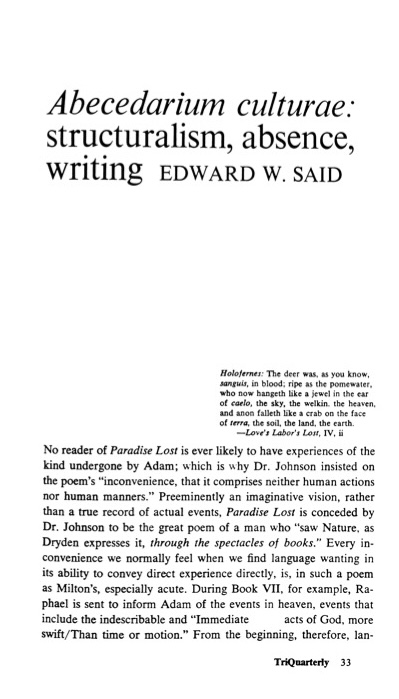
Given all his other achievements, Edward Said’s role in bringing Foucault’s work to an anglophone audience is perhaps understated today. His 1971 essay “Abecedarium culturae”, in Northwestern’s literary journal TriQuarterly was a significant piece on so-called “structuralism”, and the following year’s “Michel Foucault as an Intellectual Imagination” was one of the first articles devoted to Foucault in the United States. It was possibly the first, apart from reviews. “Michel Foucault as an Intellectual Imagination” appeared as the first article in the launch issue of boundary 2, invited by William Spanos. “Abecedarium culturae” was reprinted in Modern French Criticism: From Proust and Valery to Structuralism, a collection edited by Foucault’s host for his visits to Buffalo, John K. Simon. Said’s 1975 book Beginnings has a chapter entitled “Abecedarium culturae” which takes material from both the earlier essays.
Foucault was an important inspiration for Said’s other work, most notably Orientalism, though from the late 1970s Said began to take a distance from Foucault (though he did attend his late 1980 seminar at New York University). Even by the time of “An Ethics of Language” in 1974, Said’s review essay on The Archaeology of Knowledge, there are some criticisms beginning to appear. Timothy Brennan in Places of Mind: A Life of Edward Said provides some discussion of Said’s changing relation to Foucault, which was partly for intellectual reasons and partly motivated by politics (pp. 174-77). Karlis Racevskis has written a good survey of the connections and criticisms. In a piece about “My Encounter with Sartre”, which took place in Foucault’s apartment, Said says something of his disillusionment with French intellectuals.
As I’ve been going to Columbia University archives for various things connected to my Indo-European project, especially concerning Roman Jakobson, I also requested the Said boxes containing his work on Foucault. One of the archivists told me that the Said papers were the most consulted of their collections. There are boxes with the manuscripts, typescripts and correspondence relating to both the early pieces on Foucault and the later tributes – Foucault’s obituary and “Foucault and the Imagination of Power”. Both those later essays are reprinted in Reflections on Exile. In the correspondence files there is also a November 1972 letter from Foucault to Said, most of which is translated by Brennan in Places of Mind (p. 176):
Upon my return from America, I found the article that you were willing to write about my work. I do not need to tell you how grateful I am for the effort you have made reading, understanding, and analyzing the stutterings I have managed to get out… I infinitely admire your intelligence, your mastery, and the rigor of your analyses to the point that on many points you have helped me clarify the nature of my own future work.
I very much hope that we will have the chance to meet one day, and to have the chance to discuss the theories which concern us both. I would like to find out about where your work is heading.
Foucault to Said, 5 November 1972, Edward Said Papers, box 5a, folder 3. (The ellipses are Foucault’s.)
Foucault’s trip to America was to teach at Cornell; at the time Said was on sabbatical in Beirut. Said proposed a meeting in Paris in spring 1973. However, it was a small detail in the archives which led me down an interesting detour. In 1972 boundary 2 asked Said to give them a brief biographical note to go with his essay. He wrote back to give them this draft:
Was born in Jerusalem, Palestine, and received secondary education there, and in Egypt. BA from Princeton, and PhD from Harvard. Since 1963 I have been at Columbia, and since 1970 I have been Professor of English and Comparative Literature. Guggenheim Fellow, 1972-3; Fellow-Elect, Center for Advanced Study in the Behavioral Sciences, Palo Alto. Author of numerous articles published in English, French and Arabic. Books are Joseph Conrad and the Fiction of Autobiography (Harvard, 1966); Beginnings: Intention and Method (Basic, 1973); Swift’s Tory Anarchy (Harvard, forthcoming).
Said to Ms. [Ann] Yeoman, 21 April 1972, Edward Said Papers, box 168b, folder 29
Said tells the journal to edit this text as they see fit, and the briefer note they published reads:
EDWARD W. SAID, Professor of English and Comparative Literature at Columbia, is the author of numerous articles published in English, French and Arabic. His books are Joseph Conrad and the Fiction of Autobiography, Beginnings: Intention and Method, and the forthcoming Swift’s Tory Anarchy.
boundary 2 1, 246
The forthcoming book on Jonathan Swift was a surprise. I knew there was an essay of this title, but not a book.
The essay on Swift was published in Eighteenth-Century Studies in 1969, and it was reprinted as Chapter 2 in The World, the Text, and the Critic, along with another essay, “Swift as Intellectual”, as Chapter 3. That collection was with Harvard University Press, published in 1983. (Its working title was Criticism between Culture and System.) Said never completed his book on Swift. The indication in his own version of the note that it was to be published with Harvard University Press suggests it was more than just an idea for a future project. The project is discussed in Brennan’s biography (pp. 113-21), where he indicates that it was commissioned by Harvard, and that for a while Said worked on it in parallel to Beginnings.
Said’s archive has some materials relating to the Swift book project. As well as a typescript of the “Swift’s Tory Anarchy” article (box 110c), these boxes include various reading notes (boxes 110b and c). One folder has the text of the “Swift as Intellectual” essay (box 76a, with a draft in 110b). It was delivered as a lecture with the title “Swift as Intellectual: Language and Political Action”, at UCLA on 18 January 1980. There it was part of a series with the title “Augustan Myths and Modern Readers”, organised by Alan H. Roper in the 1979-80 academic year at the William Andrews Clark Memorial Library (the rare books and manuscript library). Other speakers included Murray Krieger, Geoffrey Hartman, Eugenio Donato, Margaret Doody, Stanley Fish. Much more interesting for this story is that the archive also includes a three-page proposal for a project with the title “Swift in History” (there are copies in both box 76a and 110b).
Said describes this project as “a study of Swift’s life and work as seen interacting with the history of which they are vital parts” (proposal, p. 1). He argues that in the period Swift is working, there is a “remarkable congruence during the age between literature and politics” (p. 1). His references to Swift’s work are wide-ranging, and he gives lots of historical examples of events and figures. “I read Swift’s work then as a totality, albeit made up of diverse parts, yet very much a unity” (p. 3). As the biographical note indicates, Said’s first book, based on his doctoral thesis, was on Joseph Conrad. In this proposal, he indicates that his “Swift in History” project will work in a related way. He describes the earlier book as “a portrait of Conrad’s mind viewed in his life and work as a structured universe with patterned characteristics” (p. 3). He concludes by saying that he had been teaching on Swift at Columbia for the past two years, and much of the work had therefore already been undertaken (p. 3). Teaching materials in box 110b indicate this means the proposal dates from the late 1960s – one course is from 1965-66 (English C3037x). Said also taught a course on “Jonathan Swift and the Early Eighteenth Century” at a Harvard Summer School in 1968 (English S-247).
Beyond what is said by Brennan, I know of two main pieces exploring Said’s engagement with Swift. One, by Clive Probyn, written before Said’s archives became available, is based on the two essays included in The World, the Text, and the Critic. The other, which makes use of materials in the archive, is by Helen Deutsch, who has written a very interesting piece on Said’s career-long engagement with Swift for boundary 2. Both Deutsch and Brennan call the unfinished book Swift in History, after the proposal, rather than the title given in the author note for boundary 2. Deutsch is working on a book on the Said-Swift relation, under the working title of The Last Amateur, due to be published by University of Chicago Press in 2026. As Deutsch said a few years ago of this intriguing project:
My book argues that Swift was an important and enduring influence on Said, whose abandoned book would have been titled Swift in History, and would have followed his first book, Joseph Conrad and the Fiction of Autobiography (1966). I have spent some of the most thrilling hours of my scholarly life with Said’s papers at Columbia University, documenting his research and teaching on Swift, a truly absorbing and moving experience. But my experience in Said’s archive confirmed my sense that I was not writing a traditional monograph; instead, it started my search for a form that stays true to the notes, the fragments, the urgently underlined jottings that kept Said’s thought alive and unfinished. Swift was a model for Said of how to be a public intellectual: how to speak, from a position of exile, for a human collective that might never exist. In the Drapier’s Letters (1724), Swift called “the whole people of Ireland” into imaginary being a century before an Irish nation was a reality. Author of monumental field-defining monographs though he was, Said was also, as he described Swift, “an occasional writer, an essayist, a pamphleteer.” Accordingly, I read Said in a minor key, building to my final claim that Said’s early unfinished book on Swift inspired his last unfinished book on late style.
It would have been nice if I could have closed the triangle, after talking of Said on Foucault, and Said on Swift, but I can only think of a very few references to Swift by Foucault. One comes in the radio lecture “Le corps utopique” in 1966, recently included in Entretiens radiophoniques. Foucault mentioned Gulliver’s Travels and René Farabet read a passage from the second part, “A Voyage to Brobdingnag”.(The passage is not included in the earlier publication of Foucault’s text, nor its English translation.) There are also brief mentions of Swift in the History of Madness in relation to melancholy, and in Foucault’s 1969 course on sexuality at Vincennes in relation to utopias. In these passing mentions there is little which Said could have directly used to inform his own study. But Said’s engagement with Foucault was very much in the sense of appropriating ideas and tools from his work – notably around discourse and Foucault’s archaeological writings. He didn’t need Foucault to have written about Swift to use Foucault to read Swift.
But how Foucauldian might Said’s study of Swift have been? In The World, the Text and the Critic, the first of the Swift texts is from 1969, before Foucault was a major focus for Said; the second is from 1980, by which time Said was taking his distance from Foucault. Indeed, the only reference to Foucault in either of the two Swift essays comes in “Swift as Intellectual” in 1980:
In general, contemporary criticism has been concerned with authors and texts whose formal characteristics exist in some disjunctive relationship with their ideological or thematic surface: thus the critic’s job is to illuminate the disjunction by exposing, or deconstructing, the contradictions woven into the text’s formal being. Moreover, the critic’s position about the texts he analyzes is a marginal one; that is, the text is important whereas the critic’s role is a secondary one, limited to revealing the text’s conditions of being. This procedure is true, I think, of the Derridean school, the school of Marxist readers, of Foucault’s disciples, the semioticians, of the so-called Yale school.
Swift resists this approach and, as I said earlier, it is his resistance that makes him so interesting and challenging a figure. My argument is that the main avenue to understanding Swift is that we take seriously the way in which he resists any kind of critical approach that does not make his existence, his functioning, and above all his self-consciousness as an intellectual—albeit an intellectual in the special historical circumstances of his cultural moment—the main avenue to approaching him (p. 87).
The “Swift in History” book proposal seems to date between these two essays. It is a development of the “Swift’s Tory Anarchy” essay, but the project is seemingly abandoned by the time of “Swift as Intellectual”. But from the brief proposal it does not seem Foucault was intended to be a major focus. Said mentions four Francophone theorists – Lucien Goldmann (Romanian-born, though lived and worked in France), Jean Starobinski (who was Swiss), Georges Poulet (Belgian) and Roland Barthes, the only one of the four who was, like Foucault, French. It will be interesting to read Helen Deutsch’s book on Said on Swift.
References
Timothy Brennan, Places of Mind: A Life of Edward Said, New York: Farrar, Strauss & Giroux, 2021.
Helen Deutsch, “Living at this Hour: Jonathan Swift, Edward Said, and the Profession of Literature”, boundary 2 46 (4), 2019, 31–62.
Michel Foucault, Sexuality: The 1964 Clermont-Ferrand and 1969 Vincennes Lectures, ed. Claude-Olivier Doron, trans. Graham Burchell, Columbia: Columbia University Press, 2021.
Michel Foucault, “Le corps utopique”, in Entretiens radiophoniques: 1961-1983, ed. Henri-Paul Fruchaud, Paris: Flammarion/Vrin/INA, 2024, 413-22.
Clive Probyn, “Blindness and Insight: The World, the Text (of Jonathan Swift), and the Criticism of Edward Said”, Eighteenth-Century Life 32 (2), 2008, 68-80.
Karlis Racevskis, “Edward Said and Michel Foucault: Affinities and Dissonances”, Research in African Literatures 36 (3), 2005, 83-97.
Edward W. Said, Conrad and the Fiction of Autobiography, New York: Columbia University Press, 2008 [1966].
Edward W. Said, “Swift’s Tory Anarchy”, Eighteenth-Century Studies 3 (1), 1969, 48-66, reprinted in The World, the Text, and the Critic, Cambridge, MA: Harvard University Press, 1983, 54-71.
Edward W. Said, “Abecedarium Culturae: Structuralism, Absence, Writing”, c, 1971, 33-71;reprinted in John K. Simon (ed.), Modern French Criticism: From Proust and Valéry to Structuralism, Chicago: The University of Chicago Press, 1972, 341-92.
Edward W. Said, “Michel Foucault as an Intellectual Imagination”, boundary 2 1 (1), 1972, 1-36.
Edward W. Said, “An Ethics of Language”, Diacritics 4 (2), 1974, 28-37.
Edward W. Said, Beginnings: Intention and Method, New York: Basic Books, 1975.
Edward W. Said, The World, the Text, and the Critic, Cambridge, MA: Harvard University Press, 1983.
Edward W. Said, “Foucault and the Imagination of Power”, in David Couzens Hoy ed., Foucault: A Critical Reader, Oxford: Blackwell, 1986, 149-55.
Edward W. Said, Reflections on Exile and Other Literary and Cultural Essays, London: Granta, 2000.
Edward W. Said, “My Encounter with Sartre”, London Review of Books, 1 June 2000.
This is the twenty-first post of a weekly series, where I post short essays with some indications of further reading and sources, but which are not as formal as something I’d try to publish more conventionally. They are usually tangential to my main writing focus, a home for spare ideas, asides, dead-ends and possible futures. I hope there is some interest in them. They are provisional and suggestions are welcome.
À l’automne 1965, Michel Foucault est invité à l’université de São Paulo. Il s’agit de son premier séjour au Brésil. Il vient de remettre à son éditeur le manuscrit de son maître-livre – Les Mots et les Choses. Six mois avant sa parution, il choisit d’en faire la matière d’un cours qu’il intitule : « Archéologie des sciences humaines ». Cette série de huit leçons permet à Michel Foucault de présenter à un public non préparé la trame historique et philosophique des Mots et les Choses. L’« Archéologie des sciences humaines » constitue ainsi à sa manière une introduction originale à l’ouvrage de 1966. Mais ces leçons proposent également une mise en perspective nouvelle des thèmes et des enjeux qui conduiront Foucault, au cours des années suivantes, à modifier en profondeur les coordonnées conceptuelles, philosophiques et épistémologiques de son « archéologie ».