
Forthcoming from Verso in April:

In Molecular Red, McKenzie Wark creates philosophical tools for the Anthropocene, our new planetary epoch, in which human and natural forces are so entwined that the future of one determines that of the other.
Wark explores the implications of Anthropocene through the story of two empires, the Soviet and then the American. The fall of the former prefigures that of the latter. From the ruins of these mighty histories, Wark salvages ideas to help us picture what kind of worlds collective labor might yet build. From the Russian revolution, Wark unearths the work of Alexander Bogdanov—Lenin’s rival—as well as the great Proletkult writer and engineer Andrey Platonov.
The Soviet experiment emerges from the past as an allegory for the new organizational challenges of our time. From deep within the Californian military-entertainment complex, Wark retrieves Donna Haraway’s cyborg critique and science fiction writer Kim Stanley Robinson’s Martian utopia as powerful resources for rethinking and remaking the world that climate change has wrought. Molecular Red proposes an alternative realism, where hope is found in what remains and endures.
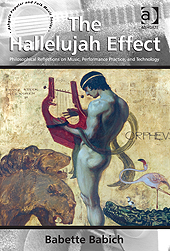 This book studies the working efficacy of Leonard Cohen’s song Hallelujah in the context of today’s network culture. Especially as recorded on YouTube, k.d. lang’s interpretation(s) of Cohen’s Hallelujah, embody acoustically and visually/viscerally, what Nietzsche named the ‘spirit of music’. Today, the working of music is magnified and transformed by recording dynamics and mediated via Facebook exchanges, blog postings and video sites. Given the sexual/religious core of Cohen’s Hallelujah, this study poses a phenomenological reading of the objectification of both men and women, raising the question of desire, including gender issues and both homosexual and heterosexual desire.

 When, in 2013, the Daily Mail labeled Ralph Miliband “The Man Who Hated Britain,” a diverse host rallied to his defense. Those who had worked with him – from both left and right – praised his work and character. He was lauded as “one of the best-known academic Marxists of his generation” and a leading figure of the New Left.


