Update on University of Surrey’s Politics department under threat

sspUniversity of Surrey’s Politics department update: There is a story in Times Higher Education but also some reports that the University is reconsidering.

Posted in Politics, Universities | 1 Comment

University of Surrey’s Politics department under threat

sspUniversity of Surrey’s Politics department is under serious threat. Apparently “the current staff of 14 lecturers/professors will be reduced to 5. The current staff have received their redundancy notices and will have to re-apply to one of the 5 positions. There is no guarantee that the 5 positions under this newly structured department will go to any of the current staff members”. The University plan is that teaching the current curriculum will be continued, but obvious concerns are being raised about the delivery to students, and of course for the staff concerned.

As Ben Rosamond puts it, despite the successes of this department:

And then, on Thursday morning, the members of staff were gathered together by university senior management and told that their department was to be dismembered. I gather ‘restructured’ was the preferred euphemism chosen by the suits, but dismemberment and probable abolition is what actually seems to be on the table. So let’s call it that. As I understand it, two thirds of the faculty will lose their jobs from the end of the summer. Some colleagues may be forced to accept demotion to stay. The sole rationale of retaining teaching staff seems to be to maintain a skeletal undergraduate programme. Masters and PhD provision are set to go. It is hard to see how any research culture could be sustained in such an environment.

Students are mobilising to resist this – there is a Facebook page ‘Save Surrey’s Politics Department‘; and a Twitter hashtag #savesurreypolitics to keep up-to-date.

There is also a petition to sign – but also to share:

We are graduates, current students and friends of the Politics Department at the University of Surrey and we are greatly distressed by the current news on the University administration’s proposed plans for the department. This petition is a way to gather signatures to express concern at the effective closure of the Surrey Politics Department which has been widely reported on twitter. This will be presented to University management next week. We invite you all to add your name to our petition. Thank you for your support.

Posted in Politics, Universities | 1 Comment

“University Freiburg: Husserl and Heidegger Remain in Freiburg” – clarification

The University of Freiburg has issued a clarification: “University Freiburg: Husserl and Heidegger Remain in Freiburg” (via Enowning).

Posted in Uncategorized | Leave a comment

Top posts on Progressive Geographies this week

I was away for much of the week, so not that many new posts.

Posted in Uncategorized | Leave a comment

What We Talked About At ISA: Weaponising Geography and the Global Striations of Military Targeting

Antoine Bousquet on geography, weapons and global calculation.

Antoine Bousquet's avatarThe Disorder Of Things

In the context of a panel I put together on “Turning Ploughshares into Swords: Weapons and Weaponizations”, the ISA’s annual conference was the occasion for me to present some of the research I have undertaken as part of my long term project into the logistics of military perception. The central aim of that project is to uncover the genealogy and operation of the functional constituents of contemporary targeting practices as they increasingly span the globe. I submit that we can outline three distinct, if profoundly intertwined, functions of sensing, imaging and mapping that respectively gather sensorial information, visually represent and disseminate it, and relate it to geospatial frameworks. It is the last of these operations that was the focus of my paper, with particular attention paid to the way in which the planet has increasingly been enframed within systems of geographic coordinates permitting the geolocation and thereby targeting of any…

View original post 2,204 more words

Posted in Uncategorized | Leave a comment

Foucault and Neoliberalism Today (2015)

Mark Kelly on the Foucault and Neoliberalism debate…

Clare O'Farrell's avatarFoucault News

Mark G. E. Kelly, Foucault and Neoliberalism Today, Contriver’s Review, March 2015

Late last year, a PhD student in Belgium, Daniel Zamora, published a smallish edited collection of essays in French called “Criticising Foucault” (Critiquer Foucault). An interview he gave in relation to the book was translated into English for the Leftist journal Jacobin and then widely shared on social media. This interview contains some interesting and worthwhile discussion, but the strapline of the English translation (absent in the French original) focuses on an allegation that Michel Foucault had an “affinity” for neoliberalism, and indeed it is this claim of Zamora’s that leads the subsequent interview. The interviewer sets up the claim that Foucault was a neoliberal as something new and shocking, but it has been aired in Foucault scholarship for a decade at least (not least in articles now reprinted in Zamora’s collection). Despite…

View original post 179 more words

Posted in Uncategorized | Leave a comment

Workshop at UNSW on The Birth of Territory and ‘Geopolitics, Geopower, Geometrics’


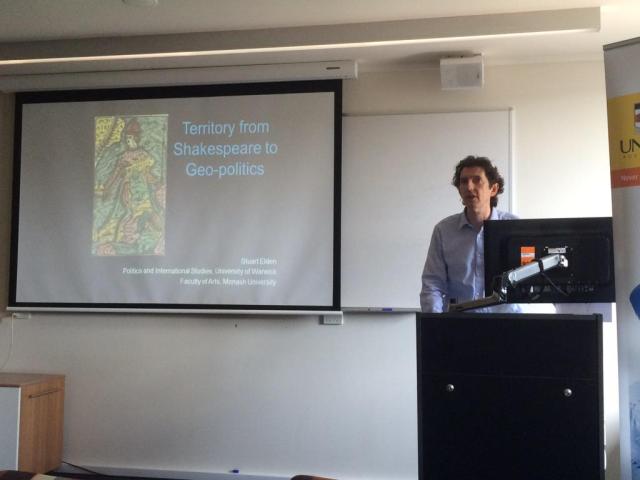
image003My public lecture “Territory from Shakespeare to Geo-politics” at University of New South Wales earlier this week was recorded by ABC Radio ‘Big Ideas‘, and I’ll hopefully be able to post the link soon. Paul Patton gave a very generous introduction and there was a good wide-ranging discussion afterwards.

Today I’m back at UNSW for a workshop looking at The Birth of Territory in the morning and an unpublished paper entitled ‘ Geopolitics, Geopower, Geometrics’ in the afternoon.

Given the discussion-based approach, this won’t be recorded, but my opening presentation on the book will be very similar to an earlier talk, available here (and for all the recordings of talks on this project see here).

Photo by Adam David Morton

Photo by Adam David Morton

Posted in Books, Conferences, Foucault's Last Decade, Politics, Shakespearean Territories, Territory, The Birth of Territory | Leave a comment

Contesting the Arctic now published

Phil Steinberg with news of his new co-authored book Contesting the Arctic.

philsteinberg's avatar

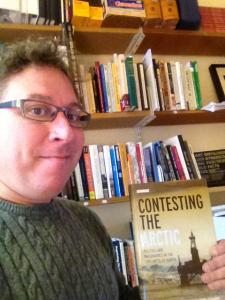
photoI’m delighted to announce that Contesting the Arctic: Politics and Imaginaries in the Circumpolar North is now published.

The book was something of a writing experiment for myself and co-authors. Contesting the Arctic not only seeks to understand the Arctic region; it also seeks to bridge the divide between academic and journalistic writing. Relying extensively on quotations from over 150 interviews, the book eschews the usual formal bibliographic references and footnotes, opting instead for a handful of explanatory endnotes and a concluding bibliographic essay. The result (we hope) is an engaging and accessible book that narrates the various ways in which Arctic residents and outsiders are imagining — and producing futures for — the region.

View original post 209 more words

Posted in Uncategorized | Leave a comment

Re-engaging Elaine Scarry’s The Body in Pain A Thirtieth Anniversary Retrospective, 10th-11th Dec 2015, University of Brighton

9352807Re-engaging Elaine Scarry’s The Body in Pain A Thirtieth Anniversary Retrospective 10th-11th December 2015 Grand Parade University of Brighton, UK

Understanding Conflict Research Cluster Critical Studies Research Group

Keynotes: Prof Elaine Scarry and Prof Joanna Bourke

The year 2015 marks the thirtieth anniversary of Elaine Scarry’s The Body in Pain. In this seminal text, Scarry offers a radical and original thesis on the relationship between embodiment, pain, wounding and imagining, arguing that pain is central to “the making and unmaking of the world”. Widely regarded as a classic, the text has influenced work on notions of the body, war, torture and pain in a variety of academic disciplines – from philosophy, to anthropology, to cultural geography, to political theory, to many others – as well as informing debates and discussions in medical science, NGOs, charities and other parts of society. In the years since its publication the text has only become more relevant as a growing number of scholars have taken account of various violences, at both the local and the global level, through an understanding of embodiment. Phenomena such as suicide bombing, ‘shock and awe’ tactics, neo-colonial occupation, the financialisation of abjection, anti-austerity occupation, the figure of the wounded veteran, memorialisation, and many others, have all been read through an understanding of the body and its relationship to power, violence and subjectivity. In this two-day conference we will engage Scarry’s text with recent theoretical accounts of the body, pain, violence and subjectivity, as well as with forms of violence that have emerged in the light of new modes of war-waging and resistance. In this way we hope to reinvigorate some of The Body in Pain’s most well known arguments while bringing parts of the text that have received comparatively less attention to the fore.

Call for papers and further details here.

Posted in Conferences | 2 Comments

Lisa Smirl – Spaces of Aid: How Cars, Compounds and Hotels Shape Humanitarianism

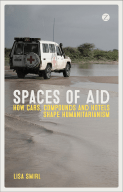
Lisa Smirl – Spaces of Aid: How Cars, Compounds and Hotels Shape Humanitarianism.

9781783603497Aid workers commonly bemoan that the spaces and experiences of working in ‘the field’ often sit uneasily with the goals they’ve signed up to: from visiting project sites in air-conditioned Land Cruisers while the intended beneficiaries walk barefoot through the heat, to checking emails from within gated compounds while surrounding communities have no running water.

While such observations might seem intuitive, to date no concerted academic or policy study has dealt with the impact of these factors on theory or policy. Spaces of Aid provides the first book-length analysis of what has colloquially been referred to as Aid Land, exploring in depth two high-profile case studies – the Aceh tsunami and Hurricane Katrina – in order to uncover a fascinating history of the material objects that have become an endemic, expected, yet unexamined part of the aid landscape.

I didn’t know Lisa well – we first met at a Durham conference organised by the International Boundaries Research Unit – but she was doing remarkable work. Since she very sadly died in 2013, I didn’t think we’d see her work get the audience it deserved. But colleagues and Zed Books have collaborated to produce this book – will look forward to seeing it. More details about the book and Lisa’s work are available here.

Posted in Books, Publishing | 1 Comment