Latour on “Digital Methods”

Latour and Venturini discuss digital methods in the social sciences.

Nicholas's avatarInstalling (Social) Order

Capture

In a fascinating, apparently not-peer-reviewed non-article available free online here, Tommaso Venturini and Bruno Latour discuss the potential of “digital methods” for the contemporary social sciences.

The paper summarizes, and quite nicely, the split of sociological methods to the statistical aggregate using quantitative methods (capturing supposedly macro-phenomenon) and irreducibly basic interactions using qualitative methods (capturing supposedly micro-phenomenon). The problem is that neither of which aided the sociologist in capture emergent phenomenon, that is, capturing controversies and events as they happen rather than estimate them after they have emerged (quantitative macro structures) or capture them divorced from non-local influences (qualitative micro phenomenon).

The solution, they claim, is to adopt digital methods in the social sciences. The paper is not exactly a methodological outline of how to accomplish these methods, but there is something of a justification available for it, and it sounds something like this:

Thanks to digital traceability, researchers no…

View original post 98 more words

Posted in Uncategorized | 1 Comment

Stuart Elden: Two Foucault reviews – Berfrois

Jeremy Crampton links to my Berfrois review of recent Foucault lecture courses, and picks a few quotations.

Jeremy's avatarOpen Geography

Lengthy review essay by Stuart Elden of two recent Foucault publications On the government of the living, and Wrong-doing, truth-telling: the function of avowal in justice, in Berfrois.

Some quotes:

It is perhaps too little noted that what we have in these and other publications, expertly edited and translated though they are, are transcribed lecture courses, supplemented by material from manuscripts. The references are, for the most part, the work of the editors, rather than Foucault’s own, and they bear many marks of their verbal delivery.

…

As he [Foucault] notes: “what I would like to do and know that I will not be able to do is write a history of the force of truth, a history of the power of truth, a history, therefore, to take the same idea from a different angle, of the will to know.”

…

But it is in confession that perhaps…

View original post 47 more words

Posted in Uncategorized | Leave a comment

With Derrida in Oxford

A nice piece by Lesley Chamberlain about Derrida, Oxford and The Post Card. Thanks to Dirk Felleman for the link.

lesleychamberlain's avatarLesley Chamberlain

the postcard from Derrida

More than thirty years ago the artist-philosopher Jacques Derrida was working in the Old Bodleian Library in Oxford when he strayed into the shop. On offer were postcards  richly and decoratively redolent of the Western heritage. The shop has since moved to an enlarged space on the far side of the Schools quad and won a prize for its innovative approach to museum marketing. But we didn’t care about commercial opportunities in our universities then. When Derrida visited, in 1977 and 1979, the postcard stand was just a draughty space, clustered at one end of the seventeenth-century Proscholium.

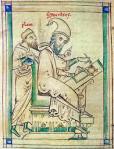
Derrida chose a reproduction of a medieval illustration showing Plato standing behind Socrates. It showed Plato looking over Socrates’s shoulder as if he, Plato, were the teacher and Socrates the scribe. Seeing these two philosophers pictured in the wrong chronological order, Derrida instantly got an idea. What did it mean if the…

View original post 2,149 more words

Posted in Uncategorized | Leave a comment

Warburg Institute high court ruling – good news!

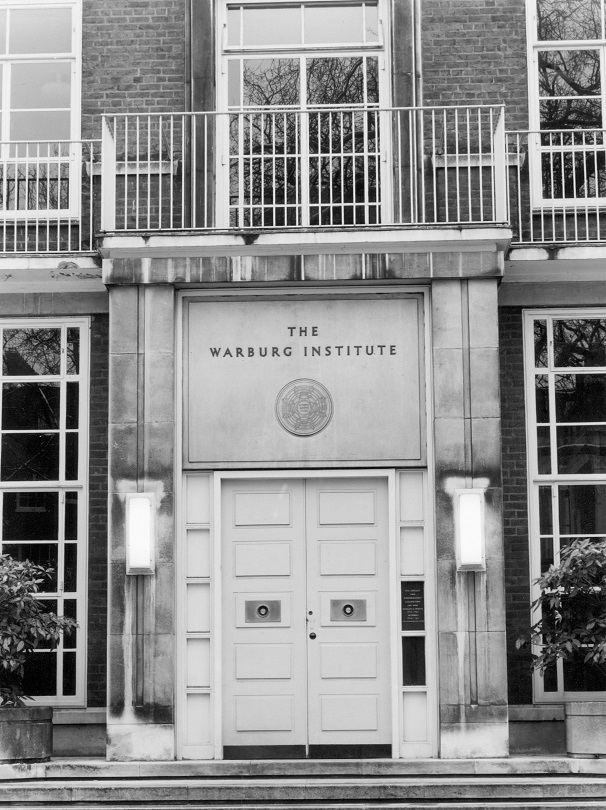
FrontdoorWoburnSquareGood news earlier this week about the future of the Warburg Institute library. I’ve said before how important this library was to my work on The Birth of Territory, and linked to a few earlier stages of this story. Here are the opening two paragraphs of the report on the High Court ruling:

To the benefit and relief of scholars worldwide, the High Court has rejected the University of London’s claims that all additions to the Warburg Institute since 1944 belong to the University, and instead agreed that they form part of the Institute. Furthermore, the judge, Mrs Justice Proudman, held that the University is obliged to provide funding for the activities of the Warburg Institute.

Leticia Jennings of Bates Wells Braithwaite, who advised the Advisory Council of the Warburg Institute, commented: “This decision ensures that the wealth of important material housed within the Institute will remain available, as before, in its entirety, and that the University will not be free to in any way restrict the access of the many scholars who use and rely on the Institute’s outstanding resources.” (more here)

Posted in The Birth of Territory, Universities | Leave a comment

Politics Reconsidered – posts from Warwick this week

Dee Dutta and Trevor McCrisken on the implications of the US mid-terms for Obama and foreign affairs

Michael Saward on ‘Political Courage‘

and the previously linked post by me and Adam David Morton, ‘Why read a long dead French Marxist to think about land struggles today?‘

Posted in Uncategorized | Leave a comment

Reminder: Submission Deadline Approaching for “Inhabiting Containment” 2015

Deadline for submissions for this conference approaching next week.

Society for Radical Geography, Spatial Theory, and Everyday Life's avatarSociety for Radical Geography, Spatial Theory, and Everyday Life

Just a reminder that the November 15 submission deadline for our 2015 symposium, “Inhabiting Containment,” is rapidly approaching. See below for CFP and symposium details:

Inhabiting Containment

Seeking to address the ongoing state violence against bodies of color in Gaza and Ferguson, MO, the Society for Radical Geography, Spatial Theory, and Everyday Life solicits abstracts for our 2015 symposium “Inhabiting Containment.” This symposium seeks work that addresses the spatiality of phenomena such as containment, racialization, and racialized-sexualized state aggression. The imprisonment and January release of CeCe McDonald, indigenous actions protesting the TransCanada Pipeline, the Israeli massacre of Gazans, the operationalization of racist policies to contain Ebola in West Africa, and the murders of black bodies in the U.S., such as Eric Garner, Renisha McBride, and Michael Brown, all demonstrate the ways that race, gender, sexuality, and ethnicity are often experienced as forms of embodied violence in the everyday. With that in…

View original post 279 more words

Posted in Uncategorized | Leave a comment

Two sessions on ‘Terrain’ at the Chicago AAG – organised by Stuart Elden and Gastón Gordillo

Despite the AAG website meltdown, Gastón Gordillo and I have organised two sessions on Terrain for the Chicago Association of American Geographers meeting in April 2015.

These sessions seeks to think critically, theoretically, and politically about the question of terrain. This concept is often thought to be the preserve of physical and military geographers, who usually write about terrain in a straightforward and unproblematic way to describe the forms and textures that define particular spaces. Precisely because the three-dimensional materiality of terrain profoundly affects and constrains mobility, visibility, and action, we think that this concept demands more careful consideration. The contributions in this panel will address several linked questions: How does the materiality of terrain have implications for how we think geographically and politically, and indeed geo-politically? How does terrain help us to conceptualise space as the medium of politics and violence, rather than simply its container? How does thinking terrain as a three-dimensional volume challenge conventional ways of thinking about space? Can we think about terrain as a means of access to wider political-strategic concerns? How should we think about terrain in relation to liquid spaces such as rivers and the ocean or the shifting weather patterns of the atmosphere?

The first session has papers from me, Nisha Shah, Teo Ballvé and Jia Jun Lee, with Derek Gregory as discussant and Deborah Cowen as chair. The second session has Gastón, Pip Thornton, Clayton Whitt and Rachael Squire, with Setha Low as discussant. This is a good mix of topics, types of terrain, and geographical sites. We’re looking forward to the sessions.


Posted in Conferences, Derek Gregory, Gaston Gordillo, Politics, Territory | 5 Comments

A table showing who is part of the new materialism, and an argument as to why it is not a “turn”

Christopher Watkin on New Materialism – discussion and a table of references.

Christopher Watkin's avatarChristopher Watkin

I’m currently writing the introduction to The Human Remains, discussing the figure of the human in the new materialism. I thought I would share the table I drew up of all the thinkers identified as part of the new materialism in different monographs and collected volumes. I have excluded individual journal articles from the list below in order to keep it under a page, and the table also excludes occasional references to the term “new materialism” by writers in the list (Catherine Malabou, for example, uses the term on a number of occasions).

Some of these texts employ the “new materialism” tag explicitly, while others have been included because the themes they identify in contemporary thought overlap substantially with at least some of the main concerns of NM. I was inspired by the table drawn up by Joe Hughes in his review of Ian James’s The New French Philosophy

View original post 1,292 more words

Posted in Uncategorized | 1 Comment

Power and Space in the City – a series of conversations at UCL

Power and Space in the City – a series of conversations at UCL. I’ll be part of the first conversation on Powerful Urban Territories on November 18th 2014, along with Wendy Pullan, Allan Cochrane and Janet Newman. Here’s the description for the whole series:

Conversations on Power and Space in the City is a series of workshops designed to challenge current academic debates and influence thinking and policy on cities in this period of rapid urban change and unrest. The series of five workshops runs from November 2014 to May 2015 bringing together internationally renowned researchers, architects and activists working on and in urban space. Our aim is to foster interdisciplinary conversations on how city spaces – imaginary, relational, material – not only influence the ways in which power is exercised, but also how power is fundamental to the production of cities. The question driving this workshop series asks how can we best understand and articulate the power relations producing cities today and what forms of urban politics are most likely to lead to progressive or transformative change?

There is a growing realisation that cities are not simply a backdrop for politics: hegemonic actors can, for example, determine future urban visions, inhibiting alternatives, or they might redefine territories by redrawing borders or altering the aesthetic character of a place. Urban publics may, in turn, resist such power by assembling in the city square to demand a greater say. Despite the diversity of such practices, relationships between space and power are most frequently understood as ‘Euclidean’ where cities are perceived as power containers or the surfaces upon which it acts.

Today, new vocabularies from diverse fields are being crafted to try to undo these simplistic imaginaries, citing ‘power geometries’, ‘topologies’ or ‘mediated associations’ as superior idioms to conceive the urban power-space nexus. These vocabularies have taken us far, but our central premise is that it’s only when exploring power-space in situ, in cities, through interdisciplinary perspectives, that we can fully appreciate the reach and impact of urban spatial politics.

Posted in Conferences, Politics, Territory, urban/urbanisation | 2 Comments

A new project on Lefebvre’s rural writings with Adam David Morton

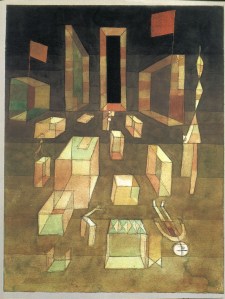
paul-klee (1)At the Warwick Politics and International Studies blog, Politics Reconsidered, Adam David Morton and I have a short post introducing a new research project. Entitled ‘Why read a long dead French Marxist to think about land struggles today?‘ the post discusses Lefebvre’s work on rural issues, which preceded his better known work on urban questions, and says a little about how his work might be relevant today. The first output from this project will be a new translation with an introduction and notes in Antipode, hopefully to be published in 2015. We are planning on a larger project to follow.

Posted in Adam David Morton, Henri Lefebvre, Politics, Publishing, Territory | 2 Comments