
Wired has some striking images of the world’s most volatile borders. Thanks to David Campbell for the link.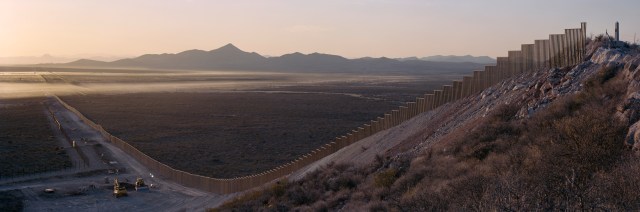
Wired has some striking images of the world’s most volatile borders. Thanks to David Campbell for the link.
Some interesting reflections on what makes a good humanities book…
And the next instalment of this detailed reading of the course…
Lecture of twenty-fourth January, 1973
As my notes and comments on this expanded beyond the length of what I posted for previous lectures, I posting on this lecture in two parts.
Foucault sets up this lecture in such as way as to emphasise the political context of debates around criminality. Though some of this can be found in his book of 1975 Discipline and Punish, much of it is more taken up in the lectures of 1975 to 1976, Society Must be Defended, and the lectures of 1976 to 1977, Security, Territory, Population. Here he suggests that look at attitudes to towards criminality and the penal code in the context of the upheavals and debates regarding sovereignty, institutions, and the use of violence to change or preserve these things, which make up the French Revolution.
In the debates of 1791, Maximilien Robespierre opposed the idea that the…
View original post 639 more words
Stockerblog continues the reading of Foucault’s latest lecture course…
Lecture of seventeenth January 1973
Foucault starts this lecture by reference to a speech delivered in the constituent assembly in October 1789, which defended the legal practices of the Old Regime (the monarchy before the French Revolution) in new language. This confirms Foucault’s suggestion of a shift from a Medieval understanding in which crime refers to a private injury, and individual pursuit of the guilty party to a modern belief that the criminal is the enemy of the community, and that it is the job of public officials to apprehend and punish criminals from the point of view of the public good. The suggestion is the French Revolution carried on the work of the absolute monarchy in centralising sovereignty as a legal-political concepts and in matters of administrative, including penal, practice. There is a possible connection in Foucault’s analysis here with Alexis de Tocqueville’s famous argument in The Old Regime…
View original post 688 more words
Antipode funding opportunities…
Don’t forget – this year’s round of Antipode Foundation Scholar-Activist Project and International Workshop Awards closes at the end of March.
Grants of up to £10,000 (or its equivalent in another currency) are available to critical geographers collaborating with non-academics and activists or holding events such as conferences, seminar series, summer schools, etc.
Read all about them…
http://antipodefoundation.org/scholar-activist-project-awards/
http://antipodefoundation.org/international-workshop-awards/
…and please share with colleagues and comrades everywhere.
Many thanks,
Andy Kent, Secretary, The Antipode Foundation
Matthew Hannah on Susan Schulten’s Mapping the Nation.
Matt Hannah has reviewed Susan Schulten’s Mapping the Nation: History and Cartography in Nineteenth-Century America (Chicago) on H-Net Reviews.
Susan Schulten’s Mapping the Nation is physically attractive, based on sound scholarly work yet accessibly written, and effectively supplemented by a user-friendly website offering a good selection of high-resolution images of historical maps and charts (www.mappingthenation.com ).The intuitive simplicity of the argument for the current relevance of the topic only reinforces the impression of a well-conceived and timely study. As Schulten, a history professor at the University of Denver, writes on the website, “Today we live in a world that is saturated with maps and graphic knowledge. The maps on this site reveal how this involved a fundamentally new way of thinking.” The “way of thinking” that coalesced as the tradition of thematic mapping has at its core the use of maps not as general representations of a region but…
View original post 38 more words
Derek Gregory with news of a conference entitled ‘Security by remote control’ in Lancaster in May.

My work on drones has been invigorated by reading an outstandingly creative essay by Lucy Suchman on ‘Situational Awareness: deadly bioconvergence at the boundaries of bodies and machines’, forthcoming at the ever-interesting Mediatropes. It’s sparked both an e-mail conversation and an invitation to speak at a symposium on Security by remote control: automation and autonomy in robot weapon systems at Lancaster University, 22-23 May. Here is the call for papers:
Remotely operated and robotic systems are central to contemporary military operations. Robotic weapons can select targets and deliver lethal force with varying degrees of human control, and technologies for fully autonomous weapon systems are currently in development. Alongside military reconnaissance and the prospective configuration of ‘killer- robots,’ drone technologies are being deployed for ostensibly peaceful purposes, most notably surveillance of public space, private property and national borders. More generally, the frame offered by contemporary security discourses has redrawn…
View original post 726 more words
Karen Morin’s piece on prisons in Society and Space – and recently discussed in Slate – now open access.
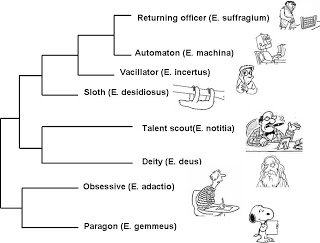 A taxonomy of journal editors – written for science, but enough relevance to social science and the humanities. Thanks to Ben Rosamond for the link.
A post-doctoral research associate post at Durham’s International Boundaries Research Unit.
Durham University seeks to employ a full-time Research Associate to contribute to the work of IBRU, an interdisciplinary consultancy, training, and academic research entity based in Durham University’s Department of Geography. IBRU combines core competencies at the intersection of political geography and comparative and public international law with critical perspectives on borders and bordering. The Research Associate will contribute to ongoing research, conference, and publication projects being undertaken or proposed by IBRU as well as initiating her or his own projects that fall within IBRU’s thematic remit. The Research Associate will contribute to the development and preparation of research grant applications, journal articles and other academic outputs. Additionally, depending on the Research Associate’s skills and experience, the Research Associate may contribute to IBRU’s consultancy and training activities in boundary delimitation, demarcation, and dispute resolution. IBRU is particularly interested in candidates who would complement existing staff interests in maritime regions and other domains that incorporate extraterritorial spaces and activities, as well as in forging links between political geographic and international law perspectives. Interviews will be held in mid-late February, with a start date as soon as possible thereafter. This is a two-year, fixed-term appointment.
Full details here.


