Mark Neocleous, War Power, Police Power

NeocleousMark Neocleous’s book War Power, Police Power is due for publication in February 2014.

From waste to drones and no-fly zones

  • Why is liberalism so obsessed with waste?
  • Is there a drone above you now?
  • Are you living in a no-fly zone?
  • What is the role of masculinity in the ‘war on terror’?
  • And why do so many liberals say they love of peace while finding new ways to justify slaughter in the name of security?

In this, the first book to deal with the concepts of war power and police power together, Mark Neocleous deals with these questions and many more by using critical theory to radically rethink war power.

Neocleous generates a provocative set of claims about state power and capital accumulation, the role of violence in the making of liberal order, the police wars at the heart of this violence, and the ways in which these processes come to be called ‘peace’. And he takes the reader down some unexpected paths: the ‘war on waste’, debates about effeminacy, the proliferation of resilience and trauma-talk, drones as the culmination of colonial bombing campaigns, and no-fly zones as the perfect accompaniment for drones.

The result is a compelling book that articulates a vision of war/police power beyond the military and the police.

Posted in Mark Neocleous | 1 Comment

From Above reviewed in Nature

From Above reviewed in Nature – and good to see the other blurbs on the back cover, including an ex-colleague and my PhD supervisor.

Posted in Uncategorized | Leave a comment

An almost unknown summary of a 1972 lecture by Foucault

On 7th April 1972, Foucault delivered a lecture under the title of “Cérémonie, théâtre et politique au XVIIe siècle”, in Minneapolis. This was published only in a brief English summary, written by Stephen Davidson, in Acta: Proceedings of the fourth annual conference of XVIIth century French Literature, pp. 22-3. I’ve finally managed to get hold of a copy of this. [update 10/10/13 – the summary is available here].

It’s an interesting topic, especially given what we know about Foucault’s lectures at the Collège de France, Théories et institutions pénales, earlier that year. Foucault suggests in the course summary that the course was the second of a three-part analysis, on the inquiry and the formation of the state. The first part was on measure and the Greek city-state (discussed in Lectures on the Will to Know) and the third would be on the examination, “as a form of power-knowledge linked to systems of control, exclusion, and punishment characteristic of industrial societies” (this was to be the focus of La société punitive). The lecture presented here could easily fit into the second of the analyses, and indeed may well be derived in whole or part from Collège de France lectures in 1972. But there are some discrepancies: the Collège de France course supposedly concentrated on the formation of the medieval state, whereas this lecture treats the 17th century, specifically a political ceremony from 1639-40 following the peasant and urban revolutions in Normandy, known as La révolte des Nu-pieds (The revolt of the barefoot).

Foucault presented the analysis in a theatrical form, in five acts. The summary outlines these five stages of the ceremony, but it also provides a fascinating glimpse into what Foucault thought his first few courses at the Collège de France would yield: a plan that is clearly related to what would become Discipline and Punish, but differs in some fundamental aspects. It may well be that the imminent publication of the 1972-73 lectures, La société punitive, will shed substantial light on how and why Foucault came to revise his plans. Here’s the key paragraph:

Before attempting the specific analysis, Mr. Foucault explained that this analysis of the political ceremony in the Seventeenth Century would ultimately become part of a larger study of the ceremonial manifestations of political power from the debates in the Greek and Roman agoras to the ceremonies at the end of the Eighteenth Century. This will be a study of how political power takes on visible or theatrical forms and imprints itself on the imagination or behaviour of a people. It would really be an ethnology of the manifestations of political power, a study of the system of demarcation of power within a society (p. 22).

I’d like to make the whole text of the summary available here, since it is hard to get hold of, and should be of more general interest. But I’d like to at least try to ask the author of the summary if that is okay. This may be a fool’s errand given 41 years have elapsed, but if anyone has contact details for Stephen Davidson, who in 1972 was at the University of Minnesota, I’d be grateful.

Posted in Michel Foucault | 5 Comments

The Daily Habits of Highly Productive Philosophers: Nietzsche, Marx & Kant

At Open Culture – drawing together descriptions of the work habits of Nietzsche, Marx and Kant.

Posted in Friedrich Nietzsche, Immanuel Kant, Karl Marx, Writing | 1 Comment

Moving targets

Derek Gregory makes a new draft essay available – ‘Moving targets and violent geographies’.

Derek Gregory's avatargeographical imaginations

I’ve added a draft of a new essay, ‘Moving targets and violent geographies’, under the DOWNLOADS tab.  It’s a general essay on drones, summarising both their genealogies and geographies, and I would welcome any comments, preferably by e-mail so they don’t get lost in the spam nets: again, this is a draft, so please treat it as such.  I wrote it for a volume of essays in honour of the work of my great friend Allan Pred, though I’ll incorporate a different version in The everywhere war.  This raw draft doesn’t feature any images (despite the references to Figure 1, etc): I’m still trying decide what to include.

You’ll see that it draws on a number of posts on the blog – a large number, now I’ve realised just how how many drone sightings there have been on geographicalimaginations.com! – as well as recent presentations.  I’ve noted…

View original post 316 more words

Posted in Uncategorized | Leave a comment

Jane Bennett lecture and workshop

Heading down to London later today, and then again Saturday, for the Jane Bennett lecture and workshop.

The work of Jane Bennett, the political theorist over the last decade has consistently drawn attention to and had a feeling for things, for the inorganic, and for the agency or quasi-agency of nonhuman actants. Her project of developing a new political ecology and renewed vitalist thought beginning with Thoreau’s Nature: Ethics, Politics and the Wild, Modernity and Political Thought (1994) was further developed in The Enchantment of Modernity: Crossings, Energetics and Ethics (2001)and found its fullest expression in Vibrant Matter: A Political Ecology of Things (2010) a book which has thoroughly reshaped the way in which we think about landscape, ecology, matter, vitality and the terrain of continental philosophy in a time of critical climate change.

This two day event makes the writing of Jane Bennett a vibrant matter for discussion across the fields of philosophy, psychosocial studies, political theory, cultural studies, literary theory, visual theory and performance studies among others. In particular, the focus will be on how Bennett’s explorations of vitalism, anthropocentrism, agency, biopolitics and new materialisms contribute to the emerging and fraught conversations between feminist and queer theory, Object Oriented Ontology and Speculative Realism.

This public lecture today will feature her current research.
Admission is free but booking is essential – book here

Saturday 5th October will consist of a workshop discussing the intersections between Bennett’s political thought, OOO and feminist/queer theory featuring responses from Lisa Baraitser (Department of Psychosocial Studies, Birkbeck), Nigel Clark (The Lancaster Environment Centre, Lancaster University), João Florêncio (Department of Visual Cultures, Goldsmiths), Eileen Joy (BABEL Working Group and Punctum Books USA), Michael O’Rourke (Department of Arts and Psychotherapy, Independent Colleges, Dublin), Jussi Parikka (Winchester School of Art, University of Southampton), Milla Tiainen (Department of English, Communication, Film and Media, Anglia Ruskin). This Saturday workshop will cost £40 Standard and £20 Birkbeck Staff and all Students – all information is here.

Posted in Conferences, Jane Bennett | Leave a comment

The New Urban Question: forthcoming book by Andy Merrifield

Clive Barnett with news of Andy Merrifield’s forthcoming book.

Admin's avatarPop Theory

Hot off the presses – not the book, but the flyer – news of Andy Merrifield’s next book, The New Urban Question:

AM

View original post

Posted in Uncategorized | Leave a comment

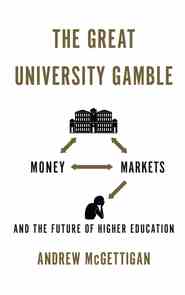
If you study or work in UK higher education you really should read this book

9780745332932I’ve mentioned it here before, but have now read The Great University Gamble. It makes a lot clear, but also unveils a lot of hidden complexity. I learned a great deal, and while I didn’t like what I found out, it is a really helpful guide to the enormous changes taking place. The politics is regularly discussed, but it was the legal and economic aspects that was the real eye-opener.

Posted in Politics, Universities | Leave a comment

Rivers’ biographies: Ertsen on Coates

A new review at the Society and Space open site.

Posted in Uncategorized | Leave a comment

London Underground live

A neat bit of cartography – taking a data feed from Transport from London and turning it into a live map. The Skyfall version is also very cool and there are others for mainline trains, etc. Thanks to Nistasha Kaul for the link.

Posted in Uncategorized | Leave a comment