I shared news of this reissue before. There is now a New Books network discussion with Morteza Hajizadeh. Thanks to dmf for this link.
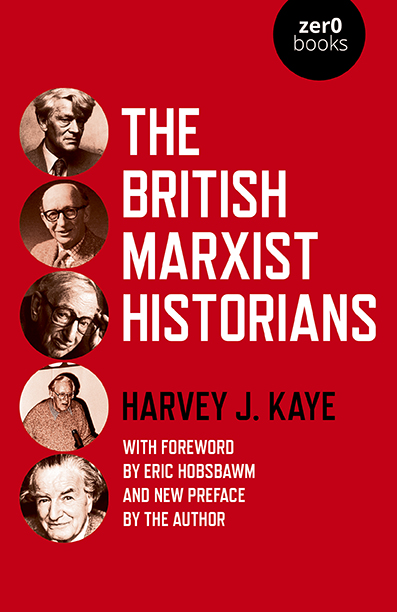
The British Marxist Historians remains the first and most complete study of the founders of one of the most influential contemporary academic traditions in history and social theory. In this classic text, Kaye looks at Maurice Dobb and the debate on the transition to capitalism; Rodney Hilton on feudalism and the English peasantry; Christopher Hill on the English Revolution; Eric Hobsbawm on workers, peasants and world history; and E.P. Thompson on the making of the English working class. Kaye compares their perspective on history with other approaches, such as that of the French Annales school, and concludes with a discussion of the British Marxist historians’ contribution to the formation of a democratic historical consciousness. The British Marxist Historians is an indispensable book for anyone interested in the intellectual history of the late twentieth century.
What we eat, who we are, and the relationship between the two.
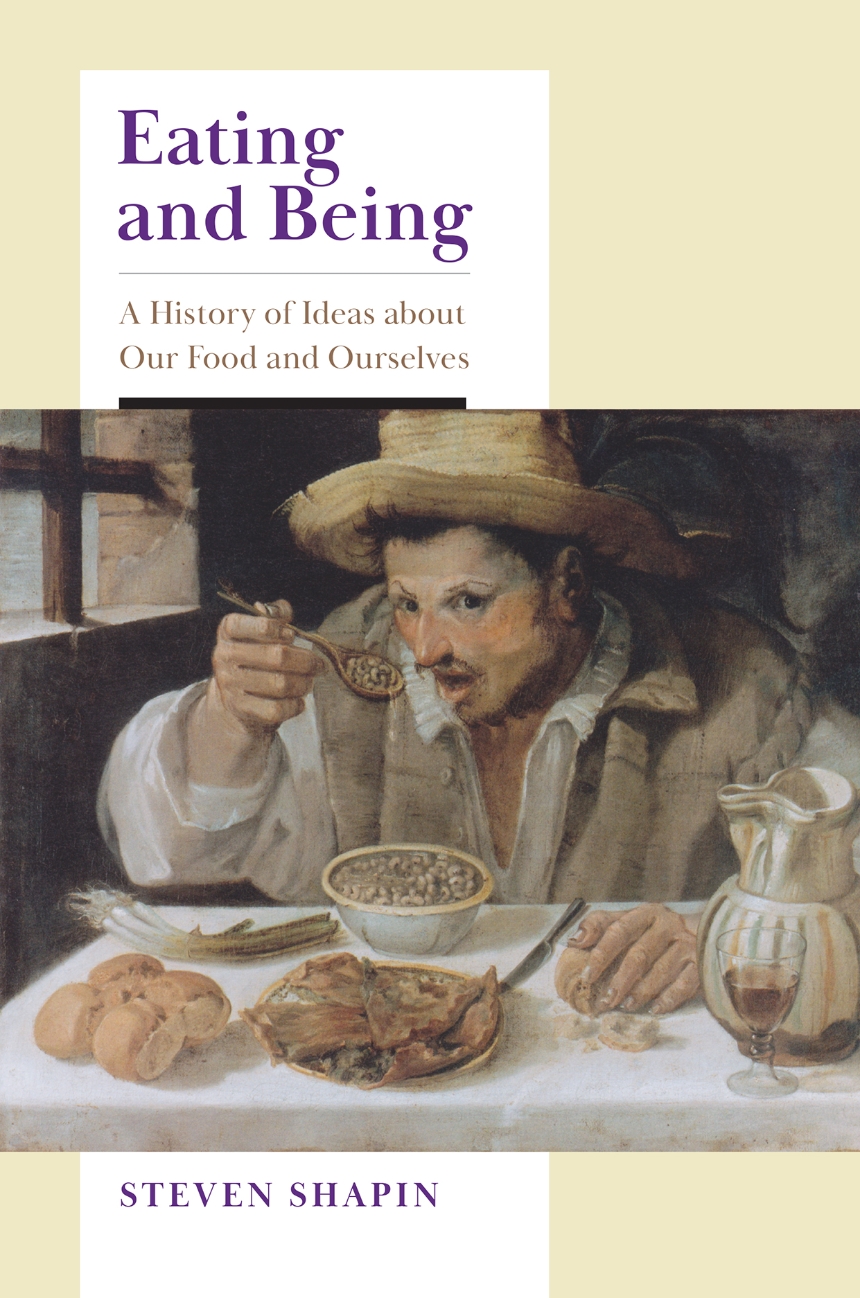
Eating and Being is a history of Western thinking about food, eating, knowledge, and ourselves. In modern thought, eating is about what is good for you, not about what is good. Eating is about health, not about virtue. Yet this has not always been the case. For a great span of the past—from antiquity through about the middle of the eighteenth century—one of the most pervasive branches of medicine was known as dietetics, prescribing not only what people should eat but also how they should order many aspects of their lives, including sleep, exercise, and emotional management. Dietetics did not distinguish between the medical and the moral, nor did it acknowledge the difference between what was good for you and what was good. Dietetics counseled moderation in all things, where moderation was counted as a virtue as well as the way to health. But during the nineteenth century, nutrition science began to replace the language of traditional dietetics with the vocabulary of proteins, fats, carbohydrates, and calories, and the medical and the moral went their separate ways. Steven Shapin shows how much depended upon that shift, and he also explores the extent to which the sensibilities of dietetics have been lost.
Throughout this rich history, he evokes what it felt like to eat during another historical period and invites us to reflect on what it means to feel about food as we now do. Shapin shows how the change from dietetics to nutrition science fundamentally altered how we think about our food and its powers, our bodies, and our minds.
‘A deeply fascinating, sui generis book by a brilliant scholar-writer, which uses the life story of a Renaissance prodigy to summon an angel-host of ideas, people and stories, all circling the question of language’s ability to transcend the mortal realm’ Robert Macfarlane
Does there exist a form of speech so powerful as to allow the speaker to control the listener, taking over their thoughts and even their will?
The Grammar of Angels tells the story of Renaissance prodigy and polymath Giovanni Pico della Mirandola, the uncontested marvel of an age of true wonders. Pico dedicated his life to a quest to find the sublime; to reconcile all existing thought into a philosophy that would settle the most important questions about human existence. This philosophy would also provide tools by which man could transcend his mortal limitations and join the ranks of the angels. At the heart of Pico’s ideas were questions that he traced through the depth and breadth of human thought, from the ancient Greeks and Egyptians to the medieval Arabs and Jews. He made use of everything at his disposal from Europe’s broadening horizons and asked primal questions of himself and the world. Why is it that we can be astonished by beauty? That the hairs on the backs of our necks can be made to stand by intoxicating rhythms and harmonies? That we can be provoked to ecstatic experiences by the simple means of an incantation? In Catholic Italy, the implications of this line of thought were dangerous and provoked violent reactions, suggesting as they did that the notion of the individual might be just as much of an illusion as a flat earth or a geocentric universe. That there may well be notions of the divine other than the Christian God.
During a tempestuous life at the exquisite heart of the Italian Renaissance, Pico’s life is a testament to intellectual daring, to a human dignity founded in the willingness to think the unthinkable and to peer over the edge of the abyss in search of answers.
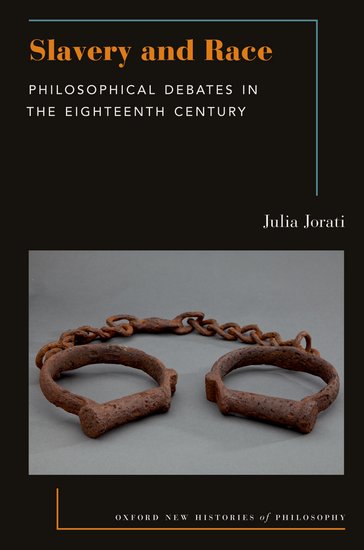
Millions of Africans were enslaved and transported to the Americas in the eighteenth century. Europeans–many of whom viewed themselves as enlightened–endorsed, funded, legislated, and executed the slave trade. This atrocity had a profound impact on philosophy, but historians of the discipline have so far neglected to address the topics of slavery and race. Many authors–including enslaved and formerly enslaved Black authors–used philosophical ideas to advocate for abolition, analyze racist attitudes, and critique racial bias. Other authors attempted to justify the transatlantic slave trade by advancing philosophical defenses of racial chattel slavery.
Slavery and Race: Philosophical Debates in the Eighteenth Century explores these philosophical ideas and arguments, with a focus on the role race played in discussions of slavery. In doing so, author Julia Jorati reveals how closely associated Blackness and slavery were at that time and how many White people viewed Black people as naturally destined for slavery. In addition to examining well-known authors like David Hume, Immanuel Kant, and Jean-Jacques Rousseau, Jorati also discusses less widely studied philosophers like Quobna Ottobah Cugoano, Lemuel Haynes, and Olympe de Gouges. By revealing important aspects of debates about slavery in North America and Europe, this book and its companion volume on the sixteenth and seventeeth centuries are valuable resources for readers interested in a more complete history of early modern philosophy.
Philosophers from Europe and colonial America engaged in heated debates about the morality of slavery in the sixteenth and seventeenth centuries, and these debates provide insights into the roots of modern racism. Julia Jorati explores the philosophical ideas, theories, and arguments that are central to early modern discussions of slavery. Some texts explicitly examine the morality of the transatlantic slave trade or of the enslavement of indigenous people in the Americas; others discuss slavery in predominantly theoretical ways. Based on these texts, Jorati shows that race and slavery came to be closely associated in this period. This association was often made through an endorsement of the theory of natural slavery: Black and indigenous people were commonly viewed as natural slaves, or naturally destined for slavery. The theory that some people are natural slaves also features prominently in theoretical discussions of slavery, and many philosophers in the sixteenth and seventeenth centuries embraced versions of it.
Jorati surveys a wide range of historical material, from the views of Thomas Hobbes, John Locke, and Gottfried Wilhelm Leibniz, to many less widely studied philosophers like Gabrielle Suchon, Morgan Godwyn, and Epifanio de Moirans. Jorati’s volume, along with its companion Slavery and Race: Philosophical Debates in the Eighteenth Century, illustrates the significance and philosophical sophistication of early modern debates about slavery, and serves as a valuable resource for scholars, instructors, and students who are curious about this widely neglected topic.
The Kingdom of Champassak was founded in 1713 in what is now southern Laos, and its royal lineage, the House of Champassak, continues to the present. In this first historical study of Champassak, Ian Baird explores the ways it has asserted its sovereignty across time and through monumental historical shifts, including the delineation of national boundaries for Laos, Thailand, and Cambodia in the nineteenth and twentieth centuries.
In re-creating this story, Baird draws not only on a dazzling variety of primary sources in English, French, Lao, and Thai but also on many years spent in conversation with members of the Na Champassak family, who are now spread across a wide geographical area, from Laos and Thailand to France and the United States. Each chapter treats one historical period, identifying the Champassak approach to sovereignty during that time. Through this deep history, Baird shows how sovereign power, even within one case, takes a wide range of forms, always contingent, contested, and uneven across space and time.
A compelling treatise on the relationship between power and enclosure
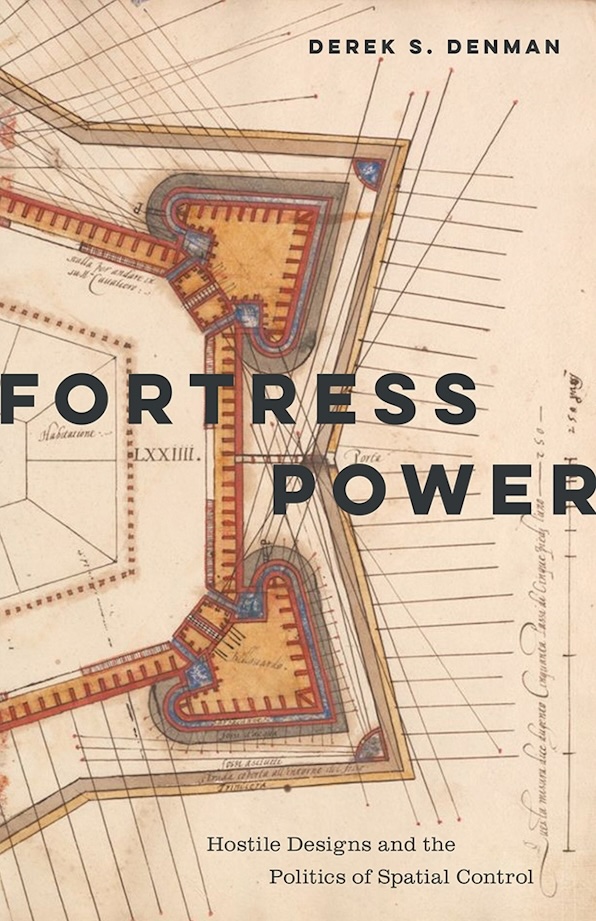
Fortress Power presents a genealogy of fortification as a material and political technology intent on obstruction, tracing its implementation across battlefields, borders, and urban environments. Drawing on the influential work of philosophers Michel Foucault and Giorgio Agamben, Derek S. Denman places the fortress alongside the archetypes of the prison and the camp, citing them as paradigmatic of how space is transformed into a tool of domination and control.
Focusing on the defensive architecture of bastion fortresses, urban design, and border landscapes, Fortress Powercharts the rise of a form of governance grounded in hostility, extending the scope of its subject from a piece of military construction to a much broader political concept. Detailing how power manifests in everything from city centers to international boundaries, the book analyzes the logic of fortification as it moves through various contexts in the advancement of surveillance, exploitation, warfare, and political authority.
Through a unique blend of architecture and design studies, political theory, international relations, geography, and migration studies, Denman outlines the disquieting legacy of the fortress to highlight its role in the formation of modern government and the enactment of violence. In an era marked by the increasing prevalence of authoritarian power and conflicting geopolitical boundaries, he presents an insightful investigation of the weaponization of the built environment.
Lynne is now on Instagram and has posted several tiles relating to this essay.
It’s a review article of my Foucault books, especially The Early Foucault and Foucault’s Last Decade. But saying that really doesn’t do justice to this wonderful text, which is beautifully written and does so much more than discuss my books. Enormous thanks to Lynne for writing this.
This essay reviews the first and last volumes of Stuart Elden’s four‐volume intellectual biography of Michel Foucault, The Early Foucault (2021) and Foucault’s Last Decade(2016). It borrows from Roland Barthes an abecedarian method to experiment with the play between order and archive that subtends Elden’s Foucault series. Like Foucault, Elden deploys an explicitly archival method for thinking philosophically. That method brings both historiographical and conceptual clarity to our understanding of Foucault within the chronological frame of his life. As a poetic order, the acrostic experimentation of abecedarian writing brings into view the nonchronological archival murmur that both shapes and exceeds Elden’s ordering of fragments in dossiers and the gaps between them.
Critical Data Studies has come of age as a vibrant, interdisciplinary field of study. Taking data as its primary analytical focus, the field theorises the nature of data; examines how data are produced, managed, governed and shared; investigates how they are used to make sense of the world and to perform practical action; and explores whose agenda data-driven systems serve.
This book is the first comprehensive A-Z guide to the concepts and methods of Critical Data Studies, providing succinct definitions and descriptions of over 400 key terms, along with suggested further reading. The book enables readers to quickly navigate and improve their comprehension of the field, while also acting as a guide for discovering ideas and methods that will be of value in their own studies.
Critical Data Studies is essential reading for students and scholars from across the sciences, social sciences and humanities, as well as those who work with data professionally who want to extend and enrich their conceptual and practical understanding of data and their use.
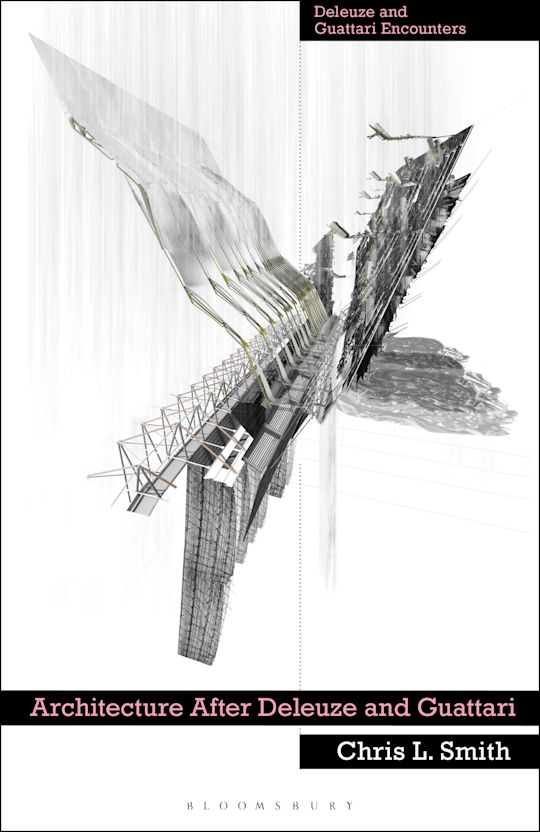
This study illuminates the complex interplay between Deleuze and Guattari’s philosophy and architecture. Presenting their wide-ranging impact on late 20th- and 21st-century architecture, each chapter focuses on a core Deleuzian/Guattarian philosophical concept and one key work of architecture which evokes, contorts, or extends it.
Challenging the idea that a concept or theory defines and then produces the physical work and not vice versa, Chris L. Smith positions the relationship between Deleuze and Guattari’s philosophy and the field of architecture as one that is mutually substantiating and constitutive. In this framework, modes of architectural production and experimentation become inextricable from the conceptual territories defined by these two key thinkers, producing a rigorous discussion of theoretical, practical, and experimental engagements with their ideas.
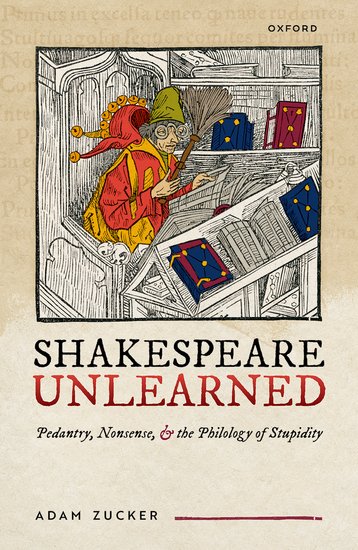
Shakespeare Unlearned dances along the borderline of sense and nonsense in early modern texts, revealing overlooked opportunities for understanding and shared community in words and ideas that might in the past have been considered too silly to matter much for serious scholarship. Each chapter pursues a self-knowing, gently ironic study of the lexicon and scripting of words and acts related to what has been called ‘stupidity’ in work by Shakespeare and other authors. Each centers significant, often comic situations that emerge — on stage, in print, and in the critical and editorial tradition pertaining to the period — when rigorous scholars and teachers meet language, characters, or plotlines that exceed, and at times entirely undermine, the goals and premises of scholarly rigor. Each suggests that a framing of putative ‘stupidity’ pursued through lexicography, editorial glossing, literary criticism, and pedagogical practice can help us put Shakespeare and semantically obscure historical literature more generally to new communal ends. Words such as ‘baffle’ in Twelfth Night or ‘twangling’ and ‘jingling’ in The Tempest, and characters such as Sir Andrew Aguecheek and Holofernes the pedant, might in the past have been considered unworthy of critical attention — too light or obvious to matter much for our understanding of Shakespeare and his contemporaries. Adam Zucker’s meditation on the limits of learnedness and the opportunities presented by a philology of stupidity argues otherwise.