Walter Benjamin, Pedagogy and the Politics of Youth

Interesting looking conference coming up in London.

Matthew Charles's avatarPedagogy & the Inhumanities

matt_a4_poster

Friday 31st May – Saturday 1st June 2013
University of Westminster, London
Fyvie Hall, 309 Regent Street, London W1B 2UW

Co-hosted by the Institute for Modern & Contemporary Culture (IMCC)
and the Centre for Research in Modern European Philosophy (CRMEP)

Provisional Schedule:

Friday 31st May: Fyvie Hall, University of Westminster, 309 Regent Street, London

13:15 – 14:00Registration (Entrance Hall)
14:00 – 14:30Welcome
Introductory Remarks
David Cunningham
Matthew Charles
IMCC, Westminster
IMCC, Westminster
14:30 – 15:30The Life of Students is a Great TransformerAntonia Birnbaum
Chair: Andrew McGettigan
Paris 8
15:30 – 16:00Break
16:00 – 17:00Attunement and Interference:
Benjamin’s Hölderlin Reading
Howard Caygill
Chair: Peter Osborne
CRMEP, Kingston

Saturday 1st June: Fyvie Hall, University of Westminster, 309 Regent Street, London

09:45 – 10:30Registration (Entrance Hall)
10:30 – 11:30Quo Vadis? Knowing and being in the digital ageMilan Jaros
Chair: Steven Cranfield

View original post 398 more words

Posted in Uncategorized | Leave a comment

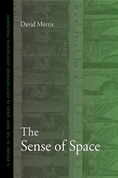
David Morris, A Sense of Space – now in paperback

David Morris’s book A Sense of Space, in the excellent SUNY series in Contemporary Continental Philosophy, is now available in paperback.

60983_covA phenomenological account of spatial perception in relation to the lived body.

The Sense of Space brings together space and body to show that space is a plastic environment, charged with meaning, that reflects the distinctive character of human embodiment in the full range of its moving, perceptual, emotional, expressive, developmental, and social capacities. Drawing on the philosophies of Merleau-Ponty and Bergson, as well as contemporary psychology to develop a renewed account of the moving, perceiving body, the book suggests that our sense of space ultimately reflects our ethical relations to other people and to the places we inhabit.

Posted in Books | Tagged | Leave a comment

The camp and geographical imaginations

A powerful piece by Derek Gregory on Auschwitz – reflecting both on a visit there and Agamben’s work.

Derek Gregory's avatargeographical imaginations

Last Thursday, the last full day of my visit to Ostrava, Tomas took me to visit the Auschwitz-Birkenau Memorial and Museum in the Polish town of Oswiecim: I’m still trying to come to terms with what I saw and felt.

It was Tomas’s third visit.  Last time, he said, it was in the depth of winter, with the ground covered in snow: Auschwitz rendered in the sombre black and white tones we’ve come to expect.  On Thursday it all seemed so incongruous: full colour on an unexpectedly sunny day – brilliant blue sky, flowers coming in to bloom and birds singing – and made even more unsettling by the new housing at the edge of the town and the supermarket up the road.  To say that is at once to invoke a moral geography of sorts, and in a series of revealing essays Andrew Charlesworth, Robert Guzik, Michal Paskowski and…

View original post 2,126 more words

Posted in Uncategorized | Leave a comment

Terricide and Terracide

Developing the work on the concept of ‘earth’ that I am currently undertaking, my RGS-IBG paper this year is on ‘Terricide‘, a concept taken from Henri Lefebvre’s De l’État. In De l’État, Lefebvre suggests (Vol I, p. 39) that he takes this from Jean-Clarence Lambert, in Opus International, no. 50. I’ve looked at that issue of Opus International, and while there are three short pieces by Lambert, nothing is on terricide. Clarence’s website doesn’t offer any help. So I’m wondering if Lefebvre did take this from Clarence but another source; or from a source he mistook for Clarence; or misremembered it entirely. This is unfortunately all-too-common with Lefebvre’s references – the work that went into the notes for Key Writings and State, Space, World was extensive.

There are very few places anywhere that the notion of ‘terricide’ is ever discussed. But as well as being the name of a video-game and a metal band, the word ‘terracide’ does appear to be used in a few more instances… Tyner513hscYiHIL__SL500_SS500_Reeves

James A. Tyner’s The Killing of Cambodia: Geography, Genocide and the Unmaking of Space has the term in the back cover blurb, and at least one review, though it does not make an appearance in the text itself. Of course, related terms such as urbicide are increasingly commonly used to describe the targeting of the environment (see, for example, Martin Coward’s Urbicide: The Politics of Urban Destruction or Stephen Graham’s Cities Under Siege: The New Military Urbanism).

Lefebvre means this term in a way that is rather more concrete and specific: the actual killing of the earth or the death of the planet through nuclear war, and especially through the imbalances created in the move from the “(bounded [limitee]) rationality of the state to the irrationality of the state system” (De l’État Vol I, p. xv; State, Space, World, p. 98).

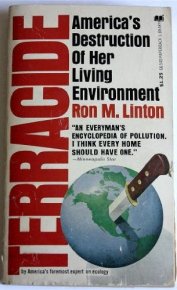
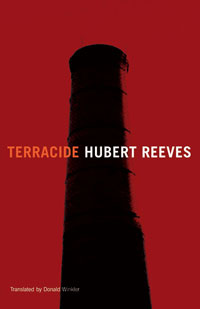
From a more environmental point of view, Ron M. Linton’s 1970 book Terracide: America’s destruction of her living environment; and Hubert Reeves’s more recent Terracide (a translation of a book originally under the title Mal de terre) looks at similar issues.

Posted in Henri Lefebvre | 1 Comment

Mapping the internet

98eaf05c1dd22d0eaf7611c076859597_vice_630x420

Interesting story about mapping connections on the internet. The image above is static, but the ones in the story are animated to show changes over the course of a day. Thanks to James Kneale for the link.

Posted in Uncategorized | Leave a comment

Call for Proposals: Workshop on Regimes of Calculation and Global Governance

Call for papers for a workshop I’m speaking at in September, along with a number of very interesting other speakers.

Call for Proposals: Workshop Regimes of Calculation and Global Governance

September 19-20, 2013

Balsillie School of International Affairs, Waterloo, Ontario, Canada

Please submit 300 word abstracts to calculation.workshop@gmail.com by Monday, June 15, 2013.

Practices of calculation underpin modes of governance and enable new forms of measurement and prediction at various scales and sites. Our life expectancy and retirement funds are calculated, along with global greenhouse gases and national debts. Calculation techniques can be profoundly inventive and transformative, conjuring up previously unseen terrains of contestation while simultaneously obscuring others. Calculation thus needs to be considered political from the outset. In sum, calculation has become a common and taken-for-granted practice that shapes how we act in the world. Without calculation, too, scholars of global governance are faced with large empirical gaps and theoretical dead ends.

This workshop seeks to bring together scholars whose objects and purposes of investigation may differ, but who share an important point of contact: a focus on calculability as a technique that may come to exert forms of control over people, places and things. The workshop asks: What is the role of calculation in global governance? To what extent have recent and on-going ecological and financial crises opened, constrained or otherwise transformed calculative projects? Using these questions as a starting point, our workshop addresses ‘Regimes of calculation’ which are practices and techniques that are used, for example, to represent social patterns through statistical or quantitative measurement.

We encourage PhD students and junior scholars from fields including, but not limited to, political science, sociology, geography, history and economics to submit proposals. Travel fund support may be available. Proposals that address the following themes are encouraged:

1) Calculative Vulnerabilities: Environment, Climate Change and Security,

2) Calculative (Im)mobilitites: Economies, Borders, and Regulation,

3) Sustaining Calculabilities: Food and Agriculture, Bodies, Health and Population,

4) Anti-Metrology: Sites of Resistance and Immunity from Calculation.

The event will consist of an opening keynote to situate regimes of calculation and global governance by Dr. Stuart Elden, and confirmed participants include Dr. Suzan Ilcan, University of Waterloo, Dr. Michelle Murphy, University of Toronto, Dr. Wendy Larner, University of Bristol, Dr. Mark Salter, University of Ottawa, and Dr. William Walters, Carleton University.

Posted in Conferences, Politics | 2 Comments

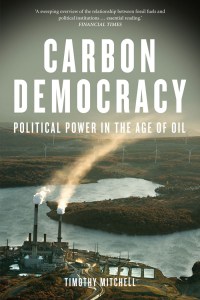
Timothy Mitchell, Carbon Democracy – paperback due in July

I missed the hardback of this a while back, but the paperback is due in July.

9781781681169_Carbon_Democracy_PBCarbon Democracy provides a unique examination of the relationship between oil and democracy. Interweaving the history of energy, political analysis, and economic theory, Mitchell targets conventional wisdom regarding energy and governance. Emphasizing how oil and democracy have intermixed, he argues that while coal provided the impetus for mass democracy, the shift to oil drastically limited democratic possibility; above all, the ability to confront contemporary ecological crises.

Posted in Books, Politics | Leave a comment

Esposito, Third Person reviewed at NDPR

0745643981Roberto Esposito’s Third Person is reviewed at NDPR.


Posted in Roberto Esposito | 1 Comment

Programme and registration

London Conference in Critical Thought programme and registration.

londonconferenceincriticalthought's avatarLondon Conference in Critical Thought 2013

View original post

Posted in Uncategorized | 1 Comment

The Geopolitics of Boko Haram

The audio recording of my talk in Istanbul earlier this month is available here. The talk was under the title of “Nigeria’s ‘War on Terror’: The Geopolitics of Boko Haram”. I’ve given this talk, in slightly different forms in a few places now – at the LSE, in Aberystwyth, and a shorter version was given at the recent AAG meeting in Los Angeles (audio recording here). I hope to finish a written version soon. As I’ve mentioned before, I have written an annotated bibliography of literature on the group which is available here.

Posted in Conferences, Politics, Territory | Tagged , | 2 Comments