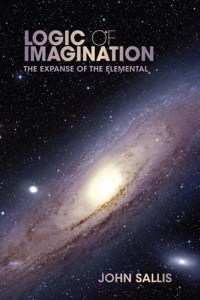
John Sallis, Logic of Imagination: The Expanse of the Elemental

LogicJohn Sallis’s latest book, Logic of Imagination: The Expanse of the Elemental, is reviewed at NDPR. Here’s the publisher’s information – looks very interesting.

The Shakespearean image of a tempest and its aftermath forms the beginning as well as a major guiding thread of Logic of Imagination. Moving beyond the horizons of his earlier work, Force of Imagination, John Sallis sets out to unsettle the traditional conception of logic, to mark its limits, and, beyond these limits, to launch another, exorbitant logic—a logic of imagination. Drawing on a vast range of sources, including Plato, Aristotle, Kant, Hegel, Nietzsche, and Freud, as well as developments in modern logic and modern mathematics, Sallis shows how a logic of imagination can disclose the most elemental dimensions of nature and of human existence and how, through dialogue with contemporary astrophysics, it can reopen the project of a philosophical cosmology.
Posted in John Sallis, William Shakespeare | Leave a comment

Katherine Gibson, Jenny Cameron and Stephen Healy talk to Society & Space co-editor Jane M. Jacobs about their forthcoming book: Take Back the Economy.

Posted in Uncategorized | 1 Comment

No Borders – review of Bristol exhibition

Hala-ElKoussy-1The TLS has a short review of an interesting looking exhibition on borders.

A thought-provoking exhibition recently opened at the Bristol Museum and Art Gallery, in partnership with Arnolfini. “No Borders”, featuring a dozen modern artists from the Middle East, Asia and Africa, “reflects upon the globalised conditions of the world today and the particular histories and contexts that inform current art practices”. The show runs until June and is free. [continues]

Thanks to Jordan Skinner for the link.

Posted in Boundaries, Events | Leave a comment

Land claims conference in Ottawa

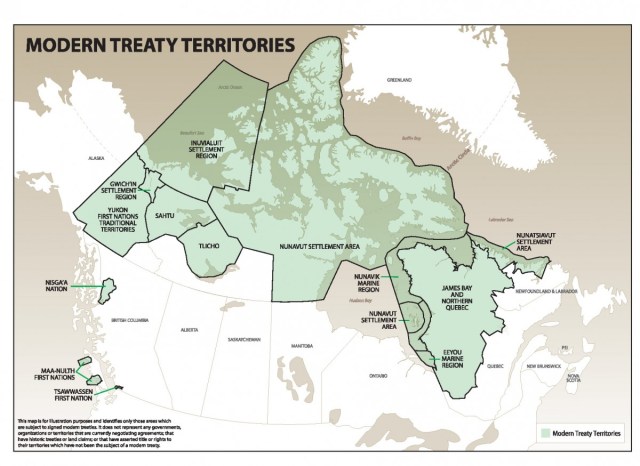
lcac_map_of_modern_treaties-e1349986217888Jeremy Schmidt links to information on the forthcoming  Land Claims Coalition Conference in Ottawa, and notes that the agenda is now available.

Posted in Boundaries, Conferences, Politics, Territory | Leave a comment

Laura Kurgan – Close up at a Distance

Interesting looking book forthcoming from Zone Books – Laura Kurgan, Close Up at a Distance: Mapping, Technology, and Politics. 
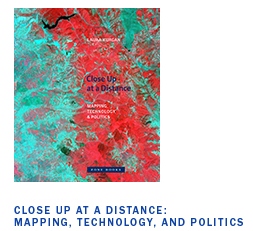
KurganThe past two decades have seen revolutionary shifts in our ability to navigate, inhabit, and define the spatial realm. The data flows that condition much of our lives now regularly include Global Positioning System (GPS) readings and satellite images of a quality once reserved for a few militaries and intelligence agencies, and powerful geographic information system (GIS) software is now commonplace. These new technologies have raised fundamental questions about the intersection between physical space and its representation, virtual space and its realization. In Close Up at a Distance, Laura Kurgan offers a theoretical account of these new digital technologies of location and a series of practical experiments in making maps and images with spatial data. Neither simply useful tools nor objects of wonder or anxiety, the technologies of GPS, GIS, and satellite imagery become, in this book, the subject and the medium of a critical exploration.

Close Up at a Distance records situations of intense conflict and struggle, on the one hand, and fundamental transformations in our ways of seeing and of experiencing space, on the other. Kurgan maps and theorizes mass graves, incarceration patterns, disappearing forests, and currency flows in a series of cases that range from Kuwait (1991) to Kosovo (1999), New York (2001) to Indonesia (2010). Using digital spatial hardware and software designed for military and governmental use in reconnaissance, secrecy, monitoring, ballistics, the census, and national security, Kurgan engages and confronts the politics and complexities of these technologies and their uses. At the intersection of art, architecture, activism, and geography, she uncovers, in her essays and projects, the opacities inherent in the recording of information and data and reimagines the spaces they have opened up.

Thanks to Andrew Burridge for the link.

Posted in Books, Boundaries, Politics, Territory | 4 Comments

Rob Walker lecture in Newcastle

Despite All Critique: World Politics and Western Reason Revisited

 Professor R. B. J Walker (University of Victoria/ PUC-Rio de Janeiro)

With responses from Professor Louise Amoore and Dr Martin Coward; Chair – Dr Angharad Closs Stephens

Monday 11 March, 3-5pm, Newcastle University, Research Beehive 2.20

Theories of international relations are interesting less for their substantive claims about contemporary politics than for their status as an expression of universalizing claims about the modern world that have been generated from one particular part of the world. As such, they must be understood first of all as an expression of a particular philosophy of history.

Despite many complaints about the hubris expressed in narratives of development and progress, and various attempts to situate theories of international relations as expressions of hegemony, colonialism, or imperialism, such theories have long been notoriously resistant to critique. There are some obvious reasons for this. This talk will explore the less obvious but especially disturbing possibility that theories of international relations are especially susceptible to dogmatic formulation and resistant to prevailing forms of critical analysis because they ultimately express the limits within which an opposition between dogma and critique, in the Kantian sense, remains intelligible.

9780415779036Rob Walker is Professor of Political Science at the University of Victoria, Canada, where he teaches in the Graduate Program in Cultural, Social and Political Thought, and Professor of International Relations at PUC-Rio de Janeiro in Brasil. His most recent book is After the Globe, Before the World (2010). He is the long-term Editor of the journal Alternatives: Global, Local, Political, and was the founding Co-Editor with Didier Bigo of the journal International Political Sociology.

For more information contact martin.coward@newcastle.ac.uk

Posted in Conferences | Leave a comment

Africa and the War on Drugs

Klantschnig9781780324746Africa as the new site of the war on terror has been receiving a lot of attention recently, and the civil wars on the continent have long been discussed, but a recently published book looks at the war on drugs in three countries on the continent – Guinea-Bissau, Lesotho and Nigeria. Africa and the War on Drugs is published by Zed Books, and there is a discussion of the book at Southworld (via the Zed blog).

Posted in Politics | Leave a comment

Discussion of Athusser’s Machiavelli and Us at Posthegemony.

Jon's avatarPosthegemony

Louis Althusser, Machiavelli and UsLouis Althusser’s Machiavelli and Us is a strange, tortured text that bears all the marks of its long germination. It originates in a lecture course given in 1962, which was cut short by Althusser’s nervous breakdown and hospitalization. The notes for that course were apparently lost, and rewritten from scratch, we are told, “very probably after 1968” (vii). These led to a new course, given in 1972, but Althusser continued to work on the manuscript “on and off up to the mid 1980s” (vii), although he never published it in his lifetime. It finally saw the light of day in 1995, five years after his death. Hence the version we have (in the translation by Gregory Elliott) has numerous footnotes indicating some of the major handwritten revisions, correction, and addenda, often of very uncertain date. One can only suspect that there is a reason for this difficult history, and perhaps…

View original post 728 more words

Posted in Uncategorized | Leave a comment

Ben Gurion University politics department

Haaretz has the news that the threat to the Ben Gurion University politics department has been withdrawn, with student recruitment allowed for next academic year.

Posted in Politics, Universities | Leave a comment

Derek Gregory’s University of Kentucky Social Theory lecture now available.

Jeremy's avatarOpen Geography

Derek Gregory’s excellent recent lecture at UK in the Social Theory series “Gabriel’s Map: Cartography and Corpography in Modern War” is now available for viewing. (The sound is a bit faint until Derek starts speaking.)

Capture


This is the 25th year of the Committee on Social Theory lecture series, and the general theme this year is “Mapping.” In a couple of weeks we will host Neil Brenner, followed by Tom Conley and Swati Chattopadhyay.

View original post

Posted in Uncategorized | Leave a comment