The ‘Thinking Urban Worlds’ workshop at Durham was held on Wednesday. A very interesting afternoon of discussion organised by Colin McFarlane with presentations by Andy Merrifield and Simon Marvin, and discussant comments from Gordon MacLeod along with my own paper. The event was recorded, so hopefully that will be available soon.
[Update – recordings and reflections available here]
In my paper ‘Urban/Territory/World’ I tried to think about the relation between these three terms. I decided to write something new, rather than just talk about previous work. I ended up with something that was too long, so decided to cut all the stuff I was comfortable with – the historical discussion of the urban/territory relation, and theorisations of the world in Lefebvre, Axelos and Fink – and just try out the newer ideas that I was thinking through. So it was a deliberately tentative paper, with indications and suggestions rather than firm propositions.
I began with the suggestion that urban, world and territory should all be thought as processes rather than objects or outcomes. There are existing bodies of literature that make such claims. But how do we think about the relation between them if they operate in that way, and especially if territory is not a container within which things happen? I wanted to get away from the idea that there were either territories within the urban, or that some parts of territory were urban and others not, and equally to resist the idea that the world was made up of territories in any simple way. The paper was in part an engagement with an unpublished paper by Neil Brenner and Christian Schmid which takes issue with the idea of an ‘urban age’ – the well-known claim that we now live in a world where more than half the population live in cities. What Brenner and Schmid do, having taken apart the basis for such arguments, is propose a different way of thinking about the urban. They suggest we should think about concentrated and extended urbanization. The first is the idea that urban studies has long focused on – agglomerations. The second is by far the more interesting – looking at the way that processes of urbanization extend beyond the agglomeration in a variety of economic, social, cultural, resource-use and ecological ways. They make a number of suggestions about the way we should think the urban and urbanization.
The suggestions they make are close to the ways I’ve tried to think about territory, and I think their theses would work well if ‘urban’ was replaced by ‘territory’, and ‘urbanisation’ by ‘territorialisation’ – understood not as territoriality, but as state-territorial strategies. Neil and I have worked on that later idea through an engagement with Lefebvre – especially in the paper “Henri Lefebvre on State, Space, Territory” (download it here). So I spent the rest of the talk trying to work through whether these ways of thinking about the urban were useful in terms of thinking about territory, and equally if my way of thinking about territory could be useful in terms of thinking about the urban – not in terms of the urban as territory, but the processes that create and transform territory being used to create and transform the urban, such as state-spatial strategies, military techniques, resistances, cartography, surveying, economic processes, strategic struggles and so on.
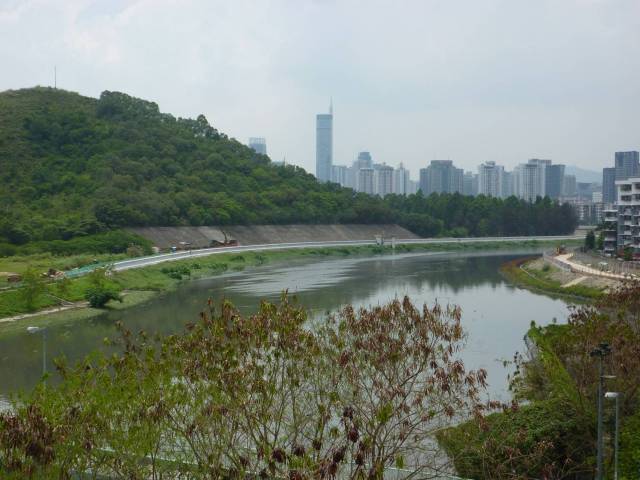
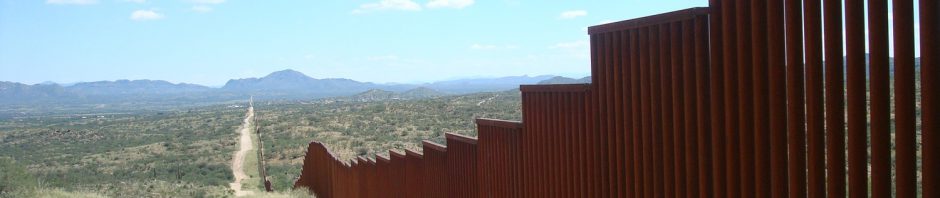
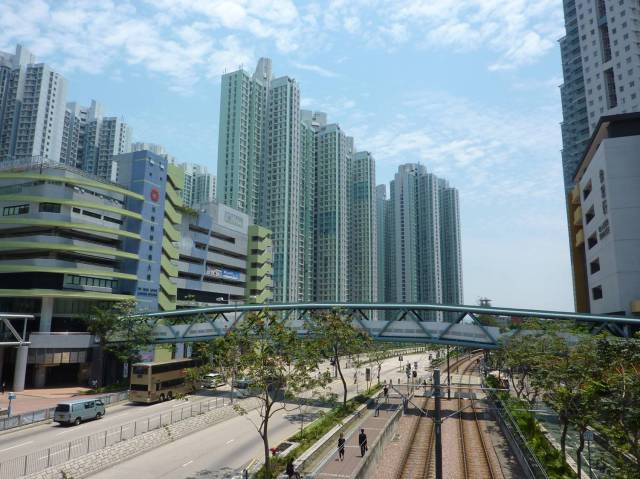 I used various examples from recent reading and thinking – Gastón Gordillo’s Landscapes of Devils: Tensions of Place and Memory in the Argentinean Chaco; Phil Steinberg and Rob Shields’s edited collection What is a City? Rethinking the Urban after Hurricane Katrina; the British Metropolitan police’s Territorial Support Group; and the Boko Haram attacks in Kano in January 2012 and the state response. All of these were indicative and not detailed, but as possible examples to develop in a fuller analysis. I also used a number of images from Hong Kong – the city of Tin Shui Wai in the New Territories (one example above), and the border between Hong Kong and Shenzhen (below).
 I’ll be talking more about all this at the AAG in Los Angeles in April 2013 – abstract here. There is also some relation to the ‘Secure the Volume’ paper I gave in Kentucky (video here) and Edinburgh earlier this year which is coming out in Political Geography next year.
 Punctum Books have published a new interesting collection, Making the Geologic Now: Responses to Material Conditions of Contemporary Life. Details of the print edition and free download link here.