Babette Babich on the books that inspired her

At the LSE blog, Babette Babich discusses the books that inspired her – wide-ranging and fascinating reading.

Babette Babich is an American philosopher known for her studies of Nietzsche, Heidegger, Adorno, and Hölderlin as well as for her work in aesthetics, including music, philosophy of music, the history of ancient Greek sculpture, and continental philosophy, especially continental philosophy of science and technology. Here she discusses the books that shaped who she is as a scholar, and recalls time spent as an impoverished student in the depths of libraries.

Books tell us the time of our lives in curiously intriguing ways, and represent a kind of ‘archaeology of the everyday’ of days past and promised days to come (those would be the books we collect in order ‘to read,’ as the Germans like to say, ‘by the fireplace, on long winter evenings’). And if I think this timing of a life in books holds true for everyone in Western culture, whether or not one tells oneself that one likes books, it is especially true for academics.

Posted in Babette Babich, Books | Leave a comment

Patricia Martin reflects on the end of the Quebec student strikes at the Society and Space open site.

Posted in Uncategorized | Leave a comment

Books I’ve read and plan to read

A book meme I took from Rob Kitchin’s The View from the Blue House and first answered a year ago. As before I’ve largely answered in relation to non-academic reading…

The book I’m currently reading? Madeline Miller, The Song of Achilles

The last book I finished?  W.G. Sebald, Vertigo

The next book I want to read? Don’t know, but on the ‘to read’ pile of novels are Michael Moorcock, Mother London; Roberto Bolaño, 2666; Aravind Adiga, The White Tiger; Edmund Wilson, To the Finland Station (non-fiction); Ahdaf Soueif, The Map of Love and Jonathan Franzen, The Twenty-Seventh City.

The last book I bought? Lars Iyar, Spurious – hasn’t arrived yet.

The last book I was given? David Martin-Jones, Deleuze and World Cinemas – David is a visting fellow at the IAS, and we just exchanged books (he got a copy of Lefebvre’s State, Space, World.)

Which was the last book you borrowed from the library? Andreas Höfele, Stage, Stake and Scaffold, for the Shakespeare project.

What is the most recent e-book you read?  Thomas Meyer, Beowulf – open access from Punctum Books.

What was the last translated book you read? Other than the Sebald, it would be Italo Calvino, The Castle of Crossed Destinies.

What was the first book you read this year?  China Miéville, Embassytown.

Which book is at the top of your Christmas list? The first novel in my Amazon wish list is Ben Marcus, The Age of Wire and String, though I don’t remember why I added it…

Which so-far unpublished book are you most looking forward to reading? I was looking forward to the Peeters biography of Derrida, which now seems to be out, so I should chase up the copy that is being sent to me. I’ll wait for Sebastian Faulks, A Possible Life and Ian McEwan’s Sweet Tooth to come out in paperback too.

Posted in Books, China Mieville, Gilles Deleuze, Henri Lefebvre, Jacques Derrida, Shakespearean Territories, William Shakespeare | 1 Comment

Pictures of a City

DubaiSome great photos of different cities collected at Urban Territory.

Posted in Uncategorized | Leave a comment

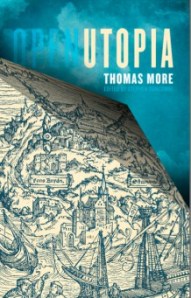
Open Utopia – Thomas More online

open_utopiaThomas More’s Utopia, online, in Latin and English, with related materials and lots of links (via Xenotopia).

Posted in Uncategorized | Tagged , | Leave a comment

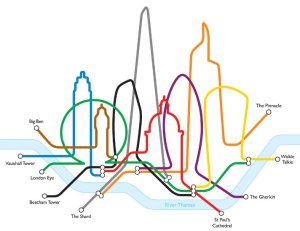
London skyline

London skylineGood piece on the changes to London’s skyline, and the complexities of politics, capital and planning regulations. Clever illustration too.

Posted in Uncategorized | Tagged , | Leave a comment

Edward Soja, Andy Merrifield and Maria Kaika on the future of urban studies (via Urban Cultural Studies).

Posted in Uncategorized | Leave a comment

Chris Philo – ‘A great space of murmurings’

Chris Philo, “‘A great space of murmurings’: Madness, romance and geography”, Progress in Human Geography, online early (requires subscription).

Prompted by the 50th anniversary of the first publication of Foucault’s famous book commonly known in English as Madness and Civilization, this essay explores how the book has changed between versions, in the process losing what can be cast as both its phenomenological undertones and a ‘romanticism’ about the truths supposedly revealed by madness. Reasons for Foucault’s own disavowal of these elements are considered, and taken together – conjoining a critical biography of the book with attention to Foucault’s reactions to it – this essay fashions a mirror to hold up to certain currents within contemporary human geography. It is argued that the ‘romantic fantasy’ which permeates the original book, if not overwhelming it, has significant echoes in the ‘romantic gesture’ displayed by some present-day geographers. The older Foucault’s distancing from his earlier romanticism is hence instructive for scholars critiquing the recent history of human geography, but there may also be grounds for claiming that it would be mistaken to lose this romanticism, together with its phenomenological correlates, entirely.

This was the Progress in Human Geography lecture at the Royal Geographical Society conference in 2011,

Posted in Chris Philo, Michel Foucault | Leave a comment

Becker on Ewald on Foucault on Becker

This is a really interesting idea – working paper and video (via Foucault News).

In a series of lectures delivered in 1979 at the Collège de France under the title The Birth of Biopolitics, Michel Foucault conducted a close reading of Gary Becker’s writings on human capital and on crime and punishment, within the context of an elaboration and critique of American neoliberalism. Foucault was assisted at the time, at the Collège de France, by François Ewald. Since then, there has been ongoing debate over Foucault’s views about neoliberalism. In this historic meeting at the University of Chicago between Professors Becker and Ewald, Professor Ewald presents a framework to understand Foucault’s writings on Becker; Professor Bernard Harcourt offers a different reading of Foucault’s views on neoliberalism; and Professor Becker responds to Foucault’s lectures and to possible critical readings of his work on human capital. Apology or critique — that is the motivating question in this rich encounter between contemporary French philosophy and American economic theory.

American Neoliberalism: Michel Foucault’s Birth of Biopolitics Lectures from UChicago Political Science on Vimeo.

Posted in Michel Foucault | Tagged , | 2 Comments

Territory and Risk

Habiter

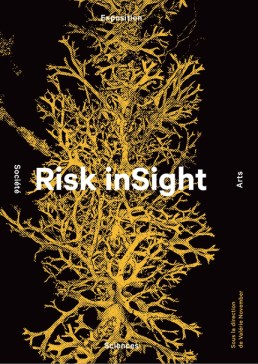
Risk inSight

Two interesting looking collections, edited by Valérie November. More details here, and in the video she talks about the work. A paper on this topic in Society and Space, co-authored with Eduardo Camacho-Hübner and Bruno Latour, entitled “Entering a Risky Territory: Space in the Age of Digital Navigation”, is available open access.

Posted in Bruno Latour, Society and Space, Territory | Tagged , | Leave a comment