Revise and resubmit – what it means and doesn’t mean

Revise and resubmit. This decision from journals has recently been discussed on the New APPS blog, and Peter Gratton has responded here. Here is my take on this – this refers to no specific case, but is the product of six years as an editor, and more as an author, referee and board member:

Yes, revise and resubmit is usually a good thing; and certainly not a moment to despair. It is not a reject, but nor is it an accept, however conditional. You are being given a chance, with guidance on what to do. If that guidance isn’t clear – ask for clearer guidance from the editor.

It is not sensible to argue with an editor that has given you a ‘revise and resubmit’ decision, seeking to get them to turn it into an ‘accept with revisions’ decision. You as author don’t know the whole picture, the identities of referees, the discussions between co-editors, etc. that got to that decision on what were likely conflicting reports. You’re also likely too close to your vision of the paper to understand. Editors have a wider perspective, and remember: they are authors too.

What is sensible is to revise the paper very carefully, doing what you can, not doing what you can’t, and silently dropping the unreasonable; and then write a very detailed response to the editors that can also be read by referees justifying what you’ve done, what you’ve not done, and why. This should not be along the lines of “here’s my revised paper; I have done everything the referees asked”. It should be detailed; and walk the editor, co-editors, and referees through the revisions. Send it, anonymised, along with the revision. If done really well it can convince the editor that they can indeed now accept this paper on the basis of the-already-made revisions. This has happened to me as an author; and I’ve seen authors succeed in this when acting as editor.

I’m not saying editors are infallible. But you are much more likely to convince them with the paper revised; than before. Referees too, like to see their comments engaged with. Few are so unreasonable to expect an author to do everything they initially suggested; especially if your response makes clear how you had to balance three reports and their multiple demands. A good editor will compensate for a reviewer who is unreasonable and wants to veto an otherwise satisfactory paper.

Of course, we all would prefer the word ‘accept’ in the decision letter on our paper; but it doesn’t always work that way. And do note, a revise and resubmit decision does not mean revise and we will accept. It means resubmit for a further round of review and decision.

Posted in Publishing | 4 Comments

Right to the City

New book on the right to the city, in Italian and English, with contributions by by Francesca Iovino, Henri Lefebvre, David Harvey, Mark Purcell, Kolektyw Syrena, Marco Deseriis, and Jodi Dean. I got the link from Mark Purcell at Path to the Possible.

Posted in David Harvey, Henri Lefebvre | Leave a comment

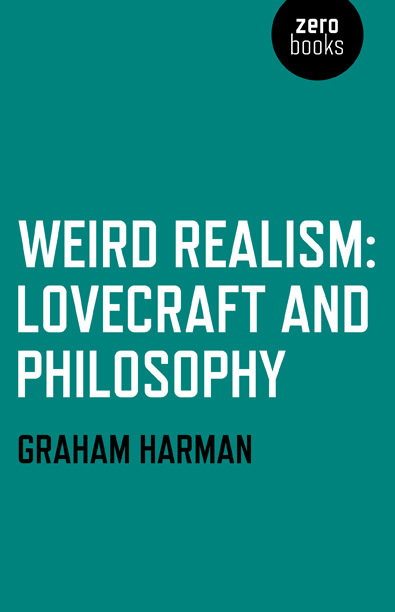
Dark Chemistry reviews Graham Harman, Weird Realism: Lovecraft and Philosophy

Extended review of Weird Realism at the Dark Chemistry blog.

Posted in Graham Harman, H.P. Lovecraft | Leave a comment

Richard Seymour – The territorial logic of the capitalist state

Interesting post at Lenin’s Tomb on contemporary politics, states and spaces. Some discussion of Lefebvre, Gregory, Arrighi, and Harvey.

Posted in David Harvey, Derek Gregory, Henri Lefebvre, Politics, Territory | Leave a comment

Derek Gregory offers some interesting thoughts about his experience of running a blog. He discusses some of the challenges, the possibilities, and makes some comments about how this might change the publishing landscape. I don’t disagree with his line about the Society and Space open site, though I think it is something that has considerably more potential than we have yet managed to exploit.

Derek Gregory's avatargeographical imaginations

I started this blog on 10 July with a promise to see how it went: I said I’d been told that blogging wasn’t a distraction but a helpful way of sorting out ideas and opening up conversations.  So what have I learned from the experience?  For me, I’ve found that blogging does several things.

First, it means that I read more attentively.  This doesn’t mean that I’m constantly thinking of the next post, simply that when something catches my attention I’m more inclined to follow it up and see where it goes rather than transfer it to the “to be pursued later” (and forgotten sooner) box.  I suspect that many of us have our favourite displacement activities, particularly online: sites we visit (or stumble upon), flitting from one link to the next and telling ourselves that this is all part of the research process.  It often is, but it…

View original post 1,110 more words

Posted in Uncategorized | 1 Comment

Antipode book reviews to be open access

Book reviews in Antipode have been made available open access, and all new book reviews will appear on the Antipode Foundation site instead of the print/online journal. More details and links to two recent reviews here. Society and Space has been doing this since the start of the year and thanks to the efforts of our review editors there is a good archive building up here.

Posted in Publishing, Society and Space | Leave a comment

AAG letter to Israeli Council of Higher Education

I’m pleased to see that the AAG President, Eric Sheppard, has written on behalf of the association to the Israeli Council of Higher Education about the Ben Gurion University Department of Politics and Government. You can read the letter here.

We’re trying to get the British Royal Geographical Society to do similarly.

Posted in Politics, Universities | Leave a comment

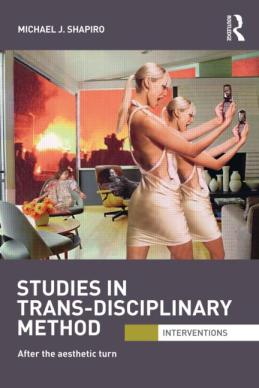
Michael Shapiro – Studies in Trans-Disciplinary Method

Michael Shapiro’s new book Studies in Trans-Disciplinary Methods: After the Aesthetic Turn is now out.

This groundbreaking and innovative text addresses the deep ontological and epistemological commitments that underpin conventional positivist methods and then demonstrates how “method” can be understood in much broader and more interesting ways.

Drawing on a broad range of philosophical and methodological theory as well as a wide variety of artistic sources from fine art to cinema and from literature to the blues, leading contemporary thinker Michael Shapiro shows the reader how a more open understanding of the concept of method is rewarding and enlightening. His notion of ‘writing-as-method’ is enacted throughout the text and offers a stimulating alternative for students to positivist social science methods.

This is essential reading for all students and faculty with an interest in post-positivist methods.

Posted in Uncategorized | Tagged | 1 Comment

Negri on Agamben, Opus Dei

Antonio Negri discusses Agamben’s Opus Dei, and his work more generally (via Peter Gratton and AUFS).

Posted in Antonio Negri, Giorgio Agamben | Leave a comment

Some good pieces open access at Antipode.

Antipode Editorial Office's avatarAntipodeFoundation.org

Work by the winners of the 2012/13 and 2011/12 Graduate Student Scholarships is now freely available (i.e. no subscription required) at Wiley Online Library – Teo Ballvé’s ‘Territories of Life and Death on a Colombian Frontier‘ and Oliver Belcher’s ‘Best-Laid Schemes: Postcolonialism, Military Social Science, and the Making of U.S. Counterinsurgency Doctrine, 1940-2009‘.  We’ve also made interventions from the participants of the first two Institutes for the Geographies of Justice open access – the 283 Collective’s ‘What’s Just? Afterthoughts on the Summer Institute in the Geographies of Justice 2007‘ and the SIGJ2 Writing Collective’s ‘What Can We Do? The Challenge of Being New Academics in Neoliberal Universities‘.

And don’t forget that the Foundation is now accepting applications for places at the next IGJ which will take place in Durban, South Africa, from May 27th to June 1st 2013.  Click here for…

View original post 2 more words

Posted in Uncategorized | Leave a comment